
BUSINESS
Egypt Parks Garment Stock in Nairobi to Collect Invoices
Egypt’s apparel chamber parks ready-stock in Nairobi and assigns collectors, because $3.4 billion in garment exports still barely register in Kenya.

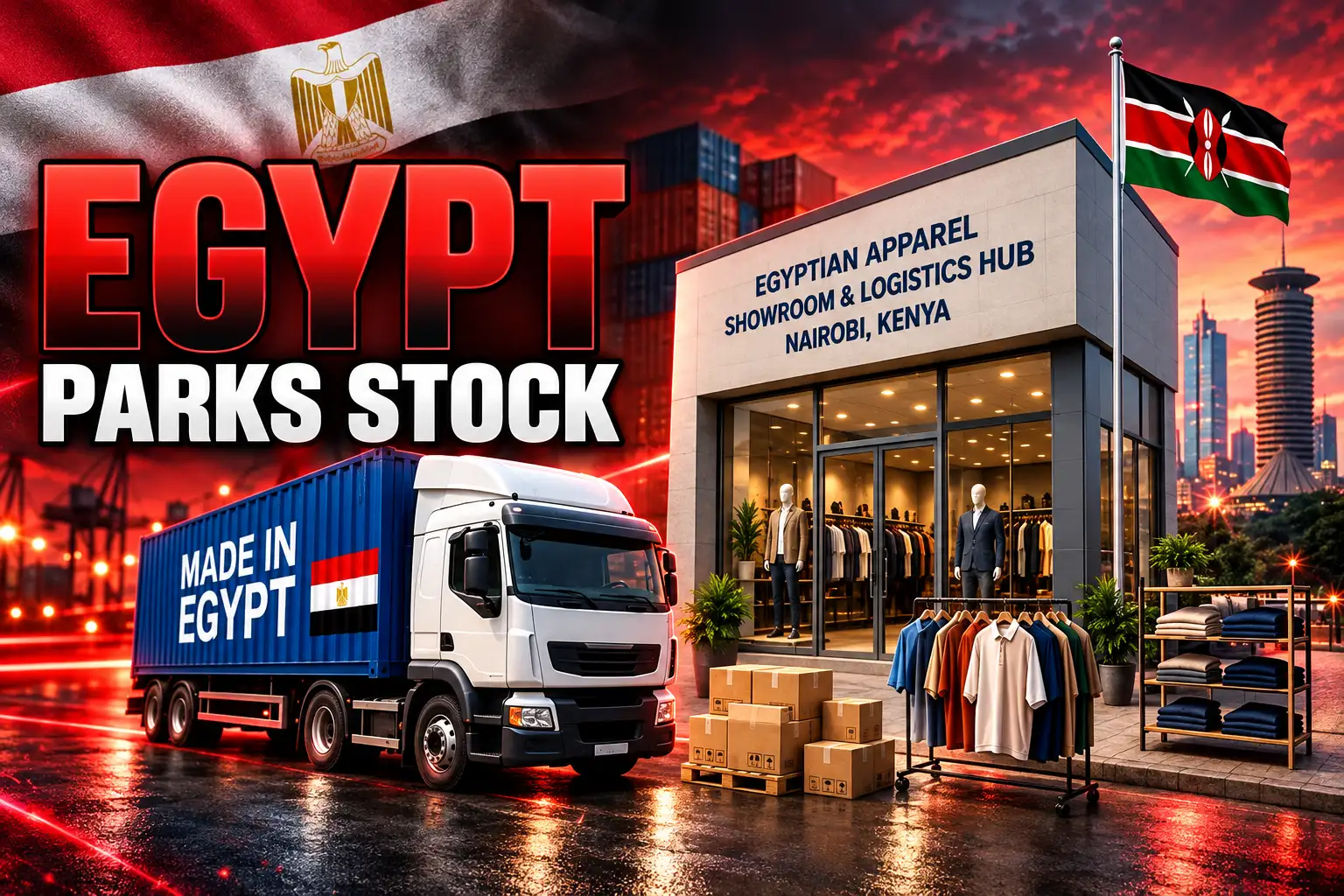
Egypt’s apparel chamber is putting a 250 square metre showroom inside a 20,000 square metre Nairobi warehouse, and paying six months of freight to fill it.
The Chamber of Apparel and Home Textile Industries at the Federation of Egyptian Industries wants that stock, and a team that collects invoices, to lift garment sales to targeted African countries by at least 20%. In 2024 Kenya bought $454,780 of woven clothes from Egypt and $80.38 million from China.
The Chamber Is Borrowing Space in an Existing Nairobi Hub
The room is new. The shed is not. Egypt’s State Information Service described the deal as a permanent exhibition space inside a logistics centre the Egyptian Industrial Exports Company already runs in Nairobi.
Mona Wahba is managing director of that company. She said the centre covers 20,000 square metres, already serves several Egyptian industries, and will add shipping, warehousing and insurance to the apparel plan. The 250 square metres Nancy Salam, a chamber board member, allocated for display and storage is a slice of that floor, not a new building.
THE HUB IN THREE FIGURES
- Showroom slice: 250 square metres of display and storage, with the chamber covering those costs for small and mid-sized members of its general assembly.
- Warehouse around it: 20,000 square metres already used by other Egyptian exporters, now offered to garment makers as a regional platform.
- Export target: at least 20% more garment sales to targeted African countries, a figure Mohamed Abdel Salam, the chamber chairperson, has not tied to a current Kenya total.
Bahia Nazim, another board member, said the chamber is working with Egyptian and Kenyan authorities, the Industrial Exports Company, and El Gendy Trading to put a logistics warehouse on that site. A July 2026 tralac guide names Egypt’s certified AfCFTA trading company as El Gondy Trading, a spelling variant of the same house, representing more than 100 Egyptian factories including cotton-product makers. The political wrapper is a chamber showroom. The operating company is already on the ground.
Egypt’s Thin Slice of Kenya’s Clothing Imports
World Bank WITS figures compiled from Comtrade show Kenya imported $103.59 million of woven apparel in 2024. China supplied $80.38 million of that, or 77.6%. Egypt supplied $454,780, or 0.44%.
KENYA WOVEN-APPAREL IMPORTS, 2024
| Origin | Value | Share |
|---|---|---|
| China | $80.38 million | 77.6% |
| Turkey | $5.21 million | 5.0% |
| South Africa | $3.41 million | 3.29% |
| India | $3.39 million | 3.27% |
| Bangladesh | $2.32 million | 2.24% |
| Egypt | $454,780 | 0.44% |
| World | $103.59 million | 100% |
Turkey, South Africa, India and Bangladesh all sit well above Egypt on the same list. Indonesia, at $457,260, edges Egypt too. Bahia Nazim told the chamber that Egypt exported $3.4 billion of ready-made garments in 2025, among Africa’s largest apparel export totals. Almost none of that production landed in Kenyan shops as woven clothing.
New shirts also compete with used ones. The same WITS series records Kenya taking $207.1 million of worn clothing in 2024, about double the woven-apparel bill, with China again the top origin. A Nairobi wholesaler who can restock from that used-clothes trade, or from a Chinese container already on the water, has little reason to wait on a made-to-order crate from Cairo.
Who Collects When a Kenyan Invoice Goes Unpaid?
The chamber listed five services around the room, and only one of them is a rack of samples. The rest are the jobs small Egyptian exporters say they cannot do from 10th of Ramadan or Mahalla once a Kenyan buyer asks for goods on the ground and pays later.
WHAT THE HUB ACTUALLY SELLS
- Display space: year-round racks in Nairobi so buyers can see Egyptian garments without a trade-fair calendar.
- Warehouse space: storage and consolidation so several factories can share a shipment into East Africa.
- Tracking and delivery: a promise to shorten the gap between an order and a doorstep in Kenya and nearby markets.
- Invoice collection: specialised teams assigned to take payment from Kenyan buyers on behalf of the factories.
- Paperwork help: administrative support so smaller firms can clear export procedures they do not run every week.
Collection is the tell. Afreximbank, which sat in on the later Cairo signing, already built the Pan-African Payment and Settlement System for instant or near-instant transfers in local currencies. The chamber is still putting people in Nairobi to chase money. That is a judgement about what SMEs actually fear: not the absence of a payment rail, but an unpaid invoice in a market they do not staff.
The centre will provide an integrated system to help Egyptian companies expand in African markets by improving shipping and distribution.
Mohamed Abdel Salam, Chairperson, Chamber of Apparel and Home Textile Industries
Abdel Salam has called Kenya one of Africa’s most strategic markets and a gateway to neighbouring East African countries. The chamber’s own service list treats that gateway as a credit problem first.
Ready-Stock Parks Factory Cash in Nairobi
Nazim said the project will run a ready-stock model. Goods sit in Nairobi before an order lands, so a wholesaler can take delivery at once and so after-sales service has a local address. That is the opposite of the usual SME pattern, which is to cut fabric after a confirmed purchase and then wait on a vessel.
Someone has to fund the shirts on those shelves. For a small maker, a pallet of polo shirts in Nairobi is working capital that is no longer in the factory, no longer in a Cairo bank, and not yet cash from a Kenyan customer. The chamber is covering showroom and storage costs for general-assembly SMEs, which lowers the rent. It does not retire the inventory itself.
If the stock turns, the model is a distribution arm. If it sits, the model is a slow leak. After-sales only exists once a first sale has happened and a buyer knows whom to call when a size run is wrong. Ready-stock is how the chamber tries to force that first sale without a six-week wait.
Why the Tariff Breaks Have Not Built a Trade
Ahmed Ezz El Din, a chamber board member, said manufacturers should use the tariff exemptions and reductions already on offer through the African Continental Free Trade Area and the Common Market for Eastern and Southern Africa. He also cited shorter shipping times from Egypt than from more distant suppliers. Those preferences have been available for years. The 2024 import table is what they produced.
tralac’s July 2026 guide lists Kenya among the COMESA free-trade members Egypt will keep trading with under existing regional rules, a group of 16 out of COMESA’s 21 states. New AfCFTA preference, the same guide notes, matters most with African countries outside that FTA. Kenya is not a new market on paper. It is an old market with almost no Egyptian clothes in it.
Apparel was the product that stalled continental origin talks. Egypt, while it chaired the AfCFTA ministerial council, brokered a consensus in September 2025 on rules of origin for garments, textiles and vehicles under a transitional mechanism, and handed the chair to Nigeria on 30 June 2026. Exporters still need a certificate of origin from the General Organisation for Export and Import Control before Kenyan customs will treat a shipment as qualifying. A study of continental clothing chains sets out how apparel rules of origin decide preference: too loose, and Asian fabric with a quick African stitch claims the break; too tight, and factories that still import yarn get nothing.
Egypt signed the AfCFTA in Kigali on 21 March 2018, ratified it on 27 February 2019, and deposited the instrument on 8 April 2019. It joined the Guided Trade Initiative in October 2022 in the first group, which included Kenya. The paperwork trail is long. The woven-apparel line is still $454,780.
Six Months of Free Freight to Fill the Racks
Abdel Salam said the chamber will cover shipping costs for Egyptian goods sent to the hub for six months, a subsidy meant to get factories to use the place while the model is new. That clock is the chamber putting cash behind the ready-stock idea. Without it, a small maker has little reason to park shirts in Nairobi on a hope that a Gikomba or Industrial Area buyer walks in.
The August signing at Federation of Egyptian Industries headquarters in Cairo brought in representatives of the African Union, Afreximbank and COMESA, plus trade and shipping firms. Abdel Salam said companies were expected to begin shipping products to Kenya in September, with the six-month freight cover running from those loads. Wahba’s firm supplies the shed and the insurance. El Gendy Trading is the named commercial partner. The chamber supplies the rent break, the freight gift, and the collectors.
THE ROAD TO A SEPTEMBER SHIPMENT
- July 20, 2026: The chamber unveils the 250 square metre Nairobi showroom and logistics plan for small and mid-sized exporters.
- Late July 2026: Egypt’s State Information Service describes the room as sitting inside the Industrial Exports Company’s 20,000 square metre Nairobi centre.
- August 16, 2026: The chamber and the Industrial Exports Company sign in Cairo, with AU, Afreximbank and COMESA officials present, and name September as the start of shipments.
- September 2026: Egyptian apparel companies are expected to begin sending goods to Kenya under the six-month freight cover.
A Nairobi markets note recorded the July announcement as a single line in an East Africa round-up. There was no public argument among Kenyan importers about whether a 250 square metre Egyptian room would dent China’s $80.38 million hold. Silence is information. The trade Egypt wants to join did not treat the plan as a shock.
September’s First Cartons Remain Unconfirmed
September has come and gone as a target, and no official list of first consignments, participating factories, or opening stock has been published. Abdel Salam’s 20% rise is still a target for a group of African countries he has not named in value terms. The room may be fitted. The cartons may be in the air. The public record stops at the signing.
WHAT WE KNOW
- The floor: 250 square metres of showroom and storage inside a 20,000 square metre centre the Industrial Exports Company already operates in Nairobi.
- The money: free showroom and storage for SME general-assembly members, plus six months of shipping paid by the chamber.
- The operators: the chamber, the Industrial Exports Company under Mona Wahba, and El Gendy Trading, with Egyptian and Kenyan authorities named as counterparts.
- The market as it stands: $454,780 of Kenyan woven-apparel imports from Egypt in 2024, against $80.38 million from China and $207.1 million of worn clothing from all sources.
WHAT IS UNCONFIRMED
- First loads: whether any factory actually shipped in September, and which brands or categories went first.
- The 20% base: current garment sales to the “targeted African countries,” so the promised lift cannot be checked against a number.
- Who holds unpaid invoices: whether collection risk stays with the factory, shifts to the chamber’s team, or sits with El Gendy Trading.
The six-month freight clock starts when cartons move, not when a memorandum is signed. Until a Kenyan wholesaler reorders from stock that is already in Nairobi, Abdel Salam’s 20% remains a target without a baseline, and the 250 square metres remain a room inside someone else’s warehouse.

Christa Pike Survived the Execution Tennessee Would Not Pause

Musk’s Oligarch Charge Hits a Queue of Three

Circle Puts USDC and EURC Into SAP Pay Workflows

Ring’s First Smart Lock Skips Home Wi-Fi for Sidewalk

GTA 6 Puts Cash Back on the Story Path

Aramco Crash Kills 14 Two Days After Oil Restart

Salah Captained Egypt to Their First World Cup Win

Apple Labor Day Deals Hide June’s Memory Price Hike

Zelda’s 40th Switch 2 Ships Without a Zelda Game

Palworld 1.0.4 Adds Palpedia Search After the 1.0 Launch
-
 BUSINESS3 months ago
Aramco Crash Kills 14 Two Days After Oil Restart
-
 NEWS4 months ago
Salah Captained Egypt to Their First World Cup Win
-
 NEWS1 month ago
Apple Labor Day Deals Hide June’s Memory Price Hike
-
 GAMING4 weeks ago
Zelda’s 40th Switch 2 Ships Without a Zelda Game
-
 GAMING4 weeks ago
Palworld 1.0.4 Adds Palpedia Search After the 1.0 Launch
-

 NEWS3 months ago
El Niño Puts Israel’s Needed Winter Rain on a Flood Clock
-

 ENTERTAINMENT1 month ago
King Charles Letter Keeps Harry and Meghan as Private Citizens
-

 ENTERTAINMENT3 months ago
A Thousand and One Drops Off Riyadh’s October Calendar