
Yemen’s Houthi leader Abdul Malik al-Houthi threatened Thursday to strike Saudi Arabia’s oil facilities and other critical infrastructure if Riyadh joins the fight against his movement. The warning came four days after the first Houthi missile fire on Saudi soil since a 2022 truce, fired over a dispute about a funeral flight from Tehran.
Saudi oil sites have survived worse before, defended by air defenses that now intercept most incoming fire. The sharper exposure this time sits elsewhere: the narrow Red Sea lane carrying the crude Riyadh rerouted to dodge the ongoing Hormuz blockade tied to the wider Iran war.
Four Years of Calm End in a Weekend
The trouble started Monday, when Yemen’s internationally recognized government struck the runway at Sanaa International Airport to stop an Iranian aircraft from landing. The Houthis, who control the capital, blamed Saudi Arabia for the strike.
Within hours, Houthi forces fired ballistic missiles at missiles aimed at Abha International Airport in southern Saudi Arabia. A Saudi-led coalition spokesperson said the missiles were intercepted. Houthi military spokesman Yahya Saree called the airport strike “blatant aggression” and said it had ended a period of de-escalation.
Three days later, on Thursday, al-Houthi went further in a televised address carried by the group’s Al-Masirah television. “All Saudi oil facilities and vital installations will be targets for our missiles and drones if Riyadh gets involved” in striking Yemen, he said.
The real equation is Sana’a airport for Riyadh airport, airports for airports, ports for ports, and blockade for blockade.
Al-Houthi said that in the same speech, framing any future Saudi military action as grounds for matching retaliation category by category.
What We Know
- Houthi forces fired missiles at Abha International Airport on July 13, the first such strike since the informal 2022 truce took hold.
- Saudi-led coalition air defenses said they intercepted the missiles before impact.
- Al-Houthi threatened oil and other infrastructure Thursday in a televised address, without announcing any new strike.
What’s Unconfirmed
- Who actually struck Sanaa airport. The Houthis blame Saudi Arabia; Yemen’s internationally recognized government says it acted alone to block the Iranian flight.
- Whether the Houthis will follow through against oil infrastructure or keep the threat rhetorical.
- Whether shipping through the Bab al-Mandeb Strait will actually be disrupted.
Nadwa al-Dawsari, an associate fellow at the Middle East Institute, a Washington think tank, told The National the arrangement was never built to last. “It was never truly sustainable because the parties fundamentally disagreed on its nature,” she said, describing the truce as hanging by a thread.
The Funeral Flight That Lit the Fuse
The Iranian aircraft at the center of Monday’s strike was carrying a Houthi delegation home from Tehran, where officials had attended the funeral of Iran’s late Supreme Leader Ali Khamenei. Khamenei was killed at the start of the US-Israeli war on Iran in late February.
Blocked from landing in Sanaa, the diverted flight carrying the Houthi delegation was rerouted to Hodeidah, a Houthi-controlled Red Sea port city. Houthi officials said the plane also carried more than 200 stranded medical patients. Saudi Arabia has long required prior authorization for flights into Houthi airspace, wary the route could be used to move weapons or Iranian advisers.
This is not the movement’s first warning along these lines. Months earlier, a Houthi official had already cautioned Riyadh that the group’s patience had run out and that it stood ready to strike Aramco facilities directly, according to a translation published by the Middle East Media Research Institute. Thursday’s speech escalated that same message from one official’s warning to the movement’s top leader speaking on national television for nearly 90 minutes.
Riyadh’s Red Sea Workaround Is the Real Target
Saudi Arabia is the world’s largest oil exporter, and it has spent months building a bypass around the Strait of Hormuz, which Iran has repeatedly threatened to close during its war with the United States and Israel.
That bypass runs through Saudi Aramco’s East-West Pipeline, a 1,200-kilometer (745-mile) line linking the Abqaiq processing hub in the east to the port of Yanbu on the Red Sea, restored to a full capacity of 7 million barrels per day after earlier disruptions. Saudi Arabia has been pushing close to 5 million barrels a day, roughly half its output, across that route to reach buyers in Asia.
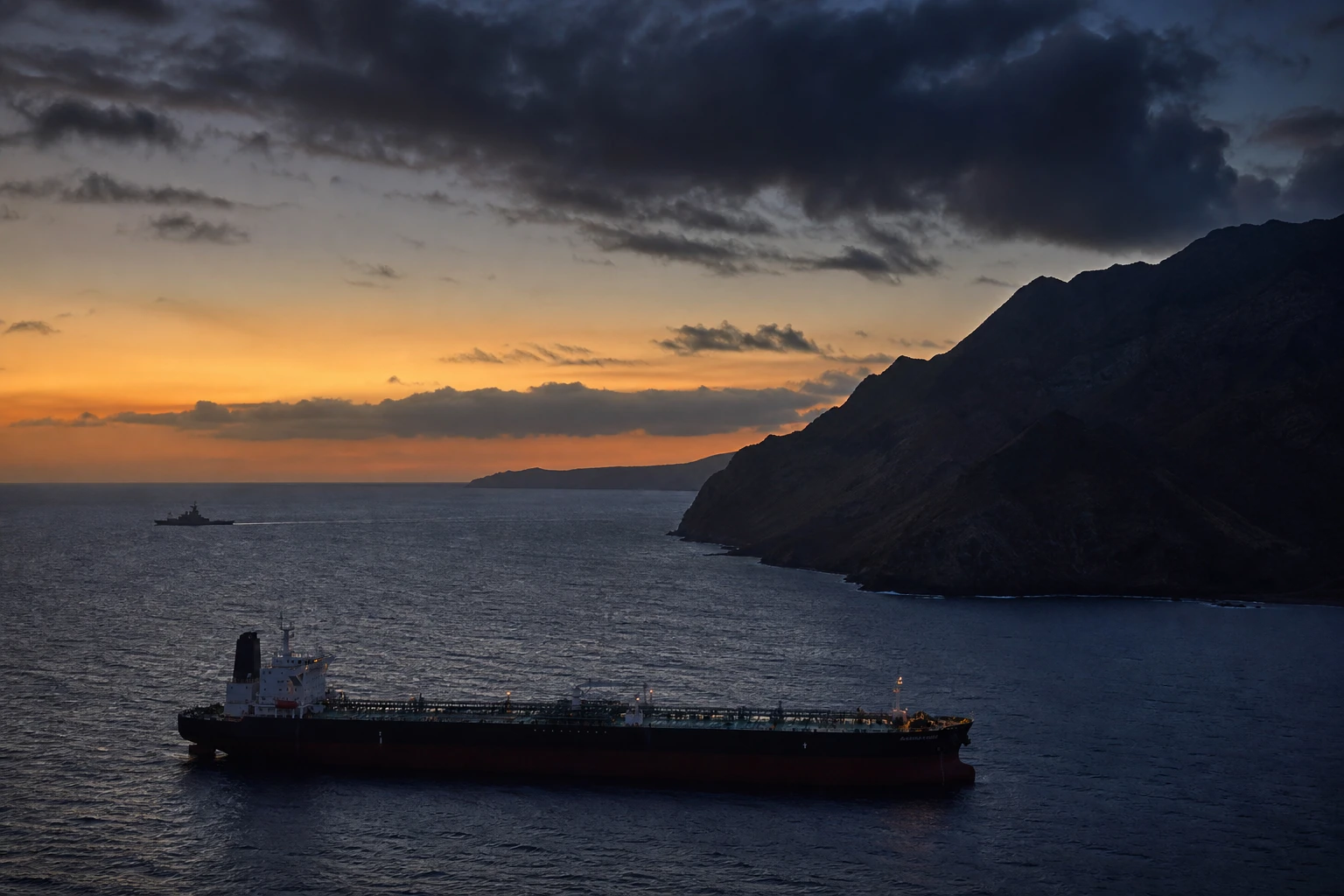
The catch: every barrel that leaves Yanbu still has to pass through the Bab al-Mandeb Strait, the narrow chokepoint the Houthis control the approaches to from Yemen’s coast. If that closes, the pipeline workaround stops mattering.
Analysts say the math gets brutal fast if both chokepoints go dark at once. Roughly a quarter of the world’s oil and gas supply would be blocked if Hormuz and Bab al-Mandeb shut simultaneously, forcing tankers onto a Cape of Good Hope detour that adds 10 to 14 days to delivery times and drives up shipping and insurance costs.
Bill Putnam, a former commander of the US Military Intelligence Readiness Command, said a Saudi retaliatory strike could push the Houthis toward exactly that outcome. “If the Houthis decide to respond, believing Saudi Arabia started this, it will lead to greater escalation, and I am even more concerned about maritime navigation in the Red Sea,” he said.
What Happened the Last Two Times Houthis Followed Through
Threats against Saudi oil infrastructure are not new. The movement has acted on them twice before, with different results each time.
2019: Abqaiq and Khurais
In September 2019, drones and cruise missiles struck the Abqaiq processing plant and the Khurais oil field, both run by Aramco. The strike temporarily disrupted 5.7 million barrels a day, more than half of Saudi Arabia’s production and about 5 percent of global supply, according to a Congressional Research Service brief. The Houthis claimed responsibility; the United States and Saudi Arabia said Iran was behind it.
2022: The Jeddah Depot Fire
In March 2022, missiles and drones hit an Aramco fuel depot in Jeddah on the eve of the city’s Formula One race weekend, sending up a plume of black smoke visible from the circuit. The blaze cost Aramco about $1.5 million in repairs, with no lasting hit to national output.
| Year | Trigger | Target | Immediate Oil Impact |
|---|---|---|---|
| 2019 | Houthi drone and cruise missile raid | Abqaiq and Khurais processing plants | 5.7 million bpd knocked out, about half of Saudi output |
| 2021 | Drone strike | Ras Tanura oil terminal | Brent crude briefly topped $70 a barrel |
| 2022 | Missile and drone barrage | Jeddah fuel depot near F1 circuit | Depot fire, about $1.5 million in repairs, no lasting output loss |
| 2026 (threatened) | Sanaa airport strike dispute | “All Saudi oil facilities,” declared but not yet struck | None so far; threat only as of Thursday |
The gap between 2019’s damage and 2022’s contained fire traces largely to Saudi air defenses, which have gotten sharply better at knocking incoming fire down before it lands.
Who’s Bracing for Impact
The immediate fallout has already reached commercial aviation. Air Cairo’s cancellation of its Abha routes followed directly from Monday’s missile fire, a small but concrete sign of how fast airlines pull back once a truce cracks.
Diplomats are trying to hold the line. UN Special Envoy Hans Grundberg is working with mediators from Qatar and Oman to keep the dispute from turning into full-scale fighting. A Gulf diplomat briefed on the talks told The National that Saudi Arabia was prepared to respond to any attack on its territory.
Mohammed Al Basha, founder of the US-based risk advisory firm Basha Report, expects the standoff over Yemeni airspace to resurface soon rather than fade. He said he expected Iran and the Houthis would probably try again within the next week to fly a direct route between Tehran and Sanaa, the same kind of flight that triggered this week’s strikes.
Maged al-Madhaji, chairman and co-founder of the Sana’a Center for Strategic Studies, a Yemen-based think tank, put the risk in blunter terms. “I believe we may soon witness an unprecedented escalation” without active mediation from Gulf neighbors or the United Nations, he said.
Could the Houthis Actually Shut Bab al-Mandeb?
Probably not entirely, and not without cost to themselves, but they do not need a full closure to rattle markets. Even the credible threat of disrupted transit through the strait has been enough in the past to push insurers and shippers toward costlier rerouting, according to analysts tracking the corridor.
Saudi and coalition forces have gotten good at stopping direct hits. Saudi ground and air forces have intercepted roughly 90 percent of Houthi projectiles fired from Yemen in recent years, according to an analysis from the Center for Strategic and International Studies. That interception rate is exactly why a Bab al-Mandeb blockade is the more efficient lever for the Houthis than another raid on a fortified refinery.
Mohammed al-Bukhaiti, a member of the Houthi political bureau, told Al Jazeera the group still holds that option in reserve. “The Bab al-Mandeb card is a strategic asset that Yemen has the luxury of utilising,” he said, adding the group would try to avoid harming countries not party to the conflict.
Escalation from here would not need to start with oil facilities at all. Risk consultancy Solace Global has laid out a broader set of pathways still on the table:
- Renewed ballistic missile and drone strikes on Saudi airports beyond Abha
- Attacks on desalination plants and other energy infrastructure inland
- A move to restrict or blockade traffic through Bab al-Mandeb itself
- Direct US military involvement against Houthi positions in Yemen
A 2021 preview of that same playbook shows how quickly one strike can move a market. A single drone hit on the Ras Tanura terminal that March drove oil prices above $70 a barrel for the first time since the pandemic crushed demand, per a Washington Institute policy analysis. Brent was trading near $85 a barrel this week, already elevated by the broader Iran war before this latest flashpoint.
What Comes Next
Al-Houthi closed Thursday’s address by calling supporters into the streets for mass demonstrations on Friday, the same day this standoff enters its fifth day without a resolution. Mediators from Oman, Qatar and the United Nations remain engaged, and Saudi Arabia has not yet answered the oil threat with any public move of its own.
Frequently Asked Questions
What did the Houthi leader actually threaten?
Abdul Malik al-Houthi said all Saudi oil facilities and other vital installations would become targets for missiles and drones if Saudi Arabia joins a broader military campaign against his movement, a threat delivered in a televised address rather than an announced attack.
Has this truce broken down before?
The 2022 arrangement had held without a claimed cross-border strike until Monday’s missile fire at Abha airport, making this the first confirmed breach of that truce in four years.
Why does Bab al-Mandeb matter more than the refineries this time?
Saudi Arabia now pushes close to 5 million barrels a day through a Red Sea pipeline route specifically to avoid the Hormuz blockade, and that entire workaround depends on ships being able to clear Bab al-Mandeb afterward.
