
Cyprus has allocated more than €318,000 in targeted 2026 grants to Christian institutions across Gaza, Syria and Jordan for church repairs, mixed schools, medical gear and daily care of children and the elderly. The package sits under the mandate of the island’s Special Representative for Religious Freedoms and the Protection of Minorities in the Middle East.
The Foreign Ministry frames the money as practical help that also keeps centuries-old communities viable and keeps Cyprus in the conversation as a regional bridge.
The Grants Reach Gaza, Syria and Jordan
The largest single line is €150,000 to the Greek Orthodox Patriarchate of Jerusalem for the Church of Saint Porphyrius in Gaza. The historic site has doubled as a civilian shelter. Funds cover construction, educational projects, new school facilities and day-to-day care of children.
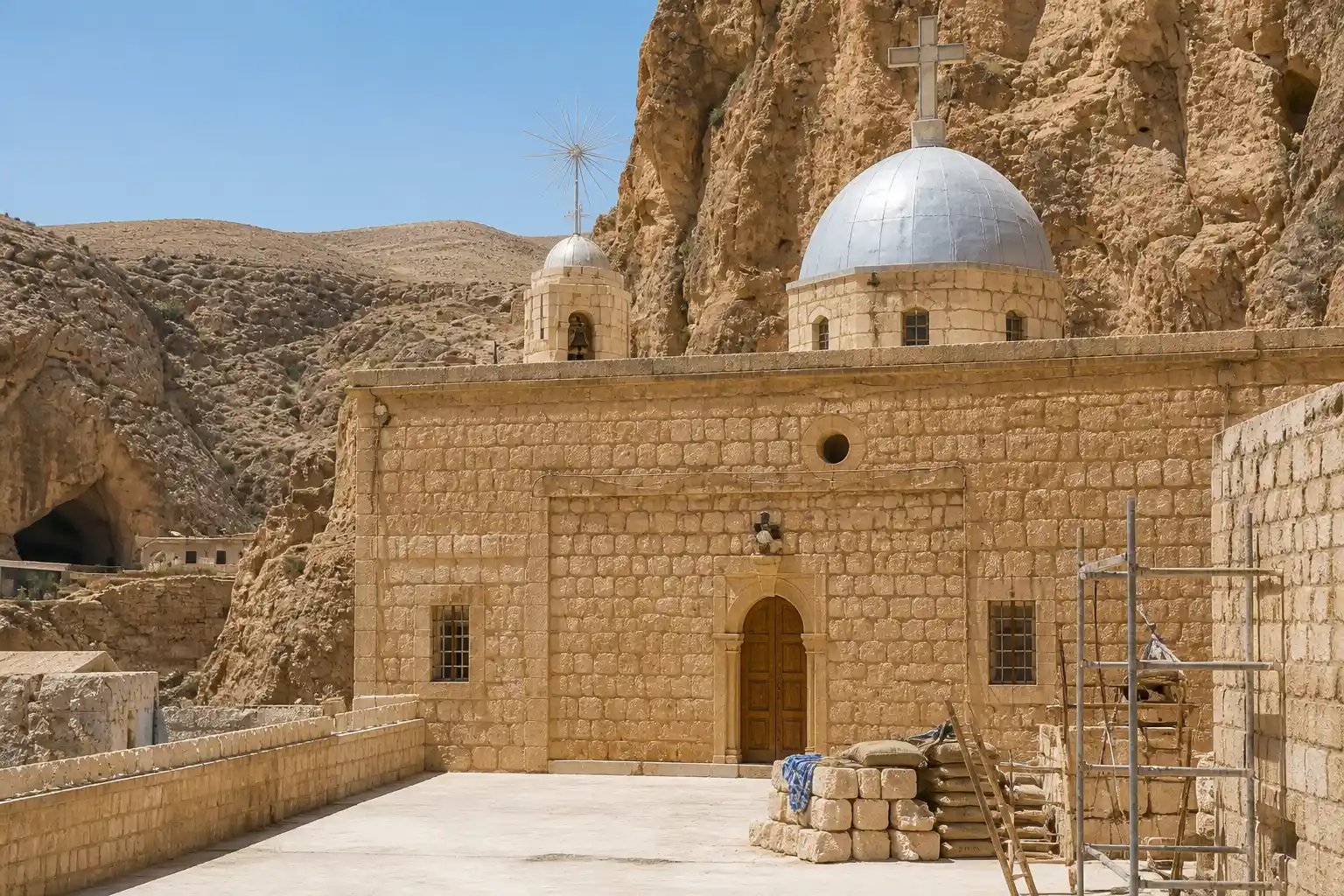
A one-time €20,000 goes to Cypriot monks of the Brotherhood of the Holy Sepulchre serving in Bethlehem, Bethany and nearby monasteries. For Syria, €100,000 reaches the Patriarchate of Antioch to restore a primary school in Hama Province that serves both Christian and Muslim pupils; the ministry says the project should ease refugee returns and stiffen local communities. Another €48,000 spreads across Syrian parishes and monasteries, among them the Monastery of Saint Thecla in Maaloula and a monastery in Saidnaya, for food, drinking water, medicines and support for the elderly and children.
In Jordan the money buys medical equipment for the Orthodox St. Luke Clinic in Amman and covers repairs to the Armenian Church of Saint Karapet on the Jordan River banks. Assistance for communities in Iraq remains under review.
| Destination | Amount | Primary use |
|---|---|---|
| Patriarchate of Jerusalem (Gaza St. Porphyrius) | €150,000 | Repairs, education, child care |
| Brotherhood of the Holy Sepulchre monks | €20,000 | Support in Holy Land sites |
| Patriarchate of Antioch (Hama school) | €100,000 | Primary school restoration, mixed pupils |
| Syrian parishes and monasteries | €48,000 | Food, water, medicines, elderly/children |
| Jordan (St. Luke Clinic + Armenian church) | unspecified portion | Medical equipment, repairs |
Total published lines already exceed €318,000 before any Iraq tranche.
Cyprus Appoints Itself the Minority Voice
These cheques flow from a post created in December 2024. President Nikos Christodoulides named Thessalia Salina Shambos, then Political Director at the Foreign Ministry and former ambassador to Israel, as Special Representative for Religious Freedoms and the Protection of Minorities in the Middle East. The official appointment of the Special Representative charged her with humanitarian and development aid focused on health, education and reintegration, plus restoration of religious and cultural monuments, and with giving minorities a channel into European discussions.
Foreign Minister Constantinos Kombos has said Cyprus is “the only Christian country in the region” and therefore uniquely placed to map needs and give those communities a voice in Brussels. Shambos previously worked the Abraham Accords period and the maritime humanitarian corridor from Cyprus to Gaza. In early August 2026 she was again in Damascus meeting Syrian officials and Patriarch John X of Antioch, reaffirming longstanding ties and concrete support for the Patriarchate’s social work.
The timing overlaps Cyprus’s turn at the EU Council presidency in the first half of 2026, a window that amplifies any initiative on minorities.
Christian Numbers Have Collapsed Across the Map
The grants land against a long demographic slide. Christians once formed 13-20 percent of the Middle East population in the early twentieth century. Multiple trackers now put the regional share near 4-5 percent, with further erosion projected.
- Syria: from roughly 1.5-2 million (about 10 percent) before 2011 to estimates between 300,000 and 600,000 today.
- Gaza: barely over 1,000 before October 2023, hundreds remaining, many sheltering in churches including Saint Porphyrius.
- Jordan: stable but low, roughly 2-6 percent depending on the source.
- Iraq: from 1.4-1.5 million pre-2003 to well under 200,000 in many counts.
Emigration driven by conflict, economic collapse and targeted violence accounts for most of the loss. A documented drop in regional Christian share has left surviving communities thinner and more vulnerable. Similar strains appear elsewhere; parallel pressures facing Egypt’s Copts and the Christian quarter under evacuation pressure in Tyre show the pattern is regional.
A Special Representative With a Quiet Mandate
Shambos’s brief is deliberately practical rather than rhetorical. It tracks the broader UN framework on freedom of religion or belief while staying rooted in Cypriot interests: heritage sites that still house living congregations, schools that keep mixed neighbourhoods intact, and clinics that serve whoever walks in.
Cyprus has treated church attacks as matters of record. After the June 2025 strike on Mar Elias Church in Damascus the ministry condemned the violence, underlined the Orthodox community’s place in Syrian heritage, and channelled emergency help through the Patriarchate of Antioch. The August 2026 package continues that line with multi-year planning instead of one-off responses.
The initiatives contribute to preserving the historic character and the centuries-old Christian religious and cultural heritage of the region. Cyprus will continue to serve as a bridge for interfaith dialogue and cooperation in the Middle East.
That is the Foreign Ministry’s own summary of the programme.
The Money Buys School Desks and Medicine
On the ground the euros translate into specific work:
- Structural repairs and new classrooms at Saint Porphyrius so the compound can keep sheltering families and educating children.
- A rebuilt primary school in Hama that already mixes Christian and Muslim pupils, meant to encourage returns.
- Staples and medicines for monasteries in Maaloula and Saidnaya that still care for elderly residents and local kids.
- Diagnostic or treatment gear at St. Luke’s clinic in Amman.
- Stabilisation work on the Armenian Church of Saint Karapet beside the Jordan.
None of the lines is large enough to reverse national trends. Together they keep doors open and roofs intact at places that still function as community anchors.
How Small Checks Amplify Bigger Talks
The second-order effect is diplomatic bandwidth. A Christian-majority EU member twenty minutes by air from the Levant can speak with both Arab capitals and Washington in the same week. The Special Representative role gives that conversation a named office and a paper trail of concrete projects. When new Syrian or Lebanese governments seek European support, Cyprus can point to existing channels with patriarchates and parishes rather than starting from zero.
The same logic applies to U.S. priorities. The 2024 appointment drew notice in circles that track Christian minorities; the current grants keep the file active. Cyprus does not replace larger donors. It supplies a trusted local atlas and a set of small, finished projects that larger partners can expand.
Iraq remains the open question. The ministry says measures are under consideration. Any future package would follow the same template: targeted, church-linked, mixed-benefit where possible.
Frequently Asked Questions
How much total funding has Cyprus allocated in this 2026 package?
Published lines already total more than €318,000 (€150k Gaza, €20k monks, €100k Hama school, €48k Syrian monasteries) before the Jordan clinic and church amounts and any Iraq decisions are added; the ministry has not released a single grand total.
Who is Cyprus’s Special Representative for religious minorities?
Thessalia Salina Shambos, appointed in December 2024 while serving as Political Director at the Foreign Ministry and previously ambassador to Israel; her mandate covers humanitarian aid, heritage restoration and giving minorities a voice in European forums.
Why is Cyprus taking this role rather than a larger EU state?
It is the only Christian-majority country in the Middle East, sits geographically between Europe and the Levant, holds the EU Council presidency in early 2026, and has existing church-to-church ties that larger capitals often lack.
What is the Church of Saint Porphyrius and why does it receive the largest grant?
It is a historic Greek Orthodox church in Gaza City under the Patriarchate of Jerusalem that has sheltered hundreds of civilians during the war; the €150,000 covers repairs after damage plus education and child-care programmes that keep the compound functional for residents.
Is further aid planned for Christian communities in Iraq?
The Foreign Ministry has stated that additional support measures for Christian and other communities in Iraq are currently under consideration, with no amounts or timelines yet published.
