
BUSINESS
Saudi Adds a 2% Fee on Non-Saudi Property Sales
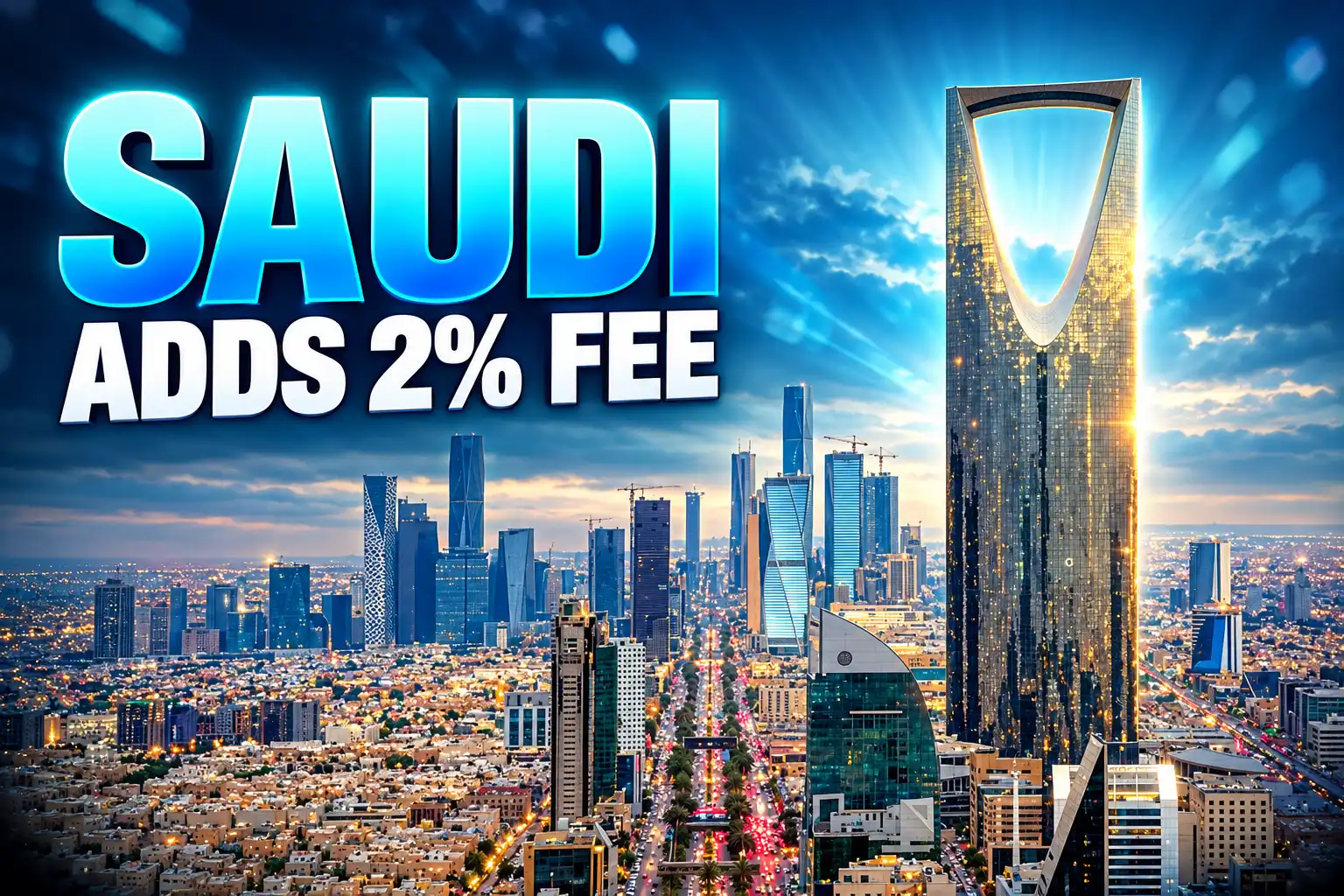
Non-Saudis pay an extra 2% on property disposals in Riyadh, Jeddah, Makkah and Madinah, on top of the 5% tax, while the rest of the map is zero-rated.

Saudi Arabia now charges non-Saudis an extra 2% fee on property disposals in four cities, on top of the 5% tax all parties pay. The General Real Estate Authority, through spokesman Taisir Al-Mufarrij, said the Real Estate Transaction Tax applies to Saudis and non-Saudis in every city, and that the extra levy hits a non-Saudi when disposing of a property, such as a sale, inside designated geographic zones in Riyadh, Jeddah, Makkah or Madinah.
That is not a nationwide foreign-buyer tax. It is a location filter sitting on the new ownership law, and it prices an exit in the four hottest markets differently from a sale in AlUla, NEOM or the special economic zones.
The Extra 2% Hits Only Four Cities
Al-Mufarrij posted the split on 6 July 2026 after the Saudi Properties portal put up a fees graphic that left buyers arguing whether foreigners paid 2% or 7%. He wrote that the 5% tax runs in all cities, and that the additional 2% applies to the non-Saudi on a disposition in the limited geographic zones of those four cities, in line with the law and its executive regulations.
تُطبق ضريبة التصرفات العقارية بنسبة (5%) على السعودي وغير السعودي في جميع مدن المملكة.
وعند التصرف بالعقار (كالبيع):
إذا كان العقار يقع في النطاقات الجغرافية المحدودة في الرياض أو جدة أو مكة المكرمة أو المدينة المنورة، فيُطبق على غير السعودي رسم إضافي بنسبة (2%)، وفقًا للنظام و… https://t.co/Hcdmxznw7L— المتحدث الرسمي لهيئة العقار (@SpokespRega) July 6, 2026
The implementing regulations, approved by the Council of Ministers on 23 June 2026 and formally published on 3 July 2026, fix that REGA rate at 2% of transaction value on all types of real rights and uses in Riyadh, Makkah, Al-Madinah and Jeddah Governorate. Disposals of real rights outside those four cities are listed at 0% for the same REGA fee. Combined, a covered non-Saudi sale in the four-city zones is 7%: 5% transaction tax plus 2% to REGA.
On a SAR 1,000,000 sale that is SAR 50,000 in transaction tax and SAR 20,000 in the extra fee, or SAR 70,000 together. Saud Al-Sulaimani, chief executive of JLL in Saudi Arabia, called the 2% competitive against countries that levy as much as 15% or 30% on foreign investors. The geography still does more work than the headline rate, because the same foreign seller pays no REGA surcharge once the asset sits outside those four cities.
How the 5% Tax and the 2% Fee Stack
The two charges are separate. The Zakat, Tax and Customs Authority collects the transaction tax at 5% of the total purchase price on each taxable transfer of ownership or of a long benefit. Sales of real estate are off value-added tax and on this 5% levy; commercial rents still take 15% VAT, while residential rents stay exempt.
REGA collects the non-Saudi fee. The published law authorises a fee that may not exceed 5% of the value of a disposition of rights in rem by a non-Saudi, without prejudice to any other fees or taxes. The regulations use 2% in the four cities today. That 5% figure is the legal ceiling, not the current bill.
THE CHARGE STACK BY CITY
| Charge | Current rate | Who it hits | Where it applies |
|---|---|---|---|
| Real Estate Transaction Tax | 5% | Every taxable transfer; the assignor pays ZATCA | All cities |
| REGA non-Saudi fee | 2% | A non-Saudi on a disposition such as a sale | Designated zones in Riyadh, Jeddah, Makkah, Madinah |
| REGA non-Saudi fee | 0% | A non-Saudi on a disposition | Outside those four cities |
| Covered four-city sale | 7% | Non-Saudi disposition plus the 5% tax | The four named cities |
ZATCA’s rule is that the seller, as assignor, is responsible for the 5% before a notary will complete the deed, though the contract may push the cash cost onto the buyer. The extra 2% is the REGA layer on a non-Saudi’s own disposition. A first purchase from a Saudi seller still carries the 5% tax; the 2% is built for the foreign holder’s later transfer in those zones.
AlUla, NEOM and the Rest of the Map
The Cabinet’s geographic document is the other half of the price. Foreign ownership is not a blank cheque across every street. It runs through mapped zones that REGA publishes on the Saudi Properties portal, and the four-city surcharge only switches on inside the limited zones of Riyadh, Jeddah, Makkah and Madinah.
Riyadh’s named list reads like a public-investment portfolio: Qiddiya, New Murabba, the Sports Boulevard and Arts District, Diriyah Gate, King Salman Park, Sedra, King Abdullah Financial District, King Salman International Airport, and a transit-oriented development site. Jeddah is drawn wider, with Central Jeddah plus Development Areas 1 through 55 across the governorate. AlUla is open through Areas 1 through 17. The giga-project map adds NEOM, AMAALA and The Red Sea. Special economic zones on the list include Jazan, Ras Al Khair and King Abdullah Economic City.
Those addresses still pay the 5% tax on a transfer. They do not pick up the extra 2% under the current Article 9 schedule, which zero-rates dispositions outside the four cities. That is the quiet incentive in the regs: a foreign holder in a Red Sea or AlUla scheme is on a cheaper REGA ticket than one selling inside KAFD or Central Jeddah.
The same two commercial capitals have been pitching large foreign real estate projects in Jeddah and Riyadh, which is exactly where the surcharge now sits. Resident non-Saudis get a narrower personal path: the regulations allow one residential property for personal use outside the geographic scope, with Makkah and Madinah carved out. Unlisted Saudi companies with foreign shareholders may also own outside the mapped zones for their business or staff housing if the Ministry of Investment approves, again except in the two holy cities.
Non-residents face a paperwork gate before any of this. A natural person must obtain a digital identity, open a Saudi bank account and hold a Saudi mobile number linked to that identity. Companies with no local presence register with the Ministry of Investment, take a Unified Number, and run payments through the REGA portal on Saudi Central Bank rails.
Makkah and Madinah Keep a Separate Gate
The holy cities are on the 2% schedule, and they keep a faith test the rest of the Kingdom does not. Ownership in Makkah and Madinah is restricted to Muslim natural persons and to Saudi companies. Non-Muslims cannot own there. Non-Saudi companies incorporated outside the Kingdom are shut out of both cities, as are non-Saudi non-profit entities.
Named Makkah zones on the Cabinet list include Abraj Makkah, Al-Manar, Burj Ajyad, King Salman Gate, Tilal Village, Jabal Omar, Thakher Makkah, Smou Suburb, Masar, and Makkah Zones 1 and 2. Madinah’s list includes Gharra, Madinah Zones 1 and 2, Al-Mahwa, Darat Al-Hijrah, Downtown Madinah, Diyar Al-Maqar, Rua Al-Madinah, Knowledge Economic City and Mishraf.
Saudi companies with non-Saudi shareholders may own in those zones if they stay inside hard caps: non-Saudi ownership of the company may not exceed 49%, and no individual non-Saudi shareholder may hold more than 5%. Premium Residency holders can take a usufruct of up to 99 years outside the approved zones of the two cities, which is a right to use and transfer, not freehold on every plot.
Developers, Inheritance and Other Zero Cases
The 2% is the default in the four cities, not the only line in the table. The regulations set a 0% REGA rate on a defined list of transfers, which is how developers, heirs and intra-group moves step around the surcharge even when the asset sits in Riyadh or Jeddah.
WHEN THE EXTRA FEE IS ZERO
- Outside the four cities: Disposals of real rights located outside Riyadh, Jeddah, Makkah and Madinah take a 0% REGA fee.
- Court and state acts: Inheritance, expropriation for public interest, and disposals under a final judicial ruling are zero-rated.
- Waqf and public bodies: A disposal to a waqf or a public legal person is listed at 0%.
- Failed deals: A return to the original non-Saudi owner within 180 days, with no change in description or consideration, is zero-rated.
- Co-owner splits: A division of jointly held property is 0% if no party’s share increases.
- Missions: Accredited diplomatic missions and international organisations, on reciprocity, are on the zero list.
- Wholly owned vehicles: A transfer from an individual to a company or fund in the Kingdom that they wholly own is 0%.
- Licensed development: Sale of units a non-Saudi developed within the licence period, completed within one year of that period ending, is 0%.
That last line is the builder’s window. A non-Saudi who buys land, builds inside the licence timetable, and sells the finished units within a year of that timetable is not meant to pay the 2% on those unit sales. Hold the stock longer, or flip undeveloped rights in the four cities, and the fee returns.
The Fee Can Still Rise to 5%
The current 2% is a regulation choice sitting under a higher statutory cap. Article 9 of the ownership law lets REGA collect up to 5% on a non-Saudi’s disposition. A later board or ministerial move could lift the four-city rate without a new royal decree, which is why tax advisers model both the live 2% and the 5% ceiling when they price a hold-and-exit in Riyadh or Jeddah.
GCC nationals sit on a different legal track. Article 5 of the law says the new regime does not cut across the Statute of Real Estate Ownership by GCC Nationals, the Privileged Residency Permit Law, or other rules that grant non-Saudis better rights. They still meet the 5% transaction tax, which does not care about nationality. They are not swept into the new non-Saudi fee schedule in the same way.
False filings are expensive. The regulations set a general-violation path of a warning or a fine of up to 5% of the value of the right in rem, capped at SAR 10,000,000. Deliberate fraud in acquiring ownership carries that 5% fine plus a forced sale of the right. Repeat failures to notify a 5% ownership change within 15 days, or to remedy a breach, escalate through percentage bands with lower cash caps.
HOW THE RULES CAME INTO FORCE
- 14 July 2025: Royal Decree M/14 issues the Law of Real Estate Ownership by Non-Saudis, replacing the 19 July 2000 regime under Royal Decree M/15.
- 22 January 2026: REGA announces that the ownership law took effect on 22 January 2026, with applications through the Saudi Properties portal.
- 23 June 2026: The Council of Ministers approves the implementing regulations and the geographic zones.
- 3 July 2026: The regulations are formally published, setting the 2% four-city rate and the 0% list.
- 6 July 2026: Al-Mufarrij confirms that the 5% tax applies to everyone, and that the extra 2% applies to a non-Saudi on a disposition in the four cities’ designated zones.
The live rate in those zones is 2%, the tax beside it is 5%, and the map beyond the four cities is written at 0% for the REGA layer. Anyone pricing a foreign sale needs those three numbers, not a single 7% stamp across the Kingdom.
Frequently Asked Questions
Do GCC Citizens Pay the Extra 2% Fee?
The ownership law leaves the GCC real estate statute and other more favourable rules in place, so GCC nationals are not dropped into the new non-Saudi fee table in the same way as other foreigners. They still pay the 5% Real Estate Transaction Tax, which applies by the transfer, not by passport. Muslim GCC citizens may also own in the designated holy-city zones under the same faith test that applies to other Muslim individuals.
What Must a Non-Resident Do Before Buying?
A non-resident natural person must obtain a digital identity through Saudi missions or the foreign ministry, open a bank account in the Kingdom in their name, and hold a Saudi mobile number linked to that identity before applying on the Saudi Properties portal. A foreign company with no local presence registers with the Ministry of Investment, receives a Unified Number, names an authorised representative with Saudi identification, and routes the property payment through approved electronic channels.
Can REGA Raise the 2% Without a New Law?
Yes. The royal decree caps the REGA fee at 5% of the disposition and leaves the applied rate to the regulations, which currently set 2% in the four cities and 0% elsewhere. Lifting the four-city rate toward that cap would be a change to the fee schedule, not a fresh decree, which is why hold-period models in Riyadh and Jeddah treat 5% as the legal upper bound.
Are Developer Unit Sales Charged the Extra 2%?
Not if they fit the licensed-development window: the non-Saudi must develop the units within the period on the development licence, and the unit sales must finish within one year after that period. Other zero-rate lines include inheritance, final court orders, expropriation, gifts to a waqf or public body, and a return to the original non-Saudi owner within 180 days with the same property and price.
Who Is Legally on the Hook for the 5% Tax?
ZATCA collects the Real Estate Transaction Tax from the assignor, usually the seller, and no notary can complete the transfer without proof of payment or an exemption. The parties may write in the contract that the buyer will fund that 5%, but the seller remains the person the authority can pursue if the tax is unpaid, and the buyer can be treated as jointly liable if ZATCA shows the buyer caused the shortfall.
Disclaimer: This article is news reporting and analysis of published Saudi real estate tax and ownership rules. It is informational only and is not tax, legal or investment advice, and it is not a recommendation to buy, sell or hold property in the Kingdom. Readers should consult a qualified Saudi-licensed tax adviser and a real estate lawyer before acting on any purchase, sale or holding structure. Rates, zone maps, exemptions and payment duties reflect the cited laws, regulations and official statements and may change.

Cook Hands Democrats the House as Crypto’s Bill Stays Dead

Wicker’s Broken Bed Was the Short Story’s Punch Line

Nvidia’s $500 Billion Financing Plan Draws a $180 Sell

Maserati Bets the Grecale V6 Can Fill Porsche’s Gap

EV Cable Theft Follows the Old Railway Copper Playbook

Aramco Crash Kills 14 Two Days After Oil Restart

Salah Captained Egypt to Their First World Cup Win

Zelda’s 40th Switch 2 Ships Without a Zelda Game

Apple Labor Day Deals Hide June’s Memory Price Hike

Palworld 1.0.4 Adds Palpedia Search After the 1.0 Launch
-
 BUSINESS4 months ago
Aramco Crash Kills 14 Two Days After Oil Restart
-
 NEWS5 months ago
Salah Captained Egypt to Their First World Cup Win
-
 GAMING2 months ago
Zelda’s 40th Switch 2 Ships Without a Zelda Game
-
 NEWS2 months ago
Apple Labor Day Deals Hide June’s Memory Price Hike
-

 NEWS4 months ago
El Niño Puts Israel’s Needed Winter Rain on a Flood Clock
-
 GAMING2 months ago
Palworld 1.0.4 Adds Palpedia Search After the 1.0 Launch
-

 BUSINESS9 months ago
BAE’s 60-Year Saudi Franchise Now Runs Through Taif
-

 BUSINESS8 months ago
Egypt Bets EGP 638 Billion Can Open Sinai to Investors