
Up to 80 percent of the coffee sold across Egypt is now adulterated, the Cairo Chamber of Commerce warned this week, according to Egypt Independent. The estimate landed days after police raided an unlicensed workshop in Faiyoum Governorate and found nearly two tons of date pits and peas being roasted and ground to pass as coffee. Mostafa Al-Sheik, head of the chamber’s coffee division, said 70 percent of cafes, high-end ones included, are now cutting real coffee with cheap fillers to protect their margins.
The fraud has an economic engine behind it. Egyptians’ coffee habit has grown more than thirteenfold since 2004, and the country’s import bill keeps climbing even in quarters when incoming volumes fall.
Two Tons of Date Pits Surface in a Faiyoum Workshop
Authorities searching the unlicensed Faiyoum facility seized close to two tons of date pits and peas that had been roasted, finely ground and blended with small amounts of real coffee and dark chocolate. The mixture was packaged under counterfeit brand labels and shipped to shops and cafes before the raid stopped it.
The bust is the first official confirmation of something Egyptian coffee drinkers had suspected for months. Consumers had used social media to describe a daily brew that tasted, looked and smelled different, without anyone able to say exactly why.
Al-Sheik’s warning gave that suspicion a specific cause. He said cases of food poisoning and severe diarrhea have already been linked to adulterated coffee sold around the country, and he is pushing regulators toward aggressive enforcement, including the closure of unlicensed backyard factories.
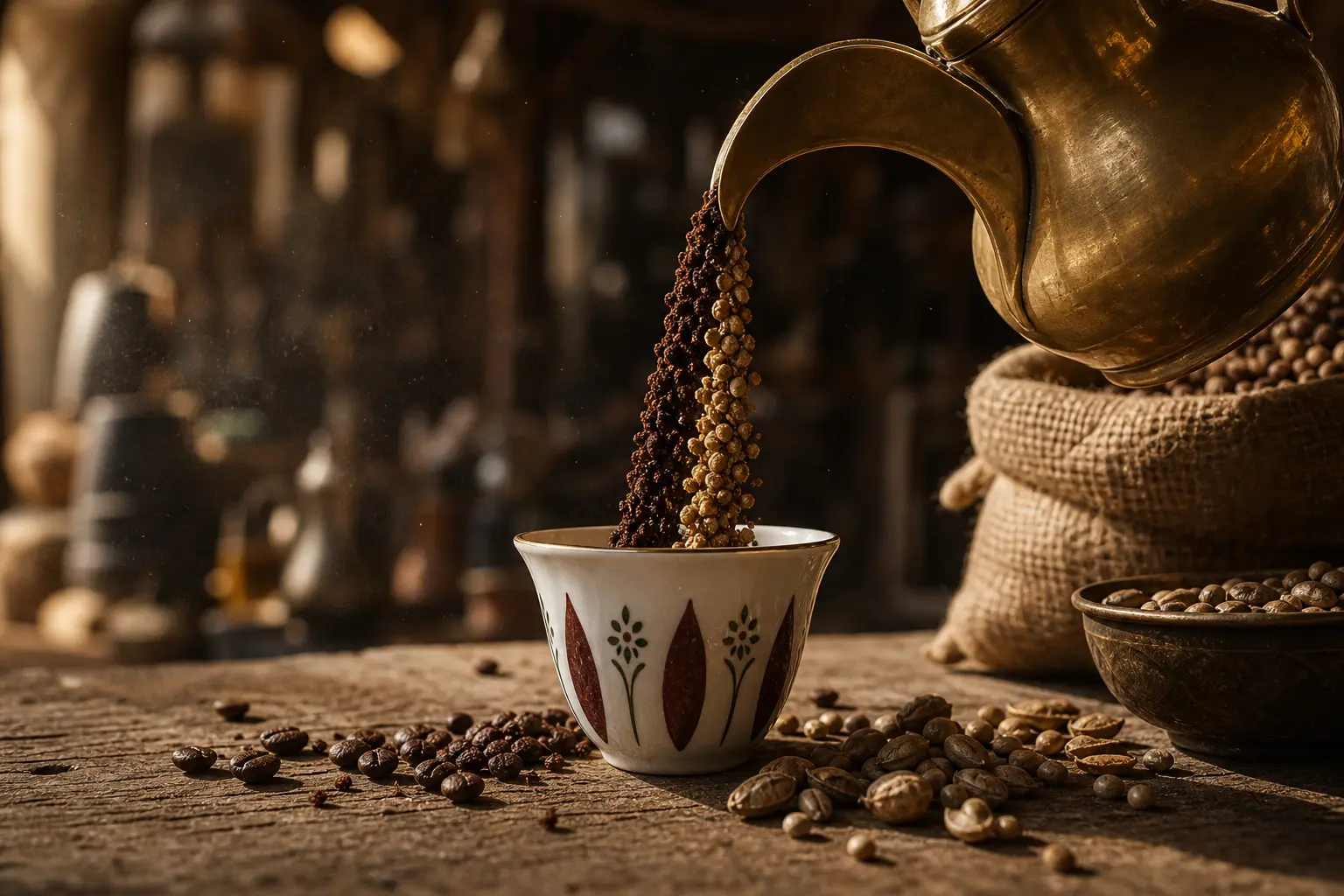
Why Did Coffee Get So Expensive in Egypt?
Egypt’s coffee import bill hit $89 million in the first quarter of 2026 even as the volume of beans coming into the country fell, a sign that price rather than demand is driving the number. A global supply shock and a fast-growing domestic habit have combined to make real coffee harder to source without paying up.
Global production in major growing countries had fallen by as much as 33 percent, Voice of Emirates News Agency reported in April, pointing to climate stress in Brazil, Vietnam and Colombia just as global demand kept rising. Egypt’s own green coffee import price had actually eased to $4,290 a ton in 2024, down from a 2022 peak of $5,109 a ton, before this year’s fresh shock pushed costs back up.
That squeeze lands on a market that has grown far faster than most outside estimates assume.
Nobody Quite Agrees on How Much Coffee Egypt Drinks
Pin down the actual size of that habit, and the sources stop agreeing with each other.
- The Cairo Chamber of Commerce puts current annual consumption at roughly 80,000 tons, up from 6,000 tons in 2004.
- A market report citing United Nations food agency data puts Egypt’s total coffee consumption at 63,000 tons in 2023, a 10.5 percent jump from the year before.
Both describe the same country in roughly the same period, and neither is close to the other. A market nobody can size accurately is also a market that is hard to police, and Egypt’s coffee retail scene has expanded fast enough to make that job harder every year.
| Metric | Figure | Detail |
|---|---|---|
| Combined coffee market revenue, 2024 | $0.85 billion | At-home and out-of-home sales combined, per Statista |
| Coffee shops in Cairo Governorate | 7,308 | Counted as of February 2026 |
| Coffee roasters based in Cairo | 107 | Plus roughly 61 in Giza and 33 in Alexandria |
| Raw coffee bean market value | $330 million | Projected to reach $395 million by 2032 |
More counters pouring cups means more places for a cheap-filler scheme to hide, and it is part of why a specialty coffee boom that is also reshaping coffee habits next door in Jordan has outrun the inspectors meant to check it in Egypt.
Even Upscale Cafes Turn Up in the Fraud
Al-Sheik named high-end cafes specifically among the offenders, alongside cheaper stalls and budget brands. All of it, he said, is aimed at protecting margins as import costs climbed.
Licensed roasters who pay full price for imported beans are competing against operations that need little more than a bag of date pits, a roaster and a label printer. That cost gap is what lets a counterfeit product undercut an honest one and still turn a profit.
The squeeze is landing on households already stretched thin. Cairo families have also absorbed a sharp rise in fuel costs this year, adding pressure to the same budgets now paying more for a daily cup that, four times in five, might not be entirely real.
What’s Being Used to Fake a Cup of Coffee?
Investigators in Faiyoum found roasted, ground date pits and peas mixed with small amounts of real coffee and dark chocolate, then sold under counterfeit brand names at a fraction of the cost of imported beans. No single home test catches every version of the fraud, but the shoppers who first raised the alarm pointed to a consistent set of warning signs.
- Aroma: a flat, dusty smell rather than the deep, oily richness of freshly roasted beans
- Color and texture: grounds that look grayer or grittier than usual, or clump together strangely
- Taste: a hollow, overly bitter cup missing the acidity a real roast should carry
- Price: a familiar brand selling unusually cheap, or loose coffee sold with no proper labeling at all
Together, those signs are the same pattern Egyptian shoppers described online for months before the Faiyoum raid confirmed it.
Egypt Has Cracked Down on Fake Coffee Before
This is not the first time regulators have found Egypt’s coffee supply compromised.
- 2022: Coffee and tea prices jump 17 to 18 percent as the Central Bank of Egypt tightens import rules, sparking fears of a looming shortage that a Cairo Chamber of Commerce division later calls overblown.
- 2023: Police shut a North Cairo workshop producing counterfeit Nescafe, seizing five million fake packs and three tonnes of raw material, alongside a since-debunked rumor that the packs contained ceramic powder.
- 2026: A raid in Faiyoum uncovers nearly two tons of roasted date pits and peas packaged as ground coffee, prompting the Cairo Chamber of Commerce to put a number on the fraud for the first time.
In 2022 and again in 2023, complaints about coffee and tea reached social media months before officials confirmed anything was wrong. That pattern repeated itself once more this year.
Rules Exist, but Enforcement Lags Behind
Egypt’s food-fraud rules are not toothless on paper. Adulterating food meant for human consumption already carries criminal penalties, and a single national authority is supposed to police the entire chain from factory to shop shelf.
Parliament established the National Food Safety Authority (NFSA) in 2017, and it began operating in January 2018 after absorbing 17 separate food-related agencies into one body. “We currently have 58 branches, plus 18 at border towns across Egypt,” NFSA chairman Tarek El Houby has said of the authority’s inspection network, which also issues the certificates exporters need to sell Egyptian food abroad.
Al-Sheik’s own prescription was blunt: shut the unlicensed backyard factories and enforce the rules that already exist. Demand for cheap coffee keeps climbing, and the price gap that rewards cutting it with peas and date pits shows no sign of closing on its own.
Frequently Asked Questions
What penalties do fake coffee producers face in Egypt?
Under Egypt’s Fraud Prevention Law, adulterating food for human consumption carries a prison term of one to five years and a fine of 10,000 to 30,000 Egyptian pounds. If the tainted product is proven harmful to health, the range rises to two to seven years in detention, with fines climbing to between 20,000 and 40,000 Egyptian pounds.
How can shoppers spot adulterated coffee?
There is no foolproof home test, but the clearest signals are the ones consumers themselves flagged months before the Faiyoum raid: coffee that smells flat, looks grayer or grittier than usual, tastes hollow or overly bitter, or is priced well below what real imported beans should cost.
Was the 2023 fake Nescafe case the same kind of fraud?
It involved counterfeit branding rather than confirmed date-pit filler, though the underlying pattern of unlicensed production feeding demand for cheap coffee was similar. That case also briefly reached Egypt’s parliament after a rumor spread that the fake packs contained ceramic powder, before a Ministry of Supply official confirmed the real issue was trademark counterfeiting.
What Powers Does the National Food Safety Authority Have?
Beyond inspecting factories and shop shelves, the NFSA sets mandatory labeling rules and issues the validity certificates that exporters need before selling Egyptian food products abroad. It also has the power to order unfit food off the market entirely, the tool Al-Sheik is now asking regulators to use against unlicensed coffee operations.
