
Iran prepared strikes on three sites inside Ukraine then called them off after what a senior adviser called a Kyiv apology for hitting an Iranian vessel in the Caspian Sea, state broadcaster PressTV reported. The claim by Mohsen Rezaei has not been independently verified, and Ukraine describes the same phone call in sharply different terms.
The July 25 strike killed one Iranian sailor. Both capitals now walk away with a story they can sell at home while the arms corridor and their larger wars stay in play.
Rezaei’s Unverified Strike Plans
Mohsen Rezaei, a major general and longtime figure in Iran’s security establishment now serving as a military adviser in the leadership circle, told PressTV the armed forces had finished preparations. “We were set to strike three sites in Ukraine, but canceled the attack following Ukraine’s apology,” he said.
We had prepared to strike three different locations in Ukraine, but after they publicly apologized for striking our vessel, we decided not to escalate
An IRGC-linked account carried a slightly different cut of the same remarks: the response was suspended after Ukraine “claimed the attack was a mistake,” and Iran still expects a price to be paid. Rezaei offered no coordinates, no timeline, and no evidence that launch orders had ever been signed. Analysts noted Iran fields ballistic missiles with the theoretical range to reach Ukrainian territory, yet no public confirmation exists that any unit moved.
What Ukraine Said on the Call
On July 28 Ukrainian Foreign Minister Andrii Sybiha posted that he had held a frank conversation with Iranian counterpart Abbas Araghchi. He stressed Kyiv wanted no unnecessary escalation. All Ukrainian actions aimed solely at defending the country from Russian aggression and were never intended to target civilian vessels or people.
- Russia bears full responsibility for provocations and casualties caused by its war.
- Iran should refrain from escalatory steps and end support for the invasion.
- Europe and the Middle East both deserve stability, security and peace.
Sybiha’s language contains no apology and no offer of compensation. Some Iranian and allied accounts later claimed Kyiv accepted the strike as an “operational error” and agreed to pay damages. Those details do not appear in the Ukrainian foreign minister’s own words.
The Ana and the Conflicting Cargo Story
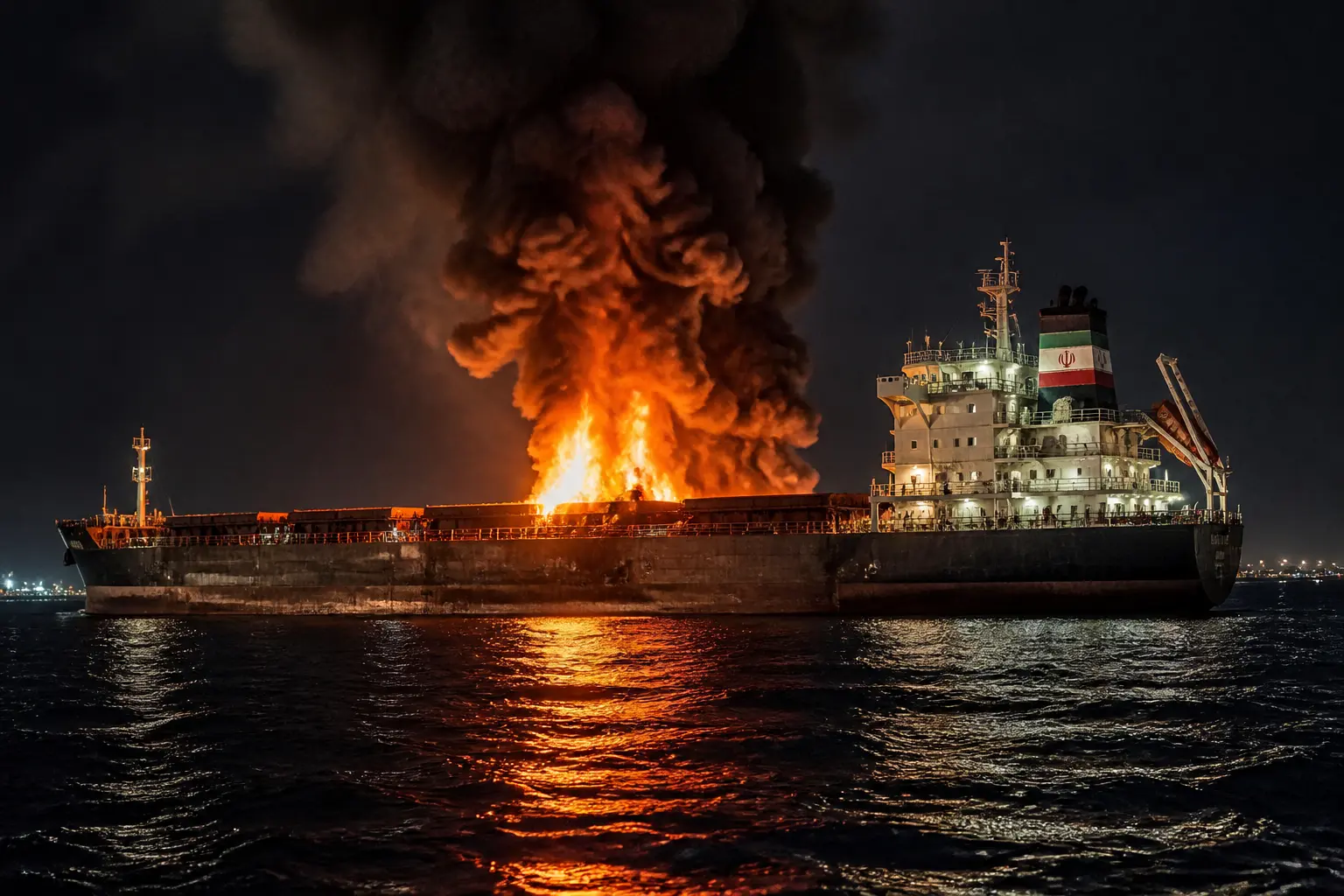
The vessel was the Iran-owned dry cargo ship Ana, struck near the mouth of the Volga by Astrakhan in the early hours of July 25. Iran’s foreign ministry said the explosion left one sailor killed and another injured. Russian Foreign Minister Sergey Lavrov called the cargo civilian and offered condolences. Ukrainian officials, including President Volodymyr Zelensky, said the targets were a Russian warship and vessels moving Iranian-linked military cargo.
| Account | Vessel Status | Cargo Claim | Casualties |
|---|---|---|---|
| Iran / Russia | Commercial Iranian ship Ana out of Astrakhan | Civilian / iron goods | 1 killed, 1-3 wounded |
| Ukraine | Military-linked transport in Caspian corridor | Drone and missile components for Russia | Same strike package hit multiple vessels |
Tehran summoned Ukraine’s chargé d’affaires and labeled the attack a hostile criminal act that violated the UN Charter. Araghchi separately accused Israel of provoking the hit to drag Europe into its war with Iran, a charge offered without evidence. Earlier coverage on this site noted how Iran blamed Israel after the Caspian strike while still denying any role in Russia’s war.
Why the Caspian Corridor Still Matters
The Caspian has become a quiet but vital supply route for Iranian weapons systems reaching Russian forces. Ukraine has hit it before. In February drones struck a Russian warship and sanctioned freighters used to move ammunition and drone parts. The Ana strike stood out because it killed an Iranian national and flew an Iranian flag.
Key numbers that frame the stakes:
- Thousands of Iranian-designed Shahed drones have been launched at Ukrainian cities since 2022.
- 1,700-plus explosive drones supplied early in the war, per Ukrainian intelligence estimates at the time.
- Up to 3,000 Shahed-type systems shipped in total according to some Western tallies, with Russia now producing variants at scale.
Kyiv treats those shipments as legitimate military targets. The same long-range campaign that reached the Caspian also produced a long-range hit on a Siberian oil refinery more than 2,700 km from the front. Hitting the corridor is both practical interdiction and a message that Iran’s support carries costs.
How Two Capitals Spin the Same Phone Call
Tehran needs a public win that looks like deterrence without opening a new front. It is already managing a grinding conflict with Israel and the United States that has seen missile exchanges, a temporary Hormuz squeeze, and repeated pauses. A direct strike on Ukraine would risk NATO reaction, European unity against Iran, and fresh pressure on the very ceasefire talks Araghchi has been trying to keep alive.
Kyiv needs the corridor closed or at least disrupted while avoiding a wider Middle East entanglement it cannot control. Calling the conversation frank rather than apologetic keeps domestic and Western audiences from hearing any concession. On X, Ukrainian users greeted Rezaei’s version with open skepticism. One widely circulated reply simply read “Be honest” under the Iranian claim. Crowd reaction treated the whole episode as classic face-saving theater.
Both versions can be true at once: Ukraine said it never meant to hit civilians, Iran chose to hear an apology, and neither side wanted the next ladder rung.
Rezaei’s Weight and the Credibility Gap
Rezaei commanded the IRGC from 1981 to 1997 through the Iran-Iraq War. He later sat on the Expediency Discernment Council, served as vice president for economic affairs under Ebrahim Raisi, and has been brought back as a military adviser, according to Iranian state media, at a moment of high regional tension. His words carry institutional memory and hard-line credibility inside the system.
- 1981-1997: IRGC commander-in-chief.
- 1997-2021: Secretary of the Expediency Discernment Council.
- 2021-2023: Vice president for economic affairs.
- 2026: Military adviser role in the current leadership structure, public voice on the Ukraine claim.
That résumé does not turn an unverified PressTV clip into confirmed operational fact. No satellite imagery, no intercepted orders, and no second Iranian official has publicly filled in the three target sites. The gap leaves room for the claim to function mainly as domestic signaling: we were ready, we chose restraint, the other side blinked.
Dual Wars Keep the Corridor Open Anyway
Iran’s decision calculus sits inside two overlapping conflicts. On one side it faces Israeli and U.S. pressure that has already produced nights of strikes, interceptions of Iranian missiles aimed at a Jordan base, and hard bargaining over Hormuz. On the other it supplies Russia with drones and components that free Russian industry for other munitions. Opening a third direct front with Ukraine would complicate both.
Ukraine, for its part, has already inserted itself into the Middle East theater by sharing interceptor expertise against Shahed drones. That cooperation gives Kyiv goodwill with Gulf states and a stake in seeing Iranian power checked. The Caspian hit was consistent with that wider posture.
So the “canceled strikes” announcement lands as theater that freezes the status quo. Iran can claim it forced an apology and showed mercy. Ukraine can claim it never apologized and will keep hitting military cargo. The Ana still burned. The sailor is still dead. And the next freighter that loads drone parts in the Caspian will still have to calculate the risk of Ukrainian drones.
That is the ironic core of the episode. A phone call both sides describe differently became the public reason a strike that may never have been fully locked was called off. The arms route survives. The multi-front pressures remain. And the next claim of restraint or apology will be measured against the same thin evidence.
