
Egypt beat Australia 4-2 on penalties in Dallas on Friday to reach the World Cup round of 16 for the first time in the country’s history. Mohamed Salah, playing through a hamstring strain he picked up in the group stage, dinked a Panenka down the middle to seal the shootout after a 1-1 draw through extra time. His teammate Mohamed Hany, in the same match, became the first player since 1966 to score two own goals at a single World Cup.
Emam Ashour’s first-half header put Egypt ahead at Dallas Stadium, and Hany’s second-half own goal pulled Australia level. Neither side broke the deadlock across 120 draining minutes in Texas, with Omar Marmoush missing a golden chance early in extra time for the Pharaohs. Hossam Abdelmaguid, an Egyptian defender, converted his country’s fourth penalty of the shootout after Harry Souttar sent his opening kick over the bar and Lucas Herrington struck the crossbar. Egypt, the fifth African nation to advance past a World Cup knockout round, now faces defending champion Argentina on Tuesday in Atlanta.
How Egypt Broke Through in Dallas
Emam Ashour’s clever header gave the Pharaohs the lead inside the first 45 minutes, looping over Australia goalkeeper Mat Ryan after a delivery from the right. The Australians, who hadn’t scored in open play since their opening 2-0 win over Türkiye, needed a slice of misfortune to find the net. It came in the second half when Egypt defender Mohamed Hany turned a cross into his own net.
Hossam Hassan’s side had further chances to settle the match in regulation. Omar Marmoush, who came off the bench against Iran in the group stage, missed a golden opportunity early in extra time to make it 2-0. Neither side broke the stalemate across 120 draining minutes in the Texas heat, setting up a shootout that Egypt’s veteran core had been waiting their careers to contest.
Tony Popovic’s Australia, hunting a first knockout-stage win of their own, sent out their penalty takers in front of Egyptian fans who had travelled in their thousands. The Pharaohs’ experienced captain stepped up to deliver the night’s defining moment.
The penalty sequence went Egypt’s way after Souttar and Herrington both missed. Salah’s chipped finish down the middle, with Ryan already committed to his dive, was the visual centrepiece of the shootout. Abdelmaguid then converted his spot-kick to seal Egypt’s progression. The key moments of the shootout:
- Harry Souttar sent Australia’s opening penalty over the bar.
- Mohamed Salah dinked a Panenka penalty straight down the middle.
- Lucas Herrington struck his penalty against the crossbar.
- Hossam Abdelmaguid converted Egypt’s fourth penalty to seal a 4-2 on penalties win.
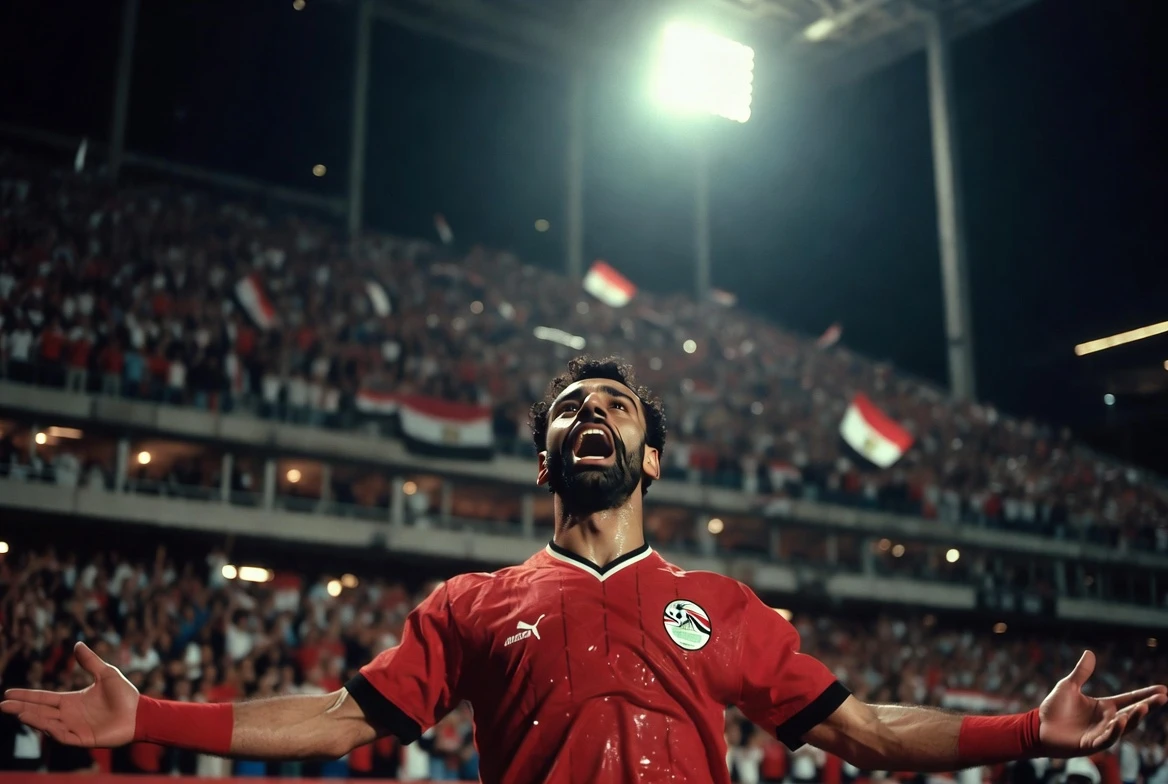
Salah’s Panenka on a Strained Hamstring
Salah had been an injury doubt for the entire build-up. The 34-year-old, who scored in Egypt’s 3-1 group-stage win over New Zealand and provided two assists at the finals, went off in the 57th minute of the 1-1 draw against Iran with a hamstring strain. Scans confirmed the strain, but Hossam Hassan named his captain in the starting lineup after the forward passed a match-morning fitness test in Dallas.
Salah played the full 120 minutes on the damaged muscle, often visibly struggling for pace. He still delivered the decisive contribution in the shootout, with the score at 1-1 after Souttar’s miss. The Egyptian captain produced an exaggerated run-up that induced Ryan to commit to his dive, then dinked the ball calmly down the middle. The finish completed a sequence that ended Australia’s hopes of a first knockout-stage win of their own.
“If somebody was going to do it, it would be me,” Salah told reporters in the mixed zone. “I am more experienced than others, and I wanted to give them confidence. I decided [in the] last minute, I don’t know if it’s my last World Cup or not, but I had to do it.” The forward, who is now a free agent after leaving Liverpool, also revealed he had used the pre-match team talk to urge his younger teammates to embrace the occasion rather than feel the weight of it. Former Aston Villa and Egypt right back Ahmed Elmohamady, speaking on beIN Sports, said Salah “deserves a statue” for his performance and called his contribution extraordinary.
It’s history. I told the guys before the game that this is the biggest stage you can play on, so enjoy it, and don’t let the pressure get to you. I’m glad that we managed to win the game. Bad luck for them, they lost on penalties. But I’m happy that we wrote history today.
Mohamed Hany’s Unwanted Place in the Record Books
The same night handed Egypt defender Mohamed Hany an entry in the World Cup record books he would rather not hold. His second-half own goal, turning a cross into his own net to cancel out Ashour’s opener, made him the first player since 1966 to score two own goals at a single World Cup.
His earlier own goal had come in the group stage against Belgium, making the Australia intervention his second of the tournament. The Australian perspective on the match, captured in a report from Arlington, Texas, noted that Australia’s equalising goal, rather than a clean Australian strike, summed up a night when the Socceroos struggled to find the net in open play. The team hadn’t scored in open play since their 2-0 win over Türkiye in the group opener.
Egypt coach Hossam Hassan was quick to defend his player. The coach dismissed the own goal as bad luck. He called Hany one of the best players at the tournament, pointing to the defender’s consistent performances since the Africa Cup of Nations. Hassan added that mistakes can happen in football but Hany had also saved Egypt in several defensive situations earlier in the competition.
Hany has been one of the Pharaohs’ most consistent defenders since the Africa Cup of Nations and made several important defensive interventions at this World Cup before his two own goals. Coach Hassan defended him publicly after the match, focusing on the result and his overall contribution rather than the milestone.
The Goals and Cameos Behind Egypt’s Historic Night
Ashour’s opener was his second goal at this tournament, according to beIN Sports analyst Mohamed Aboutrika. Aboutrika said the midfielder has played on the right wing, the left wing, in central midfield, and alongside Marwan Attia during the World Cup, excelling at each position. His headed finish against Australia capped another industrious performance in Hossam Hassan’s midfield.
Mahmoud Saber was introduced at the end of extra time and never touched the ball in open play. His only contribution of the night was his country’s first penalty of the shootout, which he converted cleanly. Egypt’s coaching staff had brought Saber on specifically to take a spot-kick, a pre-planned substitution that paid off. The opening conversion set the tone for an Egypt team that converted all four of its spot-kicks.
Egypt forward Haissem Hassan made his first appearance of the tournament after replacing Mostafa Zico in the second half, having been linked with a move away from the camp earlier over a lack of game time. The forward energised Egypt’s attack and combined well with Ashour, Salah, and Omar Marmoush. Aboutrika said the cameo showed Hassan had lost none of his sharpness despite the limited minutes.
Egypt Joins Africa’s Knockout Elite
Egypt’s progression makes the Pharaohs the fifth African nation to advance past a World Cup knockout round, joining Cameroon, Senegal, Ghana, and Morocco. It is Egypt’s first knockout-stage victory at the World Cup, a tournament the country first qualified for back in 1934. The list of African nations to win a knockout match at a men’s World Cup now reads:
- Cameroon (1990)
- Senegal (2002)
- Ghana (2010)
- Morocco (2022)
- Egypt (2026)
Cameroon’s 1990 win over defending champion Argentina was the first of the previous African knockout victories. Egypt’s progression now adds a fifth name to a list that had been unchanged since 2022.
Argentina Awaits in Atlanta
Egypt will face defending champion Argentina on Tuesday at the Mercedes-Benz Stadium in Atlanta, with kick-off scheduled for 12pm ET. The round-of-16 tie comes after Egypt finished second in Group G behind Belgium, having gone unbeaten through their group-stage campaign.
Argentina, the 2022 World Cup winners, advanced as Group H winners. Lionel Messi, who has publicly suggested this could be his final World Cup, remains the central figure for Lionel Scaloni’s side. Enzo Fernández and Julián Álvarez, both goalscorers in the 2022 final, are also in the squad.
Salah was asked after the Australia win which player he would most like to face among those playing their likely final World Cups. The list included Messi, Cristiano Ronaldo, Harry Kane, and Neymar. The Egyptian captain named Messi without hesitation. His wish has now been granted.
Frequently Asked Questions
When does Egypt play next?
Egypt faces defending champion Argentina at the Mercedes-Benz Stadium in Atlanta on Tuesday, July 7, in a World Cup round-of-16 match scheduled for 12pm ET.
What record did Mohamed Hany set at this World Cup?
The defender became the first player in 60 years to put through his own net twice at one men’s World Cup, conceding own goals against Belgium in the group stage and Australia in the round of 32.
Who took Egypt’s winning penalty against Australia?
Hossam Abdelmaguid, an Egyptian defender, converted Egypt’s fourth penalty of the shootout to clinch the 4-2 result after Harry Souttar and Lucas Herrington missed for Australia.
How many African nations have now won a World Cup knockout match?
Egypt became the fifth African nation to win a knockout match at a men’s World Cup, a milestone achieved previously by Cameroon, Senegal, Ghana, and Morocco.
Why did Australia substitute their goalkeeper before the penalty shootout?
Coach Tony Popovic replaced starting keeper Patrick Beach with Mat Ryan for the shootout, a decision that surprised both goalkeepers, neither of whom had been told of the plan beforehand.
