
Australia face Egypt at Dallas Stadium on Saturday (4am AEST) in the World Cup Round of 32, chasing a first ever knockout win at a men’s World Cup. The Socceroos have made the knockout rounds only twice before, in 2006 and 2022, and lost both times to the team that lifted the trophy. No one thinks Egypt will be the team lifting the trophy in New Jersey on 20 July, which is exactly why coach Tony Popovic has spent the week framing this as a window his young squad can walk through.
Popovic has talked openly about delivering now rather than in 2029 or 2030, naming the youngest average XI so far at this tournament. Egypt arrive unbeaten in three Group G matches with a phalanx of red-clad fans and one nagging question. Mohamed Salah came off in the 57th minute of their final group match against Iran with his left leg heavily strapped, and whether he starts in Dallas is the subplot the entire Australian camp has been watching.
How Australia Got Here
Australia finished second in Group D with four points, advancing behind the United States (six) and level on points with Paraguay, who progressed as one of the eight best third-placed teams. Turkey finished last with three. The Socceroos opened with a 2-0 win over Turkey at BC Place in Vancouver, lost 2-0 to the United States in Seattle, and then played out a drab 0-0 draw against Paraguay at San Francisco Bay Area Stadium to seal qualification.
It is the third time Australia have reached the men’s World Cup knockout rounds, after Germany 2006 and Qatar 2022. On both previous occasions they ran into the eventual champion. The expanded 48-team format in 2026 has stretched the field, and it has also made the path longer. A win on Saturday would set up a last-16 meeting against the winner of England v Cape Verde at Atlanta Stadium on Wednesday 8 July, then a potential quarter-final in Kansas City on Sunday 12 July. The full schedule is laid out in Australia’s full 2026 World Cup schedule and Group D table.
| Pos | Team | P | GD | Pts |
|---|---|---|---|---|
| 1 | USA | 3 | +4 | 6 |
| 2 | Australia | 3 | 0 | 4 |
| 3 | Paraguay | 3 | -2 | 4 |
| 4 | Turkey | 3 | -2 | 3 |
Popovic rolled the dice on two uncapped strikers, including Cristian Volpato, who only just changed his allegiance from Italy to Australia, and the Wellington-born Tete Yengi. Patrick Beach kept his place in goal after the surprise call to start him against Turkey, with veterans Harry Souttar, Maty Ryan, Jackson Irvine and Aziz Behich surviving Popovic’s pre-tournament cull. Kye Rowles, Brandon Borello and Martin Boyle were the notable omissions.
How Egypt Got Here
Egypt finished second in Group G on goal difference, behind Belgium, after a 1-1 draw with Iran in their final match in Seattle. Belgium finished top with a 5-1 demolition of New Zealand in the same window, taking the only goal-difference tiebreaker. Egypt’s three results were a 1-1 opening draw with Belgium, with Emam Ashour scoring in the 19th minute and Mohamed Hany turning into his own net in the 66th, a 3-1 comeback win over New Zealand in Vancouver, and the 1-1 with Iran. They had never previously made it past the group stage at a men’s World Cup, with prior appearances in 1934, 1990 and 2018 ending at the first hurdle. The full Group G picture, including lineups and venues, is mapped at Egypt’s path through Group G at the 2026 World Cup.
Salah scored his 68th international goal against New Zealand, then set up Mostafa Ziko’s equaliser before Trezeguet added a third in the 82nd minute to seal Egypt’s first ever World Cup victory in 92 years of trying. Salah celebrated by pumping his fist before being mobbed by teammates in front of the sellout BC Place crowd, most of them in red. The full match report is in Salah’s goal in Egypt’s first World Cup win.
| Pos | Team | P | W | D | L | GF | GA | GD | Pts |
|---|---|---|---|---|---|---|---|---|---|
| 1 | Belgium | 3 | 1 | 2 | 0 | 6 | 2 | +4 | 5 |
| 2 | Egypt | 3 | 1 | 2 | 0 | 5 | 3 | +2 | 5 |
| 3 | Iran | 3 | 0 | 3 | 0 | 3 | 3 | 0 | 3 |
| 4 | New Zealand | 3 | 0 | 1 | 2 | 4 | 10 | -6 | 1 |
Egypt are unbeaten in three matches and matched Belgium for long stretches in the opener. Their results paper over a tighter story than the table suggests. Belgium were wasteful in the 1-1 draw, the win over New Zealand came from a goal down after Finn Surman’s 15th-minute header, and the Iran match finished with the Iranians having a stoppage-time goal disallowed by VAR. That disallowed strike from Shojae Khalilzadeh would have knocked Egypt out and put Iran through, with Iran instead eliminated as the ninth-best third-placed team.
Hossam Hassan’s side will start as favourites, but their only knockout-stage experience in the modern era is the 1-1 draw they needed a second-half surge to rescue. Salah came off in the 57th minute against Iran with his left leg heavily strapped and was treated on the touchline. His availability for Saturday has been the dominant subplot of Australia’s week, and Hassan’s own update was cautious. “The doctor will write his report when we get back to the hotel and will carry out a second examination,” he said. “I spoke with Salah and, God willing, the injury doesn’t seem serious.”
Two Knockout Exits, Both Against Champions
Australia’s only previous knockout matches came against the eventual world champions in 2006 and 2022. The Socceroos reached the Round of 16 in Germany by finishing above Croatia in their group, then took Italy to the brink of extra time at Fritz Walter Stadion with an extra player on the pitch and two fresh substitutes ready. Fabio Grosso went down in the penalty area in the 95th minute, and Italy scored from the resulting spot kick. Italy went on to lift the trophy in Berlin.
Sixteen years later, in Qatar, Australia needed a penalty shootout win over Peru just to qualify, then won two group games for the first time at a men’s World Cup. The reward was a Round of 16 tie against Argentina, who were on their way to the title. Lionel Messi opened the scoring, Julián Álvarez added a second, and Australia pulled one back through Craig Goodwin. Then came the moment that still lingers. Substitute Garang Kuol, 18 years and 79 days old and the youngest Australian to feature in a knockout World Cup match, pushed a late chance just wide of Emi Martínez. Argentina held on to win 2-1 and went on to lift the trophy in Lusail.
The pattern is uncomfortable and obvious. Both times Australia have earned the right to play an elimination game, they have run into the team that will lift the trophy on the final day. Egypt are not Argentina 2022 or Italy 2006, and no one in Dallas is pretending they are. That is exactly why Popovic’s squad have spent the week talking about staying in the present, not in the ghosts of Kaiserslautern or Lusail. Australia’s knockout story so far:
- 2006, Round of 16: Australia 0-1 Italy at Fritz Walter Stadion, Kaiserslautern. Francesco Totti’s stoppage-time penalty decided a match Australia had pushed to the brink with an extra man.
- 2022, Round of 16: Australia 1-2 Argentina at Ahmad bin Ali Stadium, Al Rayyan. Messi’s opening goal and Álvarez’s second sent Argentina through; Garang Kuol missed a late chance to level.
- 2026, Round of 32: Australia v Egypt, Dallas Stadium, Saturday 4 July (4am AEST). First ever meeting between the two at a World Cup, per How Australia reached the Round of 32 in 2026.
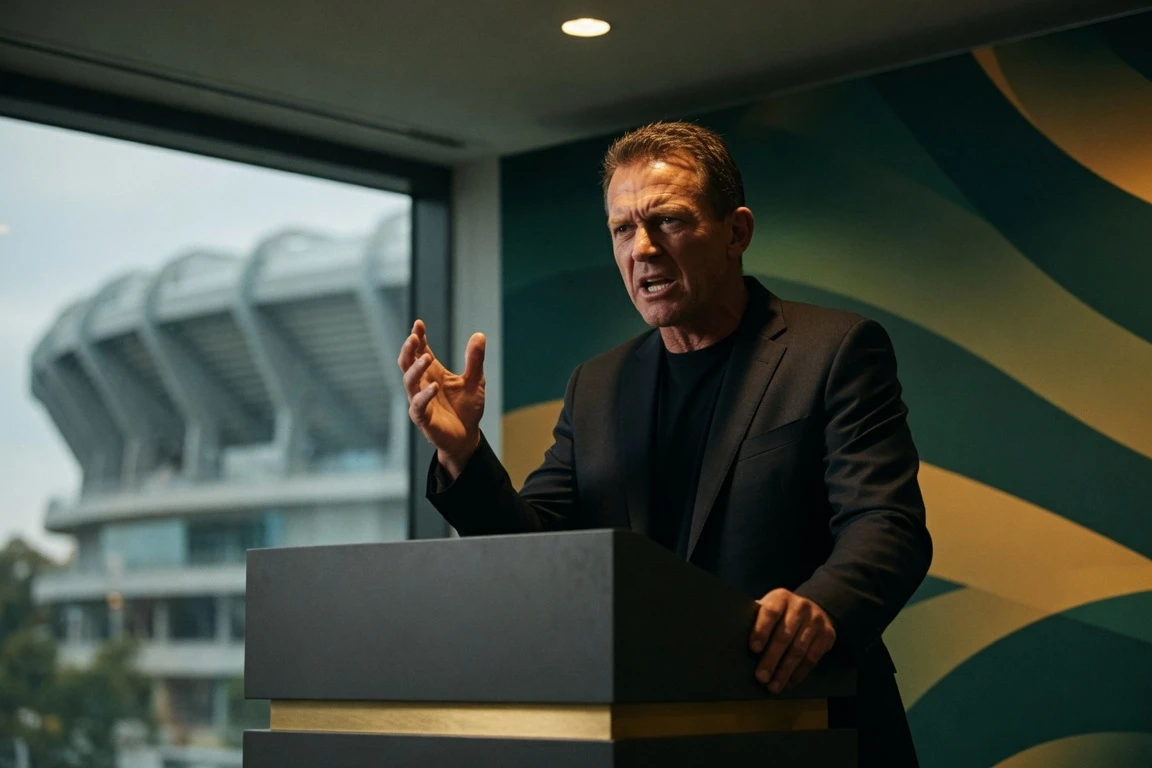
Popovic was a central defender in that 2006 squad and played every minute of the Italy defeat. He has referenced the golden generation repeatedly this week and framed Saturday’s tie as a chance to add to the wall of jerseys and team photos that line the players’ hotel in Dallas. “This group’s already made history,” he said at his eve-of-match press conference. “We have a chance tomorrow to make further history. But this group will already go down in history and, regardless of tomorrow, their team photo will proudly be up on any wall. And in particular will be on mine.” His own previews from Dallas are collected in Socceroos’ World Cup knockout preview from Dallas.
Popovic’s Selection Puzzle
The Socceroos have their own fitness questions. Popovic confirmed on the eve of the match that every player in his 24-player squad is available, with the exceptions of Mathew Leckie and Jacob Italiano, who have left camp. Leckie is heading back to Melbourne after a hamstring injury sustained in the 2-0 loss to the United States. Italiano went home to Austria after being hurt in training. Both had featured in the first two group matches.
The more delicate issue is Mo Touré. The presumed starting striker was not called from the bench in the 0-0 draw with Paraguay, and he has not completed 90 minutes for club or country since November. He was asked in the post-match media zone whether he was OK and nodded. Tete Yengi came on in his place against Paraguay, and Yengi described Egypt this week as “disorganised,” a description Popovic did not echo in his own press conference.
We believe that they’re good enough to deliver now. We’ve shown that already by getting through the group, a very difficult group. And we’ve done that through the quality that these boys have. Tomorrow is another opportunity to not think about the future but to think about now, the present. And I’m sure these boys will deliver once more a very good performance tomorrow.
The right flank is the other live call. A new-look pairing of Jordy Bos and Cristian Volpato impressed against Paraguay, but Popovic has more orthodox options in Jason Geria and Kai Trewin if he wants to tighten up against an Egypt side that will look to Salah on the break. Nestory Irankunda, deployed as a central striker against Paraguay, looked more like the winger he is at English Championship level and may be shifted back out wide.
Volpato, who only just changed his allegiance from Italy, has emerged as one of the stories of the tournament for Australia and is likely to keep his place. Behich, Souttar and Irvine provide the spine, with Aiden O’Neill expected to anchor the midfield alongside Irvine. The bench is thin; Australia can name only a handful of substitutes from a 24-player squad, and any injury to a starter is a real problem. Three of those squad members, including those who lost to Egypt at the Tokyo 2021 Olympics, are profiled in Three Socceroos chasing an Egypt grudge from Tokyo.
On the other side of the ball, Australia’s set-piece quality under Popovic has been a quiet strength throughout qualifying and through the group. Souttar and Cameron Burgess are both aerial threats, and Irvine’s delivery from wide areas has been a consistent source of chances. Egypt’s three group goals came from open play, and they have not been tested by a deliberate, dead-ball-heavy opponent at this tournament. Salah’s return to full training, documented in Salah’s return to training in Spokane, would put that aerial test under even more pressure.
The Matchup That Could Decide It
The single biggest question on Australia’s side is Salah. The Liverpool forward is the only player in this tournament who can turn a half-chance into a goal on his own, and his withdrawal against Iran was the moment that flipped a match Egypt had led. Australia will try to deny him the ball in central areas and force Egypt to beat them through their supporting cast, which has produced exactly one open-play goal across the group stage that did not involve Salah.
Australia’s two previous World Cup exits have come against teams who could do exactly that. Italy in 2006 had the spine to absorb pressure and a winger in Grosso who could produce one decisive moment; Argentina in 2022 had Messi. Egypt have Salah and not much of the rest of that tier. If Australia can keep him quiet for 90 minutes, the raw material of the squad is good enough to win a Round of 32 game. Three matchup keys to watch:
- The Bos-Volpato flank: Australia’s most attacking line against the Egypt right side, where Mohamed Hany has been booked and substituted in both Belgium and Iran matches.
- Souttar at the back post: Egypt’s three group goals all came from wide deliveries, and Australia’s set-piece defending will be tested by Egypt’s most reliable route to goal.
- O’Neill v Elneny (or his deputy): Whoever wins the second-ball battle in midfield will dictate whether Egypt’s counter-attacks or Australia’s transitions get the cleaner platform.
The two sides have never met at a World Cup before, and have met just twice in total. Australia won a President’s Cup match on penalties in 1987 and lost a friendly 3-0 in Cairo in 2010. There is no historical scar tissue to navigate, no grudge to set up the script. Popovic is right that the history gets made after the game, not before it, and Australia have already broken new ground simply by being here. A win on Saturday would send them to Atlanta, where a quarter-final against England or Cape Verde would be the next mountain. “Tomorrow is another opportunity to not think about the future but to think about now, the present,” Popovic said in Dallas. “And I’m sure these boys will deliver once more a very good performance tomorrow.”
