
Likud has asked Israel’s Central Elections Committee to bar citizens from freely hosting or driving fellow Israelis who fly home to vote in October’s election. The party’s legal adviser, attorney Ilan Bombach, told the committee the goal is to stop bribery and undue influence over voters, according to a Channel 12 report first published Tuesday.
The request lands weeks after Likud’s own Transportation Ministry was reported to be weighing limits on the flights those same voters would need just to reach the country.
Likud’s Letter to the Committee
The letter targets one specific practice. Israelis should not be allowed to offer free lodging, rides or other logistical help to citizens flying in to cast a ballot, Bombach wrote, arguing that this kind of support could function as an inducement to vote a particular way.
The letter does not describe how the Election Committee would enforce such a ban or what penalties would apply, and it does not address whether transportation or hosting arranged at market rates would fall under the same rule. Channel 12 reported the letter’s existence on Tuesday, and the committee had issued no public response as of this writing.
Bombach has filed other petitions for Likud with the Central Elections Committee this election cycle, part of a broader pattern of legal maneuvering around the vote. This one arrived one day after Likud wrapped up its own internal leadership vote, held at polling stations in Tel Aviv on July 27.
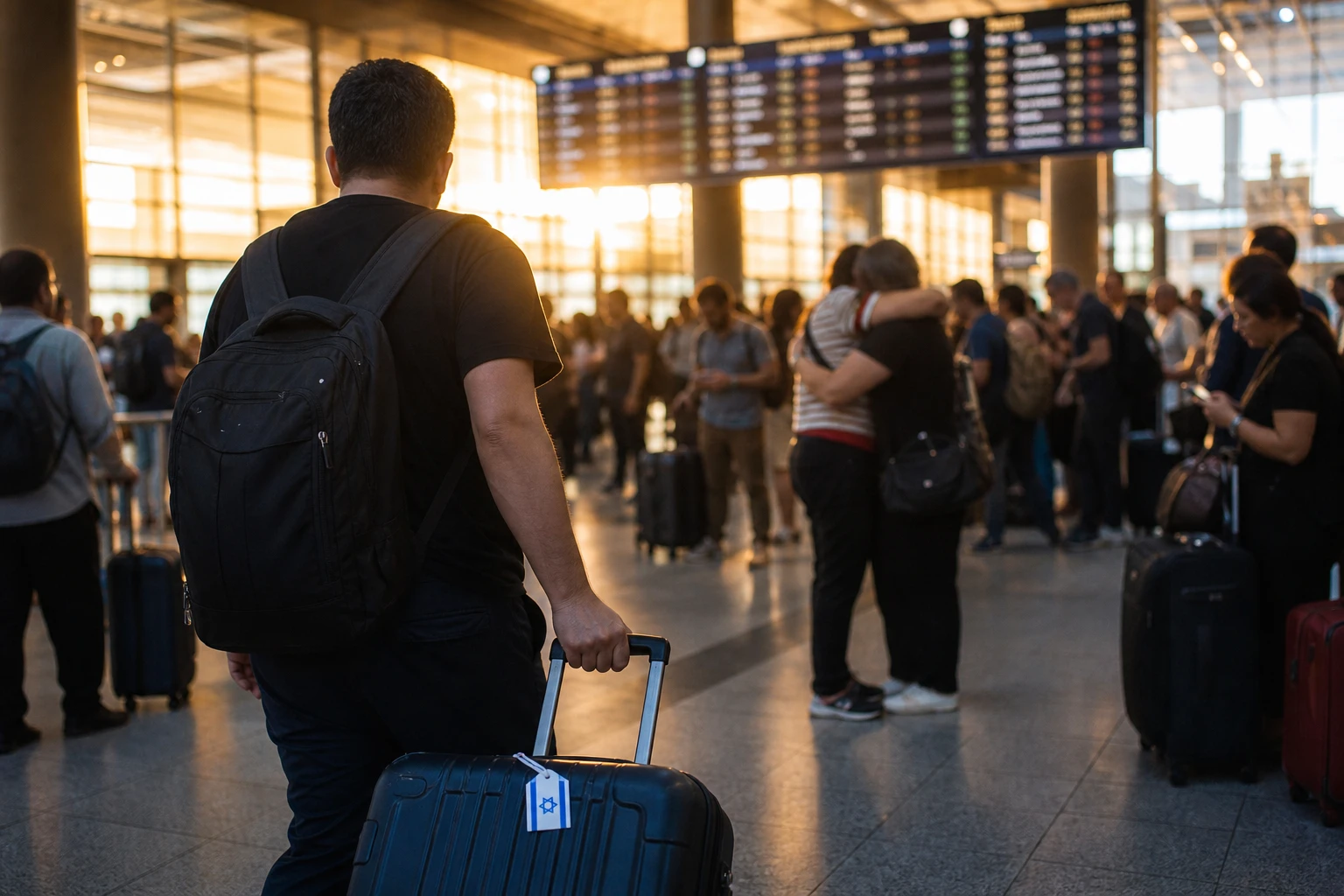
Two Restrictions, One Target
Bombach’s letter is not the only proposal touching the same pool of voters. Earlier in July, Haaretz reported that officials inside the Transportation Ministry, led by Minister Miri Regev, a senior Likud figure, were informally discussing ways to limit flights carrying Israelis home in time to vote.
Haaretz’s sourcing described a ministry worried that incoming voters lean heavily against Prime Minister Benjamin Netanyahu, with Regev’s associates estimating the total could reach the tens of thousands. Ideas reportedly discussed included capping charter flights, limiting total flight volume and restricting landing slots at Israeli airports in the days before the election.
| Measure | Proposed By | Stated Rationale | What It Would Restrict | Status |
|---|---|---|---|---|
| Hosting and logistics ban | Likud (attorney Ilan Bombach) | Prevent bribery and undue influence | Free lodging, rides and logistical help for returning voters | Filed with Election Committee, July 28 |
| Flight limits | Transportation Ministry (Miri Regev) | Not publicly stated; described as informal | Charter flights, total flight volume, airport landing slots | Informal discussion, no decision, per Haaretz |
Neither measure has been formally adopted. Transportation Ministry officials described their flight talks as unofficial, and the conversations have reportedly unsettled career bureaucrats inside the ministry.
The flight question is tangled with a separate, more mundane problem. Ben-Gurion Airport has also faced fears of cancellations tied to the Trump administration’s delayed relocation of US Air Force refueling tankers stationed on the field, giving the ministry a capacity argument distinct from the political one Haaretz described.
Why Are So Many Israelis Racing for Flights?
Because Israeli law leaves most of them no other option. Israel does not allow general absentee voting. Beyond a narrow group of diplomats and state employees posted overseas, citizens must be physically present at a polling station inside the country to cast a ballot, however far they live or however short the trip.
The rule turns every election into a logistics problem for Israelis abroad, and this one arrives at an unusually costly moment. Jewish news organizations tracking the exodus reported that a record 70,000 Israelis left the country in 2025 alone, part of an unusual net migration loss.
Ynet called the resulting scramble “the world’s most expensive ballot,” as returning voters booked last-minute seats at inflated fares once the Oct. 27 date was confirmed. The Jewish Telegraphic Agency reported a similar rush on scarce tickets in the days after the Knesset dissolved.
Only a narrow slice of expatriates can skip the trip entirely. The law firm Decker, Pex, Levi notes that only diplomats and certain state employees posted abroad may cast a ballot without returning, while students, business travelers and ordinary emigrants cannot. A legal review published by the US Library of Congress documents the underlying residency rule requiring a voter’s physical presence inside the country.
A Billboard in Cyprus
The contest for these votes is not confined to Israel. Gadi Eisenkot leads an opposition bloc in the race. He is a former chief of staff of Israel’s military, and this month his campaign put up billboards targeting Israelis vacationing in Cyprus, a popular summer destination for Israeli tourists.
Had fun? Now come back and win.
The slogan ran on roadside billboards aimed squarely at vacationing Israelis, according to Ynet and the Times of Israel, and reportedly irritated some local Cypriot residents. A poll cited by the Times of Israel put Eisenkot’s bloc at a narrow 61 seats, the bare majority in Israel’s 120-seat Knesset.
The Coalition Collapse That Set the Date
The election exists only because the governing coalition fell apart. The 25th Knesset dissolved in mid-July after United Torah Judaism moved to trigger early elections, following the coalition’s failure to pass a law enshrining the military-service exemption for Haredi yeshiva students.
It was the first time since 1988 that a Knesset had completed its full four-year term before facing voters. Lawmakers set the election for Oct. 27.
The dispute over hosting and flights builds on a chronology that stretches back to that collapse:
- Mid-July: The Knesset dissolves after the coalition fails to pass the Haredi draft exemption law, completing Israel’s first full four-year term since 1988; Oct. 27 is set as election day.
- Later in July: Haaretz reports that Transportation Ministry officials under Miri Regev are informally discussing limits on flights carrying Israelis home to vote.
- Following days: MK Efrat Rayten writes to Regev, threatening an immediate High Court of Justice petition against any flight restriction that lacks a safety basis.
- Late July: The Association for Civil Rights in Israel appeals to four senior officials, demanding guarantees that citizens can enter the country to vote.
- July 28: Likud legal adviser Ilan Bombach asks the Central Elections Committee to ban free hosting and logistical support for returning voters, according to Channel 12.
Each development built on the one before it, and the Election Committee now has two separate requests to sort through before Oct. 27.
The Pushback Begins
Efrat Rayten represents the opposition Democrats party in the Knesset. She had just secured fourth place on the party’s list, after a primary that drew 86% turnout, when she wrote directly to Regev. Any flight restriction lacking a clear safety or security basis, she warned, would trigger an immediate petition to the High Court of Justice.
Noam Sohlberg is the Supreme Court justice who chairs the Central Elections Committee. He has spent much of this year on a bench that fended off a judicial overhaul that drew protests and US concern, and Rayten’s threat points the court back into an election fight less than three months before voters go to the polls.
The Association for Civil Rights in Israel followed with its own appeal, addressed to four officials:
- Justice Noam Sohlberg – chairman of the Central Elections Committee
- Attorney Din Livne – acting director-general of the Central Elections Committee
- Miri Regev – Transportation Minister
- Gali Baharav-Miara – Attorney General
The organization argued that the right to vote is a constitutional right and that the state must let every citizen who wants to vote enter the country without obstruction. Its letter asked officials to guarantee entry close to the election date itself.
The Committee Has Not Ruled
As of publication, the Central Elections Committee has not ruled on Bombach’s request, and the Transportation Ministry has announced no formal flight policy. Both remain informal proposals rather than binding rules.
The election proceeds on schedule regardless. Israelis abroad who want a vote in the Oct. 27 result are still booking flights. The question of how easily they can get here, and who is allowed to help them once they land, now sits with the same justice who will oversee the count.
Frequently Asked Questions
Can Israeli Citizens Vote Without Flying Home?
Only in narrow cases. Israeli law exempts diplomats and certain state employees stationed abroad from the requirement to vote in person. Students, business travelers and ordinary emigrants must be physically present at a polling station inside Israel; no absentee or mail ballot exists for them.
What Exactly Would Likud’s Proposed Ban Prohibit?
Based on Bombach’s letter, the ban would target free lodging, rides and other logistical help given to citizens flying home to vote. The letter does not specify penalties or how the Election Committee would enforce the rule, and no decision has been made.
Could Courts Get Involved Before the Election?
Possibly. MK Efrat Rayten has already threatened to petition the High Court of Justice over any flight restriction that lacks a safety basis, and the Central Elections Committee is itself chaired by a sitting Supreme Court justice, giving the judiciary two separate paths into the dispute.
Why Are So Many Israelis Abroad Trying to Fly Home for This Election?
Three factors converge: Israel’s ban on general absentee voting, a record 70,000 residents who left the country in 2025, and a race close enough that one poll put an opposition bloc at just 61 seats, the bare majority in a 120-seat Knesset.
