
Qatari mediators traveled to Tehran on Sunday to finalize a US-Iran peace deal that would reopen the Strait of Hormuz, extend a fragile ceasefire for 60 days, and postpone the most contentious fight over Iran’s nuclear program. President Donald Trump and Pakistani Prime Minister Shehbaz Sharif said the agreement would be signed electronically the same day, while Iran’s foreign ministry said it could happen “in the coming days.” Regional officials who spoke on condition of anonymity told the dispatch on Qatari mediators flying to Tehran they were cautiously optimistic the deal would end a war that has reshuffled global energy markets and killed thousands.
The agreement would be a formal end to a conflict that began with US and Israeli strikes on Iran on February 28 and has since redrawn the map of Middle East diplomacy. It would also, in its current form, leave every load-bearing question about Iran’s nuclear program for the 60 days that follow.
What the Memorandum Says
The text in circulation is a memorandum of understanding, not a final peace treaty. The framework, described to reporters by a regional source, a diplomat familiar with the text, and a US official, lays out a sequence of moves meant to be reversible if the next 60 days collapse. The deal’s terms, as drafted, set a sequence of steps with no irreversible commitments on either side.
- Strait of Hormuz: Reopened “immediately” without tolls, with prewar shipping restored within about 30 days as Iran removes mines it laid during the conflict.
- US blockade: Lifted “in proportion to the restoration of commercial shipping” through the strait, with a parallel US waiver allowing Iran to sell oil freely.
- Ceasefire: The current truce, which both sides have openly violated in the past week, is extended by 60 days as a working window.
- Nuclear program: Deferred. The MOU reportedly commits Iran not to work toward a nuclear weapon and opens talks on its stock of highly enriched uranium, but sets no binding commitments.
- Sanctions and frozen funds: The MOU opens a process to discuss unfreezing Iranian assets overseas; US officials have said no money will move upfront.
- Lebanon: A separate ceasefire between Israel and Hezbollah is described as a condition, not a clause the US-Iran text itself enforces.
Iran’s Foreign Minister Abbas Araghchi has already begun to publicly contest the framework’s interpretation. He told Iranian state media that Iran “would maintain control” of the Strait of Hormuz and charge “service fees” for vessels, a position that contradicts the no-tolls language in the MOU draft. He also said the deal’s nuclear component, and the lifting of sanctions, would be “finalized in the next stage of negotiations.”
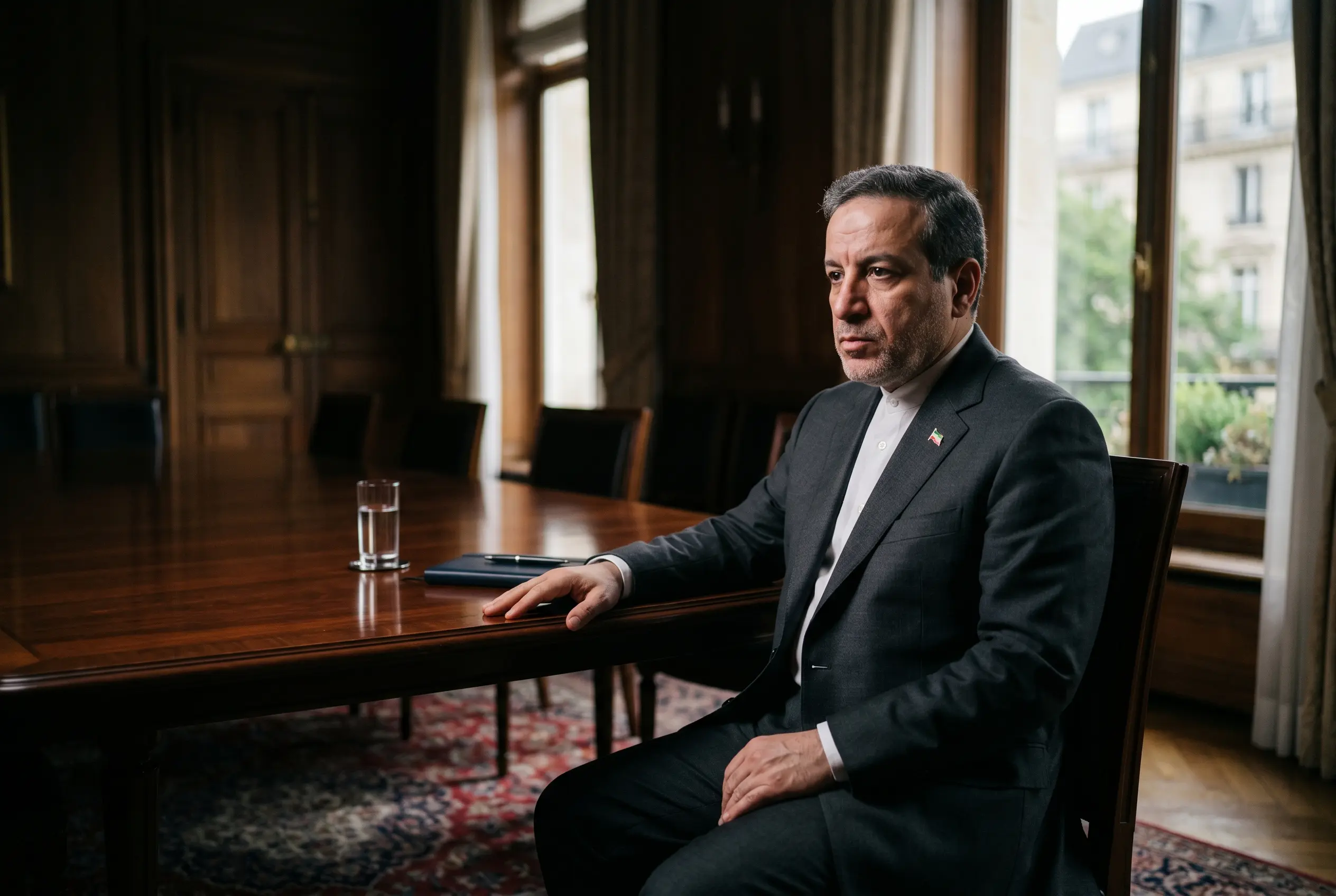
The 60-Day Window on Iran’s Nuclear Program
What the deal defers is the part that started the war. Iran is believed to hold 440.9 kilograms (972 pounds) of uranium enriched up to 60 percent, a level the International Atomic Energy Agency has described as a short, technical step from the 90 percent considered weapons-grade. Much of that stockpile is believed to be buried under three nuclear sites that US strikes badly damaged last year, which is why Trump has said the US would “downblend and destroy” the material in Iran or bring it back to the US “when all is calm.” The 60-day framework for Iran’s nuclear program sets no interim cap on enrichment, and no binding commitment on inspections, that any party has confirmed.
The 60-day window is meant to settle the disposition of that uranium, the fate of Iran’s enrichment program, and the size and sequencing of any sanctions relief. The original ceasefire, announced on April 7, has already been openly tested this week, with US Central Command saying it struck a ground control station in the port city of Bandar Abbas and Iran firing drones at US assets in the Gulf. Both sides have called those strikes defensive.
- February 28: The US and Israel launch large-scale strikes on Iran, beginning the 2026 Iran war.
- April 7: A two-week ceasefire is announced, then extended several times and repeatedly violated.
- May 24: Reports surface that the two sides are nearing a broader memorandum of understanding.
- June 13: Trump and Sharif announce a Sunday signing; Iran’s foreign ministry says the text is not final.
- June 14: Qatari mediators fly to Tehran; Israeli strikes on Beirut kill three and cloud the signing window.
Iran’s position inside that window is hardening in public even as it bends in private. The head of Iran’s negotiating delegation, Mohammed Bagher Ghalibaf, posted on X on Sunday that continued Israeli strikes on Lebanon could end the talks altogether. That message, posted the same day Israeli warplanes hit Beirut’s southern suburbs, sets an explicit precondition the deal text does not address.
Pakistan and Qatar Step Into the Driver’s Seat
The country running the back-channel is not at the table. Pakistani officials, working through a months-long shuttle between Washington and Tehran, have been the principal conduit for both sides’ drafts and revisions. Prime Minister Shehbaz Sharif was the first leader to confirm a Sunday signing, telling followers on X that Pakistan was “preparing for the electronic signing of the peace deal immediately after, followed by technical level talks next week.” Deputy Prime Minister and Foreign Minister Ishaq Dar is set to meet US Secretary of State Marco Rubio in Washington to continue the technical follow-up.
Qatar’s role is the visible one. A negotiating team flew to Tehran on Sunday morning, in coordination with the United States, to help push the text across the line, with Doha hosting a separate Iranian delegation earlier in the week. The two mediators, working in tandem, are also the reason the US-Iran deal is being signed at all, with Pakistan’s deepening Middle East entanglements giving Islamabad reach it did not have a year ago.
Israel, Iran’s Hardliners, and the Deal’s Skeptics
The deal in its current form is “a deep disappointment to Israel’s government, which has been sidelined in negotiations led by Pakistan and others,” according to the AP, citing regional officials. Israel is not a party to the text and has insisted it will continue striking Hezbollah in Lebanon; on Sunday morning, three people were killed in a strike on Beirut’s southern Dahieh suburb that the Israeli military said targeted Hezbollah. Trump, posting on Truth Social, called the strike something that should not have happened during the closing hours of the deal.
Inside Iran, the backlash to the deal is already on the street. A video released by IRGC-affiliated media showed protesters outside the Foreign Ministry’s representative office in Mashhad chanting “Death to Araghchi, the dishonorable compromiser and infiltrator.” The Wall Street Journal reported that circles centered on the Islamic Revolutionary Guard Corps had not yet signed off on the preliminary deal, a fact Tehran has not confirmed. Iran’s foreign ministry has said the text could still change; Araghchi has insisted it is not final. Iran’s hardliner backlash to the peace deal has now moved from op-eds to organized street protest.
If America cannot stop Israel, then talking about the process is no longer possible.
Ghalibaf, the head of Iran’s negotiating delegation, posted the message on X on Sunday, the same day Israeli warplanes hit Beirut’s southern suburbs, setting an explicit precondition the US-Iran deal does not enforce. In Washington, the deal faces a quieter but no less pointed resistance, with Senator Lindsey Graham, Republican of South Carolina, warning on X that the terms described by Iranian media would be “awful” and that Trump’s “red line” on nuclear enrichment must hold. Other Republicans, fighting an unpopular war ahead of the midterm elections, have said the deal does not improve on the 2015 Iran nuclear agreement that Trump himself walked away from in his first term.
The Strait of Hormuz Returns to the Center
The waterway the deal reopens is the same one the war closed, and the price relief it has already started to deliver is showing up in crude markets. Iran’s tight controls since early March, paired with the US naval blockade that followed, had forced major shippers to reroute and pushed prices to extreme levels. A Friday tweet from Trump saying a deal was within reach sent oil below $90 a barrel that day.
- 20% of the world’s oil moved through the Strait of Hormuz before the war.
- $85 per barrel: US crude for July delivery on Sunday.
- $87 per barrel: international Brent for August delivery on Sunday.
- ~30 days for Iran to remove mines and restore prewar shipping.
Iran’s sword will remain poised over the Strait of Hormuz indefinitely.
Abbas Araghchi, Iran’s foreign minister, framed the threat in those terms to Iranian state media, while insisting that “it is not possible to levy a toll” on passage through the strait. Iran, he added, would maintain control of the waterway and charge a fee for “services provided.” That framing, and Iran’s separate demand for an end to “foreign military bases and forces in the region,” will compete with the MOU text in the 60 days that follow.
The Three Vetoes That Could Block the Signing
Three of the deal’s most active opponents are inside the deal’s own coalition. Israel’s government has been publicly sidelined and is continuing its strikes in Lebanon. The IRGC, by the Wall Street Journal’s reporting, has not signed off on the text. Iran’s negotiating lead, Ghalibaf, has publicly conditioned further talks on a US-enforced end to Israeli operations in Lebanon.
A second set of obstacles sits on the 60-day window itself. Trump told Axios by phone that he had demanded clarification from Iran over reports claiming the country would receive billions in frozen assets after the deal was signed, with US officials privately “apologizing for putting out false information.” Iranian officials have said $24 billion in Iranian assets frozen under US sanctions would be unfrozen during the 60 days; the two versions have not been reconciled.
Trump is expected to take the demining question to the G7 summit that starts Monday, where he is also set to meet leaders from the UAE, Qatar, and other Middle Eastern countries. The war that began with strikes on February 28 will, if the signing holds, end in a 60-day window that has to settle the rest.
Frequently Asked Questions
What does the US-Iran deal actually do?
It reopens the Strait of Hormuz to commercial shipping without tolls, lifts the US naval blockade of Iranian ports in step with that reopening, and extends the current ceasefire by 60 days. It commits Iran not to work toward a nuclear weapon but defers the uranium, enrichment, and sanctions-relief fights to a second round of talks inside that 60-day window. The MOU also includes a US commitment to discuss sanctions relief and a mechanism for humanitarian aid. It does not address the disposition of Iran’s enriched uranium stockpile.
Has the deal been signed?
As of Sunday in Tehran, the text was in the final stages but unsigned. Trump and Pakistan’s prime minister said the deal would be signed electronically on Sunday, and Iran’s foreign ministry said it could happen “in the coming days.” The signing is expected to be electronic, with no in-person ceremony.
What happens to Iran’s nuclear program?
The deal defers the program to a 60-day technical negotiation, beginning with the disposition of Iran’s estimated 440.9 kilograms of uranium enriched to 60 percent. Trump has said the US would “downblend and destroy” the material. Iran has not publicly agreed to hand it over. The MOU also commits Iran not to work toward a nuclear weapon, a softer line than the binding enrichment caps some US officials had wanted.
What is Pakistan’s role?
Pakistan has been the principal mediator since the early rounds of the 2025-2026 negotiation track, shuttling drafts between Washington and Tehran. Prime Minister Shehbaz Sharif was the first leader to announce a Sunday signing, and Deputy Prime Minister and Foreign Minister Ishaq Dar is set to meet Secretary of State Marco Rubio in Washington to continue the technical follow-up.
Will the Strait of Hormuz reopen?
If the deal holds, the strait is set to reopen immediately on signing, with prewar shipping restored within about 30 days as Iran removes its mines. Trump will press for G7 help with demining at the summit that starts Monday. Iran has said its forces will “intervene whenever necessary” and that foreign military forces in the region must leave. The two framings will compete inside the 60-day window.
