
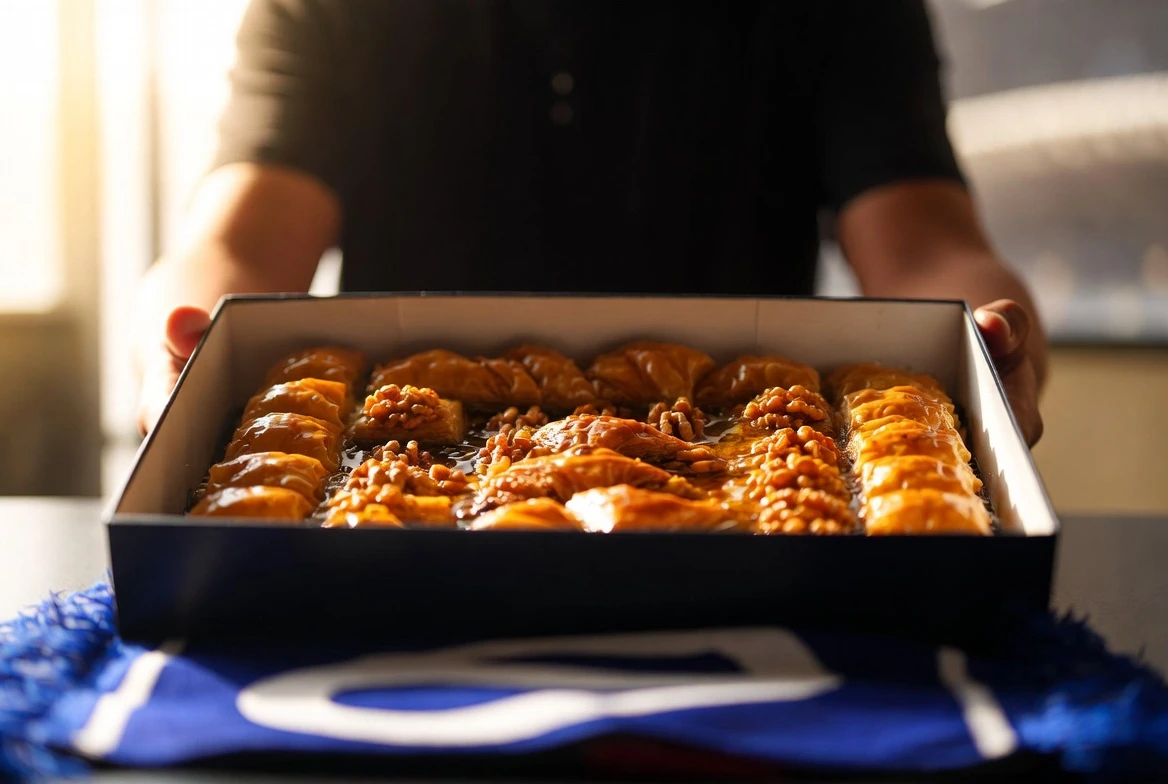
Jordan’s players left boxes of Zalatimo Brothers sweets in their dressing room after losing 1-3 to Argentina on Sunday at the 2026 World Cup. The boxes, packed with pistachio and walnut baklava and a thank-you note, were meant for venue staff and were shared by FIFA on social media. Within hours, the gesture had been picked up by international outlets and called one of the tournament’s quieter moments of sportsmanship.
The baklava came from a 165-year-old family confectioner few fans outside the Middle East had ever heard of. Zalatimo Brothers traces its sweet-making heritage to a Jerusalem pastry shop opened in 1860 by Mohammad Zalatimo, on Souk Khan El-Zeit, next to the Church of the Holy Sepulchre. The brand’s Jerusalem shop survived for 125 years under successive generations of the family before political and demographic pressure pushed the descendants to Jordan and the United States. The two dressing-room boxes, one in California, one in Texas, put the brand in front of a football audience in the millions.
From Jerusalem’s Old City to the World Cup Dressing Room
After their final group-stage match against Argentina at Dallas Stadium on Sunday, Jordan’s players departed the dressing room with a thank-you note, gifts and boxes of traditional Arabic sweets, including an assortment of pistachio and walnut baklava, for staff. The match itself ended in a 3-1 defeat. FIFA posted the boxes and the handwritten note on its official social channels, where they circulated within hours. The story behind the boxes is laid out in the dressing-room sweets moment and Zalatimo’s reaction.
Jordan had done the same thing after their group match against Algeria in California on June 23. The Fennecs came from behind to win 1-2, and the dressing room was left in the same state, with baklava boxes for staff and a thank-you note. Jordan’s 1-2 loss to Algeria in the group stage eliminated the team from the tournament, after which the Argentina match closed the campaign.
FIFA shared the gesture on social media, where fans called it an example of Jordanian hospitality and sportsmanship. The sweets were supplied by Zalatimo Brothers, one of Jordan’s best-known confectioners, whose sweet-making heritage traces to Jerusalem in 1860. The boxes appeared in both dressing rooms, the Algerian one and the Argentine one, with a thank-you note in each case.
A Family Bakery Built Across 165 Years
Mohammad Zalatimo opened a small pastry shop in Jerusalem’s Old City in 1860, on the Souk Khan El-Zeit next to the Church of the Holy Sepulchre. He made and served a single sweet by hand: mutabbaq, a traditional Palestinian pastry sold to customers for breakfast.
The shop was an immediate success, according to the Zalatimo family’s Jerusalem-to-Amman history. It quickly expanded, hiring three employees and annexing an adjacent outdoor seating area in the Souk. A popular saying took hold: anyone who had been to Jerusalem and not eaten Zalatimo’s mutabbaq had not really been in Jerusalem. Foreign dignitaries and celebrities visiting the Holy City made the shop a regular stop, and the brand became famous among Palestinians both across the country and beyond.
Five generations of Zalatimos ran the shop in Jerusalem over 125 years, maintaining its location and operating it as a one-man-show. By the early 1980s, younger family members could no longer reside in the city, with many moving to Jordan or the United States. The family began to consider selling the original shop, which had become symbolic of the ‘taste of Palestine.’
In 1986, Abdallah Zalatimo, a fifth-generation family member who had grown up in Pennsylvania, opened the first Zalatimo shop outside Jerusalem, in Amman. He named the company Zalatimo Sweets, hired 15 employees, and targeted a market segment of Palestinians who had been driven to Jordan in 1948 and 1967. Ten years later, in 1996, Abdallah’s uncle Mohammed Wael Zalatimo founded a separate company, Zalatimo Brothers, which also became popular across the region. The two bakeries have operated independently since.
What the Players Left Behind
The packing list included an assortment of pistachio and walnut baklava after the Argentina match, the item most prominently pictured in FIFA’s post. Each box also included a handwritten thank-you note and a small gift. Players left a separate selection of traditional Arabic sweets, including the brand’s signature mutabbaq, the same pastry that was the original shop’s signature product. The same supplier, Zalatimo Brothers, provided the sweets for the Algeria dressing room on June 23. The boxes were intended for the staff who had worked the team’s group-stage games.
Today, Zalatimo Brothers produces a wider range of traditional desserts than the ones that ended up in the dressing room. The brand’s full line, listed below, includes everything from breakfast pastries to evening sweets. Several of these items, including the baklava that travelled to the World Cup, are also available for online delivery abroad.
- Mutabbaq
- Baklava
- Maamoul
- Borma
- Ghriebieh
- Barazek
- Kunafa
- Chocolates
The CEO Reacts to the Viral Moment
Ahmad Wael Zalatimo is the chief executive of Zalatimo Brothers, the family bakery founded in Amman in 1996. He first learned that the dressing-room gesture had gone viral through the messages that began arriving from friends, customers and partners. They were forwarding him FIFA’s social posts and the screenshots picked up by international outlets. It was the first time many of his contacts outside Jordan had heard of the brand.
I am proud that the Jordanian football team were able to help showcase our sweets as a true and proud symbol of both Jordanian and Palestinian history and heritage.
The quote is from a statement by Ahmad Wael Zalatimo, chief executive of Zalatimo Brothers, to The National, where the full interview was published on June 30, 2026. His framing tied the bakery’s 165-year Jerusalem heritage to the team’s first World Cup appearance.
Zalatimo Brothers is a Jordanian company with Palestinian-Jerusalem roots. The CEO’s choice of words puts Jordanian and Palestinian heritage into a single sentence. The brand is sold across the Middle East and in select markets abroad.
From Eid Tables to Dubai’s Global Village
In Jordan, Zalatimo Brothers is a familiar sight on the family calendar. The brand’s gift boxes show up at Eid tables, weddings and graduation ceremonies, where they often mark the occasion. The boxes are the same shape and size as the ones the team left behind at the World Cup.
Cross-border, the company has expanded into regional markets, including the UAE and online. The full list of current markets and channels is below. The brand frames its cross-border work around the Jordanian and Palestinian diaspora. Customers abroad are the target, with the boxes meant to bring a taste of home.
The company has grown steadily over three decades and remains family-owned. Recipes have been passed down through five generations of Zalatimos, using the same Jerusalem techniques from the original 1860 shop. The brand is one of Jordan’s best-known family confectioners.
- Jordan: physical branches across the country
- UAE: a seasonal outlet at Dubai’s Global Village
- United States: online delivery of select products
- Europe: online delivery of select products
- Middle East (outside Jordan and the UAE): online delivery of select products
Two Branches, One Family Name
Zalatimo Brothers is the larger of the two brands by media footprint, after the World Cup moment. The company was established in Amman in 1996 by Mohammed Wael Zalatimo, the uncle of fifth-generation family member Abdallah Zalatimo. Mohammed Wael’s family branch now runs the business, with chief executive Ahmad Wael Zalatimo. The brand operates branches across Jordan and ships select products online.
The other branch, Zalatimo Sweets, was founded in Amman in 1986 by Abdallah, ten years before his uncle set up Zalatimo Brothers. According to a 2023 NYU Abu Dhabi family-business study, Zalatimo Sweets runs a network of around a dozen outlets across the MENA region and exported 250 tons of sweets annually as of the most recent published year. The same study puts the company’s 2018 revenue at $11 million, with distribution to 230 Walmart stores in the United States driven by the Palestinian and Middle Eastern diaspora. The two bakeries operate independently of each other.
Why a Football Locker Room Became a Confectionery Showcase
FIFA’s social channels amplified the dressing-room boxes to a global football audience. The two boxes, one in California, one in Texas, travelled from a family bakery in Amman into the public record of Jordan’s World Cup debut. The National reported the World Cup appearance introduced the company to another audience, with football fans around the world catching a glimpse of one of Jordan’s best-known sweet makers.
The CEO, Ahmad Wael Zalatimo, said he was receiving messages from friends, customers and partners about the viral moment. Screenshots of FIFA’s post were arriving within hours of publication. The brand frames the moment as a chance to share a 165-year-old family tradition with a wider audience. The CEO said the dressing-room gesture helps present the sweets on a global stage.
The 2026 World Cup was Jordan’s first, and the team was eliminated in the group stage. The team’s last match ended in a 3-1 loss to Argentina at Dallas Stadium. Jordan’s first World Cup and the tourism pitch around it extended the conversation beyond football.
Frequently Asked Questions
What is Zalatimo Brothers?
Zalatimo Brothers is a family-run Arabic confectioner based in Amman, Jordan, founded in 1996. It was established by Mohammed Wael Zalatimo and is now led by chief executive Ahmad Wael Zalatimo. The brand’s sweet-making heritage traces to a Jerusalem pastry shop opened in 1860 by Mohammad Zalatimo.
Where did the Zalatimo family originally make sweets?
The first Zalatimo shop opened in 1860 on Jerusalem’s Souk Khan El-Zeit, in the shadow of the Church of the Holy Sepulchre. The founder sold a single product: mutabbaq, a hand-made Palestinian pastry served for breakfast. A saying emerged about the shop’s reputation: any visitor who had not eaten Zalatimo’s mutabbaq, the saying went, had not really been to Jerusalem.
What sweets did Jordan’s players leave at the 2026 World Cup?
After the team’s final match against Argentina on June 28, 2026, Jordan’s players left dressing-room boxes that included an assortment of pistachio and walnut baklava, a thank-you note, and additional traditional Arabic sweets, including the brand’s signature mutabbaq. The same supplier provided the boxes after the June 23 group match against Algeria in California, which eliminated Jordan from the tournament.
Who runs Zalatimo Brothers today?
Ahmad Wael Zalatimo is the chief executive of Zalatimo Brothers and the public face of the brand in The National’s coverage of the World Cup moment. The company was founded in 1996 by Mohammed Wael Zalatimo, who is part of the same immediate Zalatimo family branch that runs the bakery today. The brand remains family-owned, with recipes passed down through generations.
Is Zalatimo Brothers the same company as Zalatimo Sweets?
No. The two bakeries are separate family-run businesses that share a Jerusalem heritage and a family name. Zalatimo Sweets was founded in Amman in 1986 by Abdallah Zalatimo, a fifth-generation family member, and operates a network of around a dozen outlets across the MENA region. Zalatimo Brothers was founded in Amman in 1996 by Abdallah’s uncle, Mohammed Wael Zalatimo, and is the brand that supplied the World Cup dressing-room boxes.
Where can I buy Zalatimo Brothers outside Jordan?
Zalatimo Brothers operates a seasonal outlet at Dubai’s Global Village in the UAE, and ships select products online for delivery across the US, Europe and the Middle East. The brand is targeted, in part, at Jordanian and Palestinian diaspora customers living abroad. In Jordan, the brand runs branches across the country and shows up at Eid, weddings and graduation ceremonies.
