
Eight Arab and Muslim foreign ministers condemned Israel’s rejection of the Gaza Peace Road Map on 16 August, declaring that Jerusalem now bears responsibility for obstructing US President Donald Trump’s Comprehensive Plan to End the Gaza Conflict. The statement, issued by the UAE, Qatar, Jordan, Indonesia, Pakistan, Türkiye, Saudi Arabia and Egypt, also rejected any denial of Palestinian statehood.
The ministers said the positions amount to a direct repudiation of the plan endorsed by UN Security Council Resolution 2803 and jeopardise collective efforts for a just and lasting peace.
Ministers Assign Full Responsibility to Israel
The full joint statement by the eight ministers frames the Israeli stance as an explicit refusal to proceed with implementation. It stresses that Israel carries direct and full responsibility for any consequences of continued rejection, obstruction, delay or non-compliance, including deterioration on the ground and disruption of ending the war.
Such rejection confirms that Israel now bears responsibility for obstructing the efforts to bring peace in Gaza and the rest of the Occupied Palestinian Territory.
The Qatar Foreign Ministry posted the same language in its Qatar Foreign Ministry statement on X. The ministers underscored the need for sustained and active US engagement to enforce Israel’s full compliance with the Comprehensive Plan and its Road Map. They called on the Board of Peace, with US support, to take immediate concrete measures within its mandate to uphold the plan’s integrity and prevent obstruction by any party.
They reaffirmed the urgent need for full and immediate implementation to address the grave humanitarian situation, ensure security and stability, and open the way for reconstruction. A just peace, they said, requires the two-state solution: an independent and sovereign Palestinian state based on the 1967 lines with East Jerusalem as its capital, in accordance with international law and UN resolutions. Any attempt to deny or foreclose that path undermines regional security and stability.
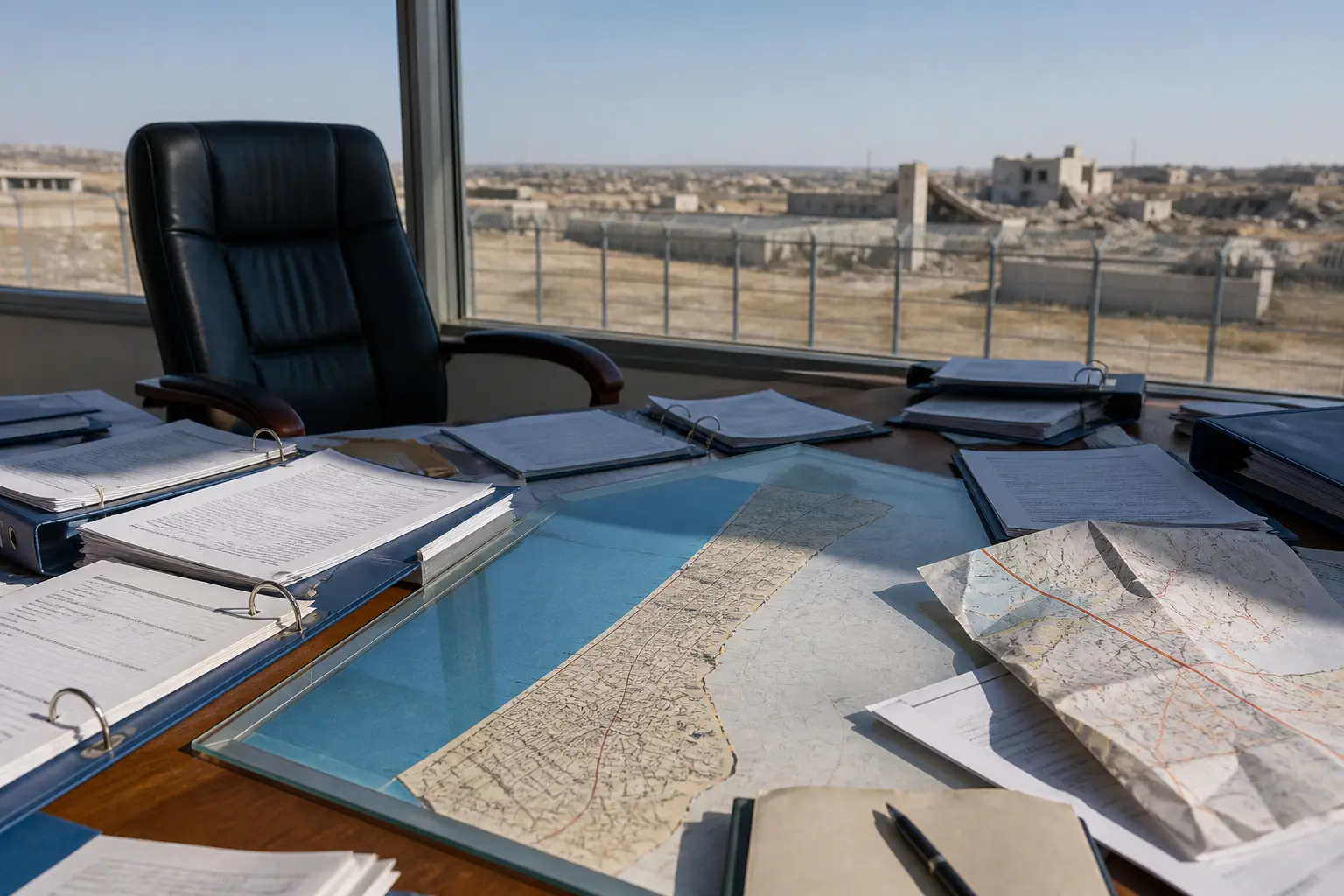
The Road Map Links Weapons Handover to Troop Exit
The Road Map, accepted by Palestinian factions, is the product of mediators including Egypt, Qatar, Türkiye, the United States, the High Representative of Gaza and the Board of Peace. It sets concurrent steps: decommissioning of weapons alongside Israeli force withdrawal, deployment of the International Stabilization Force, transfer of administrative authority to the National Committee for the Administration of Gaza, and reconstruction.
The Board of Peace 15-point Road Map details break the work into principles, security, ISF and withdrawal, and reconstruction. Progression from phase to phase depends on verification by an International Verification Committee.
| Phase focus | Core requirement | Linked action |
|---|---|---|
| Principles | Reaffirm Comprehensive Plan and complete remaining Sharm Sheikh Protocol commitments | NCAG enters Gaza after IVC certification; timetable set within 14 days |
| Security | One Authority, One Law, One Weapon; decommission heavy weapons, tunnels, production sites then personal arms | Weapons stay under NCAG; no transfer to Israel; Social Peace Agreement |
| ISF and withdrawal | ISF deploys to separate forces, train police, secure aid; monitor ceasefire | IDF completes phased withdrawal on agreed timetable linked to decommissioning |
| Reconstruction | NCAG handles day-to-day governance and recovery under BoP oversight | Pathway to self-determination and statehood once conditions met |
Hamas and other factions are to hand civilian governance and security functions to the NCAG and stay out of its affairs. Newly trained and vetted police come under NCAG. The process creates conditions for a credible path to Palestinian self-determination.
Netanyahu Drew a Hard Line on 9 August
Israeli Prime Minister Benjamin Netanyahu told his cabinet on 9 August that Israel rejects the 15-point document. He said the IDF will not carry out any withdrawal until Hamas is genuinely disarmed, covering heavy weaponry, lighter weaponry and all weaponry. He added that Israel remains in talks with the United States and knows how to stand firm on unacceptable ideas.
- No phased exit until full disarmament verified
- Continued thwarting of threats against forces and citizens
- Far-right Finance Minister Bezalel Smotrich praised the stance, saying the military cannot withdraw even a millimetre
- Hamas senior official Basem Naim said the group remains committed and expects mediators and the US guarantor to press Israel
Netanyahu faces an election on 27 October and pressure from coalition partners who reject concessions. Israeli forces have scaled back operations since early August after Board of Peace envoy Nikolay Mladenov met Netanyahu, limiting action to immediate threats. Gaza health officials say more than 1,250 people have been killed in Israeli attacks since the October 2025 ceasefire, most civilians. Israeli troops occupy and have depopulated roughly two-thirds of the enclave.
Washington Faces a Choice Between Plan and Ally
The ministers’ call for the United States to enforce compliance lands on a White House that has publicly played down the rejection. Trump said the relationship with Netanyahu remains “very good.” Senior US officials have described the comments as campaign rhetoric and indicated they are not bothered so long as Israel continues to restrain attacks in Gaza.
That posture collides with the eight nations’ demand for active engagement. The Board of Peace, chaired by Trump, is the transitional body authorised to oversee redevelopment and the International Stabilization Force. Earlier Hamas and Kushner Cairo roadmap talks and related meetings already exposed sequencing frictions. The new joint statement raises the diplomatic cost of further delay.
If the US continues to give Netanyahu latitude, the concurrent model of weapons decommissioning with withdrawal stays blocked. The NCAG cannot fully enter, the ISF deployment stays conditioned on progress, and reconstruction funding vehicles remain idle.
Who Feels the Stall on the Ground
Gaza’s more than two million residents remain largely confined to a narrow coastal strip, many in tents or damaged buildings. Humanitarian access and rubble clearance depend on the plan’s security and governance tracks. The ministers linked full implementation directly to relief of the grave humanitarian situation and to regional security for all countries and peoples.
Palestinian factions accepted the Road Map. Their position, restated by Naim, puts the next move on Israel. Any further non-compliance, the ministers warned, leaves Israel responsible for resulting deterioration. Unilateral actions that foreclose statehood are categorically rejected.
Regional states that backed the Comprehensive Plan now present a unified front. That unity increases pressure on the Board of Peace to act inside its mandate rather than wait for Israeli electoral calendars.
From Ceasefire to Stalled Second Phase
- 29 September 2025, Comprehensive Plan to End the Gaza Conflict released.
- 13 October 2025, Trump Declaration for Enduring Peace and Prosperity; ceasefire facilitated by US, Qatar, Egypt, Türkiye.
- 17 November 2025, UN Security Council adopts Resolution 2803 by 13 votes to two abstentions (China, Russia), endorsing the plan, welcoming the Board of Peace and authorising the ISF.
- January 2026 onward, Second phase discussions begin; NCAG prepared; hostage returns completed under earlier terms; disarmament talks stall amid mutual accusations of breaches.
- Late July 2026, Board of Peace announces breakthrough and publishes 15-point Road Map; Hamas accepts; Israel signals skepticism.
- 9 August 2026, Netanyahu publicly rejects the document at cabinet.
- 16 August 2026, Eight foreign ministers issue joint condemnation and demand US enforcement.
The Security Council Resolution 2803 text authorises the Board of Peace as a transitional administration with international legal personality until the Palestinian Authority completes reforms and can take control. It links IDF withdrawal to demilitarisation milestones agreed among the IDF, ISF, guarantors and the United States, while keeping a security perimeter until the threat is gone. Israel is not to occupy or annex Gaza. The resolution remains authorised until 31 December 2027 subject to further Council action.
Earlier reporting on Cairo talks freeze on Gaza rebuild phase and the Gaza plan sequencing trap exposed in Cairo already showed how the order of disarmament versus withdrawal locked institutions. The ministers’ statement converts that technical dispute into a public assignment of blame.
Pressure Now Sits with the Board and Washington
The eight governments have placed the integrity of Trump’s own plan in the hands of the Board of Peace and the United States. They insist the Road Map is the vital milestone already accepted by Palestinian factions. Israel’s rejection, in their words, threatens to derail extensive efforts to end the war and establish conditions for lasting peace.
Netanyahu’s government continues to insist on complete disarmament first. The White House continues to describe relations as strong and the comments as manageable. Between those positions sit the ISF pledges, the NCAG’s prepared architecture, the verification committee and the civilians still living under the stalled arrangements. The ministers have left no ambiguity about where they locate responsibility for the next move.
