
The United States and Iran traded strikes for a seventh consecutive night on Friday, and Iranian missiles kept landing in countries that never declared war on anyone. Kuwait’s power and desalination plants caught fire overnight. Jordan’s air defenses shot down missiles aimed at fuel tanks on a base it hosts for Washington. Qatar, Bahrain and Oman all reported hits on radar sites and military facilities that exist only because the United States asked to use them.
Brent crude closed above $86 a barrel Friday, and shipping through the Strait of Hormuz sank to its lowest point in three weeks. Six Gulf governments and Jordan are now absorbing the physical and financial cost of a war fought over their heads.
A War Between Two Countries, Fought in Six Others
US Central Command (CENTCOM) said Friday its forces had completed a seventh straight night of strikes on Iran, using fighter jets, drones and warships to hit surveillance sites, military logistics and underground weapons storage. More than 50,000 American troops are operating across the Middle East and remain “vigilant, lethal, and ready,” the command said.
US strikes also expanded into new parts of southern Iran. State media said at least five bridges were hit, including in the coastal city of Bandar Khamir, where officials said seven people were killed, some of them while crossing one of the structures. A surveillance tower at Chabahar’s Shahid Kalantari port collapsed after a separate strike; CENTCOM said it had been used for years by the Revolutionary Guards to track and target commercial vessels in the Strait of Hormuz.
Iran hit back at the countries hosting the troops behind those strikes. Iranian forces struck an ammunition depot at Kuwait’s Al-Adiri camp, buildings at the Ali Al-Salem air base and fuel tanks at Jordan’s Al-Azraq base, according to Iranian state television. Qatar’s Al Udeid Air Base took hits on radar systems and refueling aircraft. Bahrain sounded air raid sirens. Iran also claimed strikes on two radar sites in Oman.
Iran’s actions constitute a highly dangerous escalation, a grave violation of international law and the United Nations Charter, as well as war crimes requiring international accountability and prosecution.
Jasem Mohamed Albudaiwi, secretary general of the Gulf Cooperation Council (GCC), whose members are Bahrain, Kuwait, Oman, Qatar, Saudi Arabia and the United Arab Emirates, said that in a statement Saturday, accusing Tehran of deliberately targeting civilian infrastructure. The GCC has repeated some version of that condemnation at nearly every stage of the war, including in a statement its ministerial council issued just two days after the fighting began in February.
Iran’s Health Ministry says at least 38 people have been killed and more than 400 wounded since fighting resumed. The United States says 14 troops have died and 427 have been wounded since the war began in February, including 13 hurt in the days since Monday, 10 Army soldiers and three Navy sailors.
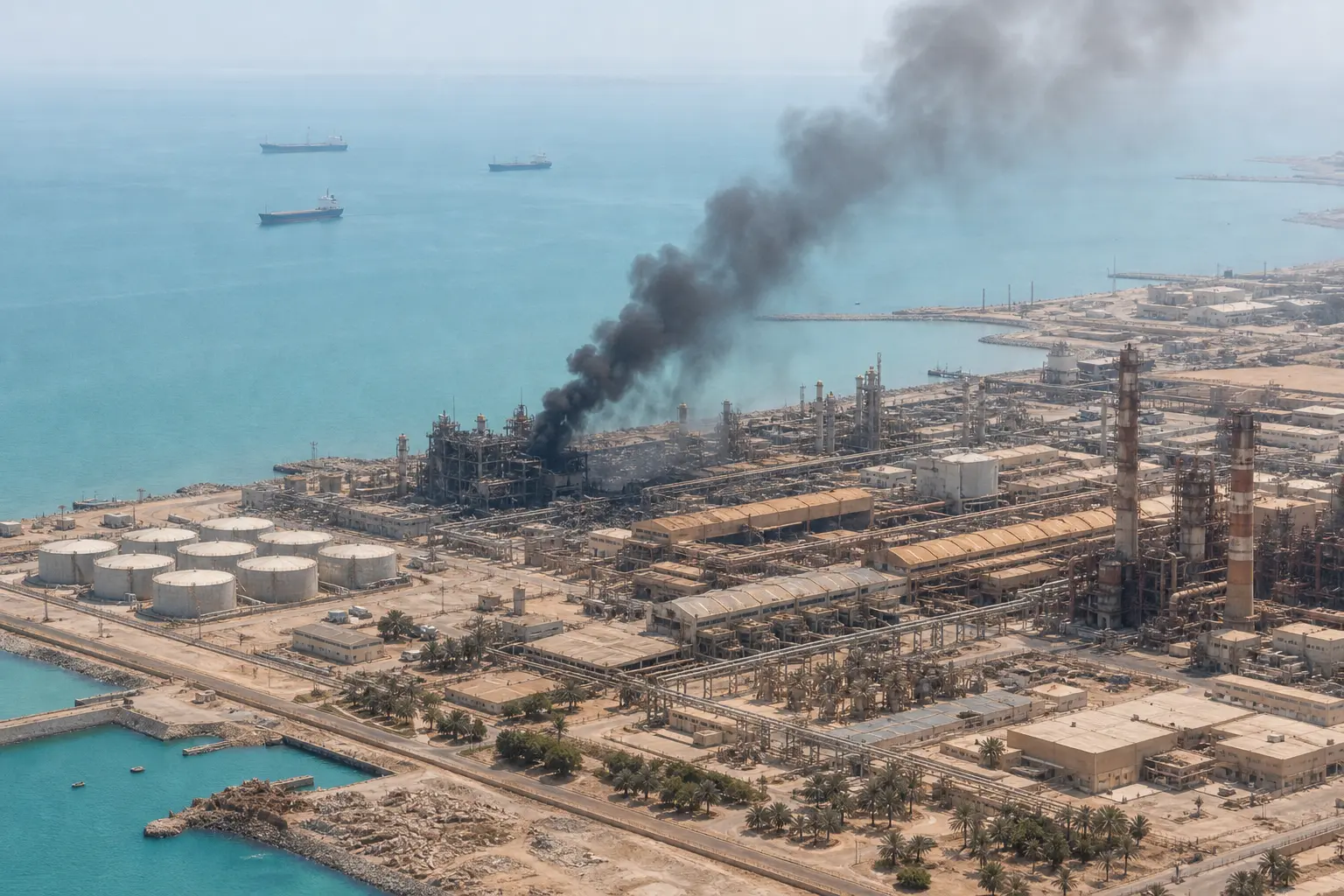
Kuwait Takes the Worst of the Barrage
Kuwait’s Ministry of Electricity, Water and Renewable Energy said Iranian drones and missiles hit a power generation and water desalination station Friday, sparking a fire and knocking several generating units offline. Authorities urged residents to conserve electricity while crews assessed the damage. Several soldiers were wounded in a separate drone attack on an army camp, and shrapnel damaged buildings at multiple locations, the Kuwaiti military said.
The barrage continued into Saturday. State media reported a transformer at the Zour South power and desalination complex was hit, followed hours later by strikes on the Al-Subiya power station and a Kuwait Petroleum Corporation site that left workers injured and forced an evacuation. Kuwait’s foreign ministry called it a “systematic aggressive approach” against civilian infrastructure and said the country reserved the right to respond.
| Country | US-Linked Target Iran Claimed | Reported Impact |
|---|---|---|
| Kuwait | Al-Adiri ammunition depot, Ali Al-Salem air base, Zour South and Shuaiba power-desalination complexes | Fire, disrupted power units, soldiers wounded, oil site evacuated |
| Jordan | Al-Azraq air base fuel tanks | Several missiles intercepted, no casualties reported |
| Qatar | Al Udeid Air Base radar and refueling aircraft | Child wounded by shrapnel, residents told to shelter twice |
| Bahrain | Communications and radar systems at a US-linked base | Air raid sirens sounded, no casualties reported |
| Oman | Two radar sites tied to Hormuz surveillance | No casualties reported |
| UAE | Adnoc-operated supertankers Mombasa and Al Bahyah | One sailor killed, eight injured |
Jordan’s air defenses have become almost routine background noise in this war. The kingdom’s military shot down another wave of incoming missiles this week, part of a pattern of nightly interceptions that has the Hashemite Kingdom absorbing hostile fire without being a declared party to the fight.
How Dependent Is the Gulf on Desalinated Water?
About 90 percent of Kuwait’s drinking water comes from desalination, along with roughly 86 percent in Oman and about 70 percent in Saudi Arabia. The Gulf has no meaningful river system and almost no natural freshwater reserves, so its cities depend on machinery that turns seawater into something people can drink.
That machinery now sits inside a war zone. Kuwait’s eight coastal desalination plants produce more than 2.2 million cubic meters of freshwater a day, and many share infrastructure with power stations, so a strike on one system can knock out electricity and water together. A 2010 CIA analysis cited in later reporting on the region warned that more than 90 percent of the Gulf’s desalinated water comes from just 56 plants, and that a prolonged outage at any single one could trigger a national crisis lasting months.
- Kuwait – about 90 percent of drinking water from desalination, no natural freshwater reserves
- Oman – roughly 86 percent of drinking water from desalination
- Saudi Arabia – about 70 percent of drinking water from desalination
- Regionwide – the Gulf produces close to 40 percent of the world’s desalinated water, much of it from fewer than 60 plants
This is not the first time the war has reached a desalination plant. Kuwait reported damage at its Doha West facility earlier in the conflict, and an Iranian strike on a Kuwaiti power and water complex in March killed an Indian worker and damaged a service building, according to Kuwaiti authorities. Iran has accused the United States of striking its own desalination plants on Qeshm Island in March, cutting water to 30 villages, a claim Washington has not acknowledged. Yemen’s Houthi rebels have targeted Saudi desalination facilities in the past as well.
Insurers Start Pricing In a War They Did Not Choose
War risk insurance premiums for tankers crossing the Strait of Hormuz have surged to between 3 and 10 percent of a vessel’s hull value, up from about 0.25 percent before the war. For a $100 million tanker, that is the difference between a roughly $250,000 premium and one running $3 million to $10 million, just to make a single transit.
Roughly 6,000 seafarers remain stuck in the region as crews grow reluctant to sail. “War rates have been on a roller coaster mirroring the development of the price of oil,” said Marcus Baker, global head of marine, cargo and logistics at the insurance broker Marsh. Iran struck two Adnoc-operated supertankers, the Mombasa and the Al Bahyah, this week, killing one sailor and injuring eight, adding to a string of tanker attacks that has run through the conflict.
Iran’s Revolutionary Guards separately claimed two oil tankers exploded after hitting mines on a route south of the strait and said a combined missile and drone operation had stopped four more ships attempting to transit. The US military rejected the account. “Like most IRGC claims, this is false,” CENTCOM said in a social media post. A tanker on the route closest to Oman was still struck by a projectile, according to the UK Maritime Trade Operations agency, though it sustained only minor damage and no injuries.
Arsenio Dominguez, secretary general of the UN’s International Maritime Organization, has called the “continued high cost of maritime insurance in the region” a matter of “great concern,” arguing that pricing has not adjusted even during lulls in the fighting. A March analysis from the reinsurance broker Howden Re put industry losses at up to $1.75 billion from tanker damage alone, before cargo losses are even counted. The World Economic Forum has gone further, describing governments stepping in as insurers of last resort after private markets balked at the risk, with strait traffic down by roughly 95 percent from its prewar average of 178 ships a day.
Five Weeks of Quiet Between Two Wars
This war did not start last week. The United States and Israel opened it on February 28 with strikes on Iran, which responded by hitting Israel and US interests across the Gulf and effectively sealing the Strait of Hormuz. Iranian officials have said the fighting has killed more than 2,000 people since then, including former Supreme Leader Ali Khamenei, according to Iranian authorities cited in regional reporting.
Washington and Tehran signed a memorandum of understanding on June 17, giving themselves 60 days to negotiate a lasting arrangement. It held for about three weeks. Iran resumed attacks on tankers using routes through Omani waters in early July, and the US answered with strikes of its own. By July 7, a Qatari-flagged LNG carrier and a Saudi-flagged supertanker had both been hit by projectiles inside the strait. The ceasefire collapsed entirely soon after, and nightly strikes have continued since.
The GCC’s ministerial council condemned a fresh round of attacks on July 12, days before Iran hit Kuwait’s desalination complex for the first time in the current escalation. The bloc has now issued some version of that condemnation from the war’s opening days in February through the ceasefire’s collapse in July, without visibly changing Iran’s calculus.
Tehran Raises the Threat of a Wider War
Mohsen Rezaei, an Iranian military adviser, warned that Tehran would move to “full-scale offensive operations” if US strikes continue for another two or three days. “Iran will no longer limit itself to retaliatory, like-for-like responses … and no political border will be safe,” he said, according to Iranian state media.
Majid Mousavi, the Revolutionary Guards’ aerospace commander, said the strikes would continue until the United States ended operations against Iranian coastal facilities and the areas around the strait. UN Secretary-General Antonio Guterres has voiced deep concern over the escalation, particularly the attacks on civilian infrastructure in Iran and across the region. China and Pakistan have both urged Washington and Tehran to return to talks, with little sign either side is listening.
David Khalfa, a Middle East specialist at the Jean-Jaures Foundation, said a widening range of strategic infrastructure is being pulled into the fight even as neither government appears to want it to spread further. “The paradox is that, while the conflict continues to escalate, neither side has a strategic interest in allowing this dynamic to continue,” he said. “Yet both perceive any compromise as a form of capitulation.” A separate accounting of the war’s strategic toll on the wider Middle East reached a similar read: momentum, not strategy, is now driving the fighting.
For now, Kuwait counts its wounded soldiers. Jordan tracks the missiles it shoots down. And tankers keep queuing outside a strait that both sides insist they do not want closed for good.
