
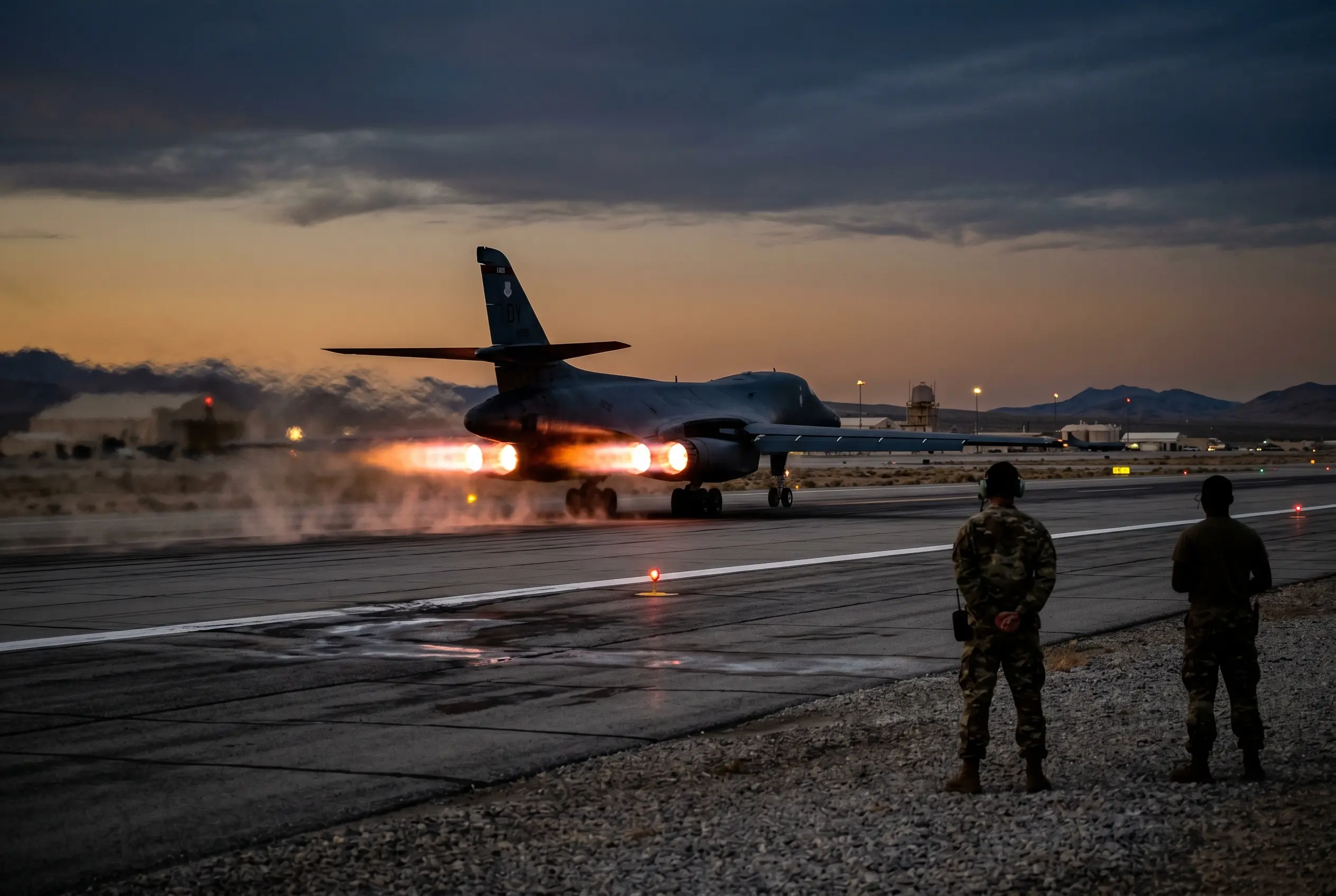
The U.S. air campaign against Iran was the most lopsided conventional air war Washington has fought in a generation. Before the April 8 cease-fire, U.S. forces alone flew more than 10,000 air sorties, struck over 130,000 targets, and intercepted 1,700 Iranian missiles and drones, according to U.S. Central Command. The campaign demolished more than 85 percent of the facilities Tehran used to produce missiles and drones, sank the majority of Iran’s naval vessels, and eliminated 70 percent of its missile launch infrastructure. None of that translated into the political outcome the war was sold on.
President Donald Trump had variously promised the complete surrender of the regime, the protection of the Iranian people from their leaders’ brutality, the end of Iran’s regional influence, and a better nuclear deal than the one Barack Obama reached in 2015. None of those aims has been achieved. The Islamic Republic survived. It adapted into an attrition strategy that badly strained the U.S. arsenal, threatened civilian infrastructure across the Middle East, and added a new dimension of power projection by effectively closing the Strait of Hormuz. The country that won the air war is the same one the U.S. public no longer trusts to keep paying for it. The Middle East after Epic Fury is not safer, more stable, or more prosperous.
The Price of a Single War
The clearest measure of the war’s cost is the munitions bill. As the defense strategist Mackenzie Eaglen has pointed out, the U.S. military fired more than 1,000 Tomahawk cruise missiles in a few weeks against Iranian targets, but it can produce only 90 to 100 per year. Washington now has, by its own public admissions, a stockpile problem that will outlast the next administration.
The interceptor picture is worse. According to the Center for Strategic and International Studies, the United States expended at least 190 THAAD interceptors and 1,060 Patriot interceptors between February 28 and April 8 alone to counter Iranian missile fire. Those figures represented around 53 percent and 46 percent of the United States’ prewar inventories, respectively. At the rates at which it can replenish these interceptors, the U.S. could not counter air threats in multiple theaters if it needed to.
The arithmetic is unforgiving. High-end air defense systems and cutting-edge munitions are financially and operationally unsustainable against low-cost, long-term drone attacks, a lesson illuminated earlier by Russia’s invasion of Ukraine. The Pentagon’s current inventories enabled it to overmatch Iran during Epic Fury, but it did so at a cost to other theaters and priorities. As Dana Stroul, a former U.S. deputy assistant secretary of defense for the Middle East, argues in Stroul’s analysis of the war’s strategic record in the July/August 2026 issue of Foreign Affairs, the United States simply cannot afford to fight another war like this one. The country’s ability to project power in the Pacific, in Europe, or in any second contingency has been quietly reduced by a single Middle East campaign.
- 1,000+: Tomahawk cruise missiles fired in weeks
- 90 to 100: Tomahawks the U.S. produces per year
- 190: THAAD interceptors expended (Feb 28 to Apr 8)
- 1,060: Patriot interceptors expended in the same window
- 53% / 46%: Share of U.S. prewar THAAD and Patriot inventories used
How Iran Rewrote Its Playbook
Iran did not win the air war, but it changed what the war was about. In the Twelve-Day War of June 2025, Tehran had directed most of its retaliation toward missile attacks on Israel, with a single performative assault on the U.S. al-Udeid base in Qatar. That script did not work. It did not deter Israel or the United States, did not weaken their resolve, and did not spook Qatar and other Gulf countries into curbing how Washington used their territory. The lesson, which Iran absorbed quickly, was to change the target set. Between last year’s war and this one, Iran’s leaders pre-delegated response authority downward and preauthorized target sets that could rapidly expand the scope of a countercampaign, what it calls a “mosaic defense.”
The shift showed in real time. Consider the regime’s response to the March 18 Israeli strike against its offshore South Pars gas field. Within hours, Tehran had escalated by attacking the Qatari side of the same offshore gas field, but also striking Saudi and Kuwaiti oil installations. Iran had moved from imposing costs directly on Israel and the United States to attacking every U.S.-aligned country in its neighborhood. Drones were used not only to strike targets directly but to deplete adversaries’ interceptor stockpiles and probe their radar coverage. Tehran expanded the scope of its strikes to civilian infrastructure: hotels, airports, desalination plants, ports, oil terminals. Psychological and economic warfare became an increasingly important element of the response.
The Strait That Stayed Closed
Iran’s greatest success was in the maritime domain, where its capacity for creative innovation has been documented since 2019. This time, knowing it could not contest U.S. naval superiority directly, Tehran used small boats, drones, mines, and onshore firing units to create persistent navigational uncertainty in the Strait of Hormuz, a waterway that handles 20 percent of the world’s shipping. Within days of the start of the war, the Islamic Revolutionary Guard Corps had declared the waterway closed to hostile shipping and was boarding, mining, and striking vessels in it.
Tanker traffic through the strait fell by about 70 percent within days. It then fell further, to near zero, as insurers withdrew cover and ship owners refused to sail. By late April the International Maritime Organization reported that around 20,000 mariners and 2,000 ships were stranded in the Persian Gulf. Iran began charging tolls of over $1 million per ship for safe passage. The pressure on global markets was instant, and the closure became the largest disruption to world energy supply since the 1970s energy crisis, per the U.S. Energy Information Administration.
The cost of the closure landed well beyond the Gulf. Brent crude surpassed $100 per barrel on March 8 for the first time in four years, peaking at $126, and March 2026 saw the largest monthly increase in oil prices on record. Fertilizer, helium, and aluminum markets all seized up in turn, since the Persian Gulf is also a major hub for those supply chains. Egypt’s monthly energy import bill alone jumped from $1.2 billion in January to $2.5 billion in March, illustrating the second-order economic damage that has compounded the war’s direct toll, captured in reporting on the Iran war’s drag on Egyptian household budgets. The full cost of the war to the U.S. military alone was estimated at nearly $29 billion by May 12, with the Pentagon requesting a further $200 billion to refill inventories and rebuild.
- 20%: Share of global oil passing through the Strait of Hormuz
- 70%: Initial drop in tanker traffic through the strait
- $1M+: Tolls Iran charged per ship for safe passage
- $126: Peak Brent crude price per barrel
- 20,000: Mariners stranded in the Persian Gulf by late April
A Trust Deficit Opens in the Gulf
The most visible rupture between Washington and its Gulf partners came in early May. Project Freedom, the U.S. effort to reopen the strait, ran aground almost as soon as it began. On May 4, the U.S. military successfully guided two commercial vessels out of the strait to challenge Tehran’s blockade. Iran responded with a cruise-missile strike on a UAE oil terminal, a missile and drone attack on a South Korean commercial vessel, and an unsuccessful attempt to target two U.S. Navy destroyers. The Trump administration insisted a cease-fire was still in place and did not respond to the attacks beyond defending its own ships.
Gulf states read the response differently. Within 24 hours, Kuwait and Saudi Arabia had closed their airspace to U.S. military aircraft and placed other restrictions on how the Pentagon used their bases. They feared that Trump’s lack of retaliation for the UAE strike would continue to embolden Tehran. Project Freedom could not continue without military cooperation from geographically close countries, and for the first time during the war, Iran forced open a temporary fissure between the United States and key Gulf partners. Kuwait and Saudi Arabia quickly restored the U.S. military’s access, but the episode was a warning of what the next crisis could look like.
The episode was also a clear signal to the region’s governments of how quickly the U.S.-Iran relationship can become a liability. At the height of Iran’s retaliation, the UAE had requested that Israel deploy troops and additional air defense systems to its territory, a request that would have been unthinkable before the war. Gulf governments, watching the U.S. absorb a strike on a friendly terminal and decline to escalate, started to talk openly about wanting more agency in their security arrangements. Polling in the United States, where the cost of the war is being felt in gasoline prices, suggested no appetite for the kind of sustained response the moment might have required, a pattern how three publics read the Iran war lays out in stark terms.
The Coalition the United States Never Built
The deeper problem exposed by the war is one of coalition-building. As Stroul argues, Washington’s failure to assemble a fighting coalition before Epic Fury, or even to make the global case that Iran had become an imminent threat, left it struggling to build international consensus against Iran’s asymmetric tactics. Trump’s stated reasons for the war shifted between forestalling an expected Israeli attack, destroying Iran’s missile capabilities, preventing a nuclear weapon, seizing oil and gas resources, and achieving regime change. Each restatement made it harder for partners to know what the United States was actually trying to achieve, and easier for adversaries to argue that there was no plan at all.
The United Nations Security Council did pass a resolution condemning Iran’s retaliatory strikes on Gulf states, and the International Atomic Energy Agency confirmed there was no evidence of an active nuclear weapons program once it was allowed to inspect damaged sites. None of that translated into partners willing to put their own forces into the air campaign or to openly endorse the war politically. The support that did materialize arrived in narrow, technical forms, valuable but far short of the burden-sharing the moment demanded. The lesson is the same one the United States has learned before. The country that fights alone also pays alone, and pays in interceptor inventories.
New Defense Partners Fill the Gaps
What the United States would not or could not provide, others have started to offer. The United Kingdom provided defense support to Bahrain, Saudi Arabia, the UAE, and other states in the region, and flew missions within the effort coordinated by Central Command. France deployed fighter jets to intercept Iranian drones and missiles targeting the UAE and sent its sole aircraft carrier group to the Red Sea. In late April, France and the United Kingdom convened a maritime security summit attended by more than 30 countries to begin planning a multinational mission to support free transit in the Strait of Hormuz.
Ukraine became an unlikely entrant. Ukrainian teams of counterdrone experts deployed across the Middle East during the war, and in late March Kyiv signed long-term security agreements for counterdrone training, technology transfers, and joint defense production with Qatar, Saudi Arabia, and the UAE. South Korea revised its defense export policy to accelerate equipment sales to the region. NATO members with prewar defense relationships in the Gulf fulfilled those commitments. The picture that is emerging is one of a more crowded Middle East security marketplace, with the United States still important but no longer exclusive.
Gulf states, for their part, are reviving older ideas. The 2000 Gulf Cooperation Council joint defense agreement, which stipulated that an attack on one member was an attack on all, was not activated during the war. But regional leaders have shown renewed interest in a Middle Eastern or Islamic NATO, with potential alignment to Egypt and Pakistan. Two existing frameworks can be expanded quickly:
- United Kingdom: defense support to Bahrain, Saudi Arabia, and the UAE, plus CENTCOM-coordinated flight missions
- France: fighter-jet intercepts over the UAE and a carrier group in the Red Sea
- Ukraine: counterdrone teams and long-term training, technology, and joint production deals
- South Korea: revised export policy to speed up Middle East sales
- Gulf Cooperation Council: renewed interest in a regional joint defense framework
- Egypt and Pakistan: candidates for a wider Middle East security architecture
From Sole Guarantor to Security Integrator
The argument Stroul makes is that the United States now has to change how it fights and how it partners if it is to keep the position it has spent four decades building. The first task is to acknowledge what the war revealed. Iran’s ability to adapt during an ongoing conflict is much greater than the United States had planned for, and degrading Iran’s conventional capabilities did not end the Iranian threat. The Middle East after Epic Fury is one in which Tehran retains the ability to project power in new ways.
The second task is industrial. The U.S. defense industrial base will need to innovate faster, lower regulatory barriers to technology transfer, and pair with trusted partners in developing and co-producing an arsenal that can meet the demands of future wars. The model the war endorsed is what Stroul calls a transition from sole security guarantor to security integrator, in which Washington convenes and coordinates a wider set of capable partners rather than carrying the load itself. The 2023 Comprehensive Security Integration and Prosperity Agreement between the United States and Bahrain, joined by the United Kingdom in 2025, is the proof of concept, as documented in the joint statement expanding the 2023 U.S.-Bahrain security pact. It expands the definition of security beyond defense to include economic and technology cooperation, and contains a NATO-like provision requiring parties to work together to confront external aggression against the territorial integrity of any signatory.
The third task is force posture. Epic Fury validated the Pentagon’s earlier work to develop a Western Access Network of bases along the Red Sea and the Mediterranean, intended to circumvent maritime chokepoints and Iran’s short-range threats. The campaign was coordinated largely from within U.S. territory and launched from the western side of the Middle East, from bases in Israel, Jordan, and Saudi Arabia, as well as offshore naval platforms. Iran attacked legacy U.S. bases in the Gulf, but the United States had evacuated troops and equipment in advance, and the war’s operational tempo was not derailed. The model works. The challenge is to keep partners on side as bases shift and posture changes.
The fourth task is political. U.S. political leaders will likely balk at reinforcing security commitments in the Middle East precisely when the region will seek them. A March 2026 survey by Ipsos for a major news wire found that 66 percent of Americans wanted a quick end to the war even if a strategic victory had not been achieved, as reported in the March 2026 poll on American appetite for the war. The American public has lost what appetite it had for the costly, sustained work of countering Iran’s threats. The same polling that told Trump he had a mandate to strike also told him he did not have a mandate to stay.
The June 14 announcement of a Trump-Iran agreement to end the war and reopen the Strait of Hormuz, with signing expected in Switzerland on June 19, is a chance to begin that work. Whether the U.S. emerges from the deal as a security integrator or a free-riding power will depend on choices made in the next twelve months, not in the next twelve years. Gulf countries are already looking for supplemental defense partners, and Washington must redouble its efforts to coordinate them. As Stroul concludes, if the United States fails to make this transition, Epic Fury will stand as the defining contradiction of U.S. power, a display of unequaled military might that ushered in a post-American Middle East.
Frequently Asked Questions
What was Operation Epic Fury?
Operation Epic Fury was the U.S. code name for the joint American-Israeli military campaign against Iran that began on February 28, 2026, under President Donald Trump’s direction, with Israeli forces codenaming their strikes Operation Roaring Lion. The campaign targeted Iranian military facilities, missile production sites, and senior leadership, including the killing of Supreme Leader Ali Khamenei in the opening strikes, and continued until a temporary cease-fire brokered by Pakistan took effect on April 8, 2026. Iran codenamed its response Operation True Promise IV.
What were the U.S. strategic goals in the Iran war?
Trump administration officials offered varying explanations for the war, including forestalling an expected Israeli attack on Iran, destroying Iran’s missile capabilities, preventing a nuclear weapon, seizing Iranian oil and gas resources, and achieving regime change. None of those goals has been achieved. The Islamic Republic remains in power, Iran’s missile infrastructure has been heavily damaged but not eliminated, and a settlement of the nuclear file remains pending. The June 14 announcement of a deal to end the war and reopen the Strait of Hormuz, expected to be signed in Switzerland on June 19, is the first concrete step toward resolving the war on terms short of the stated maximalist aims.
How much of its missile stockpile did the United States expend?
According to the Center for Strategic and International Studies, the U.S. military fired more than 1,000 Tomahawk cruise missiles and expended at least 190 THAAD interceptors and 1,060 Patriot interceptors between February 28 and April 8, 2026. Those interceptor expenditures represented around 53 percent of the U.S. prewar THAAD inventory and 46 percent of its prewar Patriot inventory, respectively. The 1,000-plus Tomahawk cruise missiles fired during the campaign far outstrip the U.S. annual production rate of 90 to 100, a gap that defense strategist Mackenzie Eaglen has flagged as unsustainable.
What is the Strait of Hormuz crisis?
The 2026 Strait of Hormuz crisis began on February 28, 2026, when Iran, in response to U.S. and Israeli airstrikes that killed Supreme Leader Ali Khamenei, effectively closed the strait to hostile shipping through a combination of small-boat attacks, sea mines, drone strikes, and onshore firing units. The strait handles about 20 percent of the world’s oil and a similar share of its LNG, and tanker traffic through it dropped by about 70 percent within days before falling to near zero, with around 20,000 mariners eventually stranded in the Persian Gulf. The closure became the largest disruption to world energy supply since the 1970s energy crisis, drove Brent crude to a peak of $126 per barrel in March 2026, and is the central reason the June 14 U.S.-Iran deal ties the war’s end to the waterway’s reopening.
What is the Comprehensive Security Integration and Prosperity Agreement?
The Comprehensive Security Integration and Prosperity Agreement, known as C-SIPA, is a 2023 security agreement between the United States and Bahrain that expands the definition of security beyond defense to include economic and technology cooperation, and contains a NATO-like provision requiring parties to work together to confront external aggression against the territorial integrity of any signatory. The agreement was left open for other countries to join, and the United Kingdom became a signatory in 2025. C-SIPA is regarded as a model for the kind of multilateral security architecture that analysts, including Dana Stroul in Foreign Affairs, argue the United States should pursue to remain the Middle East’s security integrator rather than its sole, and overstretched, guarantor.
