
Egyptian Foreign Minister Badr Abdelatty told Lebanese counterpart Youssef Raji on Monday that Israel must fully withdraw from Lebanese territory and implement United Nations Security Council Resolution 1701 completely. The call came days after the seventh round of US-brokered talks in Rome ended without new pilot zones or further Israeli pullbacks.
The Egyptian Foreign Ministry said Abdelatty stressed continuing negotiations for concrete results that respect Lebanon’s sovereignty and territorial integrity. He also called for Israel to stop all military attacks and backed the Lebanese government and army as they try to extend state authority.
Rome Round Produced Technical Talk, Not Map Changes
Lebanese and Israeli teams met at the US Embassy in Rome from August 4 to 6. It was the second Rome session and the seventh overall after five earlier rounds in Washington. They worked from the June framework that sets phased handovers.
A senior Lebanese official told Anadolu the sides stayed split on sequencing. Israel wants verified Hezbollah disarmament and infrastructure removal inside zones before more withdrawals. Lebanon wants successive pullbacks and has proposed Khiam or Bint Jbeil as next areas. Ali Taher Hill near Nabatieh remained a flashpoint; Israel claims a Hezbollah command site there while Beirut says no Israeli units sit in place for replacement.
- June 26, 2026: United States, Israel and Lebanon sign the Trilateral Framework in Washington.
- July 14-15: Earlier Rome technical talks agree structure for initial pilot zones.
- July 21 onward: Lebanese army deploys in Zawtar al-Gharbiyeh after limited Israeli redeployment.
- August 4-6: Seventh round ends in Rome with no agreement on expanding zones.
- Early September: Next formal talks scheduled.
US State Department language called the sides closer on advancing the pilot process. Lebanese presidential sources and correspondents reported no definitive results on new zones and no third-party verification mechanism locked in. Al Jazeera correspondent Zeina Khodr noted the pattern from the ground.
Rome talks end – no new “pilot zones”; no further Israeli withdrawals… no verification mechanism … no agreement on third party #Lebanon #Israel – for people of south Lebanon – agreements and negotiations have little meaning
Khodr posted that assessment after the round closed, drawing thousands of views. Strikes and demolitions continued around Beaufort Castle and other sites during the talks. An earlier pilot zone saw Israeli forces re-enter Zawtar al-Gharbiyeh and build an earthen barrier, which Lebanese sources called a framework violation.
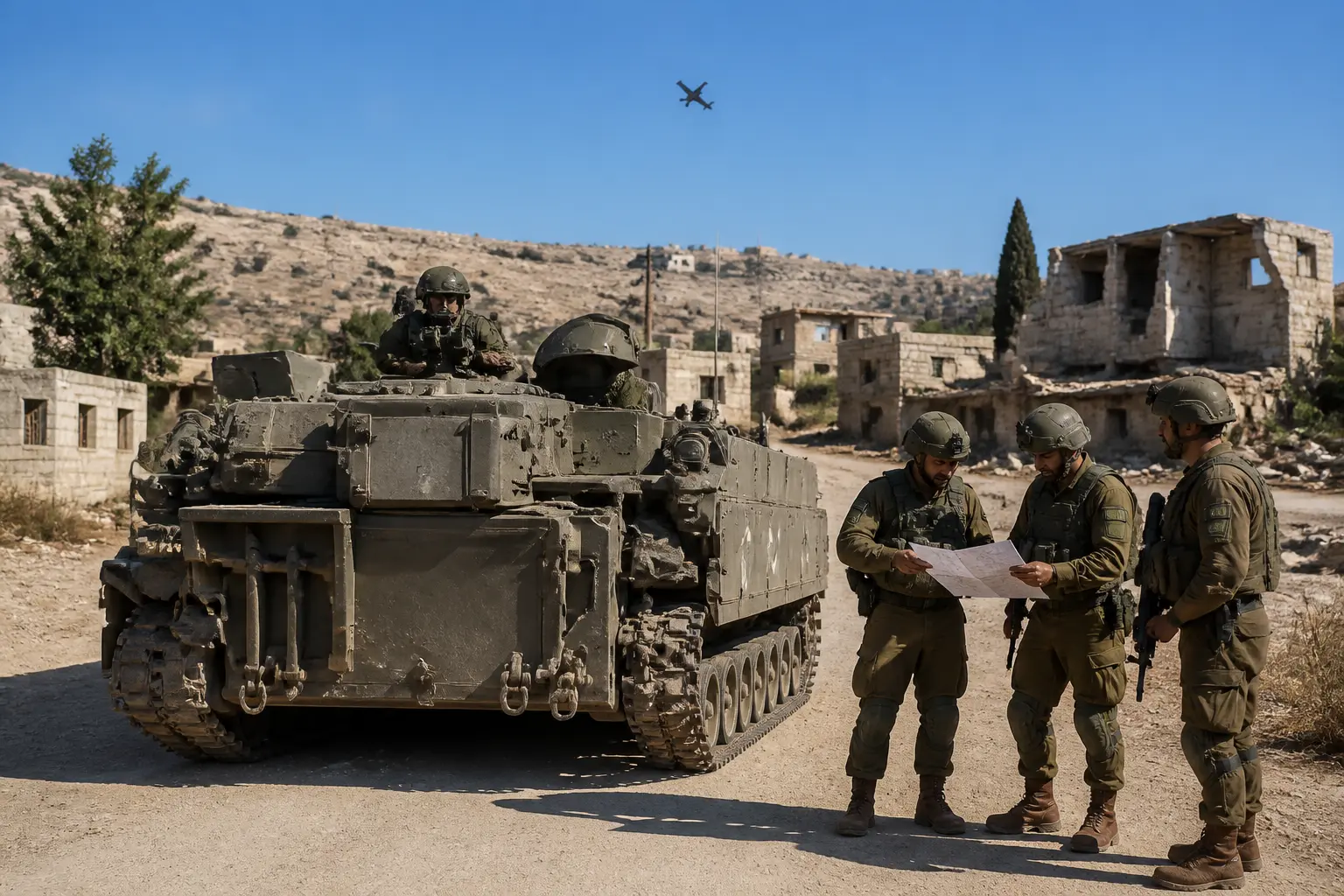
The Framework Sequence Still Governs Every Step
The June 26 Trilateral Framework text sets a reciprocal, sequenced process. The Lebanese Armed Forces restore effective sovereign authority over territory pending verified disarmament of non-state armed groups and dismantlement of their infrastructure. Only then does the IDF progressively redeploy out of Lebanese territory.
| Step | Who acts | Requirement |
|---|---|---|
| 1 | LAF | Assume full security responsibility in agreed pilot zone |
| 2 | LAF | Remove fighters, weapons and infrastructure |
| 3 | Verifier | Confirm clearance accepted by both sides |
| 4 | IDF | Redeploy once confirmation delivered |
| 5 | Civilians | Return under exclusive Lebanese control; reconstruction starts |
Two initial zones were agreed. Future ones need mutual consent. The United States pledged to verify and support. Lebanon committed to a monopoly on arms and full sovereignty. Israel stated it has no territorial ambitions and that ending the non-state threat removes any need for IDF presence or action.
Hezbollah is not a party to the talks. Its leadership has signaled pullback south of the Litani but refused full disarmament farther north. That gap keeps the sequence slow. The Rome round left pilot zones unexpanded even as a shortlist of potential verifier countries emerged.
Resolution 1701 Still Sits Half-Finished After Twenty Years
Abdelatty tied the demand explicitly to full implementation of UNSCR 1701. Adopted in 2006 after the previous major Israel-Hezbollah war, the resolution called for cessation of hostilities, Israeli withdrawal, deployment of the Lebanese army and UNIFIL south of the Litani, and disarmament of all armed groups so only state forces carry weapons.
- Cessation of hostilities and no foreign forces without Lebanese consent
- Israeli withdrawal behind the Blue Line
- LAF and UNIFIL exclusive armed presence between the Blue Line and the Litani
- Disarmament of non-state groups across Lebanon
- Secure borders and no threats from Lebanese territory
Successive reports and Council consultations have tracked incomplete delivery on the disarmament and exclusive-state-control clauses for years. A July 2026 Security Council 1701 consultations report covered the period through June and noted the new Trilateral Framework does not mention 1701, UNIFIL or a successor presence by name. UNIFIL’s current mandate runs to the end of 2026. The Framework’s pilot approach is the practical track now, yet Egypt keeps the older resolution on the table as the sovereignty baseline.
Cairo Keeps the Bilateral Track From Standing Alone
Raji thanked Egypt for continuous support of Lebanese institutions and pledged ongoing coordination. Abdelatty separately spoke the same day with Greek Foreign Minister Giorgos Gerapetritis. They reviewed regional security arrangements and de-escalation efforts. Abdelatty outlined Egypt’s intensive contacts aimed at calming tensions through dialogue. Both sides praised the Egyptian-Greek strategic partnership and wanted more political and economic work.
Egypt has long treated Lebanese stability as linked to its own border and Gaza calculus. Public calls for full withdrawal after a stalled round keep Arab capitals inside a process that is otherwise US-mediated and bilateral. The message is that pilot zones and verification shortlists are tools, not the end state. Full exit and state monopoly remain the measures of success.
South Lebanon Still Waits for Returns That Stick
Hundreds of thousands of Lebanese remain displaced from the south. Homes in early pilot areas were often uninhabitable. Israeli units have stayed nearby and fired warning shots when LAF approached too close. Hezbollah civilian networks have continued operating even after LAF deployment in places such as Zawtar al-Gharbiyeh, according to monitoring groups.
2 IDF reservists killed by an IED on August 5 during the Rome round
113 IDF projectiles recorded by UNIFIL on that Wednesday, the highest daily total in weeks
4,333 people killed in Israeli attacks since March, per Lebanese authorities
More than 1 million displaced at peak
Aid continues to arrive. Jordan’s successive aid convoys into Lebanon have pushed truck counts higher as reconstruction stays blocked behind security sequencing. Residents interviewed in the south express low faith that paper progress will restore land or stop demolitions. Some welcome any deal that ends cycles of war. Others see expansionist aims behind continued Israeli presence.
September Talks Carry the Same Sequencing Fight
The next formal round is set for early September. Washington will narrow the verifier shortlist. Lebanon will keep pressing for larger zones and faster handovers so civilians can return under state control. Israel will keep linking redeployments to verified clearance and wider security arrangements. Egypt’s Monday call puts the full-withdrawal and 1701 standard back into the public record between those positions.
Abdelatty’s language left little room for open-ended phasing. Concrete results that protect sovereignty, he said, require complete exit and the end of attacks. That is the second-order pressure the Rome stall invited: bilateral technical work continues, yet Arab diplomatic weight keeps insisting the sequence must deliver the map change, not just the next shortlist.
