
Jordan sent 26 more aid trucks into Lebanon on Thursday, pushing its four-month relief bridge to 197 trucks total. The Jordan Hashemite Charity Organization (JHCO) organized the convoy, its tenth since fighting resumed in March, working with the Jordan Armed Forces-Arab Army (JAF) and the Ministry of Foreign Affairs. It carried food, medical supplies, hygiene items, tents and two mobile bakeries into a country where more than a million people are still displaced.
The shipment lands inside a relief operation that is falling short almost everywhere else. The United Nations’ appeal for Lebanon is barely a third funded, and the Gulf donors who carried the last war are tied up in one of their own this time.
A Tenth Convoy Crosses Into a Widening War
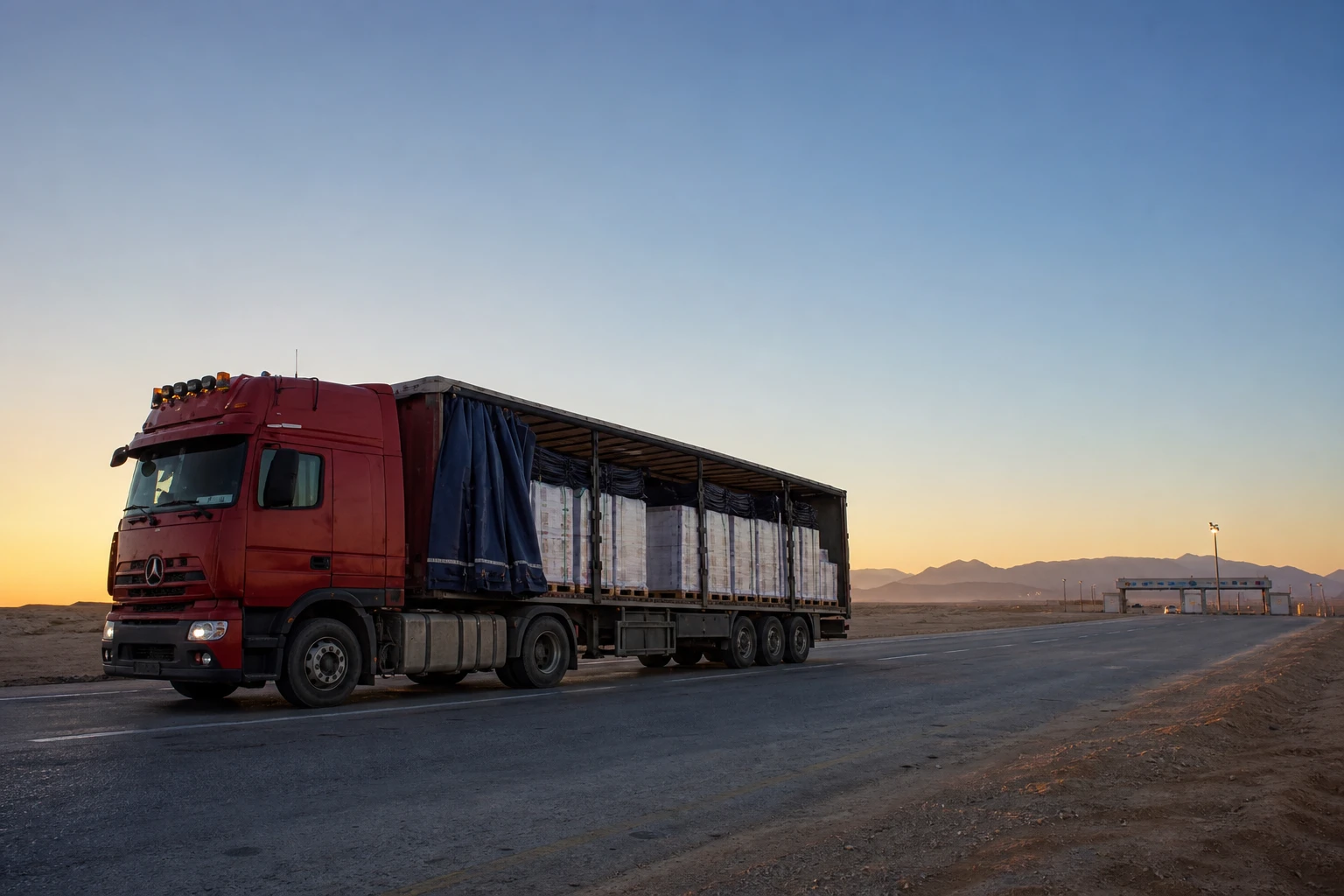
The convoy that left Jordan on Thursday comprised 26 trucks carrying food, medical supplies and other relief assistance, organized in cooperation with JAF, the Foreign Ministry and international partners, JHCO said in a statement reported by Jordan Times. It was the organization’s tenth humanitarian shipment to Lebanon since the crisis resumed in March, and it brought the cumulative total of JHCO trucks sent to the country to 197.
JHCO Secretary-General Hussein Al-Shibli said the organization keeps coordinating with the armed forces, the Foreign Ministry and international partners to steer aid toward needs identified on the ground. Across all ten shipments, deliveries have included food, medical and relief supplies, hygiene items, tents and two mobile bakeries meant to keep displaced families fed.
The War That Keeps Restarting
This round of fighting is not Lebanon’s first since the Gaza war began in 2023. It restarted on March 2, when Hezbollah fired rockets and drones at Israel after the United States and Israel launched their war against Iran and killed Tehran’s supreme leader. Israel answered with airstrikes and a ground push into southern Lebanon that it has not fully reversed.
More than 4,000 Lebanese have been killed and over a million displaced since March, according to Lebanon’s Ministry of Public Health. Israeli forces still control 55 towns in the south, part of what the UN’s human rights office describes as evacuation orders covering nearly 14 percent of Lebanese territory.
Jordan has not been a bystander to the region’s wider fighting either. In March, its air defenses intercepted eight Iranian missiles headed toward US bases passing through its airspace, a reminder that the kingdom running this relief bridge sits inside the blast radius of the conflict feeding it.
Hospitals Close as the Displaced Wait
Lebanon’s health system has taken a direct hit. Sixty-two hospitals have been damaged or shut down since fighting resumed on March 2, and at least 128 health workers were killed in 190 recorded attacks on medical staff and facilities between March and the end of May, according to the UN’s Office for the Coordination of Humanitarian Affairs (OCHA).
More than half of the displaced are women and girls, and 636 collective shelters now hold families with nowhere else to go, OCHA says. Nearly one in four Lebanese are projected to face crisis-level hunger through August.
How Much of Lebanon’s Aid Appeal Is Actually Funded?
Lebanon’s humanitarian response is running on a fraction of what the UN says it needs. OCHA’s latest appeal calls for $640 million through the rest of the year, more than double its original ask, and by early June only part of the first request had actually arrived.
- $640 million is what OCHA says Lebanon needs for the next six months, more than double its original request.
- $185 million of the original $308 million appeal had arrived by early June, according to OCHA.
- 14% is how much of the IFRC’s Lebanon appeal was funded as of late May.
- 62 hospitals have been damaged or shut down since fighting resumed on March 2, per OCHA.
The International Federation of Red Cross and Red Crescent Societies (IFRC) says its own Lebanon appeal remains under 14 percent funded, even as six of its Red Cross and Red Crescent volunteers have been killed on duty across Lebanon and Iran since the escalation began.
Behind the headlines, multiple silent crises are deepening with consequences that will last for years.
Cristhian Cardoza, the IFRC’s deputy regional director for the Middle East and North Africa, said that warning applies squarely to Lebanon, where operations may soon need to be scaled back for lack of money.
Where the Gulf Money Went
During the 2024 escalation, Gulf states including Saudi Arabia, Qatar, the United Arab Emirates, Kuwait, Oman and Bahrain provided significant assistance to Lebanon. This time, those same governments are absorbing fallout from the wider Iran war and are not positioned to respond the same way, according to Imran Riza, the UN’s resident and humanitarian coordinator in Lebanon.
Riza called the combination of conflict, displacement and funding cuts a perfect storm of unpredictable challenges.
Washington’s own contribution has shrunk too. The US gave nearly $157 million in humanitarian assistance to Lebanon in 2024, largely through the US Agency for International Development, before the Trump administration cut USAID’s budget and folded its remaining programs into the State Department. The European Union, by contrast, is still providing €100 million (about $108 million) in humanitarian aid to Lebanon this year, including through an EU-organized air bridge.
Jordan’s Four-Month Bridge, Truck by Truck
JHCO was founded in 1990 and has since sent aid to more than 30 countries, but the Lebanon operation has become one of its largest sustained efforts. The convoys typically travel by land through Syria, whose authorities JHCO has repeatedly thanked for keeping the route open.
| Convoy | Date | Trucks | Cargo Highlight |
|---|---|---|---|
| 4th | May 7, 2026 | 18 | Medical supplies and infant formula |
| 6th | June 4, 2026 | 28 | Food aid run with the World Food Programme |
| 8th | June 18, 2026 | 19 | Hospital medicine for Lebanon’s health sector |
| 9th | Late June 2026 | 20 | Relief supplies routed through Syria |
| 10th | July 16, 2026 | 26 | Food, hygiene items, tents, two mobile bakeries |
The sixth convoy alone brought the running total to 130 trucks, according to the Jordan News Agency, and was organized with the UN World Food Programme. One April shipment turned into an unusually large coalition effort, pulling in ten countries alongside the European Union.
- Switzerland
- Australia
- Canada
- Romania
- Portugal
- Germany
- Singapore
- Luxembourg
- Spain
- The Netherlands
Jordan is running this bridge while managing its own strained finances. Even Amman’s summer festival crowds arrived as tourism slumped this year, a sign the kingdom’s own economy has little slack to spare for a relief program it keeps expanding anyway.
A Ceasefire Hezbollah Still Calls ‘Null and Void’
The aid keeps moving because the fighting has never fully stopped. A November 2024 ceasefire collapsed on March 2. A new ten-day truce took hold on April 16, brokered by Washington, and was extended twice more before Israel and Lebanon agreed to a fuller ceasefire on June 3. Hezbollah rejected it within a day.
Naim Qassem, Hezbollah’s secretary-general, called that deal a roadmap to annihilate part of the Lebanese people
and demanded a full Israeli withdrawal before any halt to his group’s attacks. Negotiators kept talking anyway. On June 26, Israeli and Lebanese officials signed a framework agreement at the State Department that ties any Israeli withdrawal to Hezbollah’s disarmament, rather than mandating it outright. Qassem again rejected the deal as null and void.
A May poll by the Beirut-based pollster Information International found that 58 percent of Lebanese support disarming Hezbollah, including 38 percent within the group’s own Shiite base. Academics who study the region’s ceasefire history are less convinced the paperwork will hold. Researchers writing for The Conversation, who have tracked Israel-Hezbollah truces back to 1993, said the likelihood of a return to full-scale war remains high. A separate analysis called the same deal potentially the most significant challenge to Hezbollah’s power since the group emerged more than four decades ago.
Violence on the ground has not paused for the diplomacy. An Israeli strike killed a Lebanese army general near Nabatieh even as the latest truce was supposedly in force, underscoring how little the framework has changed on the ground so far. Negotiators were scheduled to reconvene in Rome on July 14 and 15 for a fifth round of talks, with Lebanese President Joseph Aoun due in Washington on July 21 to meet President Trump.
