
Israel and Lebanon opened a fifth round of direct talks in Washington on Tuesday, with a State Department manifest showing U.S. envoys joined by Israeli and Lebanese delegations. The round came after four earlier rounds since April failed to produce a durable ceasefire, and it sits inside a wider deal that the U.S. and Iran signed two weeks ago that pulled Lebanon into a separate negotiation track and created a U.S.-Lebanon-Iran task force to consolidate the ceasefire.
That same framework prompted Lebanese President Joseph Aoun to publicly question what role Iran now plays in his country’s affairs. Secretary of State Marco Rubio, speaking in the United Arab Emirates, said the U.S. will “negotiate and deal directly with the Lebanese government” and that Iran’s support for Hezbollah “will be discussed as part of our conversations with the Iranians.”
Who Showed Up on the State Department Manifest
The fifth round convened at the State Department on Tuesday. Per the manifest seen by NatSec Daily, the U.S. side was staffed by State Department Counselor Dan Holler, U.S. Ambassador to Lebanon Michel Issa, U.S. Ambassador to Israel Mike Huckabee, Deputy Assistant Secretary of State for Near East Affairs Jake McGee, State Department senior adviser Jay Mens and Matt Valnoski, Middle East director on the National Security Council. A U.S. official, granted anonymity to provide details of the ongoing meetings, said the talks “will continue to advance a comprehensive peace and security agreement between the two countries.”
The official said Holler and Assistant Secretary of Defense for International Security Affairs Daniel Zimmerman kicked off the day’s talks. The Lebanese and Israeli embassies declined to comment, and the White House referred questions to State, which did not respond to questions.
Lebanon was represented by former ambassador Simon Karam, Ambassador Nada Mouawad and Wissam Boutros, the deputy chief of mission, according to the manifest. Israel was represented by Ambassador Yechiel Leiter, Deputy National Security Adviser Joseph Draznin, the Israeli military’s head of strategic planning Brig. Gen. Amichai Levin, military attaché Brig. Gen. Arik Ben Dov and Noa Ginosar, the embassy’s minister-counselor for the Middle East. The State Department did not respond to an attempt to confirm the manifest.
| Country | Head of Delegation | Other Members |
|---|---|---|
| United States | Dan Holler, State Department Counselor; Daniel Zimmerman, Assistant Secretary of Defense for International Security Affairs | Ambassador to Lebanon Michel Issa; Ambassador to Israel Mike Huckabee; Deputy Assistant Secretary of State for Near East Affairs Jake McGee; senior State Department adviser Jay Mens; Matt Valnoski, Middle East director on the National Security Council |
| Lebanon | Simon Karam, former ambassador | Ambassador Nada Mouawad; Wissam Boutros, deputy chief of mission |
| Israel | Yechiel Leiter, Ambassador | Deputy National Security Adviser Joseph Draznin; Brig. Gen. Amichai Levin, head of strategic planning; Brig. Gen. Arik Ben Dov, military attaché; Noa Ginosar, minister-counselor for the Middle East |
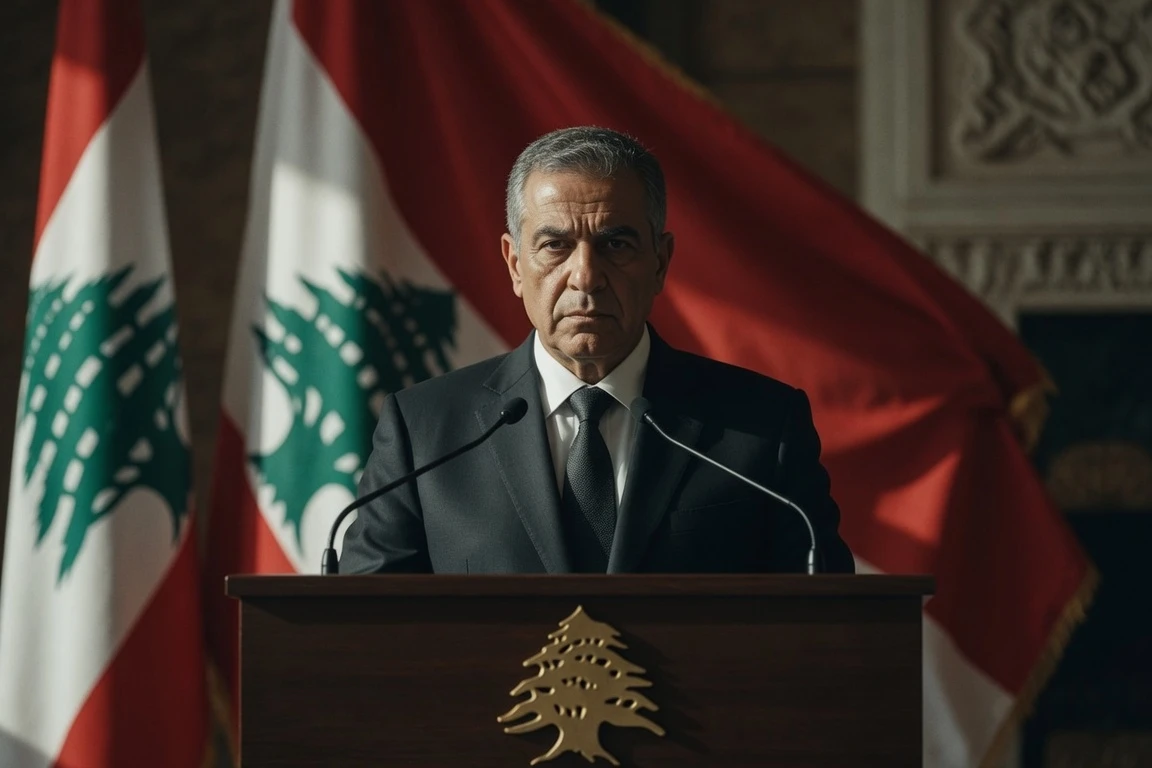
The Iran MOU Built a Task Force Lebanon Did Not Ask For
The U.S.-Iran MOU has folded Lebanon into a wider deal that Beirut insists it did not negotiate. President Aoun said he received a phone call from Vice President JD Vance and Rubio. He said the American duo is monitoring the implementation of the deal reached in Switzerland, “including the formation of a task force comprising the United States, Lebanon, and the Islamic Republic of Iran to consolidate the ceasefire in Lebanon and oversee the implementation of related measures.”
The U.S.-Iran deal stipulates that a final agreement would confirm a “permanent termination of the war on all fronts, including in Lebanon.” The arrangement, in other words, names Lebanon inside an American-Iranian agreement and then routes enforcement through a tripartite body. Aoun and the Lebanese negotiating team had spent the spring pressing Israel directly. The MOU has put Iran at the same table, and Trump’s Iran deal named Lebanon in its first clause.
A Lebanese official and two foreign officials working on Lebanon told Reuters the Iran-U.S. deal had “pulled the rug out from the Lebanese state,” leaving it in its weakest position yet. The Lebanese official was skeptical that any tangible progress would come out of the negotiations, which are set to last for three days. “There remains a fundamental problem of trust between us and the Israelis in these talks. We cannot fulfill their demands, and they reject all of ours,” the official said.
Gen. Joseph Votel, the former head of CENTCOM, told NatSec Daily he saw an inherent tension. Lebanon wants Israel’s military out of its territory and to assert its sovereignty over its land, while Israel wants to prevent future Hezbollah attacks. “One of the things Iran is going to try to do with the 60-days is going to drive a hard bargain on trying to resolve the situation in Lebanon on behalf of Hezbollah and get Israel out of Lebanon,” Votel said. “They are trying to get those types of issues front-loaded.”
Beirut’s Sovereignty Anxiety, Named Out Loud
The bilateral track that Aoun set in motion in March has been overtaken by a wider track he did not ask for. David Schenker, who served as assistant secretary of State for the Middle East during the first Trump administration, put the concern plainly. “Why would Iran have a role?” he said. “This is why so many Lebanese are upset and demoralized. They were optimistic about the promise of increasing Lebanese sovereignty over time and they see this as a real blow to that endeavor.”
Aoun used sharper language on June 5. In Aoun’s June 5 interview on Iran’s role in Lebanon, the Lebanese president said Iran is “using Lebanon as a bargaining chip in their negotiation with US.” Iran’s Foreign Minister Abbas Araghchi pushed back, posting that “Had Lebanon been a bargaining chip for Iran, we’d have a deal long ago” and adding, “Save Lebanon from your real foe, Mr. President.”
It’s not your country, it’s our country.
The line, addressed to Iran’s Islamic Revolutionary Guard Corps, came in Lebanese President Joseph Aoun’s June 5 interview with CNN.
Hezbollah’s Leader Has Already Picked the Wider Track
Hezbollah’s leader, Naim Qassem, has chosen Iran’s track. In a statement on June 4, Qassem slammed the Lebanon-Israel talks as a “surrender,” saying the resulting truce was rejected in its “entirety by broad segments of the Lebanese people.” The Lebanese government has moved carefully since 2025 to disarm Hezbollah without confronting the group directly, fearing it would spark a civil conflict. Hezbollah has called on the government to withdraw from its direct talks with Israel.
Israeli government spokesperson David Mencer, in a briefing on the eve of the new round, said the purpose of the talks is “disarming Hezbollah and achieving a genuine peace agreement” with Lebanon. “The only impediment to a deal with Lebanon is Hezbollah,” Mencer said, “which is why we believe that they should be disarmed and dismantled.” Hezbollah expects Iran to demand an Israeli withdrawal as Tehran pursues talks with the U.S. on a final deal, and says the Lebanese government should bet on that track instead. Karim Safieddine, a fellow at the Washington-based Tahrir Institute for Middle East Policy, told Reuters there is a risk that Israel could take an even more hardline position in the Washington talks given its officials’ anger over the U.S.-Iran deal. A separate US-Iran Lebanon mechanism reportedly excluding Israel is also under discussion, per Channel 12 reporting.
What the June 3 Pilot Zones Already Set
Before the MOU landed, Israel and Lebanon had already agreed to a ceasefire and to “pilot zones” in which the Lebanese Armed Forces would take over after the Israeli military cleared areas of Hezbollah. The deal, struck on June 3 after the fourth round of U.S.-mediated talks at the State Department, made the ceasefire contingent on a “complete cessation of Hezbollah fire” and the evacuation of all Hezbollah operatives from the South Litani Sector.
The two sides agreed to “swiftly advance the creation of pilot zones in which the Lebanese Armed Forces will take exclusive control of the territory to the exclusion of all non-state actors.” The parties also agreed to reconvene political and security tracks the week of June 22, with a view toward reaching a comprehensive agreement. The joint statement also condemned Iran’s attacks on countries in the region and its activities that “undermine stability throughout the Middle East, whether through support for proxies and all other acts of aggression.”
Israeli attacks since the war began in early March have killed more than 4,000 people in Lebanon, and Israeli troops continue to occupy the country’s south. Hezbollah fired on Israeli jets 48 hours into the ceasefire as Iran conditioned its deal on Israeli withdrawal, and Israeli Prime Minister Benjamin Netanyahu, after a tense phone exchange with Trump, was restrained from deepening the incursion and calling for strikes on Beirut, according to media reports.
Lebanon, for its part, has said one of its key goals in the new round would be securing an Israeli military withdrawal. Top Israeli officials have said troops would remain in southern Lebanon indefinitely. The next test of those competing positions opens in Washington this week.
Rubio’s Two-Line Position
Rubio’s position in Abu Dhabi held both halves of the contradiction. “When it comes to Lebanon and what’s happening inside of Lebanon, we’re going to negotiate and deal directly with the Lebanese government,” he said. Still, he continued, Iran’s support for Hezbollah “will be discussed as part of our conversations with the Iranians.”
The first line is what Aoun wanted to hear. The second is what Votel and Schenker are warning about. Aoun’s own statement on Tuesday’s call with Vance and Rubio did not push back on the new Iranian seat, only describing what the two U.S. officials said they were monitoring.
The two lines are not reconcilable as a matter of public messaging. Either Lebanon negotiates with Israel directly while Iran watches, or Iran sits at the same table through a task force and has standing to shape the final deal. The fifth round in Washington will test which version holds.
Why This Round May Not Move the Line
Aoun’s first ask in Washington is a “reasonable” timetable for Israeli withdrawal, the Lebanese official told Reuters. Israel is pressing for Hezbollah disarmament as a precondition. Both demands have been on the table for months. The new variable is the Iranian shadow, and whether Tehran treats the U.S.-Lebanon-Iran task force as a hostage negotiation for the larger deal, as Votel suggested, or as a way to extract concrete Israeli concessions.
The Lebanese and Israeli embassies declined to comment, and the White House referred questions to State, which did not respond. Votel said Iran’s strategy is to front-load Hezbollah’s concerns inside the 60-day window. The fifth round’s outcome is, in effect, a referendum on whether the bilateral track Aoun set in motion in March still exists, or whether Lebanon will be forced to negotiate its own war through Tehran.
