
Saudi Arabia is debating its first strikes on Yemen’s Houthi movement since 2022, after the group fired missiles and drones at Abha International Airport this week in the worst clash between the two sides in four years. Officials have not made a final call, though the kingdom’s defense minister, Khalid bin Salman, has told US and regional officials that Washington is giving Riyadh room to hit back, according to Middle East Eye, which first reported the internal deliberations.
The dispute began over a funeral flight. The deeper risk sits offshore. Since Iran’s war with the United States effectively shut the Strait of Hormuz in February, Saudi Arabia has rerouted most of its oil exports through the Red Sea, the exact waters the Houthis are now threatening to hit.
A Funeral Flight Cracks a Four-Year Truce
Direct flights between Tehran and Sanaa had not run in more than a decade. Saudi Arabia had insisted that flights to the Houthi-held capital route instead through Amman or Cairo. When a Houthi delegation flew home this month from the funeral of Iran’s assassinated Supreme Leader, Ayatollah Ali Khamenei, killed in the US-Israeli strikes that opened the wider war on February 28, Riyadh treated it as a direct challenge to that arrangement.
US and regional officials told Middle East Eye the outbound flight carried Lebanese, Iranian, Syrian and Iraqi specialists in drone and missile technology, a claim the Houthis deny. Yemen’s Saudi-backed government says it struck Sanaa airport’s runway solely to stop the delegation’s return flight. Houthi and Yemeni officials alike have pointed to the Saudi-led coalition as the actual source of the strike.
- July 3: A flight from Tehran lands in Houthi-held Sanaa for the first time in over a decade, carrying a delegation to Khamenei’s funeral.
- July 13: Yemeni government airstrikes hit Sanaa airport’s runway to stop the delegation’s return flight, which diverts to Hodeidah. The Houthis retaliate within hours, firing missiles and drones at Abha International Airport.
- July 14: Saudi-led coalition aircraft strike Saada, the northern stronghold of Houthi leader Abdul Malik al-Houthi. The Houthis say they downed a Saudi reconnaissance drone.
- July 15: The US approves an arms sale to Saudi Arabia and sends a senior Central Command general to Riyadh.
- July 16: Al-Houthi threatens a “different war” in a televised speech, naming Saudi oil facilities as targets and calling for demonstrations the next day.
Both governments have stayed vague about who actually gave the order for the Sanaa strike. Saudi Arabia has not confirmed it in public.
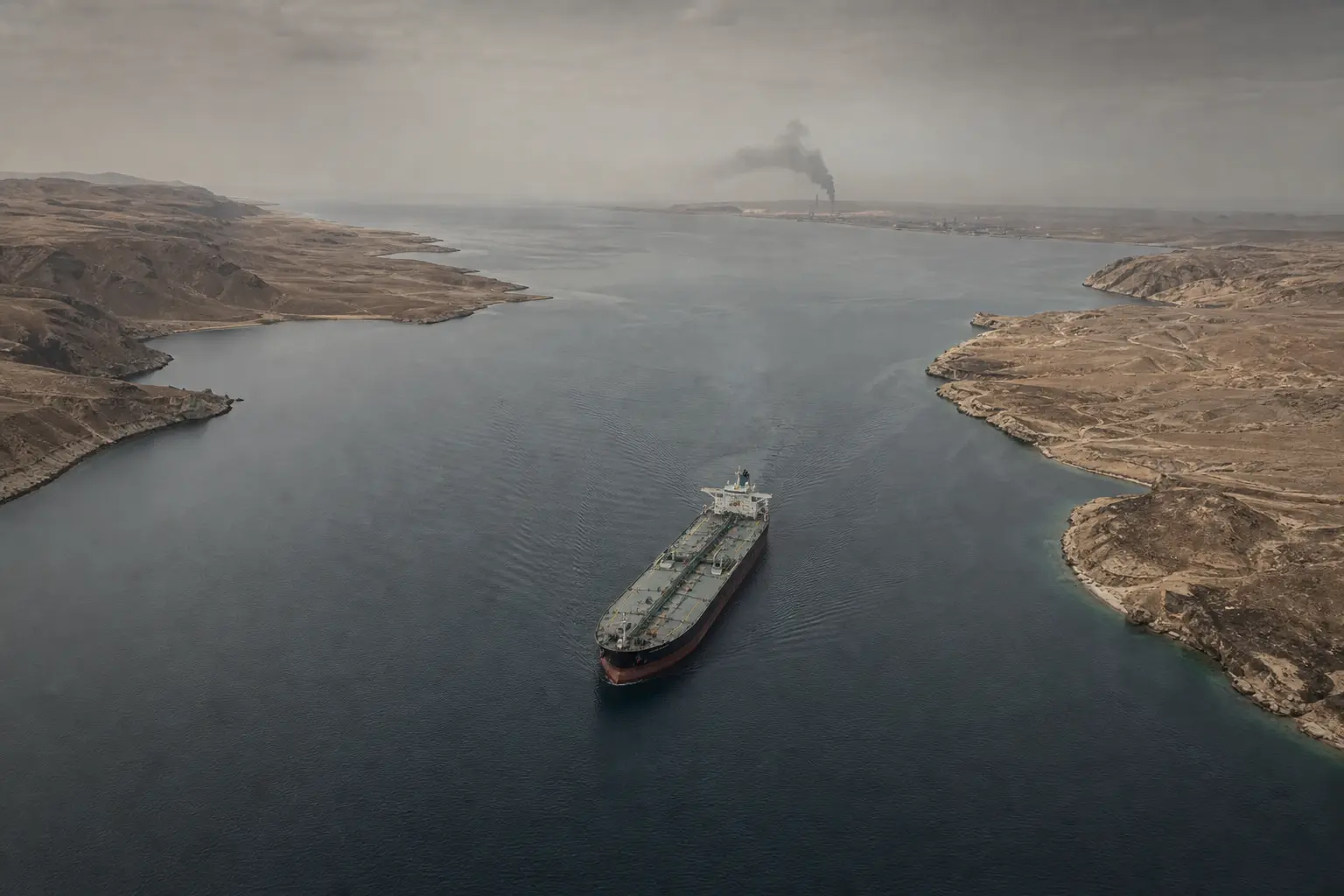
The Oil Lifeline Now Sits in the Line of Fire
Two days after the Saada strikes, al-Houthi went further. “All Saudi oil facilities and vital installations will be targets for our missiles and drones if Riyadh gets involved” in striking Yemen again, he said. “Airports for airports, ports for ports, and a blockade for a blockade.”
That threat lands at an awkward moment for the kingdom’s finances. Since Iran’s war with the United States effectively shut the Strait of Hormuz in late February, Saudi Arabia has shifted the bulk of its crude exports onto the Red Sea corridor, sending roughly 4.5 million barrels a day through its East-West pipeline to the port of Yanbu, according to Middle East Eye.
The pipeline can be temporarily expanded to 7 million barrels a day, according to the US Energy Information Administration, the government agency that tracks global oil flows. Before the war, Saudi Arabia alone shipped 6.2 million barrels a day through Hormuz, 42 percent of everything that transited the strait in 2023.
| Export Route | Normal Capacity | Status in Mid-2026 | Primary Threat |
|---|---|---|---|
| Strait of Hormuz | Saudi Arabia shipped 6.2 million bpd here in 2023 | Effectively closed since the Iran war began February 28 | Iranian naval interdiction |
| East-West Pipeline to Yanbu | 5 million bpd, expandable to 7 million bpd | Carrying roughly 4.5 million bpd | Houthi missile and drone strikes |
| Bab el-Mandeb Strait | Carried about 4 million bpd of oil in 2024 | Open, under explicit Houthi threat | Blockade or mining of shipping lanes |
Every one of those routes now touches Yemen, Iran or both.
I’d hate to be a Saudi today. There is no easy solution to Yemen.
Mohammed al-Basha, founder of the Yemen-focused risk advisory firm Basha Report, told Middle East Eye that a peace deal with the Houthis “would mean billions of dollars in reparations,” while a return to war carries 50-50 odds of a Saudi victory, he said.
That calculus is dividing opinion inside the Saudi royal court over how hard to hit back.
Cracks Inside the Royal Court
One US official and one Western official told Middle East Eye the internal debate points to real disagreement at the top of the Saudi government over how to answer the Houthi threat, as the wider war between the United States and Iran grinds on. Khalid bin Salman has indicated Washington would not object to offensive strikes, the officials said. No decision has been made.
A Gulf diplomat briefed on the talks told The National that Saudi Arabia was prepared to respond to any attack on its own territory. Separately, US officials cited by Axios said Crown Prince Mohammed bin Salman told President Donald Trump about the Sanaa airport strike in advance and secured his backing, a sign Riyadh is bracing for the confrontation to widen.
- Pakistan warned the Houthis against attacking Saudi Arabia, invoking the mutual defense treaty between the two countries, Reuters reported Thursday.
- The United States approved a sale of anti-drone rocket systems and sent a senior Central Command general to meet Saudi Arabia’s military chief in Riyadh.
- Oman and Qatar are mediating quietly, alongside the UN, to keep the crisis from tipping into open war.
- UN special envoy Hans Grundberg is pressing both sides to preserve what he called the relative calm Yemen has experienced since 2022.
UN Assistant Secretary-General Khaled Khiari told an emergency Security Council session Monday that Yemen and the wider region cannot afford another cycle of escalation.
A Stalemate That Was Never a Peace
Yemen’s war predates this month by a decade. The Houthis, officially known as Ansar Allah, seized Sanaa in 2014 and forced the internationally recognized government into exile. Saudi Arabia assembled a coalition and intervened in March 2015 to try to restore it, opening a war that has left 21.6 million Yemenis needing humanitarian aid, per the Council on Foreign Relations.
A UN-brokered truce in April 2022 halted most of the fighting but never became a full peace deal. Talks since then have stalled over a roadmap that would have Saudi Arabia pay Yemeni public-sector salaries and share oil revenue in exchange for reopening Sanaa’s airport and the port of Hodeidah, an arrangement that has become a bargaining chip in a stalled peace process rather than a route out of it.
Ibrahim Jalal, an independent expert on Yemen and the Arab Gulf, told Middle East Eye the standoff “has not produced any outcome closer to a political settlement,” adding that “the Houthis’ anti-Saudi rhetoric has also flared up.”
Could the Houthis Shut Bab el-Mandeb?
Probably not, according to the analysts who track the strait most closely. Closing it would risk drawing the United States directly into a fight the Houthis have avoided since agreeing to a separate truce over Red Sea shipping in May 2025. Houthi leaders, though, say every option, the strait included, stays on the table.
Al-Basha dismissed the closure risk. “Iran and Israel media leaks are emphasising the Bab el-Mandeb to try to bring the US into this fight, but the Houthis don’t want that,” he told Middle East Eye. “Trump also has enough problems in the Strait of Hormuz.”
Houthi officials have not ruled it out entirely. Mohammed al-Bukhaiti, a member of the group’s political bureau, told Al Jazeera the strait is “a strategic asset that Yemen has the luxury of utilising” against hostile states, though he said any action would spare vessels from countries “not involved in hostilities toward Yemen.”
Ahmed Nagi, a Yemen analyst at the International Crisis Group, has tracked how the Houthis weigh entering the wider war against the risk of losing their truce with Saudi Arabia. He said the group was testing a new red line. “If they succeeded, they could become more emboldened, raise their demands, and seek to cross additional red lines,” he said.
S&P Global Market Intelligence assessed after the Saada strikes that declaring the de-escalation phase over materially raises the odds of further missile and drone activity near the Yemen-Saudi border, along with fresh risk to aircraft flying close to airports where interceptors are active.
Washington Doubles Down on Riyadh
Washington’s response has been to send weapons. The State Department this week approved a foreign military sale covering 20,000 Advanced Precision Kill Weapon Systems, laser-guided rockets built to shoot down drones, in a package worth $2 billion.
Congress has already built new legal tools for this fight. Under the 2026 National Defense Authorization Act, the Pentagon can treat seized Houthi-bound weapons as its own stock, letting Washington arm partners like Saudi Arabia with confiscated Iranian shipments.
The deputy commander of US Central Command, Lieutenant General Patrick Frank, met Saudi Arabia’s chief of the general staff, First Lieutenant General Fayyad al-Ruwaili, in Riyadh the same week. Pakistan, which has its own mutual defense pact with Saudi Arabia, separately warned the Houthis not to attack the kingdom.
Al-Houthi closed Thursday’s speech by calling on supporters to hold mass demonstrations today.
