
World Jewish Relief is launching a 36-hour, match-funded appeal on 28 and 29 June to raise £500,000 for mental health work in Israel and Ukraine. The campaign, titled No Time to Wait, will fund trauma counselling, therapy training and suicide prevention across both countries, with every donation doubled during the window.
The push comes as the charity’s partner networks in both war theatres report rising demand. In Ukraine, more than four years of war have left an estimated 10 million people in need of humanitarian assistance. In Israel, ongoing rocket attacks and the broader security crisis since 7 October have driven a sharp increase in mental health challenges, including suicide risk.
A 36-Hour Match-Funded Push for Two Fronts at Once
The appeal, called No Time to Wait, runs from 28 to 29 June. It targets £500,000 for trauma care, therapy services, suicide prevention and specialist psychological support in both countries. Every donation is doubled through match funding during the 36-hour window, a mechanism the charity has used in past appeals but never across two active war fronts at the same time.
Funds raised will train psychologists, expand counselling and trauma services, and support home repairs for older people in Ukraine. The campaign sits under the Jewish community’s dedicated humanitarian agency, founded in 1933 and now operational in 21 countries. Chief executive Paul Anticoni OBE framed the call in stark terms. Donations made through the No Time to Wait donation page will be processed during the appeal window and doubled against match funding the charity has secured.
10 Million in Need and a Family Reconnecting
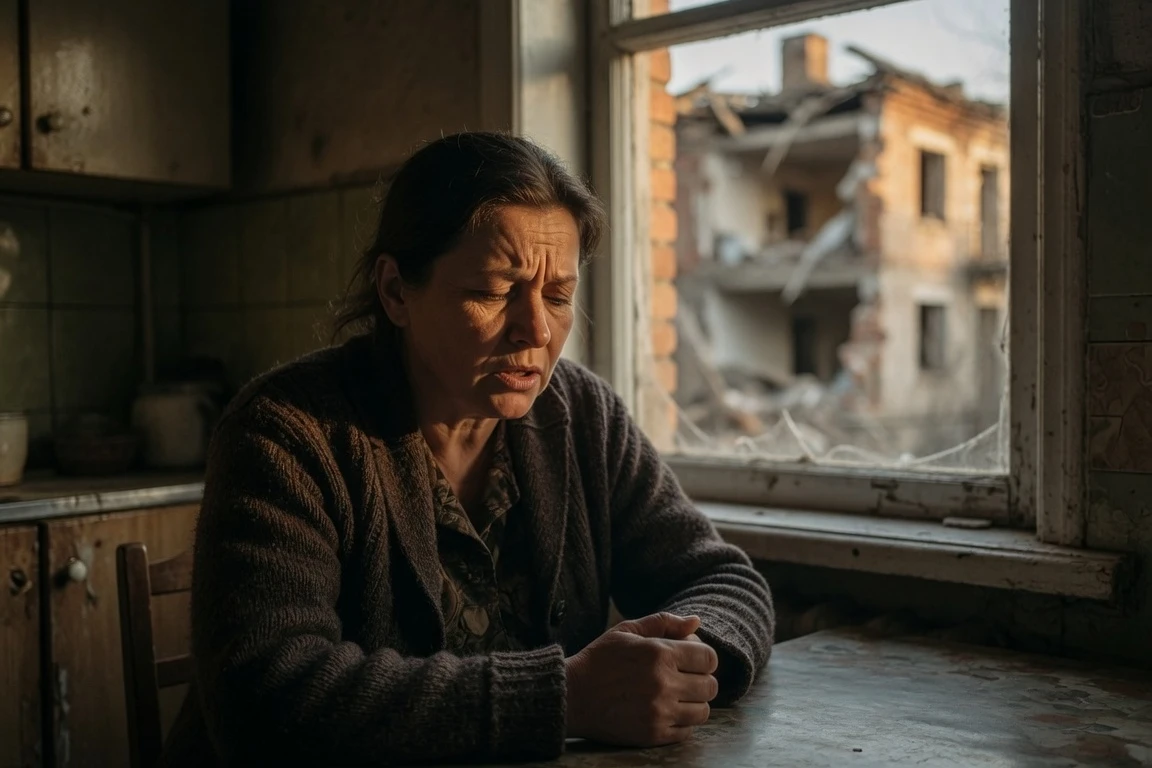
Ukraine is the half of the appeal that has run for more than four years. World Jewish Relief estimates that more than 10 million people in the country require humanitarian assistance, a figure the organisation cited again at its 3 June Ukraine emergency briefing. Around 1,000 Jewish homes have been seriously damaged since the war began, and the campaign will direct funds to repair properties belonging to older people.
Drone attacks happen in Ukraine almost every day, Liubov Rainchuk, a World Jewish Relief team member who was in the country during recent strikes, told the briefing. You know that you can live by day, but you don’t know what to expect by night, she said. Beth Saffer, head of older people programmes at the charity, told the briefing that older people have been the least likely to relocate within Ukraine and certainly to leave the country. They don’t want to leave their homes, or they don’t have the physical energy or the financial means, and they don’t want to adapt to a new place, she added.
The local partner on the ground is 2U, a Kyiv-based organisation. Julia Goldenberg, 2U’s director, told the same briefing that on a single night during the May 24 attack, the partner received reports of 50 more damaged apartments. When we appear to help, it’s not just the fixing of people’s homes. It’s the fixing of their lives, really, she said. Among those affected is Larysa, an 81-year-old Jewish woman in Kyiv whose flat was damaged by strikes. She was positively sure that she would not survive the coming winter as she would have no possibility to install a new window, Goldenberg said.
On the mental health side, the work is reconnecting families broken by repeated alert cycles. Yulia, 46, lives in eastern Ukraine with her two daughters. Years of conflict left her younger daughter Mariia struggling with anxiety and unable to express her emotions. I was afraid of losing my daughter emotionally, Yulia said. After receiving psychological support through World Jewish Relief programmes, the family began rebuilding their relationship.
Now we have finally learned to hear each other. For me, that is the greatest gift.
Yulia, a 46-year-old mother in eastern Ukraine whose daughter Mariia received psychological support through World Jewish Relief programmes, gave the words in the charity’s announcement of the campaign.
Rocket Sirens and Suicide Risk in Israel
Israel is the half of the appeal that opened after the 7 October attacks and has widened since. The charity says ongoing rocket attacks, air raid sirens and the broader impact of the war have contributed to a heightened risk of suicide across Israeli society. Schools along the northern border, facing missile fire from Hezbollah, are under particular strain, with students and staff displaced repeatedly. Teachers are exhausted, students are anxious, and entire communities are carrying the weight of unhealed trauma, according to the charity’s Israel programme overview. World Jewish Relief has responded by strengthening resilience work in northern Israeli schools through its local partner, the Israel Trauma Coalition (ITC).
The suicide prevention piece of the appeal will be channelled through MOSHE, a leading Israeli organisation working to bring down suicide rates. Rates have risen dramatically since 7 October, the charity says. Together, World Jewish Relief and MOSHE are rolling out community-based interventions designed to prevent suicide and offer critical mental health support.
Through the Israel Trauma Coalition, the charity has supported thousands of people in Israel with thousands of hours of therapy and trauma resilience training to psychologists. After attacks from Iran in June 2025, the partnership scaled up to provide emotional first aid, hotlines for therapists, and trauma-informed training to first responders and social services. The work continues at a time when the conflict has spread across the region, with sirens sounding out again as violence escalated on 28 February.
The psychological toll of war is immense for communities in Israel and Ukraine. We are urgently appealing to our community to provide a lifeline to those in desperate need.
Paul Anticoni OBE is the chief executive of World Jewish Relief, the Jewish community’s dedicated humanitarian agency founded in 1933.
The Mental Health Pipeline Behind the Appeal
The campaign’s match-funded money will scale a workforce the charity has been building for years. World Jewish Relief has already trained more than 800 psychologists across Israel and Ukraine, and provided trauma support to over 50,000 people. The No Time to Wait appeal will add to that pipeline rather than start from scratch.
The dual-front structure is the unusual piece. A single UK-based Jewish charity is now running match-funded mental health work on two active war fronts at once, with different partner networks and different trauma profiles. In Ukraine, the caseload is older Jewish civilians whose homes and neighbourhoods have been hit by repeated missile and drone barrages. In Israel, the caseload is broader, encompassing children in northern border schools, evacuees, and a population reporting a sharp rise in suicide risk since 7 October 2023.
| Indicator | Figure |
|---|---|
| Psychologists trained across Israel and Ukraine | More than 800 |
| People receiving trauma support | Over 50,000 |
| Ukrainians assisted with humanitarian aid since war began | Over 400,000 |
| War-damaged Jewish homes identified for repair in Ukraine | Around 1,000 |
| Ukrainians estimated to need humanitarian assistance | More than 10 million |
| Hours of therapy and resilience training in Israel via ITC | Thousands |
Across both countries, the table shows a charity operating at a scale few others in the UK Jewish sector can match on this issue. World Jewish Relief and its partners have assisted over 400,000 Ukrainians with humanitarian assistance since the war began, and have repaired over 1,000 war-damaged homes. In Israel, the Israel Trauma Coalition has entered emergency mode during the latest escalation in the Middle East.
ITC is running emergency hotlines, supporting hundreds of evacuees with psychological first aid, and giving school staff space to share concerns and receive practical tools. The 2023/2024 annual dinner raised £1.6m, and the charity recorded £17.3m of income that year, according to the 2023/2024 Impact Report. His Majesty King Charles retained his Royal Patronage of the charity in May 2024.
Every donation to the 36-hour appeal will be doubled through match funding the charity has secured. The £500,000 target will scale the existing programmes through ITC, MOSHE and 2U. World Jewish Relief operates in 21 countries and reported a positive impact on more than 140,000 people in 2023/2024.
How a Single Charity Ended Up on Two War Fronts
The 36-hour window is short for a fundraising appeal, but it is also a window onto how the charity’s work has been reshaped by the last four years. The Israel Trauma Coalition partner that World Jewish Relief uses in Israel is the same partner it has worked with in Ukraine. Ukrainian psychologists have travelled to Israel to learn wartime trauma protocols, and the flow of expertise now runs in both directions. The No Time to Wait campaign is the first time the charity has framed the two theatres as a single fundraising proposition.
The structure also reveals something about the wider UK Jewish charity response. World Jewish Relief remains the Jewish community’s dedicated humanitarian agency, and the dual-front campaign positions it as the main conduit for mental health giving across both conflicts. Match funding effectively halves the cost per pound of impact for donors who give during the 36-hour window, but only if the charity hits its £500,000 target within the two days.
From the partner side, the 2U briefing in Kyiv set out the daily reality. Drone attacks happen almost every day, and 50 damaged apartments were logged in a single night during the May 24 attack. The No Time to Wait appeal will help fund the next round of repairs, but the appeal’s mental health focus also reflects the partner’s concern about the longer tail of trauma in Ukrainian families. Yulia and her daughters began rebuilding their relationship after receiving psychological support through the charity’s programmes, the same pathway the appeal will fund for additional families on both fronts.
The Pipeline Already Built Before Match Funding Opens
World Jewish Relief was founded in 1933 and is proud to have rescued over 65,000 Jews fleeing the Nazis. The charity has since rebuilt itself around refugee resettlement, climate response and humanitarian action in 21 countries, with the Israel and Ukraine work now its highest-profile front. The match-funded appeal runs 36 hours on 28 and 29 June. Donations made during that window will be doubled and directed to the trauma, therapy, suicide prevention and home repair programmes already in place through the charity’s local partners.
The existing pipeline includes more than 800 trained psychologists and over 50,000 people reached with trauma support. Match funding begins on 28 June and runs through 29 June, and the appeal will be judged against the £500,000 target the charity has set.
Frequently Asked Questions
When does the No Time to Wait campaign run?
The campaign runs from 28 to 29 June. It is a 36-hour match-funded appeal run by World Jewish Relief.
What will the £500,000 fund?
Funds will support trauma care, therapy services, suicide prevention and psychological support in Israel and Ukraine, alongside home repairs for older Ukrainians.
How does the match funding work?
Every donation made during the 36-hour window is doubled, effectively halving the cost per pound of impact for donors.
Who runs World Jewish Relief?
The charity was founded in 1933 and is led by chief executive Paul Anticoni OBE. It operates in 21 countries and is the Jewish community’s dedicated humanitarian agency.
