
Lufthansa Group will fly to Riyadh again starting September 10, its first step back into a Saudi market it abandoned nearly five months ago. The German carrier said Thursday it will run three weekly Frankfurt-Riyadh flights. Sister airline ITA Airways adds five weekly Rome-Riyadh flights from September 15, and Austrian Airlines restarts Vienna-Amman service on October 2, Reuters reported.
That is the entire visible comeback. Six other Lufthansa Group destinations, Abu Dhabi, Beirut, Dammam, Erbil, Muscat and Tehran, stay off the schedule through October 24. Dubai remains grounded until September 13 after being pushed back repeatedly since March. Gulf rivals that never stopped flying spent the gap rebuilding the connectivity Lufthansa is only now easing back toward.
Riyadh Comes Back First, Amman Follows in October
Both cities had been sitting on Lufthansa’s books as suspended through October 24, the group’s standing deadline set months ago for eight Middle East destinations. Moving Riyadh up six weeks and Amman up three weeks is the first time since February that Lufthansa has pulled a restart date forward instead of pushing one back.
Riyadh matters to Lufthansa beyond this one schedule change. The group had spent the past year rebuilding its Saudi relationship, reviving nonstop Munich-Riyadh service after an eight-year gap, before February’s war reset that relationship to zero.
The restart plan, confirmed Thursday, breaks down by airline and city:
| Destination | Airline | Restart Date | Weekly Frequency |
|---|---|---|---|
| Riyadh | Lufthansa (from Frankfurt) | September 10, 2026 | 3 flights |
| Riyadh | ITA Airways (from Rome) | September 15, 2026 | 5 flights |
| Amman | Austrian Airlines (from Vienna) | October 2, 2026 | 3 flights |
| Dubai | Lufthansa and SWISS | Suspended until September 13, 2026 | Not yet resumed |
ITA Airways, Italy’s flag carrier and now part of Lufthansa Group’s stable of airlines, gets the higher-frequency slot out of Rome. Austrian Airlines’ Vienna-Amman route becomes the group’s only scheduled service to Jordan’s capital once it launches.
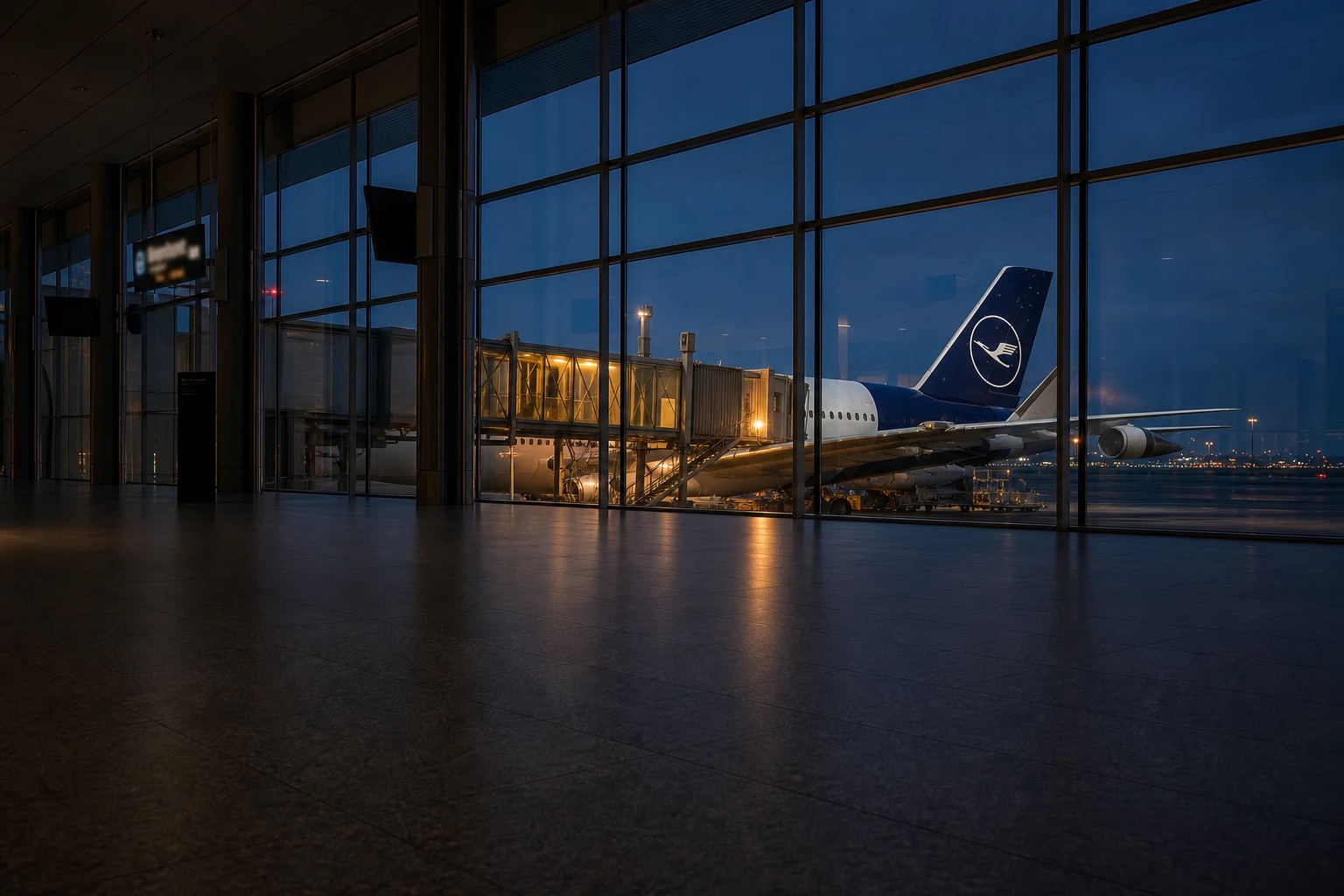
Which Middle East Cities Are Still off Lufthansa’s Schedule?
Six destinations stay suspended straight through October 24: Abu Dhabi, Beirut, Dammam, Erbil, Muscat and Tehran. Dubai gets a separate, earlier cutoff of September 13, the result of repeated delays dating back to March. Tel Aviv is the exception, largely restored across the group since early July.
- Abu Dhabi – suspended through October 24
- Beirut – suspended through October 24
- Dammam – suspended through October 24
- Erbil – suspended through October 24
- Muscat – suspended through October 24
- Tehran – suspended through October 24
Lufthansa’s own advisory confirms Dubai’s suspension running through September 13, alongside the six cities above, and warns that further changes are possible given the region’s security situation.
The carrier’s plans to bolster its Tel Aviv schedule after July’s restart show how selective the recovery still is, with one route gaining capacity while seven cities stay grounded.
Five Months of Rolling Extensions
The suspensions trace back to February 28, when the United States and Israel struck Iran and Tehran retaliated with missile and drone attacks across the region. Al Jazeera reported that at least eight countries closed their airspace that day, including Iran, Israel, Iraq, Jordan, Qatar, Bahrain, Kuwait and the UAE. Roughly 24% of Middle East flights were cancelled that first Saturday, citing aviation data tracker Cirium.
Lufthansa’s own cuts widened week by week. A March 10 update grounded Dubai and Tel Aviv service through May 31, even as Riyadh and Jeddah kept operating on schedule at that point.
- February 28, 2026: US and Israeli strikes on Iran trigger regional airspace closures. Lufthansa joins dozens of global carriers suspending Middle East flights.
- March 10, 2026: Lufthansa extends cuts to Dammam, Dubai and Abu Dhabi through mid-March, while Riyadh and Jeddah keep operating as scheduled.
- Mid-April 2026: Riyadh joins the suspension list for the first time, grouped with seven other cities under an October 24 deadline.
- June 1 to July 1, 2026: Austrian Airlines, then Lufthansa and SWISS, restart Tel Aviv service, while Dubai’s own cutoff stretches again, to September 13.
- July 16, 2026: Lufthansa sets firm restart dates for Riyadh and Amman, the first time a Middle East city moves up rather than back.
Every prior update on this timeline pushed a deadline later, making Thursday’s announcement the first to move one up instead.
The Financial Toll Behind the Caution
The caution carries a cost. Kerosene prices have risen more than 80% since the February strikes, and Lufthansa Group now forecasts an extra €1.7 billion (about $1.8 billion) in fuel costs this year.
The airline says its fuel needs are hedged around 80% for 2026, which executives say cushions some of the volatility. The group also cut 20,000 flights from its summer schedule to manage the disruption.
Even so, Lufthansa Group closed 2025 with revenue up 5% to €39.6 billion and operating profit of €2 billion, up from €1.6 billion the year before.
The massive concentration of global traffic flows via the Gulf hubs is increasingly proving to be a geopolitical Achilles’ heel.
Carsten Spohr, Lufthansa Group’s chief executive, said as much at the airline’s results briefing in March, pointing to the industry’s long reliance on Dubai and Doha for east-west connections.
Till Streichert, the group’s chief financial officer, told the same briefing that costs would keep rising. “We are confident about the coming year,” he said, citing fuel hedging and fleet modernisation as offsets. Executives still expect total capacity to grow this year, even with the Gulf network frozen.
Gulf Carriers Used the Vacuum to Grow
While Lufthansa idled routes, Gulf-based carriers kept their hubs open and rebuilt fast. Emirates, Etihad Airways and flydubai maintained operations throughout, adjusting schedules rather than pulling out of markets the way Lufthansa, British Airways and Air France-KLM did.
Emirates had restored around 87% of its pre-war flight schedule by May, according to Flightradar24 data. Qatar Airways was running about 65% of its prior capacity at the same point, before unveiling plans in June to expand toward more than 150 destinations.
Even a fellow European carrier moved faster than Lufthansa. A factbox published by Global Banking and Finance Review showed Air France back in Riyadh by June 6, more than three months before Lufthansa’s own return date.
Widebody Jets Already Left for Asia
Lufthansa Group did not wait for the Gulf to reopen before redeploying capacity. Weeks into the suspension, the airline said it would add frequencies “in the coming weeks,” including four extra Munich-Singapore rotations and increased Frankfurt-Cape Town service. Austrian Airlines added Vienna-Bangkok frequencies over the same stretch.
The group’s long-haul capacity is set to climb 6% this year, executives said in March, even as total group capacity grows a more modest 4%.
Executives have not said whether that redeployed capacity, and the widebody aircraft carrying it, shifts back to Gulf rotations once the region fully reopens.
Could the September Restart Slip Again?
Lufthansa has pushed Middle East dates back repeatedly since March, and the airline itself warns the September and October targets could still move. Analysts expect the Gulf hub system to outlast the disruption even if individual airline timelines keep shifting for months.
About half a million people a day pass through Gulf hub airports, a large share of them connecting onward, according to John Strickland, director at aviation consultancy JLS Consulting. “I would not believe that somehow these Gulf hubs are going to melt away,” he said.
Riyadh’s gates reopen September 10. Dubai, Tehran and five other Middle East cities stay closed until Lufthansa’s own calendar says otherwise.
Frequently Asked Questions
Can Passengers Get Refunds for Cancelled Middle East Flights?
Yes. Lufthansa Group says customers affected by a cancellation can rebook once free of charge or request a full refund, a policy that has applied since the suspensions began in February and still covers every route that remains grounded.
Why Did European Regulators Warn Airlines away from the Region?
The European Union Aviation Safety Agency (EASA), the EU’s civil aviation regulator, repeatedly renewed advisories telling airlines to avoid most Middle East airspace, citing risks to civil aviation and uncertainty around the Iran ceasefire. One renewal extended the warning to May 1.
Are Emirates, Qatar Airways and Other Gulf Carriers Flying Normally?
Mostly. Etihad Airways is serving more than 80 destinations, while Emirates and Qatar Airways have each restored the bulk of their pre-war networks, a sharp contrast with European carriers still returning city by city.
When Did Lufthansa First Suspend Its Middle East Flights?
The suspensions began February 28, 2026, when Lufthansa joined more than a dozen carriers, including Air France, British Airways, KLM, Turkish Airlines and Cathay Pacific, in halting Middle East flights within hours of the first strikes.
Could the September and October Restart Dates Move Again?
It is possible. Lufthansa’s own advisory warns that “changes may occur for individual airlines due to the dynamic situation and will be communicated accordingly,” language the group has repeated throughout the five-month disruption.
