
Egypt pumped more than 540,000 barrels of crude oil a day in the first half of 2026, the country’s highest production rate in nearly two years, Petroleum Minister Karim Badawi said during a tour of the Alexandria Petroleum Company refinery. Refinery utilisation climbed to around 80%, and petroleum product exports hit USD 2.3 billion between January and June, matching the country’s entire 2025 total in half the time.
The same window saw Egypt’s broader energy import bill grow even faster. That gap is the part the refinery tour didn’t put on a slide.
A Refinery Tour Doubles as a Scoreboard
Badawi’s stop at Alexandria Petroleum Company was billed as a check on efficiency upgrades already underway. He left with numbers the ministry has been eager to publicise since. Egypt’s Ministry of Petroleum and Mineral Resources credited higher production of crude oil and condensates, combined with directing more local and imported crude into domestic refineries, for pushing refining activity to its strongest point in years.
That distinction matters because refined products sell for more than raw crude does. Turning barrels into jet fuel, naphtha and lubricants adds value before anything leaves an Egyptian port. The ministry pointed to efficiency programmes run by the Egyptian General Petroleum Corporation (EGPC), the state body that manages the country’s refining and distribution network, as the driver behind most of the gain.
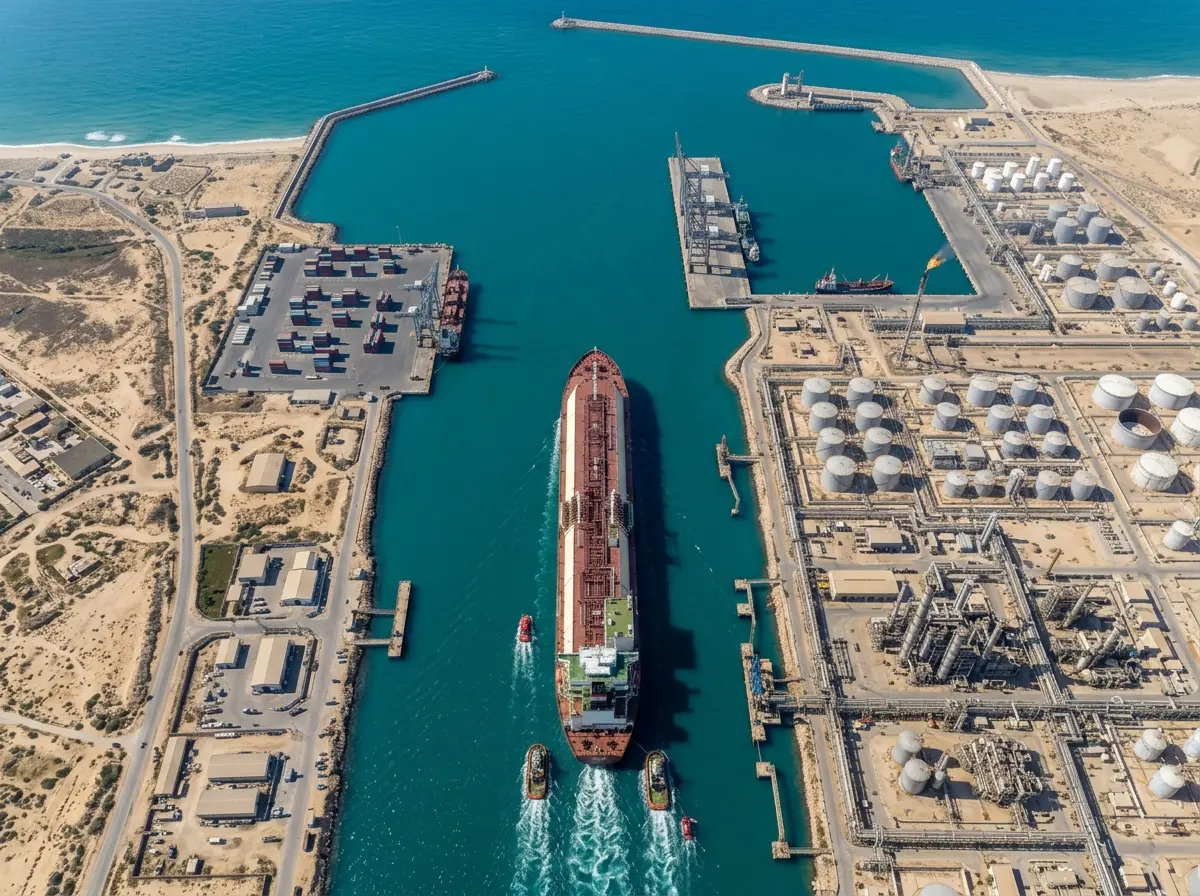
Five Plants Carry the Efficiency Push
The gains are concentrated in a handful of plants rather than spread evenly across Egypt’s refining network.
| Facility | Reported Efficiency Gain in 2026 |
|---|---|
| Cairo Oil Refining Company (Mostorod) | Gasoline complex output up about 45,000 tonnes of gasoline and 40,000 tonnes of jet fuel a month |
| Alexandria National Refining and Petrochemicals Company (ANRPC) | Running above 110% of its original design capacity |
| Al Ameriya Petroleum Refining Company | Monthly 92-octane gasoline output up 10,000 to 15,000 tonnes |
| MIDOR refinery | Production increased, per the ministry, without a specified tonnage |
| Alexandria Petroleum Company lubricants complex | Upgraded alongside the site’s broader efficiency drive |
Egypt is also moving ahead on a new package of refinery development projects worth around USD 4.5 billion, the ministry said, without specifying which plants would see funding first.
Some of the crude feeding these refineries crossed a border first. The ministry’s own account of the production record rests on higher output of crude oil and condensates combined with directing more local and imported crude into domestic plants. Egypt is still buying foreign barrels to keep refineries at 80% utilisation, even while announcing a two-year high in domestic output.
What Left Egyptian Ports in Six Months
Egypt shipped 2.3 million tonnes of petroleum products between January and June, earning USD 2.3 billion, the Ministry of Petroleum and Mineral Resources said. That figure alone matches the country’s entire petroleum product export total for 2025, reached in half the time.
Four product categories made up most of what left Egyptian refineries for foreign buyers:
- Jet fuel
- Naphtha
- Waxes
- Vacuum distillate
Each sells for more than raw crude does, which is why the ministry treats rising refinery utilisation as an export strategy in its own right, not just a production milestone.
Why Is Egypt’s Biggest Gas Field Losing Steam?
Zohr, the Mediterranean field discovered in 2015 that briefly turned Egypt into a net gas exporter, has lost roughly 30% of its output between 2021 and 2024. Water infiltration at the field since 2022, combined with operational and technical setbacks, has cut into a field that still supplies about a third of the country’s gas. Egypt brought the Zohr-6 well online this year to slow the slide, Ecofin Agency reported.
The field’s decline is the upstream half of a story the refinery numbers only tell from the downstream side. Zohr’s retreat since 2021 is the main reason Egypt has gone back to importing liquefied natural gas at scale after a short stretch as an exporter.
Egypt has had upstream wins too. The ministry announced a 15 billion cubic foot gas reserve addition at the Badr El-Din field this year, Egypt Today reported, though it is a fraction of what Zohr has lost since 2021.
Egypt’s LNG imports are projected to reach 11.14 million tonnes in 2026, up 26.3% from 9.01 million tonnes in 2025, according to S&P Global data. The firm’s energy analysts describe the country as locked into a fitful, enduring LNG dependency that tracks field performance and global prices as much as domestic demand.
The Import Bill Is Outrunning the Export One
Egypt’s total petroleum and gas import bill jumped 53.3% year on year to USD 9.7 billion in the first half of the 2025/26 fiscal year, which runs from July through December on Egypt’s calendar, Newsbase reported, citing government figures. Natural gas purchases alone accounted for USD 2.1 billion of that increase.
The numbers on both sides of Egypt’s energy ledger in 2026:
- $10.7 billion earmarked for natural gas and LNG imports in fiscal year 2026/27, up 26% from the prior year’s estimate
- $9.7 billion total petroleum and gas import bill in the first half of fiscal year 2025/26 alone, up 53.3% year on year
- $2.3 billion earned from petroleum product exports in the first six calendar months of 2026
- 11.14 million tonnes of LNG Egypt is projected to import in 2026, versus 9.01 million tonnes in 2025
Egypt imported 985 billion cubic feet of gas between July 2025 and June 2026 and is projected to import 1,081 billion cubic feet the following fiscal year, a volume increase layered on top of rising global prices. Newsbase reported that the cost of a single LNG shipment has climbed from around USD 40 million to nearly USD 60 million as global rates have risen.
Cairo Bets on Multi-Year Contracts
Egypt’s government is trying to close the gap with longer contracts instead of spot-market cargoes. Cairo is negotiating a multi-year LNG supply agreement with international energy majors, Reuters reported, aiming to lock in volumes and pricing years ahead instead of buying cargo by cargo as prices swing.
The logic is straightforward. Egypt has already booked around 300 LNG cargoes through 2026 to cover domestic demand. A multi-year deal would smooth out the kind of price spikes that made a single shipment nearly 50% more expensive than it was a few years ago.
Badawi’s refinery tour produced the numbers a ministry likes to announce: record crude output, rising exports, plants running past their original design limits. Egypt’s refineries are running harder than they have in two years. Its natural gas import bill is running faster still.
