
Bangladesh joined a Saudi-led Multinational Maritime Defense Alliance of 14 states on 30 July 2026, the first time since the Gulf War that Dhaka has entered a foreign military coalition. The move aims to protect navigation through the Bab el-Mandeb Strait, Red Sea and Gulf of Aden after Yemen’s Houthis declared a naval blockade on Saudi shipping on 20 July and began striking tankers.
Nearly 70 percent of Bangladesh’s exports already move through those waters. The signature deepens ties with Riyadh while the economic squeeze on garments, fuel and remittances is already under way.
Fourteen Nations Back a Defensive Framework
Saudi Arabia’s Ministry of Defence hosted the founding meeting in Riyadh. Representatives of 43 countries attended; 14 backed the joint statement. Members include Saudi Arabia, Türkiye, Kuwait, Bahrain, Qatar, Jordan, Egypt, Pakistan, Djibouti, Somalia, Bangladesh, Yemen, Sudan and the Comoros. Saudi Arabia leads and will host headquarters. The door stays open for others after national procedures.
The alliance describes itself as a framework for collective maritime defence cooperation. Planned activities cover intelligence sharing, operational planning, joint exercises and maritime operations. It is “purely defensive in nature and does not target any state,” the Saudi statement said. No public list of ships or aircraft each member will commit has appeared. A European Union delegation attended, though the EU already runs its own Aspides mission in the Red Sea.
- Secure freedom of navigation under international law and UN conventions
- Protect international trade and energy supply routes
- Coordinate against shared transnational maritime threats in the three waterways
- Leave the charter and rules of engagement still to be finalised
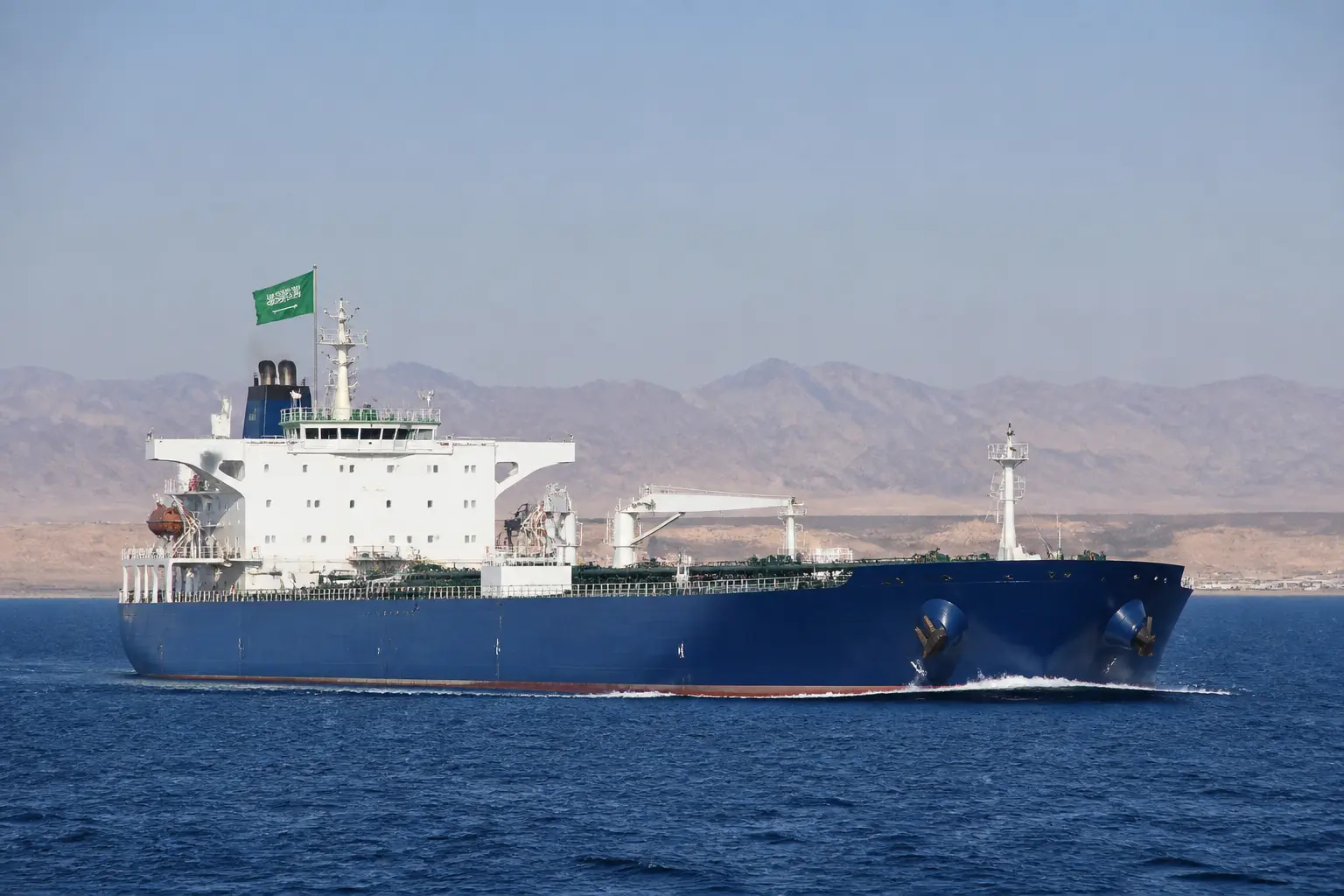
The timing tracks the three-way chokepoint crisis. After the US-Israeli war on Iran began in late February, the Strait of Hormuz, once carrying roughly one-fifth of traded oil and gas, closed effectively to Saudi exports. Riyadh shifted crude overland via the East-West pipeline to Yanbu on the Red Sea. The Houthis then sealed the southern end.
Why the Blockade Hits Bangladesh Harder Than the Map Suggests
Bangladesh sits far from the Red Sea. Its economy does not. Cargo that once reached European hubs from Chattogram in 28 to 30 days now takes around 45. For a ready-made garment sector where some 85 percent of exports feed fast-fashion chains built on short cycles, the lost weeks cut deep.
War-risk insurance for Red Sea voyages has climbed roughly three-and-a-half times. Ships that avoid the corridor round the Cape of Good Hope, adding 3,000 to 4,000 nautical miles and 10 to 15 days. Air freight has leapt from about $0.50 to nearly $2.50 per kilogram. Brent crude briefly traded above $90 a barrel after the blockade before settling near $88. Fuel and LNG imports power factories and electricity; every rise feeds power tariffs, transport fares and food prices.
| Exposure | Figure | Source note |
|---|---|---|
| Exports via Red Sea/Suez | Nearly 70% | Primarily Europe and US East Coast |
| Transit time Chattogram to Europe | 28-30 days to ~45 days | Rerouting effect |
| Saudi share of remittances | ~16% (first 11 months FY2025-26) | About $5.28 billion |
| Bangladesh-Saudi trade FY2023-24 | $1.98 billion | Vs ~$15.89 million with Iran |
| Bangladeshis to Saudi Arabia 2025 | 752,715 | More than two-thirds of total overseas deployment |
More than 40 percent of the country’s remittances originate in the Middle East overall. The World Bank April warning on conflict costs flagged higher inflation, inflated energy-subsidy bills, weaker exports and remittances, and current-account strain. Growth is already projected to slow to 3.9 percent in FY26. Prior to the conflict about 1.7 million people were expected to exit poverty this year; the revised figure is 0.5 million.
Half a Century of Ties Made the Signature Predictable
Diplomatic relations began in 1975. Formal labour migration followed in 1976. Saudi Arabia has long been the largest labour market and a major development partner. The Saudi Fund for Development has financed projects since 1977. A defence-cooperation MoU covering training, intelligence and maritime security was signed in 2019. Bangladesh backed Saudi Arabia politically in the 1990-91 Gulf crisis and supported the 2015 Yemen intervention without combat troops.
- 1975, Diplomatic relations established
- 1976-present, Labour migration corridor opens and expands
- 2015, Political support for Yemen intervention; joins Islamic Military Counter Terrorism Coalition without full combat role
- 2019, Defence-cooperation MoU
- July 20, 2026, Houthis declare naval blockade on Saudi shipping
- July 28-29, Claims of strikes including the fourth Houthi strike on the NCC Ghazal and other tankers
- July 30, 2026, Multinational Maritime Defense Alliance founded; Bangladesh among 14
Md Tanvir Habib, Assistant Professor of International Relations at the University of Dhaka, called the shift a move “from being a mere contributor of cheap unskilled labour and recipient of Saudi aid to a security partner.” Remittances from the Kingdom alone made up about 16 percent of the total in the first eleven months of FY2025-26. Recorded trade stood near $1.98 billion against roughly $15.89 million with Iran, about 125 times smaller.
Khandakar Tahmid Rejwan, Lecturer of Global Studies at Independent University, Bangladesh, and a defence analyst at the Jamestown Foundation, situates the decision inside that history. “This creates a powerful economic and diplomatic incentive for Dhaka to remain responsive to Saudi security concerns,” he said. “The present move represents continuity rather than a sudden strategic departure.”
Bangladesh’s decision to join the Saudi-led maritime defence coalition should be understood primarily as a maritime-security and strategic partnership decision, rather than an unconditional commitment to participate in a war against the Houthis.
Rejwan made that distinction clear. A demonstration of reliability could reshape how Saudi policymakers weigh Dhaka for security needs and open a more intimate partnership over time. Bangladesh arrives as a large Muslim-majority state and a veteran of nearly four decades of UN peacekeeping, sharpening its value beyond any naval hulls it may never send.
Analysts Draw a Bright Line Against Mission Creep
The consensus among Bangladeshi analysts is that accession is still symbolic. Dhaka has no immediate capacity to deploy significant naval assets into the Red Sea. It extends moral and political weight to freedom of navigation. The risk is mission creep. A nation that has stayed out of military blocs for fifty years now stands at the threshold of one.
Habib warned that the initiative “still remains far from fully chalked out” and that Bangladesh should map Houthi and Iranian responses carefully. “Bangladesh will need to have a clear and transparent discussion with Iran to ensure that our security engagements with Saudi Arabia, borne out of our shared values, are not misunderstood.” Rejwan drew the same boundary: any perception that Dhaka has become a combatant could expose it to retaliation, complicate ties with Iran, and undermine its longstanding preference for strategic autonomy.
Major General (retd) ANM Muniruzzaman, president of the Bangladesh Institute of Peace and Security Studies, noted that Bangladesh historically avoided defence alliances. This first participation requires care that the country does not become entangled. State Minister for Foreign Affairs Shama Obaed Islam framed the choice simply: “We want stability in this region, we want peace.” Foreign Affairs Adviser Humayun Kabir said the step addresses the Houthi challenge, not isolation of Iran, and moves relations toward a strategic partnership.
Material Interests Rank Saudi Arabia Far Above Iran
Sympathy for Tehran after US-Israeli strikes does not translate into leverage. Iranian FDI stock stood around $20,000 at end-June 2024 against $34.09 million from Saudi Arabia. Iran supplies no comparable labour market, remittance flow, development finance or energy financing. US goods trade with Bangladesh reached about $11.8 billion in 2025, including roughly $9.5 billion in Bangladeshi exports. When material interests diverge, Dhaka leans toward denser partners while trying to preserve the thinner relationship with Tehran.
The same hierarchy appears in energy. In 2024 the Saudi-based International Islamic Trade Finance Corporation agreed to provide $1.4 billion to the Bangladesh Petroleum Corporation. Future cooperation under Saudi Vision 2030 in energy, infrastructure and industry remains the larger prize. A recent push for deeper Saudi manufacturing investment fits the same pattern. The alliance signature is one more signal of reliability inside that ledger.
What the Signature Commits and What It Does Not
On current evidence the commitment is political and institutional, not operational. No Bangladeshi warship has been announced for Red Sea patrol. The charter is unfinished. Contributions will likely start with intelligence sharing and exercises. Pakistan’s presence among the larger military participants and reports of Pakistani-flagged tankers still transiting under strong national warnings offer one possible model of calibrated engagement.
Crowd reaction on X has stressed the balancing act. Critics question transparency over terms and fear entanglement in broader rivalries. Supporters see a necessary defence of the sea lanes that already carry most of the country’s exports. The sharper observation is that Bangladesh’s main contribution is legitimacy: a major South Asian Muslim democracy and UN peacekeeping veteran standing with the principle of free navigation. That value exists whether or not a Bangladeshi frigate ever sails north of Bab el-Mandeb.
Earlier incidents already show how Bangladesh is exposed on the ground. Bangladeshi workers killed in earlier Saudi strike episodes and repeated Houthi threats against Saudi oil facilities underline that migrant households and energy security sit inside the same crisis. The alliance does not create that exposure; it merely makes the political response more visible.
The second-order effect is the reclassification itself. For decades Riyadh filed Bangladesh as a source of manpower and a recipient of concessional loans. A security-partner designation, even if initially light, changes the conversation about future labour agreements, energy financing and investment. That upgrade arrives while the immediate costs of longer voyages and higher insurance already land on factory owners, power tariffs and household budgets. The decision is right only for as long as the alliance asks Dhaka to protect commerce rather than wage war. The months ahead will test whether Riyadh’s next request stays inside that line.
