
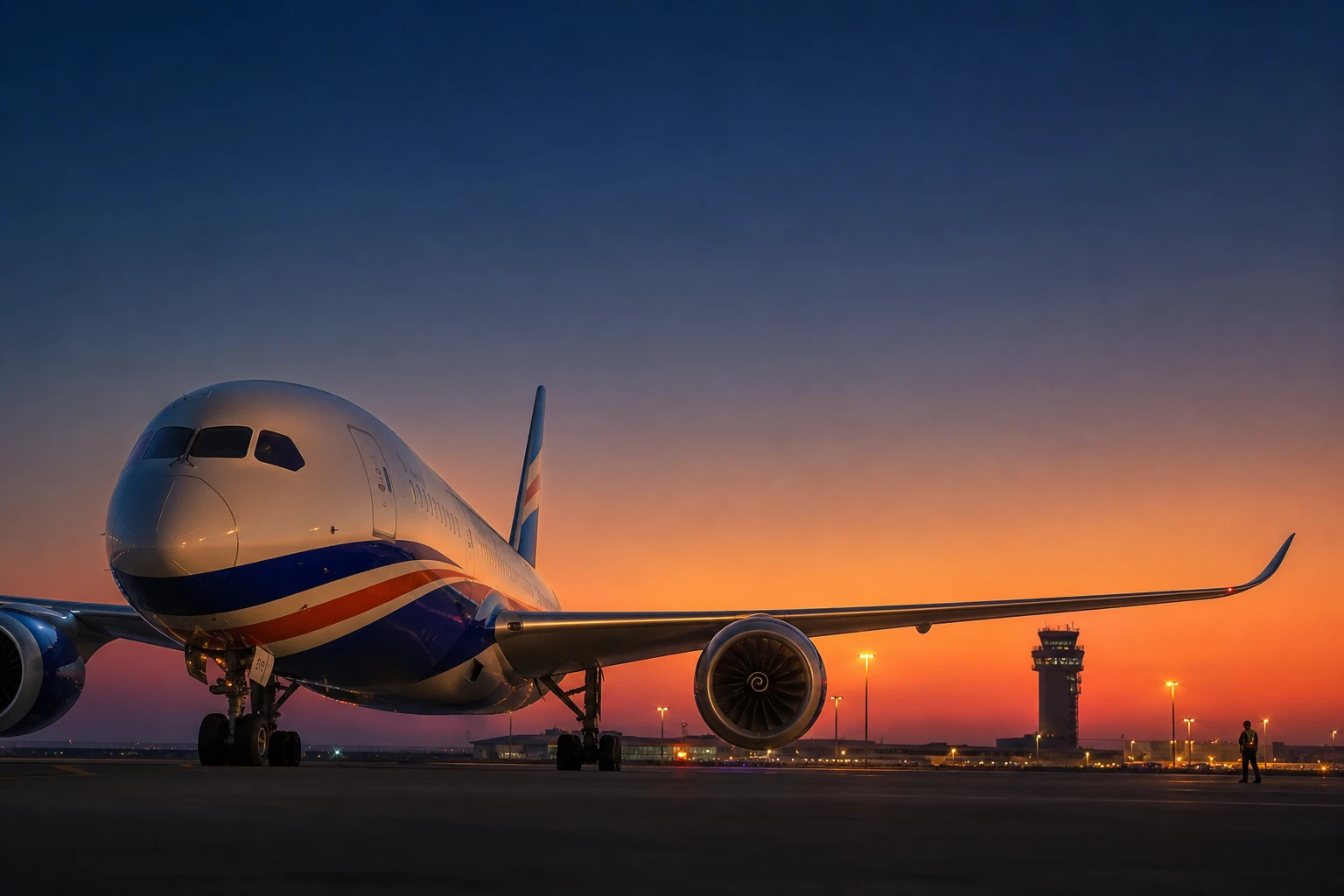
Arkia Airlines will add a Boeing 787-9 Dreamliner and a second widebody jet to its Tel Aviv-New York route this fall, the Israeli carrier said, expanding a service it started with a single leased plane 18 months ago. The airline will fly the Dreamliner on Mondays and Wednesdays through August and September, then swap in a Hi Fly-operated Airbus A330-300 with business class seating starting September 11.
That original bet, placed during wartime when El Al alone served the route, has scaled into a three-cabin widebody operation with its own JetBlue connections and a five-year plan for 20 aircraft. What began as an emergency fix for stranded travelers is now Arkia’s flagship international product.
Arkia Adds a Second Widebody to Its Flagship New York Run
The Dreamliner arrives on lease from Neos, the Italian leisure carrier, and will carry 345 passengers across economy and premium cabins with paid Wi-Fi available for the whole flight, Arkia said. It flies the added Monday and Wednesday frequencies through the two-month window.
Starting September 11, a Hi Fly-operated Airbus A330-300 takes over one of the aircraft slots currently on the route. The jet seats 249 passengers, including 46 in business class and 203 in economy, and will carry an Israeli crew on every flight, the airline said.
| Aircraft | Operator | Total Seats | Business Class | Joining the Route |
|---|---|---|---|---|
| Boeing 787-9 Dreamliner | Neos (Italy) | 345 | None; economy and premium only | Mondays and Wednesdays, August through September |
| Airbus A330-300 | Hi Fly | 249 | 46 seats | September 11 |
Arkia said the added capacity and the aircraft swap followed increased demand for flights to New York, along with customer requests for a higher-quality experience on the long-haul route. The airline described the corridor as its flagship route to the United States and said the move would sharpen its premium offering while improving comfort and service.
How Much Bigger Is Arkia’s New York Operation Getting?
Arkia’s New York schedule has grown from three weekly flights on one leased jet in February 2025 to as many as seven under a JetBlue interline deal signed in January, with the carrier reporting nearly 70 percent passenger growth this year even before this week’s added frequencies and aircraft swap.
Arkia linked its JFK flights to JetBlue’s network on January 8, Reuters reported, giving Israeli passengers connections across the United States, Latin America and the Caribbean. Dave Jehn, JetBlue’s vice president of network planning and partnerships, said the deal “allows us to expand our global reach and provides customers with a wider range of destinations and seamless connections between flights.”
Oz Berlowitz, Arkia’s chief executive, has framed the growth in blunt terms. “We are ending the year with nearly 70 percent growth in passenger numbers,” he told the Jerusalem Post in a separate feature this spring, adding that the carrier now runs four widebody jets dedicated to long-haul flying, all with three service classes, a scale the airline had never operated before.
The airline has also leaned on price to pull passengers away from El Al, advertising one-way economy fares as low as $999 and business class fares starting around $1,750 one way on the New York run.
El Al’s Monopoly Keeps Cracking
Israel’s Competition Authority has already fined El Al NIS 121 million for wartime price gouging. Commissioner Michal Cohen is now weighing a second penalty, NIS 110 million (roughly $35 million), for blocking Arkia’s access to maintenance hangars during the war. The regulator said El Al’s refusal could have exposed Arkia to “economic, safety, and reputational risks.”
El Al has pushed back. “El Al always acts in accordance with competition law provisions,” the airline said in a statement, adding it had helped rival Israeli carriers “far beyond what was required by law.” Dina Ben Tal Ganancia, El Al’s former chief executive, who stepped down last year after steering the airline to roughly $950 million in wartime profit, called the monopoly allegations “a complete surprise” and said El Al is “a law-abiding company” that would never break the rules.
Arkia is no longer the only challenger. Israir sought a US permit for the New York route and has since won approval to fly it, aiming to become a third Israeli carrier on the corridor. Mark Feldman, chief executive of Ziontours Jerusalem, said the arithmetic is simple for travelers. “The bottom line is that increased competition will lead to lower ticket prices for the consumer, and that is needed,” he said. United and Delta have also restored Tel Aviv service since the ceasefire, adding further pressure on fares even as El Al keeps El Al’s grip on the New York corridor as the dominant operator by frequency.
A Wartime Bet That Started With One Leased Jet
Arkia’s US debut was born of crisis. After Hamas’s October 7, 2023 attack, foreign airlines repeatedly suspended Tel Aviv service, and by late 2024 El Al was the only carrier flying nonstop to North America. A group of tech investors, organized as TechAir, pushed Arkia to fill the gap. Papaya Global chief executive Eynat Guez, one of the backers, said the effort aimed to protect Israeli business continuity “even in such a challenging time for everyone.”
Transportation Minister Miri Regev backed the push with a government program covering half of any airline’s losses from war-related cancellations, provided it flew at least twice weekly. Arkia leased an Iberojet Airbus A330-900neo, trained crews and launched service in about three months, becoming, per Flightradar24’s tracking data, New York as its 15th scheduled destination. Roundtrip economy fares opened at $1,199.
The first flight was on February 8, 2025. It began as a kind of high-tech startup idea.
Berlowitz made those remarks looking back at the launch, recalling that only El Al was flying the route at the time and that economy tickets had been running between $6,000 and $7,000. During last June’s brief war with Iran, when Israeli airspace shut entirely, Arkia kept the New York flights operating through what it called complex and unconventional routing rather than pulling out.
- February 8, 2025: Arkia flies its first Tel Aviv to JFK service on a wet-leased Iberojet A330, three times weekly.
- June 2025: A Neos-operated Boeing 787-9 Dreamliner joins the route, lifting weekly frequencies and adding premium economy.
- January 8, 2026: Arkia signs its interline agreement with JetBlue, linking up to seven weekly JFK flights to JetBlue’s US network.
- July 2026: Arkia adds a weekly Phuket route as its Far East network keeps growing.
- September 11, 2026: A Hi Fly Airbus A330-300 with 46 business class seats replaces one of the widebodies currently flying to New York.
Twenty Aircraft in Five Years, Starting With Tokyo
Berlowitz has said Arkia plans to operate 20 aircraft, including widebody jets, within five years, with service to at least two North American destinations and continued growth in the Far East. New York was the opening move, not the ceiling.
The airline has already stacked new long-haul routes on top of its US expansion:
- Bangkok, added late last year as Arkia’s first regular Far East service.
- Hanoi, launched in January as a route with no other direct service from Israel.
- Phuket, a weekly flight added this month to compete head to head with established leisure carriers.
- Tokyo Narita, where Arkia begins twice-weekly Boeing 787 service starting in October, following the same underdog script it used against El Al in New York with cheaper fares that broke El Al’s Tokyo monopoly.
The New York expansion arriving this September is the clearest sign yet that Arkia’s wartime improvisation turned into a durable business. A carrier that once wet-leased a single Spanish jet to keep Israelis connected to New York now owns the aircraft schedule, the crew, and, increasingly, the pricing power on its own flagship route.
