
Israel has allowed a 2021 add-on water deal with Jordan to lapse without renewal since November 2025, freezing an extra 50 million cubic meters a year that had flowed to one of the world’s most water-stressed countries. The arrangement doubled the 50 million cubic meters Israel already sends Jordan under the 1994 peace treaty, and Jerusalem is now conditioning any renewal on Amman moderating its public criticism of Israel and restoring full diplomatic ties.
An Israeli-Jordanian relations expert has read the move as a “stab in the back” given Amman’s help intercepting Iranian drones during Israel’s recent war with Tehran. The UAE is now promoting a summit in Abu Dhabi aimed at reviving the extra supply, the stalled “Prosperity” water-and-solar initiative, and broader ties. Behind the diplomacy, Amman is racing to bring its own Aqaba-Amman desalination plant online to cut the political hold any single neighbour exerts over its taps.
The 50 Million Cubic Meters That Dried Up
The 1994 peace treaty committed Israel to send Jordan 50 million cubic meters of water a year from Lake Tiberias, partly compensating for upstream diversions that reduced flows in the lower Jordan River, per the Fanack Water Brief. In 2021, under the Bennett-Lapid government, Israel and Jordan agreed on an additional 50 million cubic meters a year on top of the treaty quota. That supplemental deal expired in late 2025 after a series of extensions and has not been renewed, leaving only the original treaty volume flowing.
Energy Minister Eli Cohen had been renewing the add-on every six months under internal debate, with extensions reportedly driven partly by U.S. pressure and Jordan’s help intercepting Iranian drones. The decision to stop came as Jordanian Foreign Minister Ayman Safadi kept up his public criticism of Israel over the war in Gaza. Jordan had separately asked for a five-year renewal and an increase of the supplemental allocation to 80 million cubic meters, and Israel did not engage. The freeze has now stretched eight months without water from the supplemental pipeline, with neither side publicly putting a date on a renewal.
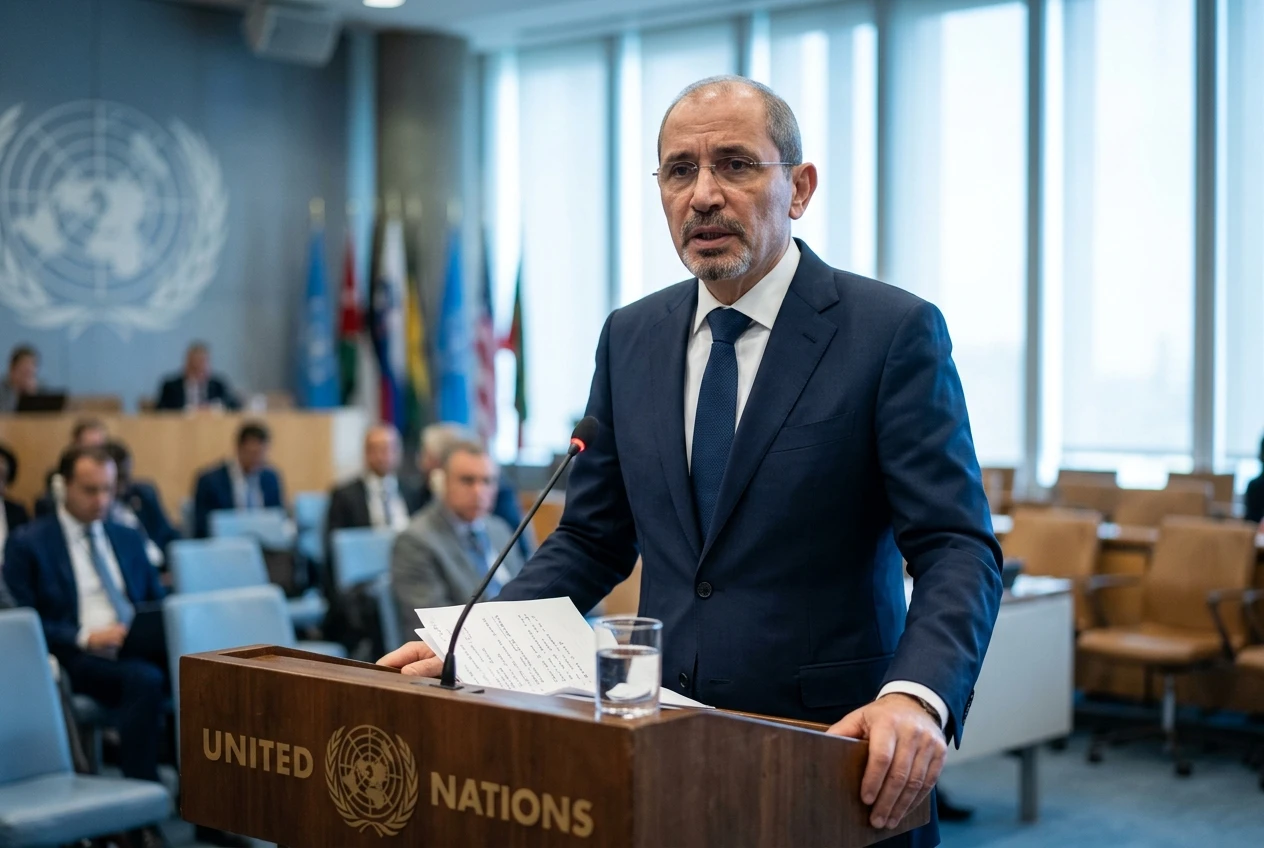
King Abdullah of Jordan declined repeated requests from Prime Minister Benjamin Netanyahu to meet in March. One of Abdullah’s conditions for sitting down was the renewal of the water agreement, per the initial report on the diplomatic freeze. Jordan’s foreign ministry has not publicly responded to the latest Israeli position.
What’s Actually at Stake in Amman
Jordan sits near the bottom of every global water-stress ranking. The U.S. Commerce Department puts the kingdom’s renewable freshwater at 61 cubic meters per capita per year, and Ynet reports an annual deficit of about 500 million cubic meters, a gap that has driven chronic household rationing, drained aquifers, and pushed successive governments to look abroad for supply.
Three supply streams now compete for Jordan’s attention: the Israeli treaty quota, the expired add-on, and the country’s own desalination project.
| Source | Annual volume | Current status | Terms |
|---|---|---|---|
| 1994 peace treaty quota (Lake Tiberias) | 50 million cubic meters | Continuing, regardless of the add-on | What Ynet calls a “symbolic price” |
| 2021 add-on (Bennett-Lapid) | Up to 50 million cubic meters; Jordan asked for 80 million | Expired late 2025; not renewed | Previously renewed every six months |
| Aqaba-Amman National Water Carrier | 300 million cubic meters, planned | Financial close being finalised | State project backed by the Green Climate Fund |
With the Israeli add-on frozen, Amman is leaning harder on desalination at home, on transfers from Syria’s Yarmouk River, and on its joint Disi/Saq fossil-aquifer arrangement with Saudi Arabia. Public anger over Gaza has hardened resistance to any visible water-for-normalisation trade, and a population of which the Jerusalem Post reports upwards of 50% are of Palestinian origin makes the politics unusually sensitive.
Why Israel Says It Walked Away
A senior Israeli official told Ynet that Israel continues to meet its treaty commitments and has no obligation to send more. The official noted that 2025 was Israel’s driest year in a century and that government priority had been refilling Israeli reservoirs and supplying local agriculture. The official’s conditioning of further supply on political goodwill sits at the heart of the standoff. “Jordan needs the water, but when you help your neighbors, you expect warmer relations,” the official added.
Dr. Ronen Yitzhak, an Israeli-Jordanian relations expert at the Moshe Dayan Center, said the freeze “reflects the political crisis between the countries.” He argued in the Israeli-Jordanian analyst’s account of the policy clash that the timing lands badly because Amman helped Israel during the Iran war by intercepting drones and missiles crossing its airspace.
Public opinion in Jordan did not like Jordan’s support for the United States and Israel in the war against Iran, and now that this news has been published in Jordan, they feel like they have been stabbed in the back. They supported Israel against Iran, and now Israel is returning evil for good. This is another card for those opposed to Israel in Jordan.
Yitzhak called Israeli demands for softer public statements “blackmail” and warned that any future Jordanian concession would be read as “selling support for Palestinians” for water. Jordanian officials have privately accused Israel of turning a vital resource into a bargaining chip at a moment of maximum regional vulnerability. The freeze has now stretched eight months without water from the supplemental pipeline, with the Israeli position hardening in step with Safadi’s rhetoric.
The UAE’s Back-Channel and a ‘Prosperity’ Revival
The UAE is promoting a trilateral energy summit in Abu Dhabi that would bring together the Israeli, Jordanian, and Emirati energy ministers. A senior Israeli official told Ynet the summit would discuss restoring the extra 50 million cubic meters, advancing the “Prosperity” water-and-solar initiative, and patching up Israeli-Jordanian diplomacy. The UAE’s role, the official added, is to provide an “umbrella of goodwill” that could restart cooperation.
The Prosperity initiative was first sketched in a 2021 declaration of intent signed by Israel, Jordan, and the UAE, sitting inside a longer pattern of structural ties between Jordan and Israel that includes the 1994 peace treaty, the 2016 Leviathan gas agreement, and three decades of water annex arrangements. It was later unpacked into two project streams, “Prosperity Blue” for a desalination plant and “Prosperity Green” for a Jordanian solar facility. Jordan abandoned its 2022 memorandum for the water-for-energy deal in late 2023 over Israel’s Gaza war. The agenda at the proposed Abu Dhabi meeting would carry five core items.
- Renewing the 50 million cubic meters add-on that expired in November 2025
- Reviving a 200-million-cubic-meter Israel-to-Jordan desalination pipeline (Prosperity Blue)
- Building a 600 MW Jordanian solar plant exporting power to Israel (Prosperity Green)
- Restarting bilateral ties after both countries recalled ambassadors in late 2023
- Setting a date for the long-delayed trilateral summit itself
Jordan has not confirmed a date for the summit, and Israeli officials cautioned that the meeting’s timing depends on whether Gaza tensions continue to cool. A trilateral energy declaration was first sketched in 2021 and revived in ministerial meetings in Abu Dhabi in 2023. “If the atmosphere following the war continues to calm, this agreement could return,” one Israeli official told Ynet.
Jordan’s Quiet Pivot to Its Own Desalination
Even as the diplomacy plays out, Jordan is finalising what its government calls the National Water Carrier: the Aqaba-Amman Water Desalination and Conveyance project. The plant is designed to deliver 300 million cubic meters a year to Amman and other highland cities, drawing from a large reverse-osmosis facility on the Red Sea. Once operational, the project would become Jordan’s first large-scale desalination plant and its largest infrastructure undertaking to date. The financial close on the project is being finalised, per the published report on the carrier alternative.
The $5.8 billion project, supported by the Green Climate Fund and foreign lenders, would cover roughly a third of current national water use once operational. Jordanian planners have framed the carrier explicitly as a way to cut the political hold any single neighbour has over the country’s taps. Construction financing is being lined up, and a financial close is being targeted by the Water Ministry.
The carrier is paired with a parallel push to revive water cooperation with Syria after the fall of the Assad regime in December 2024. Jordan and Syria launched a Joint Water Platform in September 2025 to coordinate releases from the Yarmouk Basin, per the Jordan Times. Syria has offered tentative support on illegal wells drilled on its side of the border. Disi/Saq aquifer transfers from Saudi Arabia remain a third strand.
The carrier alone, once running, would deliver 300 million cubic meters a year to Jordanian cities, while the add-on’s 50 million cubic meters remains in limbo. Officials at the Water Ministry are signalling that the carrier is Jordan’s structural answer to its water stress, separate from any future Israeli deal.
Where This Leaves the Trilateral Summit
Whether the add-on flow resumes depends partly on whether the UAE-brokered summit actually convenes and what it produces. Israeli officials suggested that a single Abu Dhabi meeting could put water, normalisation, and the Prosperity projects back on the same page. Jordanian officials have framed their position more bluntly: renewal of the add-on was a precondition for King Abdullah agreeing to meet Netanyahu. Both countries’ ambassadors have been out of post since 2023, leaving lower-level staff to carry day-to-day diplomacy.
Yitzhak predicted the strategic relationship will hold even as the political disagreement plays out, arguing the issue would ultimately be resolved in “discreet and secret talks.” A senior Israeli official told Ynet the freeze will “not harm strategic cooperation” and that quieter channels are still moving. The first test of whether that thaw is real is whether the Abu Dhabi summit actually meets.
Frequently Asked Questions
Why did Israel stop the extra water supply to Jordan?
Israel allowed the 2021 add-on to lapse in November 2025 and is conditioning renewal on Jordan moderating its public criticism of Israel over the Gaza war, and on the two sides restoring full diplomatic relations including returning ambassadors.
What was the 2021 add-on agreement?
An arrangement reached under the Bennett-Lapid government that added another 50 million cubic meters a year to the 50 million cubic meters Israel already supplies under the 1994 peace treaty. It had been renewed every six months by Energy Minister Eli Cohen.
What is the “Prosperity” project?
A trilateral initiative announced in 2021 under which Israel would build a desalination plant supplying 200 million cubic meters a year to Jordan, while Jordan builds a 600 MW solar facility exporting electricity to Israel. Jordan abandoned its 2022 memorandum for the project in late 2023.
What is Jordan’s National Water Carrier?
A $5.8 billion reverse-osmosis desalination and pipeline scheme at Aqaba designed to deliver 300 million cubic meters a year to Amman and other highland cities. The Jordan Times reports financial close on the project is being finalised.
Could the trilateral Abu Dhabi summit resolve the standoff?
The UAE is pushing for a meeting between the Israeli, Jordanian, and Emirati energy ministers that would put water, the Prosperity project, and normalisation back on the table. An Israeli official told Ynet that a deal “could return” if post-war tensions continue to ease.
