
Adult content creator Lia Nayt was refused entry at Queen Alia International Airport in Amman and put on a return flight hours after her plane touched down in Jordan, according to the originating report. Jordanian authorities did not issue a public statement naming the legal ground for the decision, leaving the case to be read through the country’s stated duty to protect public morals and its written bans on pornographic content. Her own account, posted from the return leg of the trip, frames the visit as a professional one that never started, and the episode is now travelling through Turkish, Arab, and Jordanian news outlets.
The Refusal at Queen Alia
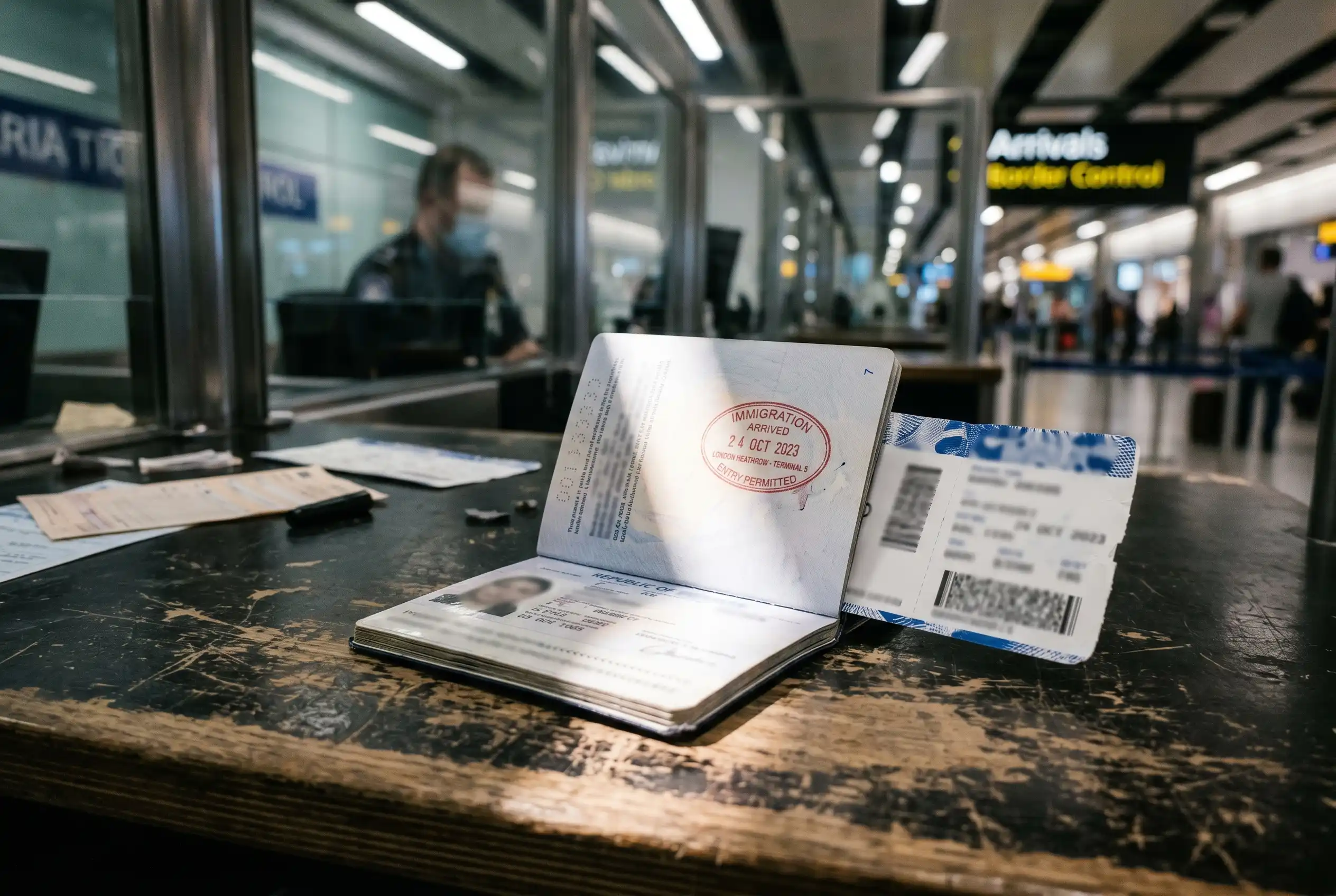
Jordanian authorities denied entry to adult content creator and actress Lia Nayt and deported her immediately after she arrived at Queen Alia International Airport in Amman, according to the originating report on the airport denial. The report says she was not allowed into the country and was placed on a return flight shortly after her arrival, with the time between landing and boarding back out measured in hours rather than days. The incident moved onto social media first, after Lia Nayt posted videos describing what had happened, and from there into Turkish, Arab, and Jordanian news outlets that picked up the case in parallel.
The reports tie the decision to her line of work. The originating write-up notes that Jordan maintains laws and regulations that prohibit the production, promotion, and distribution of pornographic content, and that authorities are known to enforce rules they consider necessary to protect public morals and public order. No specific article, regulation, or written refusal has been published.
That absence of a stated legal ground is now the spine of the story. Lia Nayt’s own videos and the surrounding coverage are the only public account of what happened in the terminal, and they are telling a different story from each other. The state has not contradicted the reports, and it has not detailed them either.
What Lia Nayt Said Before the Return Flight
In a video shared on her social media accounts, Lia Nayt said she was surprised by the decision and that she lives in a Western country where her profession is legal and socially accepted. She also claimed she was unaware that her line of work could prevent her from entering Jordan, and she appealed to Jordanian authorities to reconsider.
She argued that her work is legal in several European countries and said she had intended to visit Jordan for professional purposes. Authorities proceeded with the deportation process and did not allow her into the kingdom, and the appeal has not produced any public response in the days since. Her framing of the trip as professional and her location abroad are her own statements from the return flight, not confirmed by the Jordanian side, and the rest of the article treats them that way.
The Cybercrime Law Behind the Decision
Jordanian authorities do not need a tailor-made border rule to turn away a foreign creator whose work they call pornographic. The 2023 Cybercrime Law, signed by King Abdullah II in August 2023, gives them a ready-made handle. Under articles 13 and 14, the law punishes the production, distribution, or consumption of “pornographic content,” which is undefined, and content “promoting, instigating, aiding or inciting immorality,” with at least six months imprisonment and a fine, according to how articles 13 and 14 of the cybercrime law are written in a Human Rights Watch analysis of the text.
The same law also touches the tools creators and their audiences use to reach each other. Article 12 restricts the use of Virtual Private Networks and Tor, the kind of software that lets users reach content Jordanian networks block, on the stated ground of criminal use. The combination matters at a border: the state can argue that the work the visitor is associated with falls inside the law, and the public-morals frame does the rest of the work without any new statute.
The law was approved in the record time of less than two months, and a total of 14 organizations, including Human Rights Watch, Access Now, Article 19, and the Gulf Center for Human Rights, asked the king in an open letter to review it. Their letter, covered in the international rights-group warnings about the law, argued that it would further undermine free speech online, threaten internet users’ right to anonymity, and introduce new authority to control social media that would pave the way for an alarming surge in online censorship.
The US State Department also weighed in. “This law, with vague definitions and concepts, could undermine Jordan’s homegrown economic and political reform efforts,” State Department spokesperson Vedant Patel warned in July 2023. None of that criticism changed the trajectory of the law, and none of it is on the public record as having been applied to a single foreign creator at Queen Alia until now.
What This Signals for Creators Crossing Into Jordan
The case draws a clean line for any creator weighing a trip. The legal status of their work in Europe or North America is not the test that matters at the gate; the test is whether Jordanian authorities are willing to label it pornographic, and the 2023 Cybercrime Law is written broadly enough to let them reach that label without naming a specific charge. Public-morals enforcement at the border no longer needs a separate statute when the same words already sit in the cybercrime text.
It is particularly worrying that the wording of the new cybercrime law is so vague, and several of its articles can be interpreted and instrumentally applied to the most diverse cases.
That framing belongs to Lorena Stella Martini, Jordan researcher at the European Council on Foreign Relations, who told DW that the wording of the new law was vague in ways that let it reach cases far beyond its stated targets. The Lia Nayt removal is a concrete example of the breadth she described, applied to a person whose work is legal where she lives and undefined under the law used to keep her out.
Reactions Split Along Familiar Lines
The originating report says the case has generated mixed reactions online. Some social media users supported the authorities’ decision, arguing that Jordan is entitled to enforce its own laws and cultural values. Others questioned whether banning entry based on a person’s profession was appropriate, and the originating write-up frames the episode as a fresh illustration of the gap between laws and social norms in different countries.
The gap is real, and the numbers behind it are small enough to fit on a card:
- The 2023 Cybercrime Law was signed by King Abdullah II in August 2023.
- Articles 13 and 14 of the law target pornographic content and content promoting, instigating, aiding, or inciting immorality.
- Penalties under those articles start at six months’ imprisonment and a fine.
- A total of 14 international rights organizations asked the king to review the law before he signed it.
- The bill moved from introduction to law in less than two months.
Those figures are not a verdict on the deportation. They are the public record the deportation is being read against, and they show how thin the line is between a policy that critics call a clampdown and a tool that the state can use at an airport gate on a single visitor.
How Jordan Enforces Its Moral Code at the Gate
What is happening inside the terminal is the same logic the state already applies on the network. Jordan’s Telecommunications Regulatory Commission, working with internet service providers and telecom companies, has put in place a network-level block on pornographic websites across all fixed and mobile networks, according to how the country’s porn block was implemented at the network level.
The block uses advanced filtering to automatically classify and block IP addresses and domains hosting pornographic content, and it covers all internet packages, including those accessed on smartphones, with continuous updates to the blocking lists. TRC Board of Commissioners chairwoman Lara Al-Khatib framed the measure as protection from exploitation, especially of children, and as a way to limit online sexual exploitation.
Read together, the network filter and the airport refusal are two ends of the same chain. The TRC stops the content from reaching Jordanian users inside the country, and the border stops the creator from reaching Jordanian users in person, both under a stated concern for public morals. The legal text that does the work at the gate is the same legal text that the rights groups warned about in 2023.
That parallel is what makes the case more than a single bad night at the airport. It shows the same enforcement language being used in two places at once, and it leaves any creator with a public profile in this space asking which border will be next.
Where the Public Record Ends
The originating report is candid about what it does not know. It describes the decision as something the authorities proceeded with, and it sets out what the law and public-morals framing allow them to do, but it does not claim a court order, a written refusal, or a specific citation of the cybercrime law at the gate. There is no detailed public statement from the Jordanian side explaining the legal grounds for the decision, and there is no public reply to her appeal.
Four questions sit open on the public record:
- What specific legal ground, if any, was cited when Lia Nayt was refused entry.
- Whether she has been told she can re-enter Jordan at a later date, and on what terms.
- Whether a written refusal was issued, and whether it is appealable.
- Whether the professional visit she described was tied to a specific named engagement in Jordan.
Until the Jordanian side publishes an answer, the case lives in the gap between her account from the return flight and the state’s silence, and the rest of the story will be told in that gap.
