
Jordan welcomed the UN Security Council statement of August 7 that condemned Houthi missile attacks on Saudi Arabia since July 13 and strikes on commercial vessels since July 22. The Foreign Ministry renewed absolute solidarity with Riyadh and full support for measures to protect its security, sovereignty and citizens.
The ministry stressed the need to follow international law and Security Council resolutions, especially Resolution 2216, while rejecting threats to regional security and freedom of maritime navigation.
What the August 7 Statement Said
Members of the Security Council condemned the Houthi missile attacks launched against the Kingdom of Saudi Arabia from July 13 onward. They also condemned attacks targeting commercial vessels that began July 22. The statement underlined adherence to international law and relevant resolutions and rejected actions that endanger regional security or the rights of free navigation.
Jordan’s response on Sunday matched the language used by Saudi Arabia itself. The Saudi Foreign Ministry statement welcoming the same rebuke called the attackers the “terrorist Houthi militia,” reaffirmed the Kingdom’s right to defend itself under international law, and urged the international community to implement the resolutions and take a firm stance against violations that undermine peace efforts in Yemen.
Qatar, Kuwait and Bahrain issued nearly identical welcomes within hours. The coordinated cascade turned a single Security Council note into a visible Arab diplomatic front.
July Breaks Four Years of Relative Calm
The current round began on July 13. After Yemeni government forces struck Sanaa airport to stop what they described as an Iranian aircraft carrying equipment and personnel, Houthi forces fired ballistic missiles and drones at Abha International Airport in southern Saudi Arabia. Saudi air defenses intercepted the incoming weapons. Houthi military spokesman Yahya Saree said the attack ended the de-escalation phase.
- July 13, 2026: Houthis strike Abha Airport with missiles and drones; Saudi forces intercept.
- July 20: Houthis declare a maritime blockade on Saudi Arabia in the Red Sea.
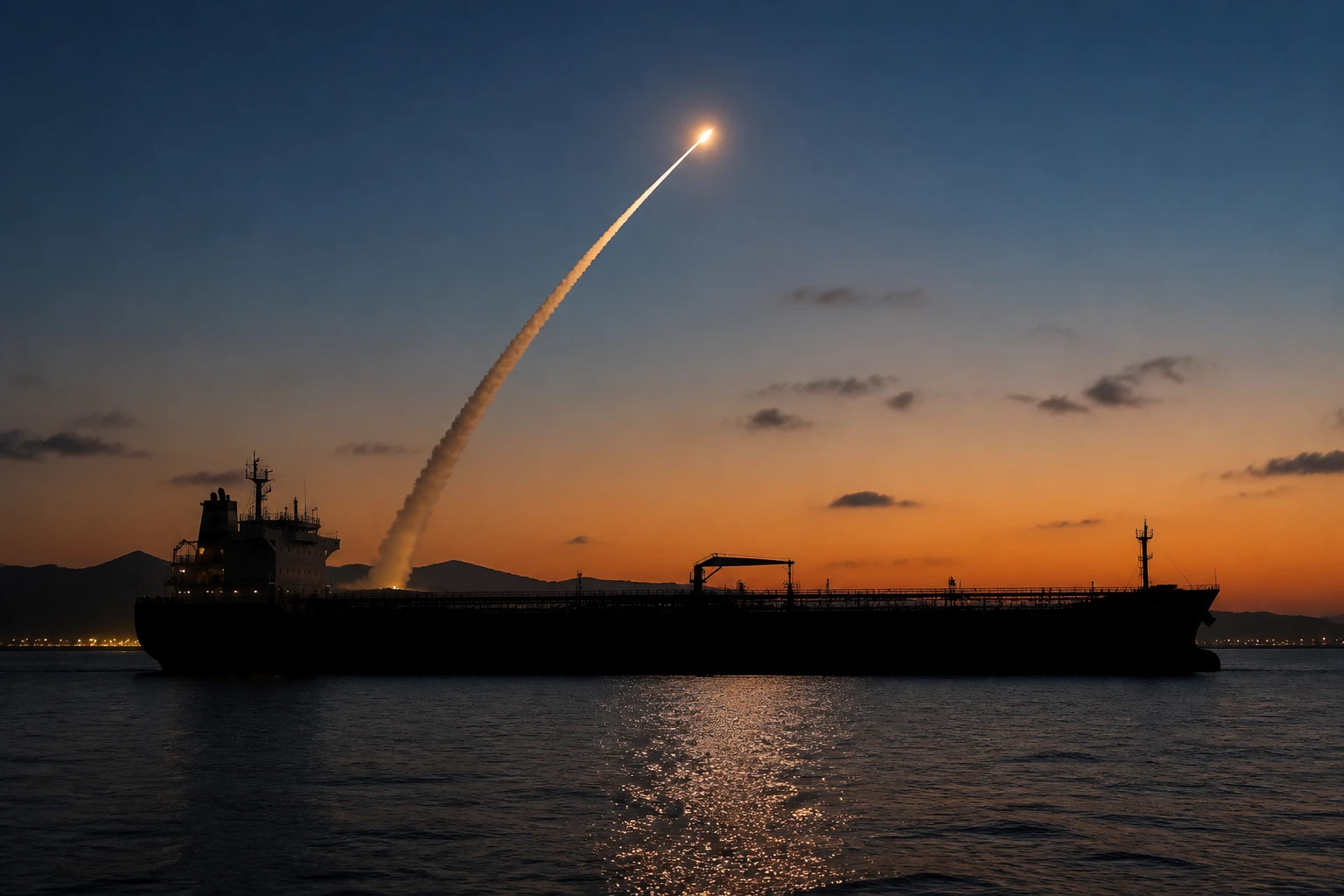
- July 22: Houthis claim missile and drone hits on Saudi oil tankers Encelia and Layla; Saudi authorities confirm fire on Encelia’s bow, all crew safe.
- Late July-early August: Further claims against oil facilities in Jizan and Yanbu, plus Najran Airport and civilian areas in Najran province.
- August 7: UN Security Council issues its condemning statement.
On one Najran strike, coalition spokesman Major-General Turki al-Maliki said 11 civilians were wounded, including seven Saudis, one Yemeni, two Egyptians and one Pakistani. A four-year-old child suffered second-degree burns. Al-Maliki accused the Houthis of indiscriminate shelling of civilian areas.
Resolution 2216 Remains the Legal Anchor
The Security Council and the governments that welcomed its statement repeatedly pointed to Resolution 2216 of April 2015. That text, adopted under Chapter VII, demands the Houthis cease military operations and withdraw from seized territory, relinquish arms taken from government institutions, and end violence that threatens neighboring states. It imposes a targeted arms embargo under Resolution 2216 on the Houthis and forces loyal to the late Ali Abdullah Saleh, expands travel bans and asset freezes, and reaffirms the legitimacy of Yemen’s then-president.
Eleven years later the same resolution still supplies the primary legal language used against cross-border attacks and arms flows. The August 7 statement simply restated the obligation and added the fresh condemnation of the 2026 missile and shipping strikes.
Commercial Ships and the Civilian Cost
The shipping attacks carry the widest second-order risk. After declaring a blockade, the Houthis said they targeted the Encelia and Layla for violating it. Saudi state media confirmed the Encelia took a hit that set its bow on fire while the vessel sailed in the Red Sea. Crew members escaped unharmed. Further claims followed against other Saudi-linked tankers and coastal oil infrastructure.
- Encelia: Confirmed hit and bow fire; all crew safe.
- Layla: Claimed by Houthis; confirmation incomplete in public reports.
- Najran civilians: 11 wounded, including a four-year-old with burns.
- Yemen government forces: At least 30 soldiers killed in related Houthi missile strikes on Hadramout and Marib camps.
These incidents sit inside a wider pattern. The Houthis had already disrupted Red Sea shipping during the Gaza war. The 2026 strikes against Saudi-linked vessels and ports raise insurance costs, force route diversions, and threaten the Bab al-Mandab chokepoint that carries a large share of global oil and container traffic.
| Incident | Date | Target | Reported Result |
|---|---|---|---|
| Abha Airport | July 13 | Saudi civilian airport | Missiles and drones intercepted |
| Encelia tanker | July 22 | Saudi oil tanker, Red Sea | Bow fire, crew safe |
| Najran province | Early August | Civilian areas | 11 wounded, child burned |
| Hadramout/Marib camps | August 6-7 | Yemen government forces | 30+ soldiers killed |
Saudi Arabia has invited partners into a new Red Sea protection coalition. Thirteen countries had signaled agreement by late July. The UN statement and the rapid GCC welcomes supply the diplomatic cover for those steps.
A Cascade of GCC Welcomes Forms the Perimeter
Jordan did not act alone. Within a short window Saudi Arabia, Qatar, Kuwait and Bahrain all issued public welcomes of the identical Security Council language. Each statement stressed solidarity with Riyadh’s right to protect its territory and citizens and called for full implementation of existing resolutions.
- Saudi Arabia: welcomed the condemnation, asserted self-defense rights, and urged firm international action.
- Jordan: absolute solidarity and support for all Saudi security measures.
- Qatar, Kuwait, Bahrain: parallel language praising the statement and rejecting threats to navigation and regional stability.
This is the second-order layer. A single Jordanian note would have been routine. The synchronized front turns the Security Council text into a shared Arab position that raises the political cost of further Houthi or Iranian-proxy strikes. It also sits beside recent joint Saudi and US responses to Iranian-linked strikes and parallel Arab positions against Iranian pressure.
The Foreign Ministry expresses the Kingdom of Saudi Arabia’s welcome of the statement issued by the members of the United Nations Security Council on Friday, August 7, 2026, including its condemnation of the missile attacks carried out by the terrorist Houthi militia against the Kingdom of Saudi Arabia since July 13, as well as the attacks against commercial vessels since July 22.
That language from the Saudi Foreign Ministry’s official account captured the tone across the Gulf.
Why the Timing Matters for Shipping and Proxies
The escalation coincides with the broader US-Israel conflict with Iran that began in late February 2026. Analysts note the Houthis have become more open about coordinating pressure on maritime routes as a way to support Iran. At the same time, the long-stalled Saudi-Houthi political track that followed the 2022 truce has lost momentum. The group has revived old demands and added new ones while testing cross-border strikes.
For Jordan the stakes are practical as well as diplomatic. Any sustained disruption of Red Sea trade raises energy and import costs across the region. Jordan has previously intercepted drones and missiles linked to Iranian-backed groups and maintains close security coordination with Saudi Arabia. A firmer collective position reduces the chance that Riyadh would face isolation if it expands defensive operations or supports Yemeni government forces more actively.
Ahmed Nagi of the International Crisis Group has described two drivers: a domestic calculation by the Houthis that stalled talks leave them freer to apply pressure, and a regional calculation that the Iran conflict creates an opening to raise the price of shipping through the Red Sea. The Security Council statement and the GCC cascade answer both by restating legal red lines and showing that the Arab side is aligned.
Frequently Asked Questions
What does UN Security Council Resolution 2216 require of the Houthis?
Adopted in April 2015 under Chapter VII, it demands that the Houthis immediately cease all military operations, withdraw from territory they seized, relinquish arms taken from Yemeni government institutions, and stop violence that threatens neighboring states. It also imposes a targeted arms embargo and expands sanctions including travel bans and asset freezes.
When did the 2026 Houthi cross-border attacks on Saudi Arabia begin?
The first major strike of the current round hit Abha International Airport on July 13, 2026, with ballistic missiles and drones. Saudi defenses intercepted the weapons. Subsequent attacks included commercial vessels from July 22 and civilian areas in Najran province.
Which commercial vessels did the Houthis claim to attack in July 2026?
Houthi spokesmen named the Saudi oil tankers Encelia and Layla on July 22, saying both had violated a maritime blockade the group declared against Saudi Arabia. Saudi authorities confirmed a fire on the Encelia’s bow; all crew members were reported safe. Confirmation of the Layla claim remained incomplete in initial public reports.
What specific actions did the August 7 UN Security Council statement condemn?
It condemned the missile attacks launched by the Houthi militia against Saudi Arabia since July 13 and the attacks targeting commercial vessels since July 22. It also stressed the need to adhere to international law and relevant resolutions, foremost Resolution 2216, and rejected threats to regional security and freedom of maritime navigation.
How did other Gulf states respond to the same UN statement?
Saudi Arabia, Qatar, Kuwait and Bahrain each issued public welcomes within a short period, using closely matching language that affirmed solidarity with Saudi security measures and called for full implementation of Security Council resolutions. The near-simultaneous statements created a coordinated diplomatic front.
The Jordanian welcome, the matching Gulf notes, and the Security Council text itself now sit on the record as a single diplomatic package. Whether that package slows the next missile or tanker strike will be tested on the water and at the border in the weeks ahead.
