
A metered taxi from Cairo International Airport into downtown costs about 150 to 200 Egyptian pounds, roughly $3 to $4. That fare hasn’t gotten cheaper. The pound has.
Egypt’s currency has lost more than 70% of its value against the dollar since early 2022. Every ride out of CAI, whether it’s a battered taxi, an Uber, or a private car with a driver holding a name sign, gets a little cheaper in dollars each time the pound slides further. Back home, that same slide is why fuel and fares keep climbing in local terms, and why the metro line meant to reach the airport by now still has no finish date.
What Actually Waits Outside Arrivals at CAI
Cairo International Airport spreads across three passenger terminals, each with its own taxi rank and ride-hail pickup zone just outside the arrivals hall. A free shuttle links all three, and which one you land at depends entirely on your airline.
The airport has had plenty of arrivals to manage lately. It recently handled 1,400 flights in a single 48 hour stretch, which is exactly why so many travelers are weighing the same choice at once: taxi, app, private car, or bus. Here is how the main options compare.
| Option | Typical Cost | Travel Time | Worth Knowing |
|---|---|---|---|
| Official metered taxi | EGP 150 to 200 ($3 to $4) | 25 to 45 minutes | Unmetered black and white cabs need a price agreed before you get in |
| Uber or Careem | EGP 150 to 300 ($3 to $6) | 25 to 45 minutes | Fare is fixed in the app before the ride starts |
| Private or hotel transfer | Fixed price, above taxi rates | 25 to 45 minutes | Driver waits with a name sign, useful for late arrivals |
| Shuttle plus public bus | EGP 5 to 15 ($0.10 to $0.30) | 50 to 75 minutes | Daytime only, and there is still no direct metro link |
Every option on that list still works around the same gap. Nothing rail-based reaches the terminal doors yet.
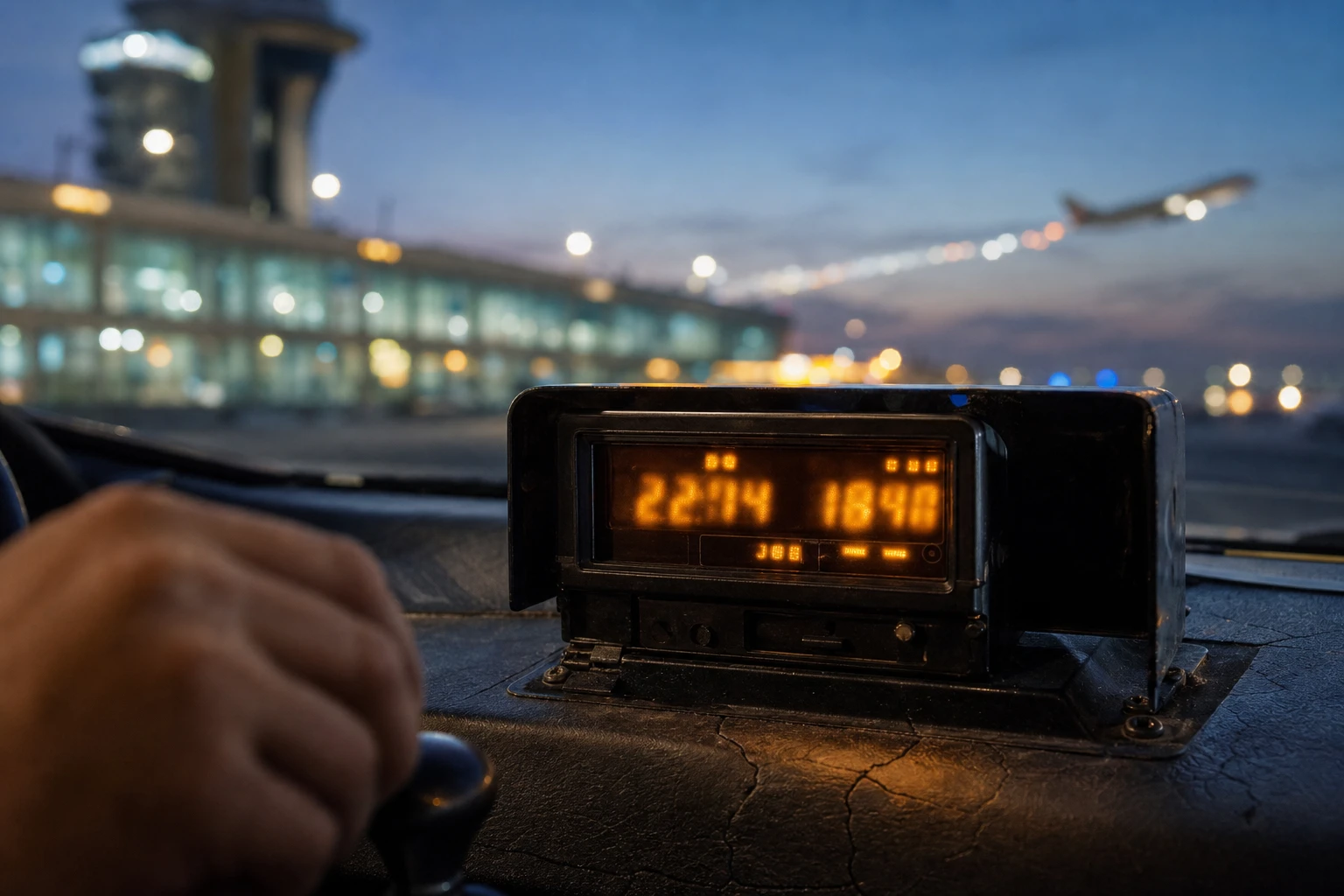
Avoiding the Foreigner Rate at the Taxi Rank
The most common trap at CAI is simple. A driver claims the meter is broken, or skips it entirely, then names a flat price once the bags are already in the trunk. Guides covering Egypt describe travelers quoted prices several times the usual fare this way, with some drivers taking longer routes to pad the bill further.
A few habits fix most of it:
- Walk past anyone who approaches inside the arrivals hall and head straight for the marked rank outside.
- For white or yellow metered cabs, watch the driver reset the meter to zero before pulling away.
- For black and white cabs, agree the fare before getting in, never after arriving.
- Carry small Egyptian pound notes. Drivers routinely claim they have no change for large bills.
Licensed airport taxis are not a scam, but they are rarely the cheapest option either. Priced honestly, they still typically run 50% to 100% higher than an Uber or Careem covering the identical route, which is part of why ride-hail apps have become the default pick for anyone with a charged phone and a local SIM.
Why a Bargain Fare Reflects a Battered Currency
The pound traded around 51.8 to the dollar in March 2026, and forecasters expect it to keep drifting weaker, toward 53 to 54 by year end. That slow slide is the real reason a downtown transfer feels like pocket change to anyone paying in dollars or euros.
Suez Canal tolls, one of Egypt’s biggest sources of foreign currency, tell part of the story. Houthi attacks on shipping and the wider Iran-Israel conflict have pushed Suez Canal revenue down 52% this year, from more than $9 billion annually to an estimated $4.3 billion. “Every billion dollars lost by the Suez Canal translates roughly into doubled import pressures on the currency,” The Middle East Insider wrote in its March analysis.
The regional fallout from that same conflict has already reshaped household budgets across Egypt, stacking on top of pressure that was already building from a decade of devaluations and IMF-guided currency floats.
Transport Costs Are Still Egypt’s Sharpest Inflation Problem
Headline inflation eased to 14.6% in May 2026, down from 14.9% in April, based on Egypt’s official statistics. Transport costs are cooling more slowly. Transport inflation eased to 24.7% in May, down from 29.2% in April, after the government raised fuel prices by 14% to 17% in March.
That gap matters. The same currency slide that makes a $4 airport ride feel like nothing to a visitor also raises the local cost of imported fuel, and that shows up in every microbus, taxi meter, and bus fare Egyptians pay for themselves.
Not everyone reading the numbers agrees on where they go next.
- EFG Hermes and Al Ahly Pharos both expect relief, projecting headline inflation to fall to between 8% and 11% by the end of 2026 and the pound to stabilize near EGP 45 to 49 per dollar.
- A currency desk at Naga.com takes the more cautious view, expecting the pound sliding toward EGP 53 to 54 by year end as debt and financing needs keep the pressure on.
Either way, that forecast gap is a bet on how much fiscal room Cairo has left, and fiscal room is exactly what decides whether the metro reaches the airport on any predictable timeline.
Does the Metro Reach Cairo International Airport Yet?
No. Cairo Metro Line 3 currently ends at Adly Mansour station on the city’s northeastern edge, still short of the runways. A dedicated Bus Rapid Transit (BRT) service covers that last stretch, so a metro-plus-bus trip is possible, just slower and more crowded than a taxi or ride-hail car.
A direct fix has been on the drawing board for years. Phase 4C would add roughly 7 kilometers of tunnel and five underground stations, running from Heliopolis station through Al-Hegaz Square and the Military Academy area to the terminal itself. A design contract went to a Vinci-led construction consortium in October 2024, and the design work wrapped in October 2025.
What it does not have is a finish date. Engineers flag land acquisition in the crowded neighborhoods near the airport as a likely source of delay, the same kind of holdup that slowed earlier phases of the line. Beyond Phase 4C, a further Phase 5 is still only at feasibility stage and would eventually tie the airport into Metro Line 4 instead. A separate financing push for the airport rail link is already running into the same budget limits shaping every other big decision in Cairo right now.
A Debt Bill Bigger Than the Blueprint
Egypt has more infrastructure plans than fiscal room to fund them all at once. Debt service now eats up around 83% of tax revenue, according to the IMF’s review of the program, leaving little for the kind of capital spending a five-station tunnel extension needs.
The numbers behind that squeeze keep moving. The IMF completed the fifth and sixth reviews of Egypt’s loan program in February, letting Cairo draw about $2.3 billion in fresh financing. By late June, a preliminary staff-level deal put Egypt on track to receive more than $1.6 billion in financing, pushing total disbursements under the country’s two IMF arrangements toward $7.2 billion.
None of that money is earmarked for a metro spur. It goes toward broader fiscal repair: tax reform, reduced energy subsidies, and a shrinking state footprint in the economy, conditions attached to every new tranche Cairo negotiates. The airport extension has to compete for room in that same budget, which is a large part of why it has a finished design but not yet a single meter of new tunnel.
The taxi meter will keep resetting to zero. The exchange rate probably won’t.
Frequently Asked Questions
Do Uber and Careem drivers in Cairo always honor the price shown in the app?
Mostly, yes, though not always. Some travelers report drivers asking for cash above the quoted fare once the ride is underway, particularly late at night. Cancelling through the app and rebooking, or flagging the driver via its support option, resolves most of these attempts without an argument at the curb.
Why does the Egyptian pound keep losing value against the dollar?
A mix of forces drives it: falling Suez Canal toll revenue, heavy external debt repayments, and a central bank interest rate held near 25% to keep foreign capital in the country. Most bank forecasts still expect gradual weakening through the rest of 2026 rather than a sharp reversal.
When will the Cairo Metro finally reach the airport?
There is no confirmed date. Beyond the five-station Phase 4C extension, planners are still doing early feasibility work on a Phase 5 that would link the airport to Metro Line 4 instead, an even earlier-stage option. For now, Adly Mansour station and its connecting bus stay the only rail-adjacent route.
What is the cheapest way from Cairo Airport into the city?
A shuttle-plus-public-bus combination costs roughly EGP 5 to 15, well under a dollar. It takes 50 to 75 minutes or longer in traffic, runs daytime hours only, and offers little dedicated luggage space, so it suits light packers better than families with suitcases.
Which terminal will I land at in Cairo?
It depends on the airline. Terminal 3 is EgyptAir’s home base and hosts its Star Alliance partners, while Terminal 1 and Terminal 2 handle most other international and charter carriers. A free shuttle connects all three, so landing at the “wrong” one for your hotel plans isn’t a major setback.
Is it safe to take a taxi late at night from Cairo Airport?
Yes, official ranks run 24 hours a day outside every terminal. For very late or very early flights, a pre-booked private transfer with a driver holding a name sign removes the need to negotiate anything half-asleep, and it sidesteps the overnight surge pricing that ride-hail apps apply.
