
On July 9, 2026, the Center for Rescue Archaeology of the Russian Academy of Sciences and the Palestinian Authority’s Ministry of Tourism and Antiquities signed a memorandum pledging to digitally document heritage sites across Palestinian-administered areas of the West Bank. The agreement runs through Russian state institutions: the Academy, the State Hermitage Museum, Rossotrudnichestvo, and the Russian diplomatic mission to Ramallah.
Its first publicly named sites are Solomon’s Pools south of Bethlehem and Tell es-Sultan, ancient Jericho. Both monuments sit at the heart of Jewish and biblical history, and the Russian and Palestinian framework wraps them inside a state program called the “Digital Archive of Monuments of Africa and the Islamic World.” Israel is not part of the project. The decisions made now about how these sites are named, dated, and described will travel through the databases that future researchers, museums, and heritage bodies consult.
A Memorandum Wrapped in Five Russian State Bodies
The signatories on July 9 were Natalia Solovyova, director of the Center for Rescue Archaeology at the Institute for the History of Material Culture of the Russian Academy of Sciences, and Hani al-Hayek, the Palestinian Authority’s minister of tourism and antiquities. The ceremony, held by video conference, was moderated by Timofey Bokov, the head of Rossotrudnichestvo’s office in Palestine, and attended by Mikhail Piotrovsky, director of the State Hermitage, alongside Artur Antonyan, Russia’s deputy representative to the Palestinian National Authority.
What Russia put on the table is not a small academic expedition. It is the institutional weight of the Russian state. The Academy of Sciences provides the technology. The Hermitage brings bibliographies, expert supervision, and global name recognition. Rossotrudnichestvo, the federal agency for cultural diplomacy abroad, coordinates the work through its local office, which has operated under the informal name “Russian House” since 2021. The diplomatic mission supplies political backing.
The memorandum slots into a broader Russian initiative called the “Digital Archive of Monuments of Africa and the Islamic World.” Piotrovsky presented the project on March 25, 2026, at a meeting of the Russian Presidential Council for Culture, after which Vladimir Putin publicly promised support. According to what the Russian Academy press account says about the July 9 signing, the program is scheduled to run through 2028 and to deliver at least 30 full-fledged three-dimensional models of monuments. The Hermitage will collect bibliographic data, while archaeologists handle the digital filming and build geographic information systems for research, restoration, and education.
- March 25, 2026: Mikhail Piotrovsky presents the “Digital Archive of Monuments of Africa and the Islamic World” at a meeting of Russia’s Presidential Council for Culture. Vladimir Putin subsequently pledges public support.
- Late May 2026: Israeli Finance Minister Bezalel Smotrich and Knesset member Zvi Sukkot visit Solomon’s Pools south of Bethlehem and swim in one of the basins. Palestinian residents respond with organized counter-visits.
- June 12, 2026: Israeli forces raid the Solomon’s Pools tourist area, firing tear gas and stun grenades at Palestinian visitors, according to a local source cited by WAFA.
- July 9, 2026: The Russian-Palestinian memorandum on cultural heritage is signed by video conference.
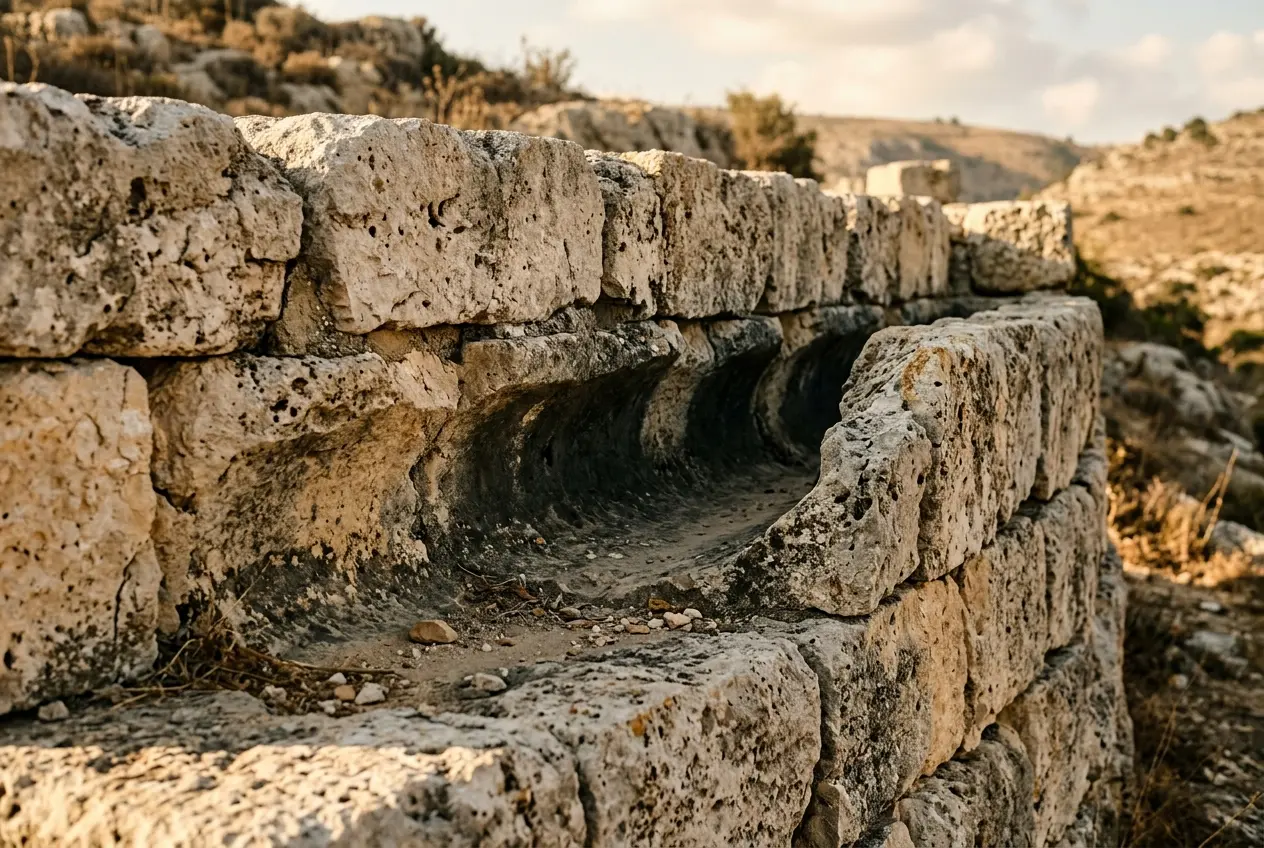
Solomon’s Pools and the Aqueduct to the Temple Mount
Solomon’s Pools sit south of Bethlehem in the village of Artas, inside Area A of the West Bank under Palestinian Authority control since the 1993 Oslo Accords. The site comprises three terraced open-air reservoirs with a combined storage capacity exceeding a quarter of a million cubic meters, built as part of a regional water system that also served Jerusalem. Historians and archaeologists date the construction of the pools to the 2nd and 1st centuries BC.
The pools were not a stand-alone reservoir. They fed the Lower Aqueduct to Jerusalem, an aqueduct the Israel Antiquities Authority places in the Second Temple period, most likely under Hasmonean or Herodian rule. The aqueduct ran approximately 21 kilometers from the pools to Jerusalem, with the Temple Mount as its terminal point. Water flowing to Jewish Jerusalem during the Second Temple era passed through these channels. New underground discoveries near Ramat Rachel continue to surface Second Temple-era infrastructure just south of the Old City. Repairs and extensions under Roman, Byzantine, Islamic, Mamluk, and Ottoman rulers in later centuries do not change the foundational identity of the system.
The pools became a national flashpoint in late May 2026, when Smotrich and Sukkot visited the site and swam in one of the basins, per the May 2026 standoff at Solomon’s Pools. The Palestinian Authority responded by framing the site as an integral part of Palestinian national identity. Hani al-Hayek, the same minister who would sign the July 9 memorandum with Russia, announced parallel efforts through local and international channels to defend the pools.
On June 12, 2026, Israeli forces raided the Solomon’s Pools tourist area and fired tear gas and stun grenades at Palestinian visitors, per WAFA. Natalia Solovyova, the Russian archaeologist who would sign the July 9 memorandum weeks later, acknowledged in a statement to RIA Novosti that there is a “very complex situation” around the site.
It is unacceptable that such an important site remains under the control of the Palestinian Authority. We will change this situation soon and ensure it is reopened to all citizens of Israel.
Bezalel Smotrich, Israeli finance minister, in a late May statement reported by Mondoweiss.
Tell es-Sultan Between Prehistory and the Book of Joshua
The second publicly named site, Tell es-Sultan, sits in the Jericho oasis near the Jordan Valley. Its earliest monumental layers date to the Neolithic era, and the mound contains one of the oldest known sequences of permanent human settlement in the world. UNESCO inscribed the site on its World Heritage List in 2023 under the title “Ancient Jericho: Tell es-Sultan, a Prehistoric Site.” Israeli archaeology uses the name Tel Jericho in modern Hebrew and biblical Jericho in the Hebrew Bible for the same mound.
It would be wrong to call the entire mound a Jewish monument. Its deepest layers predate the emergence of the Jewish people by thousands of years. It would be equally wrong to call it an Arab or Islamic monument, since its oldest occupation phases long predate the Arab conquest of the region.
Jericho occupies a central place in the Hebrew Bible and in Jewish historical memory, especially in the story of the Israelites crossing the Jordan under Joshua. Israeli archaeological writing identifies Tell es-Sultan explicitly with biblical Jericho. Russian and Palestinian communications, by contrast, emphasize the site’s place inside the national heritage of “Palestine” without naming its biblical layer. The deepest strata of the mound cannot honestly be reassigned to any modern national identity.
What a Digital Archive Decides About a Monument
A digital archive is more than photographs and three-dimensional shapes. The metadata attached to each monument is where the political decision lives. As an Israeli investigation of the memorandum’s framing of Jewish heritage lays out, the archive carries every official name, periodization tag, bibliographic citation, and cultural attribution that will follow the site into museums, universities, and international heritage submissions.
Russian reports on the program say the Hermitage and the Russian Academy team plan to build geographic information systems that pair photorealistic 3D models with official names, descriptions, periodization, bibliographic references, ownership records, and educational commentary. The same format will let these records feed directly into museum databases, exhibition copy, and tourism materials. The Russian program is scheduled to run through 2028 and to deliver at least 30 full-fledged three-dimensional models of monuments. The team plans to start with three or four priority sites the Palestinian Authority selects first.
That selection priority sits with the Palestinian Authority alone. Solomon’s Pools and Tell es-Sultan have already been publicly named as priority sites. Solovyova cited Roman cisterns, remains of a water pipeline, and Christian churches and mosques as further examples of the region’s archaeological wealth; these are not yet a confirmed first-phase list.
Whoever writes that metadata gets to determine whether the Lower Aqueduct to Jerusalem is introduced as a Second Temple structure built to supply the Temple Mount or as a regional water system. Whoever writes that metadata gets to decide whether Tell es-Sultan is described as a multi-period site whose biblical Israeli period belongs in the middle of the record. Putin’s public endorsement after Piotrovsky’s March 2026 pitch is the political cover for that work. The outputs are designed to be reusable in international heritage discussions, including at UNESCO, where the Palestinian Authority has an active submission agenda.
- The official name of the monument as it will appear in international databases.
- The geographic and political attribution, including which state is listed as the steward of the site.
- The cultural attribution, including which civilizational heritage is foregrounded in the description.
- The historical periodization, including how much weight is given to ancient Israelite, Hasmonean, Herodian, and Second Temple phases.
- The bibliographic anchor, shaping which scholars, excavations, and research traditions are cited as authoritative.
Sebastia and the Wider Archaeological Front
The Russia-Palestinian memorandum lands against an Israeli push from the opposite direction at Sebastia, ancient Samaria, in the northern West Bank near Nablus. Sebastia is associated with the capital of the northern Kingdom of Israel, named Shomron in the Hebrew Bible, and with the Roman city Herod later renamed Sebaste after Augustus. The site carries layers from Iron Age Israelite, Hellenistic, Roman, Byzantine, Early Islamic, Crusader, Mamluk, and Ottoman periods, and is venerated as the traditional burial place of John the Baptist, marked today by a Crusader cathedral converted into the Nabi Yahya mosque. Sebastia has been on the UNESCO Tentative List for the State of Palestine since 2012.
On February 11, 2026, the Israeli Civil Administration issued a second expropriation notice for the entire archaeological site of Sebastia and 1,800 dunams of surrounding land, per a July 2026 position paper from the Israeli NGO Emek Shaveh. The Israeli government has framed the move as preservation of a neglected site. The Palestinian Authority, Sebastia’s residents, and Emek Shaveh have called it unilateral annexation of Palestinian-administered archaeology. Israeli authorities have already allocated tens of millions of new shekels to develop Sebastia as the Shomron National Park. New carbon dating of Arava fortresses has reshaped how the broader Kingdom of Israel timeline is read.
Solomon’s Pools and Sebastia together describe the same struggle from two directions. Israel is pushing for administrative control over sites in Area C and extending into Area B and Area A. Russia is now bringing state scientific authority to the Palestinian Authority on the same sites, or sites of equivalent weight. Both sides are weaponizing heritage. Both sides are excluding the other from the technical work that shapes how the stones are written about in the future. Archaeology has become a second front in a contest already played out diplomatically, militarily, and at the United Nations.
The Questions Jerusalem Has to Put on the Table
The Israeli government has not publicly responded to the July 9 memorandum at the time of writing. The Foreign Ministry has not announced a request for the text of the agreement. No list of confirmed sites has been requested or shared. The Israel Antiquities Authority has not been named as a participant. Israeli specialists have not been named as authors of the digital records. The Russian state’s offer to the Palestinian Authority has been left standing without an Israeli counter-offer.
Silence becomes more expensive the longer it lasts. Once 3D models, periodization tables, and bibliographic dossiers enter UNESCO submission files and museum exhibitions, the cost of correcting them rises. The useful response is to put specific, technical questions on the table before the first scan is published.
- Who owns the raw scans, the geospatial data, and the bibliographic dossiers produced by the project?
- Which body writes and approves the official descriptions, periodization, and cultural attribution for each monument?
- Will Israel Antiquities Authority research on the Hasmonean, Herodian, Second Temple, and ancient Israelite phases be included in the metadata?
- Can the archive be cited in future UNESCO submissions, exhibitions, or educational programs without Israeli consent?
- Will the project consult the Israel Antiquities Authority on each site before any digital record is finalized?
Frequently Asked Questions
What did the July 9, 2026 Russia-Palestinian memorandum cover?
The agreement was signed between the Center for Rescue Archaeology of the Russian Academy of Sciences, led by Natalia Solovyova, and the Palestinian Authority’s Ministry of Tourism and Antiquities, led by Hani al-Hayek. Russian specialists are to digitally document Palestinian cultural heritage sites, beginning with three or four priority locations chosen by the Palestinian Authority. The work falls under the umbrella of the Russian state’s broader “Digital Archive of Monuments of Africa and the Islamic World,” presented to Russia’s Presidential Council for Culture in March 2026 and endorsed publicly by Vladimir Putin.
Which sites have been specifically named in the first phase?
Two sites have been publicly identified. Solomon’s Pools sit south of Bethlehem and feed the Lower Aqueduct to Jerusalem. Tell es-Sultan is the mound identified in Israeli archaeology with biblical Jericho. Russian reports cite Roman cisterns, remains of water pipelines, and Christian and Islamic structures as further examples of regional archaeology, but these have not been confirmed as part of the first phase.
Why is Solomon’s Pools so contested?
The site lies inside Area A under Palestinian Authority control per the 1993 Oslo Accords. In late May 2026, Israeli Finance Minister Bezalel Smotrich and Knesset member Zvi Sukkot swam in one of the basins and called publicly for Israeli control. The Palestinian Authority responded with organized local visits and, weeks later, signed the July 9 memorandum with Russia to anchor its claim in international scientific backing. Beneath the pools sits the Lower Aqueduct, the system that carried water to the Temple Mount during the Second Temple era. Each side reads that Jewish historical layer differently.
How does Israeli archaeology describe the Lower Aqueduct to Jerusalem?
Israeli materials place the construction of the aqueduct in the Second Temple period, most likely under Hasmonean or Herodian rule. The system carried water approximately 21 kilometers from Solomon’s Pools to the Temple Mount. It was repaired and extended under Roman, Byzantine, Islamic, Mamluk, and Ottoman rulers in later centuries. Israeli archaeological writing treats the foundational layer of the aqueduct as part of the infrastructure of Jewish Jerusalem during the era of the Second Temple.
What concrete steps has Israel been urged to take?
Commentary on the memorandum has urged the Israeli government to seek the full text of the agreement, to confirm Israel Antiquities Authority participation in the digital documentation, to require explicit naming of Hasmonean, Herodian, Second Temple, and ancient Israelite phases in every dossier, and to publish its own independent digital documentation of sites in Judea and Samaria in Hebrew, English, Arabic, and Russian. None of these steps has been publicly confirmed by the Israeli government at the time of writing.
