
Lebanese President Joseph Aoun and US Vice President JD Vance spoke by phone on Monday about a new ‘deconfliction cell‘ for Lebanon, a mechanism Qatar and Pakistan announced after a Sunday round of US-Iran talks in Switzerland. The aim is to keep the ceasefire between Israel and Hezbollah from sliding into a wider escalation.
The call landed on the first day since fighting resumed on March 2 that UN peacekeepers detected no air strikes, and the first day Israel lifted wartime restrictions on its northern border. Yet Israel was not in the announcement, and Israeli Prime Minister Benjamin Netanyahu said the same evening that his forces in southern Lebanon would act with full freedom against any threat.
A Cell for a Conflict One Party Won’t Join
Pakistan and Qatar issued the joint statement on Sunday in Switzerland, after the United States and Iran met for the first round of post-war talks. The mediators said the ‘parties’ had agreed to the creation of a ‘deconfliction cell among the parties, the Lebanese Republic, and the mediators, in order to ensure the end of military operations in Lebanon is upheld, in accordance with the memorandum of understanding.’
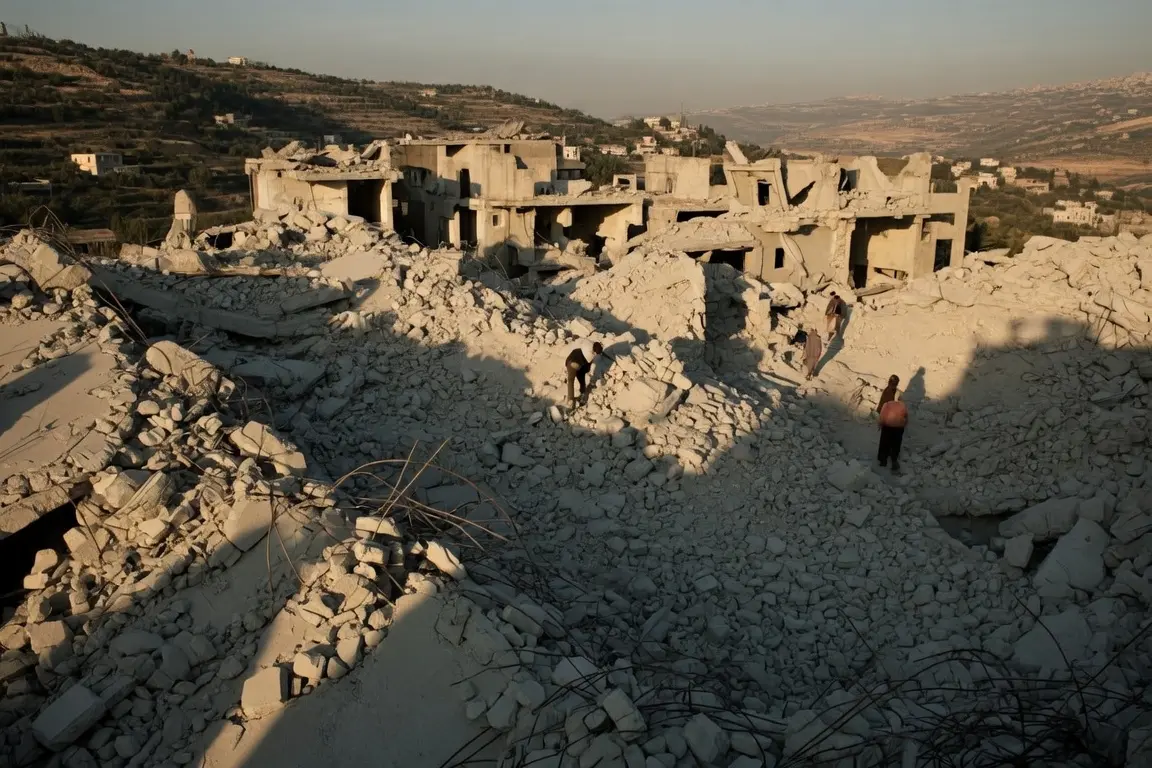
The mechanism is meant to manage a war that drew Lebanon into a wider Middle East conflict on March 2, when Hezbollah opened rocket fire on Israel in support of its backer Iran. Aoun’s office said the Monday call with Vance, senior US adviser Jared Kushner, and Qatari Prime Minister Sheikh Mohammed bin Abdulrahman al-Thani focused on ‘the issue of consolidating the ceasefire in Lebanon, stopping the Israeli military escalation and steps that should be taken in this regard, including the possibility of forming a cell for this purpose.’ On the ground, Israeli troops have been operating in a buffer zone up to about 10 kilometers deep inside Lebanese territory, and entire villages in that strip have been razed. Israel, for its part, was not in the mediator statement that announced the cell, and was not a signatory to the underlying memorandum of understanding, a separate text signed digitally on Sunday by Trump, Vance, and Iranian parliamentary speaker Mohammad Bagher Ghalibaf and published this week as the 14-point text of the US-Iran deal.
Iran’s Foreign Minister Abbas Araghchi called the cell ‘the first real test’ of the emerging US-Iran framework. ‘Pakistani and Qatari mediation has led to major breakthroughs to bring the war in Lebanon to an end,’ Araghchi wrote on X. The phrasing positions the cell as the enforcement arm of the 14-point memorandum that the US released on Wednesday, which in its first paragraph commits the United States and Iran and ‘their allies in the current war’ to ‘the immediate and permanent termination of military operations on all fronts, including in Lebanon.’ The memorandum is due to be formally signed Friday in Switzerland, triggering a 60-day window to negotiate a final deal.
Vance Frames the Cell as a Brake on Escalation
US Vice President JD Vance, who helped broker the memorandum with Iran, framed the new mechanism in Switzerland on Monday as a tool to prevent single incidents from cascading. ‘We want a regional ceasefire, right? We want Hezbollah to stop firing at our friends in Israel. We want Israelis to be able to live in peace,’ he said at a press conference. ‘We also want to make sure that, you know, when things happen, they don’t spiral into a broader escalation.’ Vance said the goal is to allow direct communication between Israel, Lebanon, Hezbollah, and other regional partners ‘since there really hasn’t been a mechanism to have those discussions until basically when we set that up’ on Sunday.
He said the United States had made ‘very good progress’ on the mechanism and that the ‘Israelis have been very clear they do not have territorial intentions on south Lebanon.’ The reason Israel is staying, he added, is ‘because they’re worried about Hezbollah fighters in south Lebanon firing into Israel.’
Netanyahu Pushes Back With ‘Full Freedom’ for His Forces
The Israeli prime minister, on the same day, made clear that the ground presence is not under negotiation. Netanyahu said the directive from him and the defense minister to the IDF is unchanged: troops in southern Lebanon can act without restriction against any direct or developing threat to them or to Israeli residents in the North. ‘The IDF has no restrictions on this matter,’ he added.
Israeli Prime Minister Netanyahu used a Sunday statement to push back against suggestions Israel might pull back. He pledged on Sunday that Israeli forces would remain in southern Lebanon ‘as long as necessary.’
Our fighters in southern Lebanon have full freedom of action to thwart any direct or developing threat to them or to the residents of the North.
Foreign Minister Gideon Sa’ar offered the same line. He insisted that while Israel ‘has no territorial ambitions’ in Lebanon, it will not withdraw from the established ‘security zone.’ Israeli media, L’Orient Le Jour reported, had earlier pushed back against speculation that troops would pull back from certain positions. The buffer zone, unilaterally declared by Tel Aviv, has been the site of extensive demolition and bulldozing operations.
The First Day UN Peacekeepers Saw No Trajectories
On the ground, Monday offered a rare opening. Stephane Dujarric, the spokesman for the UN secretary general, said Sunday ‘marked the first day since the resumption of hostilities on March 2 in Lebanon, that peacekeepers from our peacekeeping force in Lebanon did not detect any trajectories or observe any interceptions.’
‘This lack of activities has continued through this morning,’ Dujarric said, welcoming the ‘reduction of hostilities.’ Israel said on Sunday that it was lifting all wartime restrictions on gatherings in its northern border areas from Monday morning, another concrete sign of de-escalation. Some residents had started returning to the south over the past two days to inspect damaged homes and businesses, though the Lebanese army urged them to delay returning to border villages.
L’Orient Le Jour reported that the only Israeli action in southern Lebanon in the late morning Monday was a stun grenade fired near journalists in the Nabatieh region. Machine-gun fire was reported in Zawtar Sharqieh in the same region.
The quiet day, however, did not unwind the previous week’s damage. Neither side respected an April 17 ceasefire, and fighting only paused on Saturday evening after it threatened to derail the deal signed between the US and Iran the previous week. The cost of those weeks of fighting, the UN Development Program and Lebanon’s government-linked National Council for Scientific Research said on Monday, is now counted in dollar terms and in the number of buildings destroyed.
Pakistan and Qatar Step In as Mediators
Pakistan and Qatar brokered the new deconfliction cell jointly, with the Sunday statement coming from the two mediators alone, no US or Iranian signature, even though both Washington and Tehran were at the table. The November 2024 mechanism, by contrast, had been built around representatives of the Lebanese and Israeli militaries, the United States, and France. That earlier channel collapsed in March when Israel and Hezbollah returned to war, and the new deconfliction cell is part of a wider US-Iran package that also covers the Strait of Hormuz. The joint statement did not specify who would staff the new cell or where it would sit.
Vance’s account of the new cell emphasizes its communication function. He said the cell is meant to give the parties a way to talk about incidents in real time, so small flare-ups do not become bigger ones. ‘Israel and every other nation in the region has the right of self-defense, but we want to make sure that everybody has that right of self-defense in the background where we’re talking about how to de-escalate these conflicts rather than spiraling out of control,’ Vance said.
Aoun Insists Lebanon Negotiates for Itself
We do believe… that we can get to a place where Lebanon’s territorial integrity and sovereignty is protected, Israel’s security is protected.
US Vice President Vance made the comment at a press conference in Switzerland that wrapped the first round of US-Iran post-war talks. Aoun, in his own readout of the Monday call, was clear about what Lebanon will accept from outside.
‘We negotiate for ourselves, and we do not accept any other party doing so for us,’ the Lebanese president said. ‘We welcome any assistance that comes from any country to end the war, particularly as the situation in the region is interconnected.’ ‘But there is a big difference between trying to help us and interfering in our internal affairs,’ he added, in remarks widely read as a signal to Tehran, which through Hezbollah has long held significant political weight inside Lebanon.
Aoun is heading into a fifth round of direct Lebanon-Israel talks in Washington on Tuesday. A US State Department official told AFP that the goal would be ‘to end the cycle of violence for good’ and to ‘advance a comprehensive peace and security agreement between the two countries.’ Hezbollah has pushed Lebanon to walk away from the Washington talks, and its leader, Naim Qassem, used a Sunday evening speech to reject any Israeli ‘security zone’ in the south. The new deconfliction cell, as announced, makes no reference to such a zone.
4,106 Killed and $1.38 Billion in Damage
The diplomatic maneuvering runs over a war whose damage is now being measured in dollars and buildings. The UN Development Program and Lebanon’s government-linked National Council for Scientific Research said Monday that direct damage to buildings in south Lebanon is estimated at $1.38 billion. The rapid assessment compared satellite imagery from late April with that of October 2025, so the latest weeks of the conflict are not included.
‘In total, 11,095 buildings were completely destroyed, impacting 17,891 housing units, while 2,242 buildings sustained partial damage… and 9,311 buildings incurred minor damage,’ the joint statement said. Lebanese authorities say Israeli attacks since March 2 have killed more than 4,100 people and displaced more than one million others. The Israeli army has reported 36 soldiers killed inside Lebanon. A fifth round of US-brokered bilateral talks is due in Washington on Tuesday.
- $1.38 billion in direct building damage in south Lebanon, per a UN Development Program and CNRS assessment released Monday.
- 11,095 buildings completely destroyed, affecting 17,891 housing units.
- More than 4,100 people killed in Lebanon since March 2 (Lebanese authorities).
- More than 1,000,000 people displaced since the war resumed.
- 36 Israeli soldiers reported killed inside Lebanon.
- About 10 km depth of the Israeli-declared buffer zone inside Lebanese territory.
