
Tensions between Lebanon and Israel escalated sharply after Hezbollah leader Naim Qassem called on the Lebanese government to cancel planned direct talks in Washington. His remarks come as both nations prepare for rare diplomatic engagement amid ongoing conflict and rising casualties.
Qassem warned that any negotiations with Israel are “futile” and vowed Hezbollah would not recognize or abide by any outcomes from the talks.
The situation highlights deep divisions inside Lebanon over whether diplomacy can end the violence or whether armed resistance will continue regardless of political efforts.
Washington talks face growing pressure
The planned meeting between Lebanese and Israeli ambassadors in Washington marks a rare diplomatic moment in decades of hostility. The discussions are expected to focus on easing hostilities and exploring possible steps toward a ceasefire.
Lebanon’s government has supported engagement, framing the talks as a path toward stopping the ongoing war and reducing civilian suffering. Israel, however, has pushed for more direct negotiations, with officials signaling that broader peace discussions and security guarantees remain central to their position.
Israeli leadership has also made its stance clear on security concerns. Prime Minister Benjamin Netanyahu emphasized that any long term arrangement must include the disarmament of Hezbollah and what he described as “real peace that will last for generations.”
This divergence has made the Washington meeting politically sensitive, with competing goals on both sides shaping expectations.
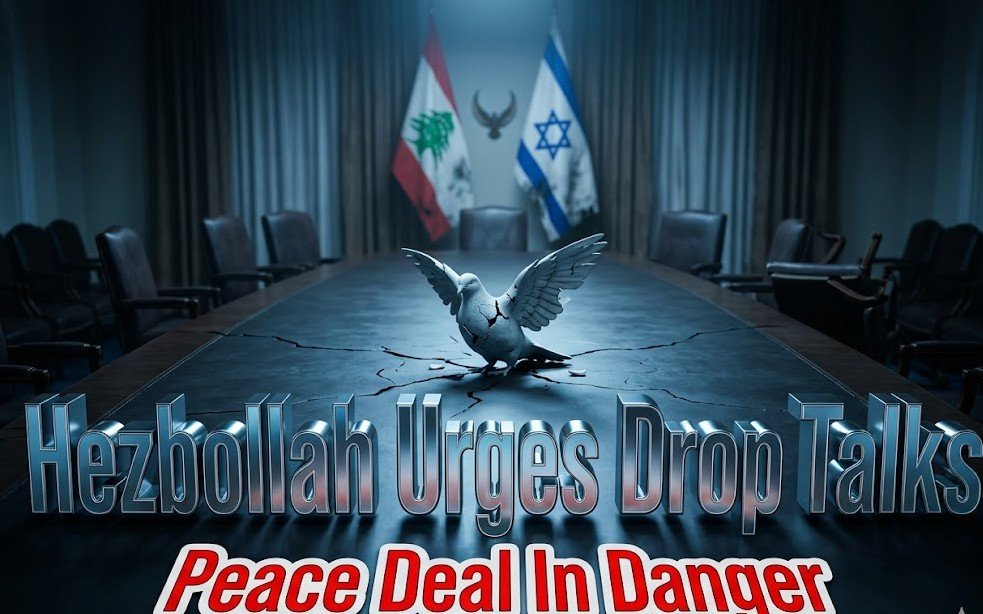
Hezbollah rejects negotiations outright
Hezbollah’s response was immediate and firm. Naim Qassem, speaking in a televised address, rejected the legitimacy of talks and urged Beirut to withdraw from the meeting entirely.
He described the negotiations as a pressure tactic against Lebanon and accused the government of being influenced by external forces. Qassem insisted that the process lacked national consensus and warned that it undermines Lebanon’s internal unity.
Hezbollah declared it would not accept or implement any agreement reached through the Washington discussions.
A senior Hezbollah official also reinforced this position, stating that the group would not feel bound by any diplomatic outcomes produced in direct negotiations between Lebanon and Israel. This signals a clear separation between the state’s diplomatic approach and Hezbollah’s military and political stance.
The group further reiterated its commitment to continuing confrontation on the ground, framing its actions as resistance against Israeli military operations.
Rising conflict and humanitarian strain
The backdrop to these diplomatic tensions is a continuing cycle of violence between Israel and Hezbollah. Fighting has intensified in recent months, with cross border strikes, air raids, and ground engagements reported across southern Lebanon and northern Israel.
The conflict has resulted in heavy human and material losses, with large scale displacement reported in Lebanese border regions. Civilian infrastructure in multiple areas has been damaged, adding pressure on Lebanon’s already strained public services.
Key reported impacts include:
- Significant displacement of families from southern Lebanon
- Damage to residential areas and transport routes
- Rising casualties among civilians and combatants
- Growing economic disruption in border regions
International actors have repeatedly called for restraint, warning that escalation risks wider regional instability. Humanitarian organizations have also raised concerns about access to basic services in affected areas.
Lebanon split over diplomacy and resistance
Inside Lebanon, the political debate remains deeply divided. Some officials view the Washington talks as a rare opportunity to secure a ceasefire and stabilize the country after months of escalation.
Others argue that engaging in direct talks with Israel risks weakening Lebanon’s internal position and sidestepping broader regional realities. Hezbollah has positioned itself firmly in opposition to any diplomatic framework that does not address its core demands.
The Lebanese government has continued to emphasize that its goal is to stop the war and protect civilians, while maintaining that diplomatic engagement does not automatically imply political normalization.
This internal divide reflects a broader struggle over Lebanon’s sovereignty, security strategy, and future foreign policy direction.
Regional stakes and uncertain path ahead
The Washington talks are unfolding at a time of heightened regional tension, with multiple conflicts intersecting across the Middle East. The outcome of any Lebanon Israel dialogue could influence wider diplomatic efforts and security dynamics in the region.
However, with Hezbollah rejecting the process and Israel insisting on stricter security terms, the path forward remains uncertain. Analysts warn that without mutual agreement on basic terms, the talks may struggle to produce immediate breakthroughs.
For now, both sides appear entrenched in their positions, leaving diplomacy and conflict running in parallel tracks. The coming days in Washington will likely test whether even limited dialogue can hold under the weight of ongoing war.
As Lebanon stands at a crossroads between negotiation and continued resistance, the decisions made in the diplomatic arena may shape not only the current conflict but the country’s long term stability.
The situation continues to evolve, and the human cost on the ground remains the most urgent concern for civilians caught in the middle.
