
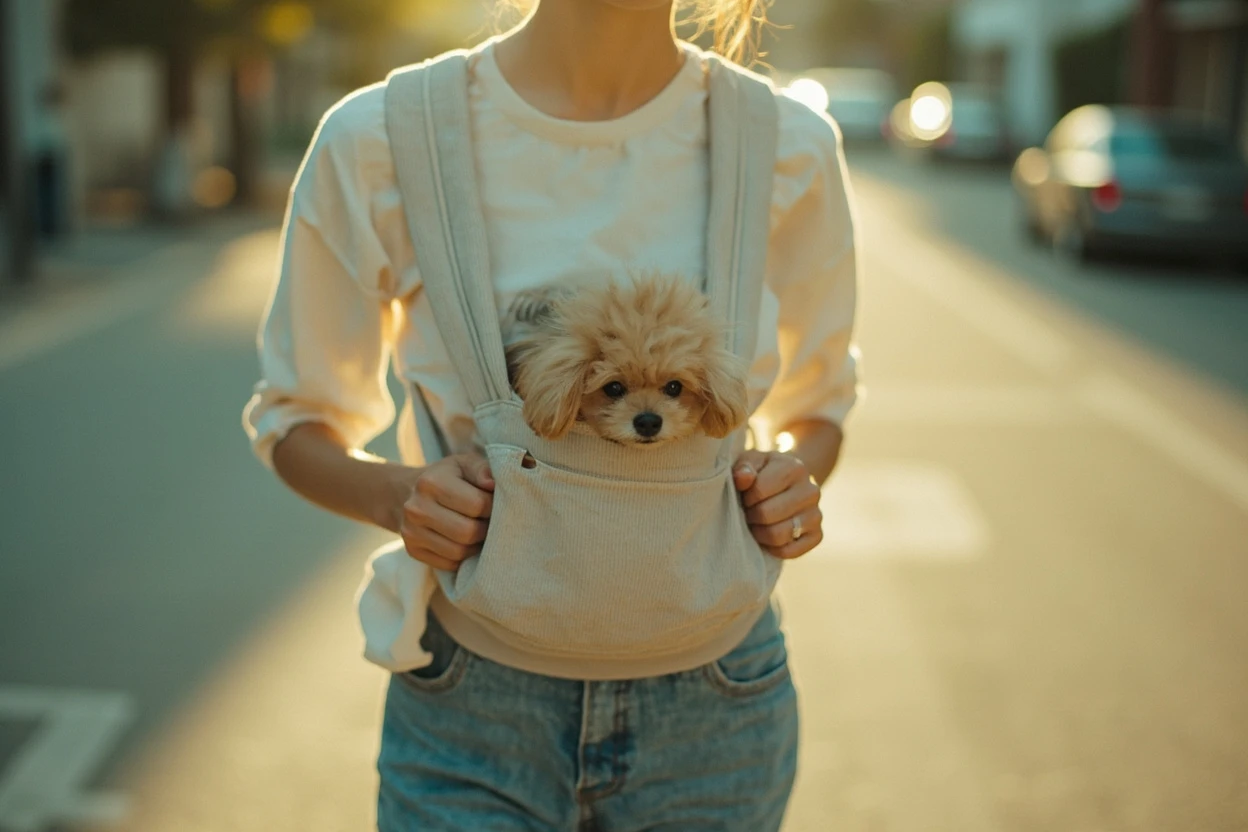
In Ikeda, Gifu Prefecture, Shin Ohta took his toy poodle for a routine walk and came home with a new product line. The salesman works at Lucky Industries, Japan’s oldest baby carrier maker, founded in 1934 and credited with more than 40 million carriers sold. After years of watching his dog stop mid-stroll, Ohta helped the company launch its first pet line in 2022: the Nu-i dog hip carrier. Earlier this year, Lucky Industries stood alongside Unicharm, AirBuggy, and dozens of other former infant-goods brands at Tokyo’s annual Interpets conference, hawking dog nappies, pet strollers, and slings for cats.
The companies share one reason for the move. Japan’s pet care market was worth 880 billion yen ($5.4bn) in 2025, up from 689.6 billion yen ($4.2bn) in 2020, according to market researcher Euromonitor, while the population of children under 15 has fallen to the point where pets now outnumber them by more than 2 million. Baby-goods manufacturers are quietly becoming pet-goods manufacturers, and the customer base is finally on their side.
A Salesman’s Dog, A 92-Year-Old Company, And the Pivot to Pets
The idea began on a routine walk in Ikeda. Ohta’s toy poodle liked to stop mid-stroll, and at nearly 5kg (11lbs), carrying him home was a real burden. “I knew there had to be a better way,” Ohta told Al Jazeera in an interview published this week.
Ohta works in sales at Lucky Industries, founded in 1934 and credited with producing more than 40 million baby carriers since. After consulting a veterinarian, he helped the company launch its first line of dog hip carriers in 2022, the Nu-i. Earlier this year, Lucky Industries was one of dozens of brands showing pet products at Interpets, Tokyo’s annual pet industry fair. Stalls at Tokyo Big Sight over the first weekend of April sold walk-in pet dryers, organic cat treats, pet clothing, and disposable nappies for dogs and cats.
Few of the pets at the fair were on a leash. Most rode in strollers or were tucked into the doggy version of baby slings, dressed in colorful outfits, fur clips, and even diapers. Lucky Industries CEO Hiroyuki Higuchi framed the shift in plain terms. “When the company started, Japanese families had many children, and mothers needed carriers to be able to work around the house,” Higuchi told Al Jazeera. “But now, Japanese families are shrinking.” The company is now betting on dogs to fill the gap left by shrinking nurseries. As Ohta put it:
With fewer babies around, it has been harder to come up with new ideas for baby products. Now, my life is centred around my dogs, as are the lives of many of my friends. When we meet up, we talk about our pets.
Inside Interpets, Where the Old Baby Aisle Shows Up in a New Form
The Interpets conference is a working map of Japan’s pet economy. Held at Tokyo Big Sight in early April, it drew the country’s largest household names into the same hall that once showcased infant goods. Stalls sold walk-in pet dryers, organic cat treats, and supplements. Many of the products were repackaged versions of items baby brands had been selling for years. Disposable nappies, pushchairs, and carriers sat alongside pet clothing and treats.
Unicharm ran one of the largest displays, a long wall of dog and cat nappies from its “Mannerware” line. The Tokyo-based company built its name on feminine hygiene products and disposable diapers before adding pet diapers in 2001. Inside the hall, pets were dressed in colorful outfits, fur clips, and even diapers. Most owners wheeled their dogs in strollers or wore them in slings across the chest, the same way Japanese parents have long carried infants. The migration from the baby aisle to the pet aisle was on full display, on a single convention floor.
The look of the fair signalled a shift in how Japanese consumers see their animals. Pets at Interpets were not the side characters of family life. They were the focus. Brands brought out carriers, slings, and small wardrobes sized for dogs and cats, and many of those products were built by companies whose core business used to be babies.
Why Pet Care Now Out-Earns Nappies at Unicharm
Unicharm entered the pet business in 1986 and now runs pet care operations in 11 countries and regions, mostly across Asia and North America. The company’s FY2025 results show what that side of the house is now worth. Consolidated net sales for pet care reached 156.1 billion yen in FY2025, a 5 percent rise year-on-year, and the segment has become a core pillar of overall growth. Under Unicharm’s 13th Medium-Term Management Plan, which began in 2026, pet care is officially labelled a “growth driver,” the same plan that anchors the company’s next decade.
Pet care now accounts for 17 percent of Unicharm’s total sales as of 2025, with a public target to lift that share to 20 percent by 2030. The segment’s profit margin tells the bigger story. Unicharm’s pet care division posted a 15.4 percent margin in 2025, against 10.7 percent for personal care. The personal-care business is still larger, but pet care is the more profitable line, and the company is treating it that way.
Unicharm is now exporting the playbook. In May 2026, the company announced the acquisition of Brazilian pet food maker Nutrire as a wholly owned subsidiary, giving it a foothold in one of the world’s largest pet markets. In July 2026, Unicharm confirmed its entry into the Indian pet care market, with products rolling out the same month, according to a Unicharm press release. Both moves sit inside the same growth-driver strategy, and both target markets where rising incomes and the same pet humanisation trend are opening doors.
Pet Humanisation, The Cultural Force Behind the Pivot
Companies do not move product lines on demographics alone. They move when customers do. Unicharm spokesperson Isshu Uehara lays the consumer shift in plain language. “Lifestyle changes, such as remaining single, marrying late, and the growth of childless, dual-income households, have led to a greater number of people seeking emotional connections through pets,” Uehara told Al Jazeera. “As a result, we’re seeing the growth of ‘pet humanisation’, or treating pets like family members or children rather than just animals.” That phrase, “pet humanisation,” is now the shorthand across the industry.
Customers, Uehara added, want premium products that “extend pets’ lifetimes” and want to “share experiences with them, like dining together or going out to cafes and friends’ houses.” Barbara Holthus, a sociologist and director of the German Institute of Japan Studies in Tokyo, has watched the trend build over years of research on Japanese households. She placed Japan’s case in a wider frame:
Before, a dog or cat might have just been an additional family member, but with fewer other family members and fewer children in the house, the focus becomes very concentrated on this animal.
Holthus called Japan a prime example of what she described as the “multi-species family.” Pets, she added, do not only replace children. They replace partners after a divorce or the death of a spouse, and they serve as playmates for the country’s growing share of only children. The market is reading the same social data, and it is repositioning its shelves around it.
The Demographics Driving the Whole Shift
The pivot is built on a hard demographic floor. A Japanese national survey of fertility trends found that between 2002 and 2021, the proportion of households with only one child rose from 10 percent to nearly 20 percent. Single-person households and childless dual-income couples have grown alongside that shift. Japan recorded 671,236 births in 2025, and the fertility rate kept falling. Lucky Industries’ Higuchi summed up the gap from the manufacturer’s side: “Compared to the baby goods market, the pet sector is doing better,” he told Al Jazeera. “Companies see it as a reliable sector.”
The numbers make the gap concrete. Euromonitor’s figures show Japan’s pet care market climbing from 689.6 billion yen ($4.2bn) in 2020 to 880 billion yen ($5.4bn) in 2025. Pets now outnumber children under 15 by more than 2 million in Japan. Baby-goods makers are reading the same data, and they are running out of babies to sell to.
The market is moving on three fronts at once, and the indicators all point the same way:
- Japan’s pet care market, 2020: 689.6 billion yen ($4.2bn), per Euromonitor
- Japan’s pet care market, 2025: 880 billion yen ($5.4bn), per Euromonitor
- Unicharm pet care net sales, FY2025: 156.1 billion yen (5 percent rise year-on-year)
- Unicharm pet care share of total sales, 2025: 17 percent (target 20 percent by 2030)
- Unicharm pet care profit margin, 2025: 15.4 percent, against 10.7 percent for personal care
- Single-child households, 2002: 10 percent, rising to nearly 20 percent by 2021
- Pet vs. child gap: more than 2 million more pets than children under 15
Where the Industry Goes Next
For Unicharm, the next leg of the strategy is geographic. The company now sells pet care products in 11 countries, mostly in Asia and North America, and is racing into new ones. India is the most recent addition, with Unicharm’s entry starting in July 2026. Brazil came next, via the May 2026 Nutrire acquisition. Both moves sit under the same growth-driver mandate in Unicharm’s 13th Medium-Term Management Plan, which positions pet care as the company’s central expansion engine through 2030, with a focus on partner animals as part of its Kyo-sei Life Vision 2030 roadmap.
For the smaller Japanese players, the playbook is simpler. Lucky Industries sells Nu-i dog carriers and joins Interpets each year. Stroller brands like AirBuggy and clothing companies like Sweet Mommy have made the same leap, applying infant expertise to a market of pet owners. The pivot is no longer a side project for Japan’s baby-goods industry. With more than 2 million more pets than children under 15, and a fertility rate still falling, the dog aisle is where the next decade of revenue has to come from, and the brands that move fastest will own it.
The research for this story draws on reporting by Al Jazeera’s Genevieve Mansfield, who interviewed Ohta, Higuchi, Uehara, and Holthus for the original feature. The Unicharm India market entry release is available on the company’s corporate news site.
