
Lebanon’s embassy in Washington said Hezbollah has accepted a US proposal to stop attacking Israel in exchange for an end to Israeli strikes on Beirut’s southern suburbs. Within hours the fighting carried on, and oil markets cared less about the truce in Lebanon than about what Iran might do to the Strait of Hormuz.
In Beirut and Jerusalem the deal is read as a local pause. For the traders pricing crude and the mediators trying to hold a fragile US-Iran ceasefire together, it is a test of whether the wider war stays contained.
Three Capitals, Three Versions of the Same Truce
The Lebanese embassy said it had received confirmation of Hezbollah’s acceptance of a US proposal for a mutual cessation of attacks. Under the terms it described, Israeli strikes on Beirut’s southern suburbs would cease in return for Hezbollah refraining from attacks against Israel, and the arrangement was meant to extend across all Lebanese territory.
Benjamin Netanyahu, the Israeli prime minister, confirmed the agreement and then narrowed it. He warned that strikes on Beirut would resume if Hezbollah did not stop hitting Israeli cities and civilians, and said the IDF (Israel Defense Forces, the country’s military) would keep operating in southern Lebanon as planned.
Donald Trump, the US president, offered the broadest version. He said he had spoken to Netanyahu and to Hezbollah representatives, that all shooting will stop, and that no troops would be going to Beirut. The three accounts agreed on the headline and split on the fine print.
| Party | What it pledged | The condition attached |
|---|---|---|
| Lebanese embassy, Washington | Mutual halt, extended to all Lebanese territory | Israel ceases strikes on Beirut’s southern suburbs |
| Benjamin Netanyahu | Stop strikes on Beirut | Only if Hezbollah halts; IDF keeps operating in the south |
| Donald Trump | All shooting stops, no troops to Beirut | Talks with Iran continue separately |
The gap matters because the reciprocal halt held for less time than it took to announce. Hezbollah said it launched three attacks on Israeli tanks and soldiers near two northern villages using drones and artillery. Israel’s military said it intercepted two projectiles fired from Lebanon, while Lebanon’s state news agency reported fresh Israeli strikes in the south and a violent detonation in the town of Debbine.
Why Oil Moved Before the Politicians Did
The clearest verdict on Monday came from the commodity markets, not the podiums. Brent crude, the global oil benchmark, jumped almost $5 a barrel toward $97.44 before easing back, a move set off less by Lebanon than by Iranian warnings about closing the world’s most important oil corridor.
Prices first spiked when Iranian media reported that Tehran had cut communications with Washington and was preparing to shut the Strait of Hormuz. Crude pared its gains only after Trump said Israel and Hezbollah had agreed to halt attacks and that talks with Iran were continuing.
- Almost $5 a barrel: Brent’s intraday jump on Monday before it slipped back toward the mid $90s.
- More than 30%: the gain in crude since the war began on 28 February, according to oil flows through the Strait of Hormuz tracked by the US Energy Information Administration.
- 7% plus: the early surge after Tehran signaled a full closure of the strait.
That sequence is the story in miniature. A ceasefire announcement in Beirut barely registered until it was tied to the question that actually drives the oil price: will the waterway between the Gulf and the open sea stay open.
Tehran Turns Lebanon Into a Lever
Iran has spent weeks insisting that the truce it struck with the United States covers Lebanon too. That claim, dismissed in Washington, is what gives a regional skirmish the power to move global energy prices.
The All-Fronts Claim
Abbas Araghchi, Iran’s foreign minister, said the US-Iran truce was a ceasefire on every front, Lebanon included.
It is unequivocally a ceasefire on all fronts, including in Lebanon, and its violation on one front is a violation of the ceasefire on all fronts.
By that logic, every Israeli strike on Beirut becomes a breach of the wider deal, and Tehran reserves the right to answer anywhere. That includes the sea lanes, where Iran’s allies could threaten the Bab al-Mandab and other maritime chokepoints at the entrance to the Red Sea.
The Suspended Channel
Tasnim, a news agency affiliated with the Islamic Revolutionary Guard Corps (IRGC, Iran’s elite military force), reported that Tehran could suspend the indirect negotiations it has been running with Washington through mediators. Iran’s negotiating team later halted the exchange of texts, accusing the US of sending mixed signals.
US officials, including Trump and Vice-President JD Vance, counter that Lebanon was never part of the deal with Iran. That dispute, over a single clause that may or may not exist, is now the hinge on which the oil premium swings.
The Strait That Still Sets the Price
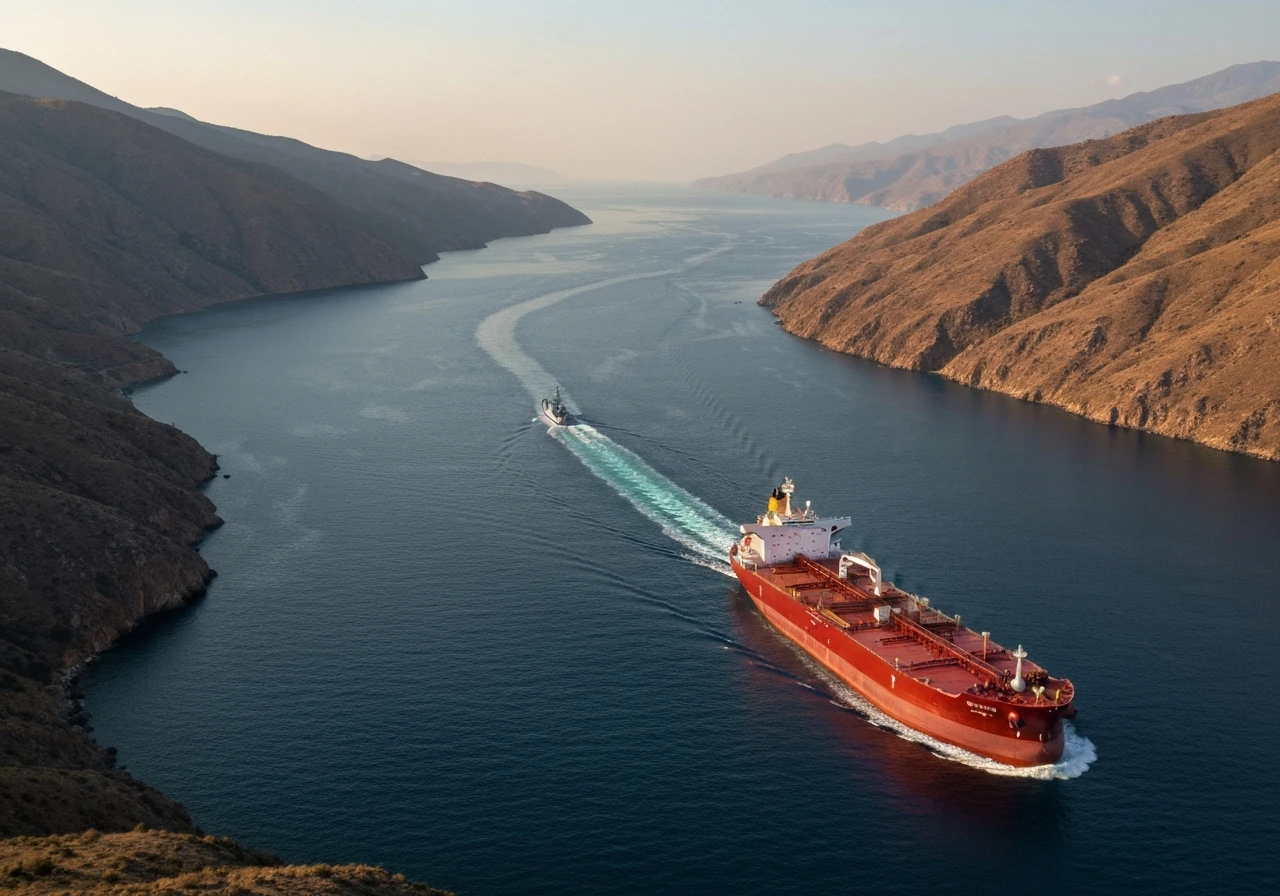
Strip away the diplomacy and one geographic fact explains the market’s nerves. Roughly 20 million barrels a day of oil pass through the Strait of Hormuz, the narrow channel between Iran and Oman, equal to about 20% of global petroleum liquids consumption, according to the Energy Information Administration.
The same agency reckons Hormuz carries more than a quarter of the world’s seaborne oil trade and around a fifth of global liquefied natural gas, almost all of it Qatar’s liquefied natural gas exports through the strait. There is no quick substitute. Pipelines bypassing the strait can absorb only a fraction of that volume.
That is why a threat to close it, even an unfulfilled one, prices in instantly. The International Energy Agency treats the channel as the single biggest risk to oil security, and its own briefing on the International Energy Agency’s account of Hormuz oil security underlines how little spare margin the system has. The three-month war has already disrupted traffic through the strait, lifting energy costs worldwide.
So when Tehran links Beirut to Hormuz, it is connecting a low-stakes border fight to the highest-stakes piece of infrastructure in the global energy map. The Lebanon truce is small. The lever it sits on is not.
How the Two Ceasefires Came Apart
The current standoff is the product of two separate agreements that Iran insists are one. Reading them in order shows why a deal signed in April is being argued over in June.
- 28 February: US and Israeli forces launch strikes on Iran, opening the war that has rattled energy markets since.
- 8 April: a US-Iran ceasefire takes force, with Pakistan acting as the main mediator.
- 16 April: a separate US-brokered ceasefire between Israel and Lebanon begins.
- 21 April: Trump extends the US-Iran truce indefinitely.
- 1 June: Iran suspends indirect talks as the Hezbollah-Israel reciprocal halt is announced.
Washington keeps the two tracks apart on paper. Marco Rubio, the US secretary of state, had proposed a plan for gradual de-escalation in Lebanon to Netanyahu and to Joseph Aoun, the Lebanese president, treating it as a problem to be managed alongside, not inside, the Iran file.
What Keeps the Guns Quiet
For now the truce rests on two readings of the same words. Lebanon’s ambassador to Washington, Nada Moawad, was told the strikes would stop. Netanyahu says they will resume the moment Hezbollah fires again, and the IDF is still working in the south as if nothing has changed.
The market has already shown which way it leans, sending crude up and then trimming the move within a single session. The oil price is now a live scoreboard for a conflict that has no formal end.
If the reciprocal halt holds and Israeli operations in southern Lebanon wind down, the Hormuz threat loses its trigger and the war premium drains out of the barrel. If the strikes resume and Tehran keeps treating Lebanon as the broken clause, the same crude that moves through one narrow strait will go on pricing in a war that nobody has signed away.
