
Iran closed the Strait of Hormuz for a second time on Sunday after the Islamic Revolutionary Guard Corps struck a commercial ship, then fired missiles and drones at five Gulf states. The US response came overnight: about 140 Iranian military targets hit in a third strike round this week. President Donald Trump told CNN by phone that the two sides had been close to a deal hours before the maritime attack.
The exchange reopens the war that began on February 28 with US-Israeli strikes that killed Iran’s Supreme Leader Ayatollah Ali Khamenei. It also returns the waterway that handles a fifth of the world’s oil to the front line. Negotiators had been due to restart work after Khamenei’s burial on the toughest matters, including fully reopening the strait.
A Single Ship, and a Strait Declared Closed
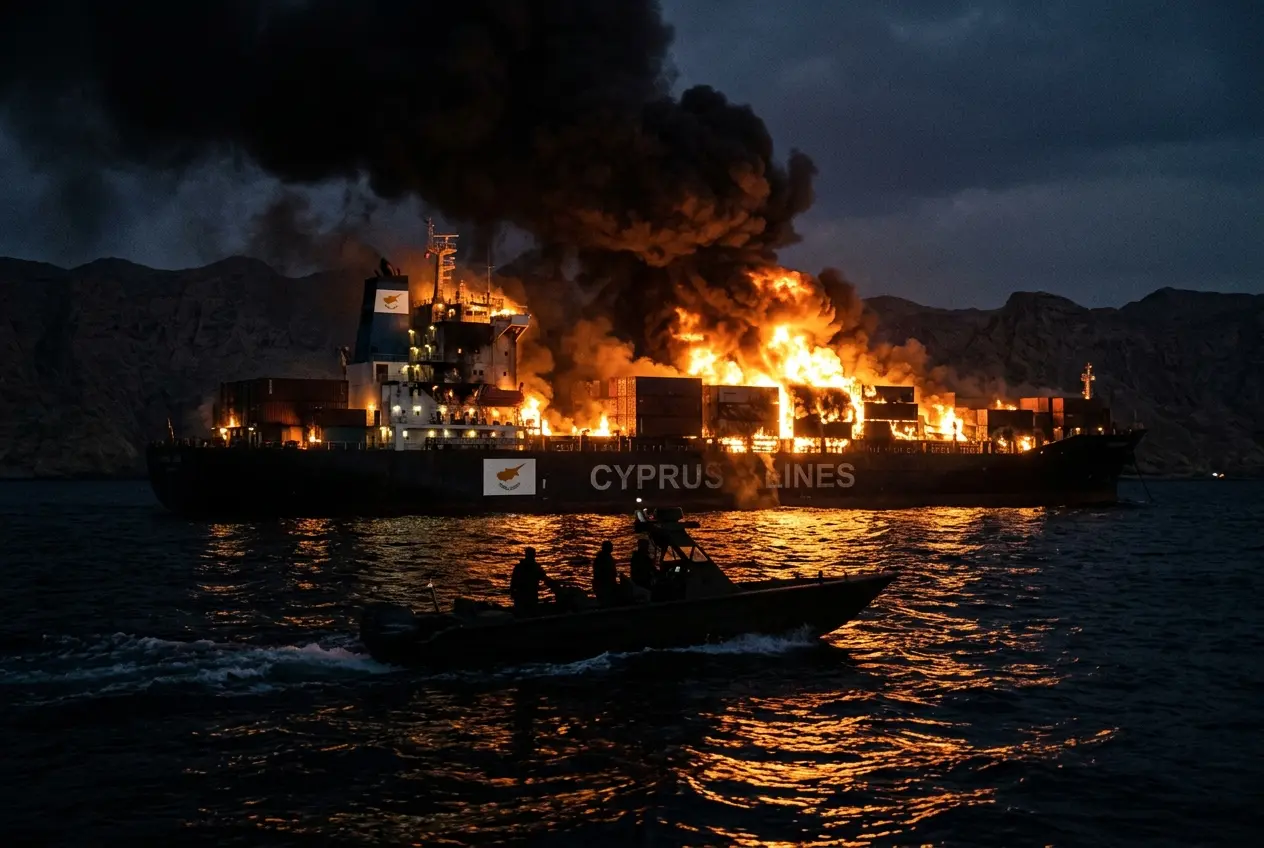
Iran’s Islamic Revolutionary Guard Corps fired on the Cyprus-flagged container ship M/V GFS Galaxy as it transited the strait on Saturday, leaving it disabled with “significant engine room damage,” US Central Command said. Iranian state media carried the IRGC version of the same incident: warning shots, then a halt, after the ship ignored orders to take an Iran-approved route. The IRGC then declared the Strait of Hormuz “closed until further notice,” saying no vessel would be allowed through, a position that ties to the IRGC’s Hormuz closure and 140-target response. The clash over language matters because the waterway had been quietly transiting under a US-Iran memorandum of understanding signed in mid-June. Each side is now framing the same incident in opposite terms.
“Iran does not control the Strait of Hormuz. It remains an international waterway. US forces are positioned and prepared to keep it that way,” the US military command said in a statement on Sunday. Oman’s navy rescued 23 crew members from the Galaxy after the strike forced them to abandon ship. India said 10 of 11 Indian nationals on board were rescued and one remains missing, per India’s foreign ministry.
Iran insists that vessels transit through a route it has approved to maintain a degree of control over the chokepoint, Al Jazeera’s account of the talks says. Ships that have tried to use a different shipping lane closer to the Omani coast have been attacked. The US and many Gulf Arab states say they will not accept Iran charging for passage through the strait. Trump, on Sunday, framed it as a near-miss: he said the two sides were “close to a deal” on Saturday, and then, by his account, Iran hit a ship with a drone two hours later.
What the 140-Target Strike Hit
CENTCOM said late Saturday it had struck roughly 140 Iranian military targets in retaliation for the IRGC’s attack on the Galaxy. Targets included missile and drone launch sites, naval assets, ammunition storage facilities, communication networks, and coastal surveillance locations. Iranian state media reported one army officer killed; the southern Hormozgan province, including Bandar Abbas, Qeshm Island and Hajhiabad, was hit.
By the numbers:
- About 140 Iranian military sites struck by CENTCOM on Saturday
- Over 80 targets struck on 7 July in the opening round
- 60+ IRGC small boats destroyed since the 7 July round
- About a fifth of global energy exports moved through the strait before the war
- Oil and gas prices pushed to a multiyear high after Iran’s grip tightened, per Al Jazeera
Earlier in the week, the US had hit over 80 targets in a 7 July round, including more than 60 IRGC small boats used to harass commercial shipping, per CENTCOM’s news release on the July 7 strike round. The three-night combined total is well past 300, per the Fox News live blog. A few hours after Saturday’s strikes began, CENTCOM returned with another round against Bandar Abbas, Qeshm and Hajhiabad, per Al Jazeera’s account. The Qeshm governor said 10 to 11 “enemy projectiles” hit the island on Sunday. Overnight strikes also killed an Iranian navy lieutenant in the port of Jask in southern Iran, per the Mehr and Tasnim news agencies cited by AFP.
Iran Retaliates Across Five Gulf Capitals
Iran widened its campaign across the Gulf on Sunday with strikes on five Arab states and Jordan. Air raid sirens sounded in Bahrain, home to the US Navy’s 5th Fleet, while the UAE, Kuwait, Qatar and Oman also reported incoming fire. The IRGC separately claimed it had destroyed “the logistical support centres for naval vessels and the refuelling facilities for US aircraft carriers at the port of Duqm in Oman.”
Three people were injured in Qatar, including one child, the Qatari Interior Ministry said. Jordan’s army said three Iranian missiles fell “in several locations across the kingdom, without causing any casualties.”
How each Gulf capital responded on Sunday:
- Qatar: three injured, called the barrage a “dangerous escalation” and held Iran “fully legally responsible”
- United Arab Emirates: air defences engaged missiles and drones; later said the threats were outside its borders
- Kuwait: three border centres and an offshore oil drilling platform hit; one worker wounded
- Bahrain: missile alert sirens sounded for the third time
- Oman: summoned the Iranian ambassador for a formal protest over drone attacks on Musandam and Al Wusta governorates
- Jordan: three missiles fell, no casualties reported
Oman went further than the rest, summoning Iran’s ambassador in a formal protest note, a rare public accusation by the sultanate that hosted Iran’s foreign minister for talks on the strait the day before. Qatar, Bahrain and the UAE kept up the language of condemnation without naming a military response. Qatar condemned the Iranian attacks against it and its neighbours, calling the barrage a “dangerous escalation” that would undermine diplomacy. Iran’s central military command said its forces “will respond decisively to this aggression and terrorist act” and “under no circumstances will (the Iranian armed forces) allow interference in the affairs of the Strait of Hormuz, nor will they permit others to manage it.” Pakistan’s top diplomat, separately, called for “de-escalation” and for all sides to “show restraint” in a phone call with his Iranian counterpart on Sunday. A wider look at the retaliation sits in Iran’s retaliation on US bases in five Arab states.
Trump framed the strikes in blunt terms on Sunday: “We hit them very hard last night.” He told CNN by phone that the United States and Iran had been close to a deal on Saturday. “They were giving up everything, and then all of a sudden, two hours after that, they hit a ship with a drone,” Trump said. “These people, there is something wrong with them,” he added.
How Close to a Deal the Sides Were
Trump’s Sunday account had it that the US and Iran were “close to a deal” on Saturday and that Iran was “giving up everything.” Within two hours, per Trump’s account, Iran hit a ship with a drone. Iran’s Parliament Speaker Mohammad Bagher Qalibaf, the country’s top negotiator, posted on X to push back on the framing. Around the same time, the US revoked the license that had allowed Iran for the first time in years to sell oil openly on world markets in US dollars. A US official, cited by the report on US strikes that revoked Iran’s oil sales license, said the license was pulled because Iran’s behaviour in the strait was unacceptable and needed consequences.
The era of bullying and extortion is over. It leads nowhere. We don’t fold.
Qalibaf, the speaker of Iran’s parliament, wrote the post on X. The license had let Iran sell crude openly on the international market in US dollars; Iran had long been suspected of selling sanctioned crude at below-market prices to China. Per Al Jazeera, the path through the chokepoint has been the central fault line in the talks, with Iran insisting on controlling which route vessels take and on charging passage fees. Washington and most Gulf Arab states have refused to accept that arrangement.
An adviser to Iran’s supreme leader cast the strait in even starker terms. “This strategic passage is more important than dozens of atomic bombs, and the Islamic Republic of Iran will protect it,” Mohsen Rezaee was quoted by the ISNA news agency as saying. Western countries accuse Iran of seeking an atomic bomb; Tehran has insisted its nuclear programme is for peaceful, civilian purposes.
Why This Choke Point Holds Global Oil Hostage
The Strait of Hormuz is a sliver of water between Iran and Oman, narrow enough that ship traffic can be squeezed at will. Al Jazeera reported that roughly a fifth of global energy exports used to pass through it before the war. Iran’s effective control since late February has lifted oil and gas prices to a multiyear high. A negotiated memorandum signed in mid-June briefly reopened passage, on terms Iran required vessels to follow.
The 60-day interim deal that let ships transit without paying charges is in dispute. Iran insists it must control the routes and later charge fees for passage; the US and Gulf Arab states reject the tolls. CENTCOM on Sunday made clear it would keep the strait open by force if necessary.
The commercial ship that started this week’s exchange, the M/V GFS Galaxy, was struck off the coast of Oman before the IRGC issued its “closed” notice. CENTCOM and Trump blamed Iran for the attack; Iranian state television said the LNG tanker was attacked after ignoring warnings, without directly claiming responsibility. Oman condemned the “irresponsible acts,” state media reported, even though the sultanate had hosted Iran’s foreign minister for talks the day before. One Indian national remains missing from the Galaxy, per India’s foreign ministry. The route dispute and the revoked oil-sales license now sit alongside the toughest outstanding matters in any resumed talks: fully reopening the strait and rolling back Tehran’s disputed nuclear programme.
Frequently Asked Questions
Why did Iran close the Strait of Hormuz again?
The IRGC struck the Cyprus-flagged M/V GFS Galaxy on Saturday after, in its telling, the ship ignored repeated instructions to take an Iran-approved route. The force then declared the strait closed until further notice. The waterway had been quietly transiting under a June memorandum of understanding that the latest incident breaks.
Which Gulf countries did Iran strike in retaliation?
Iran reported missile and drone attacks on the UAE, Qatar, Kuwait, Oman and Bahrain on Sunday, with three people injured in Qatar, including one child. Jordan said three Iranian missiles fell on its territory without causing casualties. Oman summoned Iran’s ambassador in a formal protest, a rare public accusation from the sultanate.
How much oil passes through the Strait of Hormuz?
Al Jazeera puts the pre-war flow through the strait at roughly a fifth of global energy exports. Iran’s grip since late February has lifted oil and gas prices to a multiyear high, the same account says. A negotiated memorandum signed in mid-June briefly reopened traffic on Iran-required terms.
Did the US and Iran have a deal before this round of strikes?
Trump said on Sunday that the two sides had been close to a deal on Saturday. He had said earlier in the week that he believed the deal was over, then agreed to continue talks after a request from Tehran. Iran’s Parliament Speaker Mohammad Bagher Qalibaf posted on X to push back on the framing, calling the US approach bullying and extortion that Iran would not bend to.
Who now leads Iran after Khamenei’s death?
Iran’s new Supreme Leader is Ayatollah Mojtaba Khamenei, the son of Ayatollah Ali Khamenei, named after his father’s death in the February 28 US-Israeli airstrike that opened the war. Mojtaba Khamenei was reportedly wounded in the same strike and is believed to be in hiding, per The Associated Press. Khamenei’s funeral procession concluded at the Imam Reza shrine in Mashhad on Thursday, per the same AP account.
