
Religious Israelis have kept their core political map almost unchanged since the October 7, 2023 attacks, according to repeated Agam Labs surveys of thousands of respondents. As Israel heads toward the October 27, 2026 Knesset election, that stability collides with a party that claims their name yet often polls near or below the 3.25 percent threshold and with growing internal pushback against settler violence.
Hebrew University researcher Nimrod Nir, who directs Agam Labs, told The Times of Israel the religious community (Religious Zionists mixed with Haredim) was probably the least politically affected by the wars. “Their ideology and their political identification are attached to their religious beliefs, which are much more stable,” he said.
What the Surveys Measure
Agam Labs data from earlier this year show sharp gaps with secular Israelis on the character of the state. Twenty-six percent of religious respondents wanted Israel run according to halacha. Another 53 percent preferred Jewish and democratic, with the Jewish side outweighing democracy. Only about 15 percent chose democracy first or a fully equal non-national model. Secular respondents flipped those numbers: more than 80 percent picked one of the two more liberal options.
On democracy itself, nearly 63 percent of the religious public equated it with majority rule (elected officials free to act as they see fit). Twenty-eight percent chose checks, balances and fundamental rights. Among secular respondents the split was 14.5 percent majority-rule versus 77 percent checks and balances.
| Question | Religious | Secular |
|---|---|---|
| Prefer halacha rule | 26% | 0.9% |
| Jewish outweighs democratic | 53% | (low) |
| Democracy = majority rule | ~63% | 14.5% |
| Support full sovereignty over West Bank | 65% | (minority) |
| Annex Gaza + settlements | 57% | 7.7% |
The 2025 Israeli Democracy Index from the Israel Democracy Institute found 41 percent of religious respondents said the democratic character was already too strong relative to the Jewish one. Fourteen percent said the opposite and 29 percent called the balance correct. A clear majority of Haredim and a plurality of national-religious respondents leaned the same way.
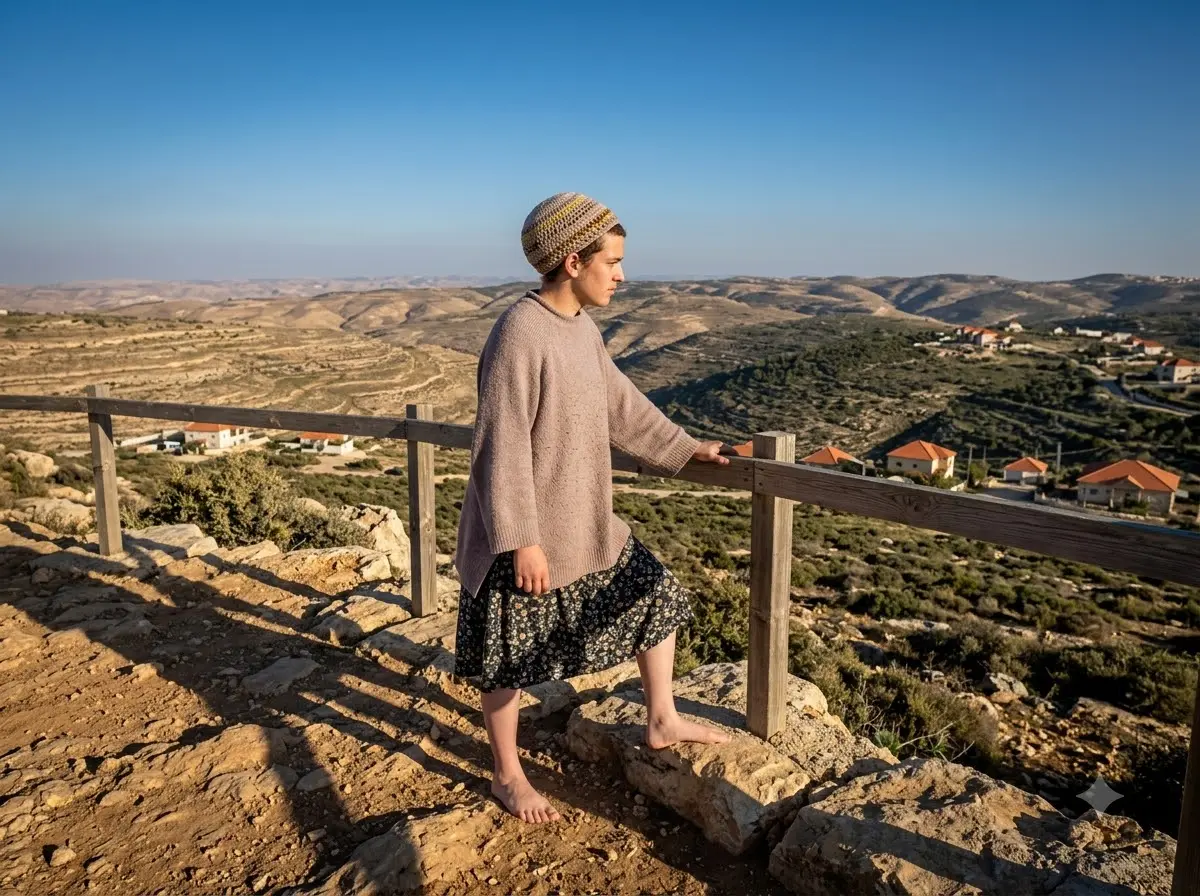
The Party That Claims the Name
In November 2022 the joint Religious Zionism-Otzma Yehudit-Noam list took 14 seats. The factions later split. Bezalel Smotrich and Itamar Ben Gvir became the sector’s most visible faces, pushing settlements and assertive Jewish power. Demographer Sergio DellaPergola of Hebrew University notes the religious community is still about 12 percent of adult Israelis. “The Religious Zionism party today does not reach 3% support, so the gap is evident,” he said.
Recent polling for the October 27 vote shows Smotrich’s Religious Zionism hovering between 4 and 6 seats in most mainstream surveys, with Otzma often at 7 to 9. Some earlier readings put the party near or under the threshold. Central Bureau of Statistics figures shared by Channel 12 place religious Israelis across the map: 12 percent in the West Bank, 15 percent in Jerusalem, 36 percent in the center, 19 percent in the north and Haifa, 17 percent in the south. Birth rates stay higher than secular rates, yet outflows of less radical members keep the overall share roughly flat.
- 2022 joint list: 14 seats
- Current RZP polling range: commonly 4-6 seats
- Otzma Yehudit range: commonly 7-9 seats
- Religious adult population share: ~12%
- Electoral threshold: 3.25%
On X and in party coverage, the latest Religious Zionism slate drew notice for its hardline settler tilt and sidelining of moderates. Ben Gvir has said the two parties appeal to different electorates and ruled out another joint run. That purity focus leaves some religious voters feeling the party no longer has a place for them even when they back the policies on paper.
Land Still Tops the List for This Bloc
Nir said Religious Zionists remain the only major segment that still treats the Israeli-Palestinian file as a top issue. Agam Labs asked about policy in Judea and Samaria. Sixty-five percent of religious respondents backed extending sovereignty. Twenty-three percent wanted expansion of major blocs while curbing illegal outposts. Freezing or dismantling options drew under 4 percent combined. Secular preferences ran the opposite direction.
On Gaza, 57 percent of the religious public backed annexation and new settlements. Another 20 percent wanted an Israeli governing body. Fewer than 20 percent preferred Arab-state, PA or new Palestinian control. Secular support for annexation sat at 7.7 percent.
Since the current coalition took office at the end of 2022, more than 100 new settlements have been approved under Smotrich’s dual role at Finance and Defense civilian affairs for the West Bank. In the prior 29 years Israel had greenlit only six. Settler attacks rose 27 percent in 2025 versus 2024 per IDF and Shin Bet figures. Yesh Din counted 378 incidents in the 40 days of Iran hostilities alone, with eight Palestinians killed and 200 injured. A July 24 gunfight after settlers entered a northern West Bank village left two Israelis and four Palestinians dead.
Religion and State Now Outranks the Battlefield
Nir argued the deepest fracture has shifted inward. “Until six or seven years ago, the ideological and political division between right and left in Israel had to do with foreign policy issues, especially Israel-Palestine,” he said. “Now everything is more internal. [The fracture] is about religion and state and power struggles within.” Even during the Iran fighting, over 60 percent of respondents named internal threats greater than external ones. They feared polarization more than war. That ranking matches broader findings that Israelis ranking internal rifts above external threats remain widespread.
According to a 2025 Hiddush survey, only 17 percent of religious respondents favored separation of religion and state; 83 percent opposed it. The same year’s 2025 Religion and State Index findings showed 57 percent of Jewish Israelis overall still support separation, with 83 percent backing freedom of religion (including 71 percent of national-religious respondents). Drafting yeshiva students topped voter priorities for the next election.
The full 2025 Israeli Democracy Index reinforced the religiosity gradient on Jewish versus democratic balance. Mitvim’s 2025 Foreign Policy Index found religious respondents (including ultra-Orthodox) the least supportive of foreign sanctions on violent settlers: 69 percent opposed them outright.
Praise Mixed with Unease at Har Etzion
In April a packed hall at Yeshivat Har Etzion in Alon Shvut heard IDF Central Command head Maj. Gen. Avi Bluth and others denounce settler violence. Rabbi Yaakov Meidan, a yeshiva head and prominent Religious Zionist voice, condemned “extreme and terrible crimes committed by Jewish youth” and said the community must “fulfill the mitzvah of expelling the evil from our midst.”
At the same time, regarding the people who live there, if there is no understanding of the difficulties they are subject to, I am not sure we will be able to [achieve anything].
Meidan still praised Smotrich and the government and voiced worry about what a different coalition might do to settlements after October. Agricultural outposts drew defense even as critics call them bases for attacks. The event captured the sector’s split: reject the worst violence, defend the settlement enterprise, keep the current power brokers.
A Different Religious Map Takes Shape
Smol Emuni, the Faithful Left, offers one organized counter. Co-founder Mikhael Manekin described a “very new and dangerous brand of Judaism” that has grown popular since October 7, one that permits almost anything in the name of survival. “It almost reaches an amoral understanding of the world where basically, you are allowed to do whatever you want to anybody, including theft and killing,” he said. Even opponents inside the community often try only to moderate it rather than replace it.
The movement keeps the word “left” deliberately and calls for an end to the occupation. Its Bnei Avraham activists provide protective presence in West Bank Palestinian communities; many grew up in settler homes and may face former classmates on the other side. “I think a lot of the work that we’re trying to do is not to explain to other people that we exist, but to explain it to ourselves,” Manekin said. “I’m not a very optimistic individual in general, but I am very hopeful that what we do works.” Activists span ultra-Orthodox to traditional. Publishing, study halls and educator networks sit under the same umbrella.
DellaPergola noted half or more of the Religious Zionist community has moved toward radicalization, while less radical members leave the category. That churn helps keep the 12 percent share stable despite higher fertility.
How This Bloc Shapes the October Ballot
The religious public’s weight is not only demographic. Its consistent preference for sovereignty, Jewish primacy and majority-rule democracy feeds coalition math. Hardline parties can still act as blockers or enablers even when their seat totals lag the sector’s size. Opposition lists, including Democrats emerging as potential kingmakers, must calculate around that reality. An Agam Labs April 2026 public opinion study showed continued pessimism and Netanyahu dissatisfaction across broader samples, yet the religious core holds its prior coordinates.
Smotrich has predicted double-digit seats; recent polling is lower. Ben Gvir’s separate run and the purity of the latest slate both signal a bet that ideological intensity beats breadth. Whether that bet pays, the stakeholders who live the ideology every day (in settlements, in central cities, in yeshivot and in dissenting study halls) will still set the boundaries of what any new government can attempt on land, religion and state power. The faces change. The underlying map has not.
