
Egypt’s weather authority is warning of a heatwave through Thursday, when Cairo’s perceived temperature is expected to hit 40 degrees Celsius (104 Fahrenheit) at the peak of the week. The Egyptian Meteorological Authority (EMA) says the heat builds gradually from Saturday, July 18, with humidity adding two to four degrees to how the air actually feels. Upper Egypt will run far hotter, with real daytime readings climbing well past 40C in the south.
Egypt has spent billions of dollars rebuilding its power grid since the blackout summers of 2023 and 2024. This week is shaping up as the sharpest test of that bet yet.
Cairo’s Thermal Feel Climbs Toward 40C by Thursday
Cairo has already spent days sitting in the mid-30s Celsius; Tuesday’s humid high of 35 degrees was itself a preview of what the EMA now calls a full heatwave. The bulletin issued this weekend runs from Saturday through Thursday, with the hottest, most humid stretch landing at the end of the week.
Nights and early mornings will stay warm and sticky across most of the country, the EMA said, with genuinely hot conditions by day almost everywhere except the coast. Humidity is doing real work here. It is adding two to four degrees to how the heat feels, pushing the perceived temperature well above the thermometer reading across Cairo and the Delta.
- Northern coast: actual highs of 31C to 32C, the mildest area of the country
- Greater Cairo and Lower Egypt: actual highs of 37C to 38C, feeling closer to 40C with humidity factored in
- Upper Egypt: actual highs of 39C to 40C, feeling closer to 42C
- Southern Upper Egypt: actual highs as steep as 44C, with the perceived temperature running just as high
The EMA also flagged fog between 4am and 8am on roads leading in and out of northern Egypt, including routes through Greater Cairo, the Suez Canal cities, central Sinai and northern Upper Egypt, warning it could turn dense in patches. Satellite tracking shows intermittent winds moving through several regions from Tuesday to Thursday, the authority said, offering brief pockets of relief even as the heat builds toward Thursday’s peak.
A Grid Betting Against Its Own History
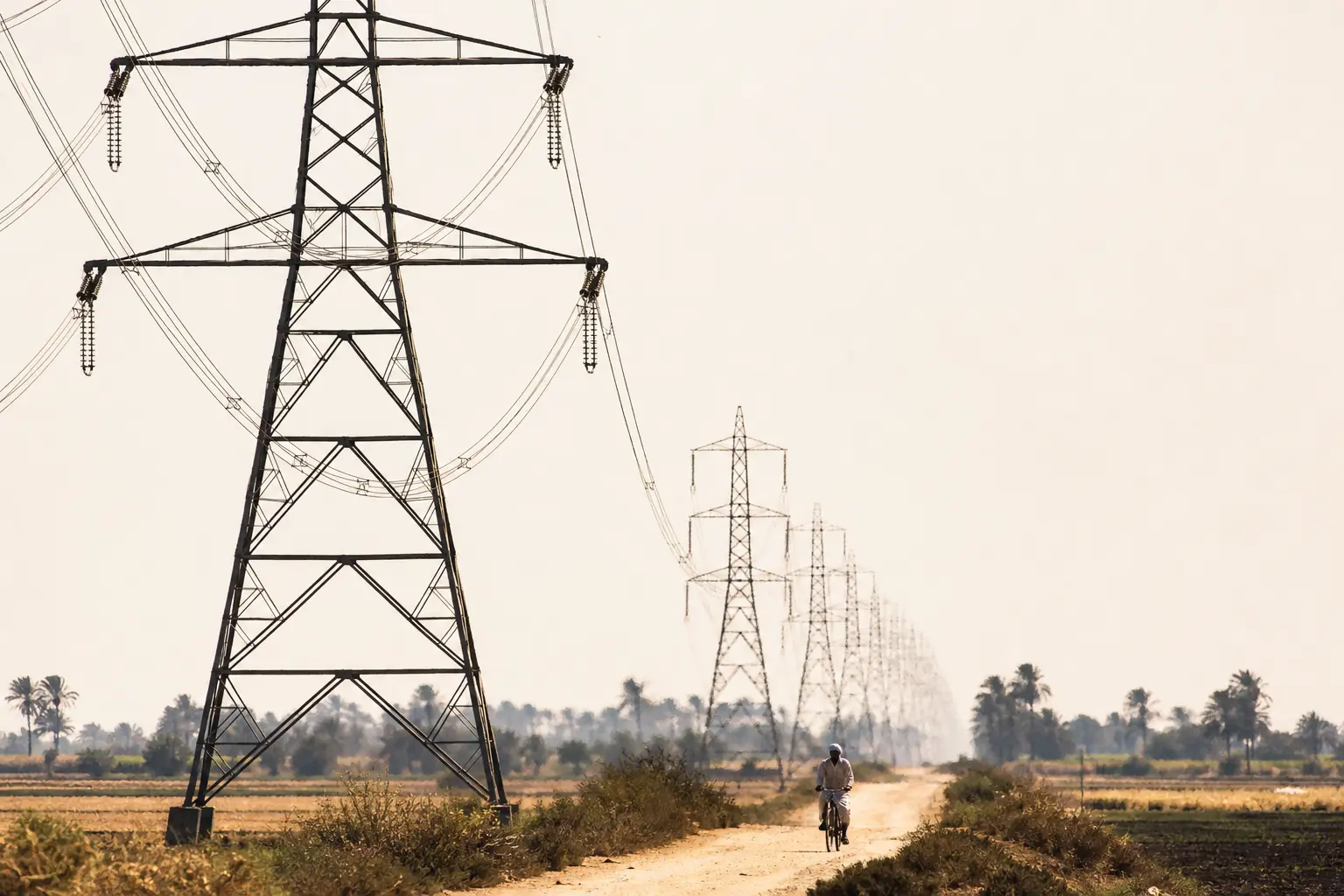
Every extra degree in this week’s forecast lands on a power grid that has broken its own record three summers running. Cairo-based newsletter EnterpriseAM reported the network hit a peak load of 36.6 gigawatts in June alone, with demand projected to climb toward 40 gigawatts before the season ends.
Egypt’s government insists this year is different. Mansour Abdel Ghany, spokesperson for the Ministry of Electricity and Renewable Energy, confirmed no electricity load shedding this summer and said officials are bracing for peak demand roughly 8 percent above last year’s record. A 20 percent surcharge will apply to certain high-consumption commercial users during peak hours instead of blanket household cuts, he said.
- 40,000 megawatts: the record peak load Egypt’s grid carried last summer
- 3,000 megawatts: new generating capacity added to the grid this year ahead of the seasonal peak
- 2,200 megawatts and 1,300 megawatt hours: renewable power and battery storage the ministry plans to connect during 2026
- 160 LNG cargoes: the number Egypt has contracted through 2026 to keep power plants fed
Some of that spending is brand new. Egypt’s Cabinet this month approved a 37 million euro financing package from the European Union and the European Bank for Reconstruction and Development to modernize transmission lines and fold more wind power into the grid, part of a wider program known as NWFE. Battery storage, in particular, is a genuine first for Egypt’s system, letting operators bank solar power for the evening hours when air conditioners run hardest but the sun has already set.
The Blackout Summers Egypt Is Trying to Outrun
The government’s confidence this year only makes sense against what came before. Rolling blackouts hit Egypt hard in the summers of 2023 and 2024, after a natural gas squeeze collided with soaring demand for air conditioning.
We are currently in a period of temporary load shedding until the network returns to normal pressures.
Prime Minister Mostafa Madbouly said that in July 2023, days after the first two-hour daily cuts began. The government blamed falling output from the offshore Zohr gas field and a push to keep exporting LNG for hard currency. Then came the war in Gaza. Cabinet officials said gas flows from Israel’s Tamar field collapsed to zero that November, deepening the shortfall.
The human cost went beyond warm living rooms. Doctors told Human Rights Watch that hospitals shut down dialysis units and neonatal wards during the cuts, and rural governorates absorbed longer outages than officially announced. The cuts finally eased in July 2024 once new LNG shipments arrived, after consumption had climbed to what Madbouly called an unprecedented 37.5 gigawatts a day.
| Summer | What the Grid Carried | What Happened |
|---|---|---|
| 2023 | Demand outpaced gas supply | Two-hour rolling cuts began July 22, worsened that November by the Gaza war’s hit to Israeli gas flows |
| 2024 | 37.5 gigawatts a day | Cuts resumed in spring, suspended from July 21 once new LNG cargoes landed |
| 2025 | 38,800 megawatts in late July, later a seasonal record of 40,000 megawatts | Grid absorbed the peak; officials reported no formal load-shedding schedule |
| 2026 (through June) | 36.6 gigawatts and climbing | Government pledges a summer without cuts, banking on new capacity and LNG deals |
By that measure, last year was the first real evidence the bet could work. The grid absorbed a record without a formal rationing schedule, even as officials described the single-day jump as unprecedented for the network’s history.
Drivers and Farmers Face the Sharpest Edge
Two groups meet this week’s heat with the least protection. Commuters on the roads into and out of northern Egypt will hit dense morning fog between 4am and 8am, according to the EMA, on top of daytime heat that turns those same routes into ovens by noon.
Further south, field workers spend the hottest hours of the day exposed to the same triple-digit heat the EMA is forecasting for southern Upper Egypt, with none of the air conditioning that will get most Cairo households through Thursday. The EMA’s own advice, repeated in this bulletin, is to avoid direct sun during peak hours and stay hydrated; for someone working a field or a construction site, that guidance is easier issued than followed.
Households, meanwhile, are absorbing the cost of the grid’s expansion in their bills. Egypt raised household electricity tariffs by as much as 50 percent in August 2024, and the government has financed its LNG import bill partly through those higher rates, according to Egyptian Streets, a Cairo-based news site.
Will Thursday’s Peak Break the Grid’s New Ceiling?
Will Thursday’s numbers from the National Energy Control Centre hold, or crack? The pattern from the last two summers offers a clue rather than a guarantee. Last July, the network absorbed a historic peak of 38,800 megawatts in a single day without triggering rolling cuts, an 800-megawatt jump that officials said the grid handled through emergency monitoring teams and reinforced transmission, according to a cabinet statement.
This week adds a variable last July didn’t carry in the same way: humidity. The EMA’s own numbers show perceived heat running two to four degrees above the thermometer, and it is the perceived number, not the raw reading, that tends to push households to switch on every air conditioner in the house at once.
Egypt’s own digital ambitions add a future claim on that same grid. The World Bank has pledged support for Egypt’s AI and digital economy push, though it has not attached a price tag to that commitment, and data centers are exactly the kind of constant, round-the-clock electricity demand that grid planners now have to fold into their summer math alongside air conditioners. The same dynamic is playing out well beyond Egypt: US grid operators issued a federal emergency alert over the Fourth of July as a heat wave pushed the mid-Atlantic grid toward record demand, Al Jazeera reported, evidence that heat-driven power stress is a global habit now, from Cairo to the mid-Atlantic.
For Cairo, the test builds the moment temperatures climb past Wednesday and into Thursday’s forecast peak. The Ministry of Electricity has staked its credibility on the grid holding through that peak without a single announced cut.
Frequently Asked Questions
Does Egypt Have Scheduled Power Cuts This Summer?
No formal load-shedding schedule is in place as of mid-July 2026. The Ministry of Electricity has ruled out rolling blackouts for the season and instead applies a 20 percent peak-hour surcharge to certain high-consumption commercial and service businesses, a narrower tool than the household rationing used in 2023 and 2024.
What Sparked Egypt’s 2023 and 2024 Blackouts?
A drop in output from the Zohr gas field collided with a government push to keep exporting LNG for hard currency, then worsened when Israeli gas flows through the Tamar field fell to zero for weeks after the Gaza war began in October 2023, according to cabinet statements from that period. Egypt has since contracted as many as 160 LNG cargoes through 2026 to avoid a repeat.
Why Does Fog Form During a Heatwave?
Fog and extreme daytime heat can coexist because they happen at different hours. Overnight humidity near the Delta and northern coast cools close to the dew point before dawn, producing fog between roughly 4am and 8am, then burns off as the sun climbs and daytime temperatures spike, the exact pattern the EMA flagged for this week’s roads in and out of northern Egypt.
How Is This Heatwave Connected to Europe’s Recent Heat Dome?
The same North African heat mass pushing Cairo toward a 40C feel this week fed the broader system that sent temperatures above 40C across Spain, France, Germany and Poland in late June, with France recording roughly 1,000 heat-linked deaths over three days, Cairo-based newsletter EnterpriseAM reported. A reading that counts as an ordinary Egyptian summer day was treated as a continental emergency once it reached northern Europe.
Has Egypt Had Deadlier Heatwaves Before?
Yes. Egypt’s most severe recent heat crisis came in August 2015, when dozens of people died of heatstroke and more than 500 were hospitalized nationwide, according to safety guidance compiled by the travel resource My Egypt Travel. Health officials have since pushed hydration, shade and reduced midday exposure as the main public defenses each summer. This week’s forecast does not approach that scale, but it is the first time since the blackout summers that Egypt is wagering roughly three billion dollars in new fuel contracts on never having to find out.
