
Egypt’s cosmetics and personal care market topped $900 million in revenue in 2025 and is projected to reach $1.57 billion by 2032, according to industry estimates. Most of the credit belongs to one factory outside Cairo that ships 85% of what it makes somewhere else.
L’Oréal’s Cairo plant sends its output to 20 countries, and Egypt’s government is praising it for reasons that have little to do with mascara. The country needs dollars, and export factories are one of the few reliable ways to get them.
L’Oréal’s Cairo Plant Ships 85% of Its Output Abroad
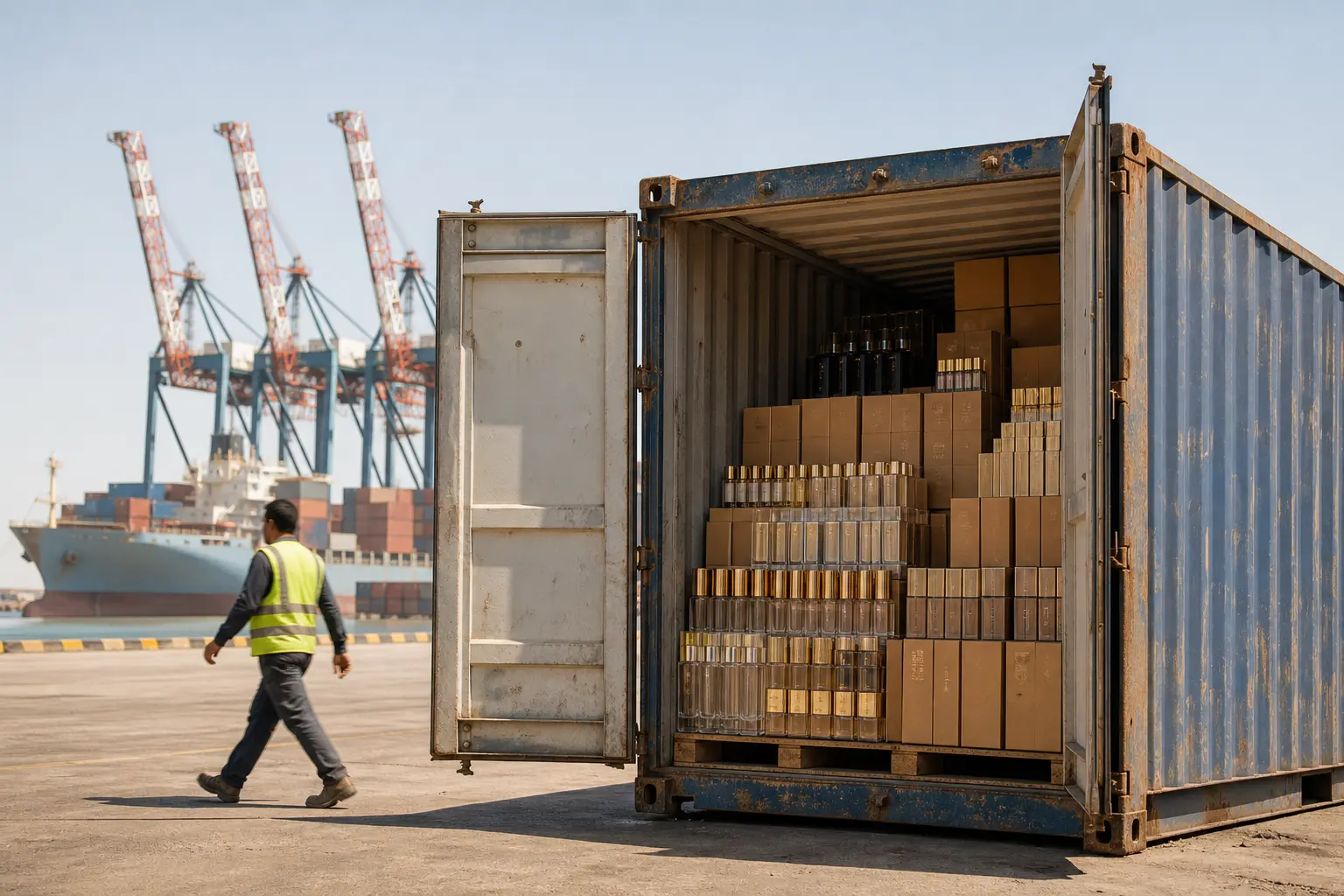
Industry Minister Khaled Hashem has told Egyptian audiences the same story twice in recent weeks: L’Oréal’s factory in the 10th of Ramadan industrial zone has served as a regional production and export hub for the Middle East and North Africa since it opened in 2013, exporting 85% of its output to 20 countries. He has pointed to it as a model for other manufacturers to copy.
The plant runs entirely on renewable energy and recycles all the water used in production, leaving zero wastewater, Hashem said. L’Oréal’s own account of the Cairo site describes it as the company’s first LEED-certified factory in Egypt, built around green technology from the start. A socio-economic impact study released in Cairo in late June, produced by the French research firm Astères using OECD-based modeling, put a number on the scale: 442 million units produced over the last five years.
The plant itself employs around 450 people directly. The wider figure L’Oréal is promoting is bigger. The Astères study attributes 22,000 jobs across Egypt’s economy to the company’s presence, plus social programs the group says have reached 117,000 people, with a focus on women’s economic empowerment and digital inclusion.
I can proudly say we do not just operate in Egypt; we invest in its future and actively contribute to its advancement.
Mohamed El Araby, L’Oréal Egypt’s managing director, said that at the Cairo launch of the impact study. Egypt’s cosmetics figures, meanwhile, trace back to GMI Research’s tracking of the local cosmetics market, which had the industry at $835 million in 2023 growing at a 7.2% annual clip, a trajectory that lines up neatly with the $900 million reported for 2025 and the $1.57 billion forecast for 2032.
Egypt’s Trade Gap Widens Again
Here is why a beauty factory gets ministerial attention. Egypt has spent the past four years fighting a dollar shortage that forced three currency devaluations, a full pound float in 2024 and an International Monetary Fund program that keeps releasing money in tranches tied to reform targets.
The numbers had been improving. Non-oil exports rose 17% in 2025 to $48.6 billion, and the annual trade deficit narrowed 9% to $34.4 billion, according to Ministry of Investment and Foreign Trade data. Then 2026 opened badly.
Egypt’s trade gap reached $10.3 billion in January and February 2026, up from $6.9 billion in the same two months of 2025, according to figures released by Egypt’s state statistics agency, CAPMAS. Exports fell to nearly $8 billion from more than $9 billion a year earlier, with non-petroleum goods posting the steepest decline, while imports climbed past $18 billion.
The Egyptian pound has its own recent scars. It hit a historic low of 51.72 to the dollar in April 2025 before clawing back 6.01% over the year, and the Central Bank of Egypt’s reserves have since climbed past $51 billion, with net foreign assets at $20.78 billion by the end of September 2025, according to Daily News Egypt’s analysis of the pound’s 2026 outlook. Analysts there peg a baseline range of 46 to 50 pounds per dollar for the year, contingent on the IMF releasing its fifth and sixth review tranches on schedule.
Ordinary Egyptians have been hedging the same uncertainty in their own way. Retail savers have piled into gold investment funds that now count more than 306,000 investors, a small but telling sign of how little faith some households still place in the pound alone.
The $100 Billion Plan That Left Cosmetics Off the List
Exports sit at the center of the government’s answer to all of this. President Abdel Fattah Al-Sisi reviewed Egypt’s National Industrial Strategy for 2026 to 2030 on July 6, 2026, a plan built to push non-oil exports toward $100 billion and turn the country into a regional manufacturing base, according to a presidency statement carried by Economy Middle East’s coverage of the strategy review.
Hashem named seven priority industries for that push. Cosmetics is not among them.
- Ready-made garments – targeted for expanded export capacity and supplier development
- Textiles – grouped with garments under the same industrial mapping exercise
- Food industries – flagged for deeper integration into global supply chains
- Automotive manufacturing – described by Hashem as one of the plan’s highest priorities
- Electrical and engineering equipment – tied to the localization of components
- Electronics assembly – aimed at reducing import dependence on finished devices
- Pharmaceuticals – included for its export competitiveness and investment potential
Egypt’s manufacturing sector as a whole already generates more than 85% of the country’s non-oil exports, contributing 16% of gross domestic product and 14% of total employment, Minister of Planning Rania Al-Mashat told parliament, according to a Ministry of Planning briefing on the FY2025/2026 development plan. That happens to be the same share L’Oréal’s own factory sends abroad, a coincidence that makes the Cairo plant look less like an outlier and more like a template the government wants replicated well beyond a single industry.
Part of that template is energy. The strategy’s Industry Solar initiative aims to install rooftop solar panels at roughly 7,000 factories to cut power bills and back Hashem’s repeated calls for other manufacturers to match L’Oréal’s renewable setup. Egypt has already leaned on outside development finance for similar projects, including a solar plant near Dandara backed by $66 million from the African Development Bank.
Why Are Young Egyptians Driving Beauty Sales?
Egypt’s population skews young, spends heavily on grooming and shops through social media, and those three forces are what actually move cosmetics off shelves inside the country, separate from any export strategy. Roughly 60% of Egyptians are under 30, per United Nations Population Fund estimates, and that cohort is now the market’s main driver.
Rising interest in grooming among male consumers is widening the customer base beyond the women who have traditionally dominated cosmetics spending. Social media adds fuel on top of that: Egypt had more than 45 million social media users as of January 2024, close to 40% of the population, a base large enough to turn influencer marketing into a primary sales channel rather than a supplement to it.
Egypt’s local market is a small piece of a much larger picture. The global beauty industry is forecast to exceed €290 billion in 2025, serving about 4.6 billion consumers, and the regional split shows how thin North Africa’s slice still is.
| Region | Global Rank by Share | 2025 Share of Global Beauty Market |
|---|---|---|
| North America | 1 | 28% |
| North Asia | 2 | 27% |
| Europe | 3 | 24% |
| Middle East, North Africa, South Asia Pacific and Sub-Saharan Africa (combined) | 4 | 12% |
Egypt sits inside that last, combined 12% slice alongside dozens of other markets, which is exactly why a single export-oriented factory carries so much weight in the national conversation. It is one of the few pieces of that regional share that Egypt itself manufactures rather than imports.
Unilever and P&G Compete for the Same Shelves
L’Oréal is not the only multinational using Egyptian factories to reach Egyptian and regional shoppers at once. Unilever Mashreq SAE led mass beauty and personal care sales in Egypt in 2024 with brands including Dove and Vaseline, backed by an extensive local distribution network, according to Euromonitor International’s market report on Egypt’s beauty sector.
Procter & Gamble and Henkel PDC Egypt SAE also run local operations that compete on the same shelves, per multiple market research trackers. Having a factory inside Egypt gives these companies a cost advantage over pure importers, which has helped push prices down and widened what ordinary shoppers can afford.
That competitive layer matters for the export argument, too. If Cairo wants more foreign manufacturers to treat Egypt as a production base rather than just a sales market, L’Oréal, Unilever and their peers are already the proof that the model can work at scale, years before cosmetics ever made an official priority list.
Frequently Asked Questions
Why did L’Oréal choose Egypt for its Middle East and North Africa manufacturing hub?
Proximity to fast-growing regional markets was the deciding factor. L’Oréal’s own announcement at the time said it was “crucial for L’Oréal to have a production facility close to its key markets” able to adapt products to local tastes, with a staged investment of 50 million euros behind the plant.
What is Egypt’s Industry Solar initiative?
It is a government program under the 2026 to 2030 National Industrial Strategy that aims to install rooftop solar panels at around 7,000 factories nationwide, lowering energy costs for manufacturers while pushing the kind of renewable setup L’Oréal’s Cairo plant already uses.
Will the Egyptian pound stay stable through 2026?
Analysts expect a baseline range of roughly 46 to 50 pounds per dollar for the year, assuming Egypt keeps refinancing external debt, tourism keeps recovering and the IMF releases its fifth and sixth review tranches without delay.
How many jobs are actually linked to L’Oréal in Egypt?
L’Oréal’s Cairo plant directly employs around 450 people. A separate economic modeling study by the French firm Astères puts the total, including indirect and induced jobs across suppliers and distributors, at roughly 22,000.
