
Egypt signed Spain’s Xcalibur Smart Mapping on May 24, 2026, to launch the country’s first nationwide airborne mineral survey in 42 years. The cabinet approved the deal to map six desert zones and underwrite a multi-year plan to lift mining’s share of GDP from 1% to 6%. The aerial map is the easy part. The harder lift sits below the flight path, in refineries that turn black sand and phosphate into export-grade products and in an MRMIA-led licensing regime that can absorb the data, against a low-intensity war over eastern desert gold that no sensor can settle from above.
For Cairo, the contract marks the first systematic look at the country’s subsurface since the early 1980s. Madrid-based Xcalibur, the operator of what Ahram Online describes as the world’s largest airborne geophysics fleet, will fly a 45-aircraft inventory over Eastern Desert, Sinai and Western Desert terrain. The results are intended to underwrite fresh licensing rounds and pull mining onto a similar footing with oil and gas in the national accounts, and to settle, on a map, the long-running question of whether Egypt’s mineral wealth is the strategic asset the cabinet has been marketing to international capital.
A 42-Year Geological Map, Redrawn From the Air
The contract was signed at Marsa Alam Airport, with a survey aircraft parked on the apron as the backdrop. It covers six geographic zones selected jointly by the Ministry of Petroleum and Mineral Resources and the Egyptian Mineral Resources and Mining Industries Authority. The areas span the southern and northern reaches of the Eastern Desert, the Sinai peninsula, the northern and eastern parts of the Western Desert, plus the Bahariya Oasis and Abu Tartur plateau in the New Valley governorate.
Karim Badawi, Egypt’s Minister of Petroleum and Mineral Resources, has framed the deal in operational terms, telling Xcalibur’s launch statement on the Egypt survey that the new geological database is meant to lower exploration risk for international bidders. The new MRMIA, restructured under a 2025 law into an independent economic authority, will run the contract with technical support from the Nuclear Materials Authority and the Egyptian aerial firm DroneTech. MRMIA signed a memorandum of understanding with Xcalibur in November 2025 to scope the work, Egypt Oil & Gas reported. The cabinet approved the contract during a weekly meeting before the May 24, 2026 signing.
The six zones, listed by Ahram Online, span most of Egypt’s prospective ground. They include, according to the cabinet and ministry:
- Eastern Desert, southern and northern reaches, the historic heartland of Pharaonic gold rushes and the country’s most active illegal-mining front
- Sinai, the peninsula whose mineral prospects are tightly bound to its security situation
- Western Desert, northern and eastern sectors, already known for oil and gas infrastructure
- Bahariya Oasis, long associated with iron-ore deposits and the New Valley mining corridor
- Abu Tartur, in the New Valley governorate, home to one of the country’s largest phosphate reserves
This project represents the first comprehensive airborne mineral survey conducted in Egypt in 42 years and marks a major milestone for the modernization of our mining sector.
Karim Badawi, Egypt’s Minister of Petroleum and Mineral Resources, said the line in Xcalibur’s launch statement at the Marsa Alam Airport signing.
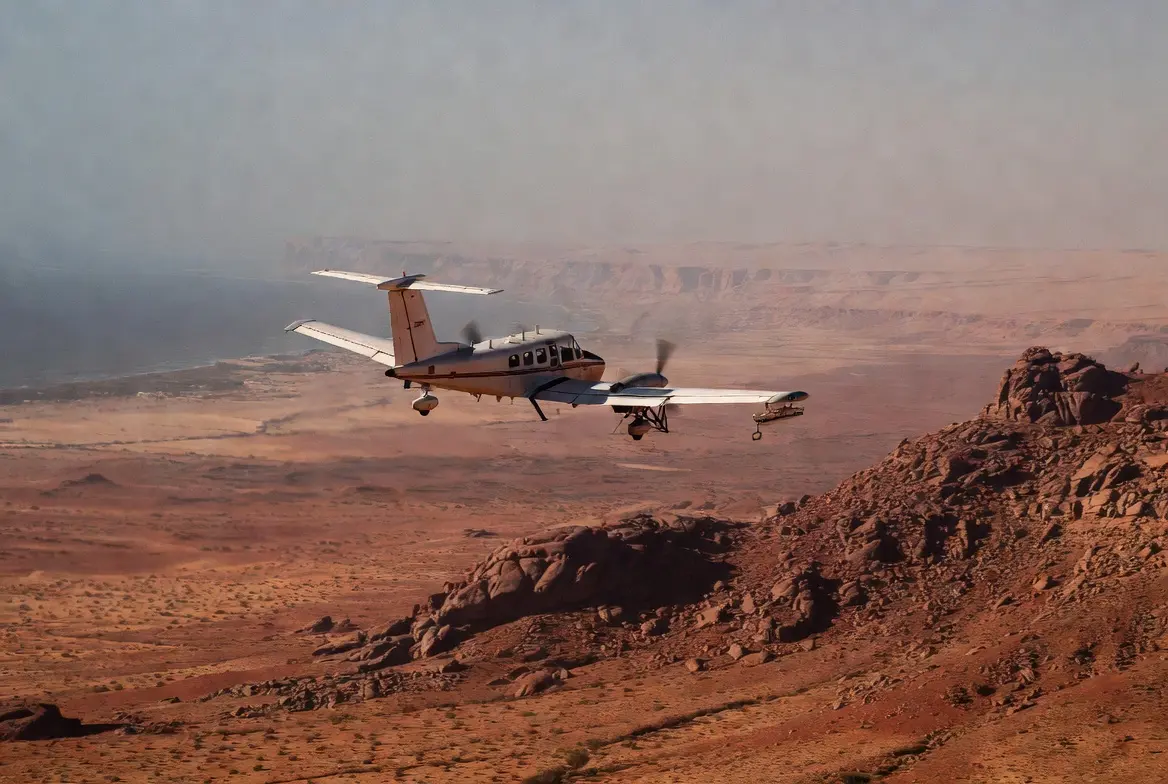
The 45-Aircraft Fleet Scanning Egypt’s Subsurface
Xcalibur’s pitch to Cairo is essentially a flying laboratory, the data backbone of Egypt’s aerial survey for the gold rush it eyes. The firm operates 45 aircraft, including fixed-wing planes and helicopters, fitted with geophysical sensors that map a terrain’s electrical conductivity, density and geothermal structure from low altitude. That workflow turns hundreds of kilometers of desert into high-resolution subsurface maps without breaking ground. The Madrid-based company has logged more than 1,400 airborne survey projects worldwide, according to Egypt Oil & Gas.
The new Egyptian database is being framed as a step toward an Earth Digital Twin, a dynamic, data-driven model of the country’s subsurface. Xcalibur’s strategy chief Juan Francisco Muñoz Martínez described the digital twin as “the future of resource management,” a framing the company has used to position the project as a demonstration of how airborne geophysics and AI can help governments build a more sustainable picture of their natural resources. The MRMIA’s chairman, geologist Yasser Ramadan, said the partnership is meant to combine international expertise with the capabilities of Egyptian scientific institutions.
Beyond the Pharaohs’ Gold, a Wider Mineral Bet
Gold is the headline, but the survey is being sold as a base for a much wider portfolio. Egypt’s Mediterranean coastline is lined with black-sand deposits stretching from Abu Qir to Rafah, a belt the Nuclear Materials Authority has identified across 11 sites. The Bibliotheca Alexandrina on Egypt’s 11 black sand sites describes those sands as a store of ilmenite, zircon, magnetite, rutile, garnet and monazite, with downstream uses feeding roughly 41 industries.
Phosphate is the second pillar, with Abu Tartur’s deposits feeding Egypt’s fertilizer export industry. Egypt’s wider critical-minerals pitch is being made to ride the same global demand curve as the energy transition. Copper and zinc outcrop in the Eastern Desert alongside the gold veins, drawing the Turkish OZ Mining MoU for the Eastern Desert into the same conversation, and the country’s quartz reserves add a third industrial input.
The geological case is also an archaeological one, and the past is unusually close to the present. Just a few miles from Marsa Alam, archaeologists have uncovered a gold extraction and processing complex dated to about 3,000 years ago, with crushing and grinding workshops, settling ponds, clay furnaces, residences and administrative buildings, activity tied to the Third Intermediate Period between the 21st and 25th dynasties, roughly 300 years after Thutmose III and Amenhotep IV sent expeditions that located more than two hundred gold deposits.
From 1% to 6% of GDP, and a $10 Billion Export Goal
The survey is the technical lever for a larger economic bet. Mining contributes about 1% of Egyptian GDP today, and the government has set a target of 6%, a number repeated at the Egypt Mining Forum and in cabinet messaging. The cabinet is pairing the airborne map with a stack of regulatory changes, including a more flexible licensing regime, revised revenue-sharing terms, and the conversion of the old Egyptian Mineral Resources Authority into the independent MRMIA, with the authority to negotiate directly with international firms.
Real GDP growth slowed to 5% in the first quarter of 2026 and is expected to moderate further in the second, against a national plan that targets 7% growth by 2030. Mining is one of five priority sectors named in that plan. The export target is concrete: lift mining exports to $10 billion by 2040, from a 2021 base of $1.6 billion. A snapshot of the figures the cabinet and the petroleum ministry have published, and the deal’s wider stakes, is below.
- 1% – current share of mining in Egyptian GDP
- 6% – government’s target share by 2030
- $1.6 billion – Egyptian mining exports in 2021
- $10 billion – official mining-export target for 2040
- 1.4 million tons – non-phosphate ore and mineral exports in July 2025, valued at $52.5 million
- 39% – year-on-year jump in total ore and mineral production, to 26 million tons
The Eastern Desert’s Other War
Mapping the surface is the easy part. Over the past decade, the rise of informal gold mining in the Eastern Desert, the emergence of armed groups around it, and repeated state attempts to reassert control have produced a low-intensity conflict that now frames Cairo’s mining ambitions. The same terrain Xcalibur will scan from the air is also a smuggling corridor toward Sudan.
Egyptian forces recently detained 87 Egyptians and 136 foreigners along the border, accusing them of illegal gold mining and smuggling, in an operation that also seized large amounts of mining equipment. A U.N. Panel of Experts report in 2024 found that more than 50% of gold mined in Sudan was smuggled out of the country, a trade that has funded the conflict on both sides of the border.
Cairo’s response has escalated beyond arrests. The Egyptian military has warned that it “retains all available options to deal with all threats.” The cabinet’s reform stack, on licensing, revenue sharing, and MRMIA independence, is meant to convert the new survey data into tenders that can absorb the pressure the desert already produces. The data Xcalibur collects can identify where the next mine might be, but the government will still have to control the ground above it.
Where the Aerial Map Stops Helping
An airborne survey can lower exploration risk, but it cannot build a refinery, license a mine, or chase a militia off a gold vein. The cabinet’s reform stack, on faster licensing, MRMIA independence, and a new digital mining portal launched earlier in 2026, addresses the first of those gaps; the second and third are still being tested on the ground.
Egypt’s 1% to 6% GDP target, and the $10 billion 2040 export goal that sits behind it, will turn on whether the data Xcalibur delivers translates into tenders, processing capacity, and durable security in the desert the planes are flying over. The cabinet’s reform timetable is built on the assumption that the airborne survey, the new MRMIA, and the foreign capital now circling the sector can be assembled in roughly the same window. The eastern desert will be the first place that assumption gets tested.
Frequently Asked Questions
What is Xcalibur Smart Mapping?
Xcalibur Smart Mapping is a Madrid-headquartered firm that operates what Ahram Online describes as the world’s largest airborne geophysics fleet. The company has logged more than 1,400 projects across mining, energy and infrastructure worldwide, and the 42-year Egyptian survey was signed at Marsa Alam Airport in May 2026.
Why is Egypt launching its first mineral survey in 42 years now?
Egyptian mining currently contributes about 1% of GDP, against a 6% target by 2030, with mining exports intended to grow to $10 billion by 2040 from a 2021 base of $1.6 billion. The reform stack on licensing, revenue sharing, and the conversion of the old Egyptian Mineral Resources Authority into the independent MRMIA is designed to attract the international capital that the new geological database is meant to underwrite.
Which minerals is Egypt targeting beyond gold?
The country’s pitch rests on three pillars: gold in the Eastern Desert, vast black-sand deposits along the Mediterranean coastline that hold ilmenite, zircon, magnetite, rutile, garnet and monazite, and large phosphate reserves at Abu Tartur that feed the fertilizer export industry. Copper and zinc outcrop in the Eastern Desert, and Egypt is positioning itself inside the global critical-minerals demand curve tied to the energy transition.
Why is the eastern desert a security concern for mining?
Over the past decade, informal gold mining in the Eastern Desert has produced armed groups, smuggling toward Sudan, and a low-intensity conflict with the Egyptian state. Egyptian forces detained 87 Egyptians and 136 foreigners in a recent border sweep, and a U.N. Panel of Experts report in 2024 found that more than 50% of gold mined in Sudan was smuggled out of the country. The new survey’s data can identify future mines, but the state will still need to control the ground above them.
How does the survey fit Egypt’s wider reform agenda?
The deal sits inside a broader reform programme, with mining one of five priority sectors named in Egypt’s plan to lift real GDP growth to 7% by 2030, from 5% in the first quarter of 2026. MRMIA’s new status as an independent economic authority, a more flexible licensing regime, and a digital mining portal launched earlier in 2026 are all meant to convert the new geological database into tenders and projects.
