
The US-Iran ceasefire collapsed on Sunday as fresh American airstrikes hit roughly 140 Iranian military targets and Iran’s Islamic Revolutionary Guard Corps declared the Strait of Hormuz closed to commercial shipping. The IRGC attacked a Cyprus-flagged container ship, the M/V GFS Galaxy, on Saturday evening, drawing the third round of US strikes in a week and triggering missile and drone retaliation across six Gulf states. The breakdown puts the 25-day-old Islamabad Memorandum of Understanding at the center of a renewed war footing, with Brent crude jumping 3.51 percent to $78.68 a barrel.
US President Donald Trump told NBC’s Meet the Press on Sunday that the United States had “bombed the hell out of” Iran, hours after US Central Command wrapped a third consecutive night of strikes on missile, drone and naval sites along Iran’s southern coast. Iran’s Foreign Ministry accused Washington of having “violated nearly all aspects” of the MoU and warned neighboring states not to allow their territory to be used for strikes on Iran. Mediators in Muscat were still negotiating a structured shipping arrangement for the strait when the strikes began; the route to any new ceasefire now runs through the same waterway the June deal left unresolved.
The Ship and the Closure
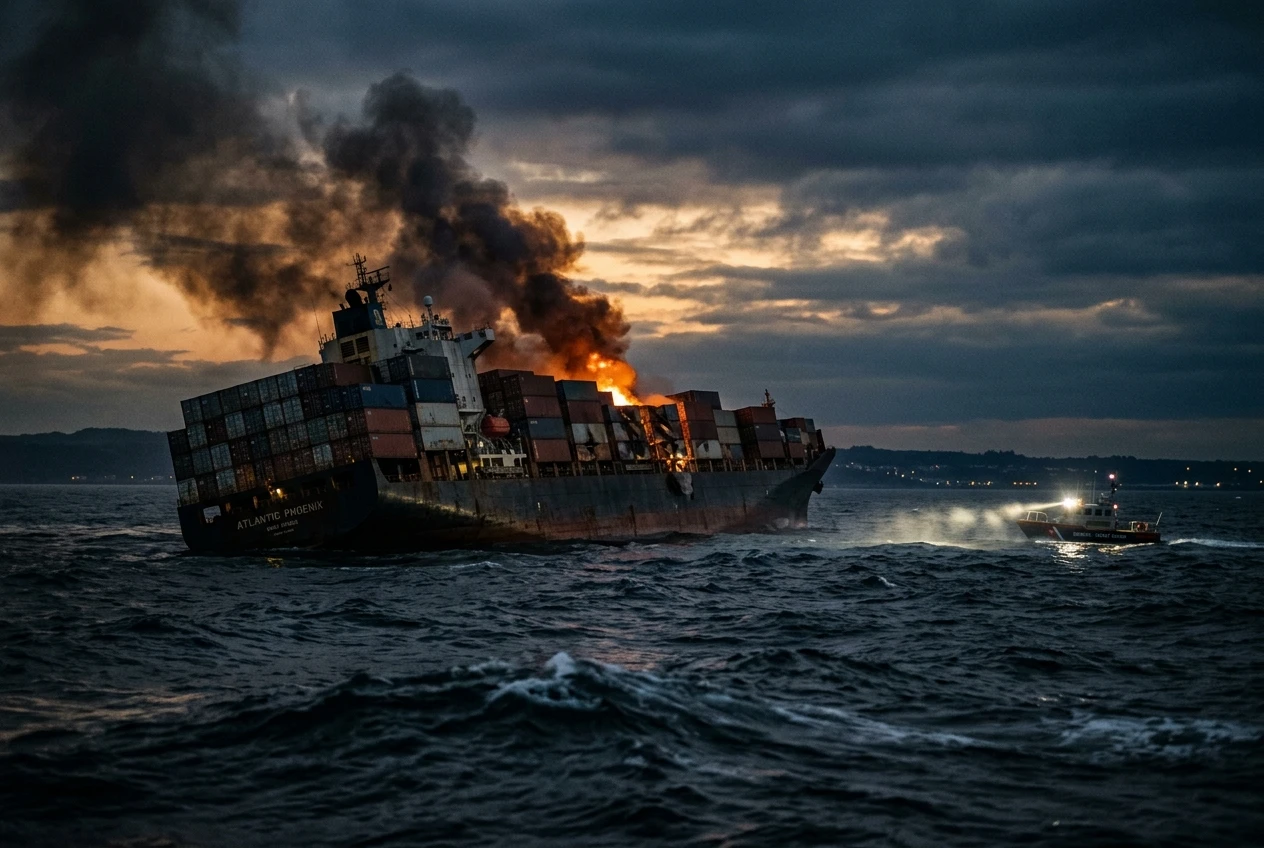
The M/V GFS Galaxy was crossing the Strait of Hormuz at 7:15 p.m. ET on Saturday when IRGC forces opened fire, according to US Central Command. The vessel suffered significant engine room damage and an onboard fire, the command said, leaving it unable to continue the journey. Oman rescued 23 crew members, but one civilian remained missing on Sunday. The IRGC said it had fired only a warning shot at the ship for using an “unauthorized route”; the United States described the attack as “blatant” and ordered the strikes in response.
Within hours of the strike, the IRGC announced the Strait of Hormuz off-limits to commercial shipping. “Following this incident … the Strait of Hormuz will be closed until further notice and until the end of the American interventions in this area, and no vessels will be allowed to pass through it,” the Iranian statement, carried by state media, said. The closure is unilateral; CENTCOM said commercial traffic continued at “reduced levels” and added that “Iran does not control the Strait of Hormuz. It remains an international waterway.” The command logged more than 140 vessels transiting over the past week.
Iran’s framing implied the closure could lift if Washington halted the strikes; the language offered no timetable. CENTCOM, for its part, said Iran’s “Memorandum of Understanding” remained in force on the US side and that the military would “keep it that way.”
Three Nights of Strikes
US forces struck approximately 140 Iranian military targets with precision munitions launched from land- and sea-based fighter aircraft, drones and naval vessels on Saturday, CENTCOM said. Targets included Iranian missile and drone sites, naval capabilities, ammunition storage facilities, communication networks and coastal surveillance locations. The three-night campaign now exceeds 300 sites struck across Iran, the command said. Trump posted on Truth Social before the Saturday strikes that the June ceasefire “is OVER,” telling Tehran that the United States had agreed to keep talking but had stated “in no uncertain terms” that the truce was finished.
Defense Secretary Pete Hegseth posted two sentences on X within hours of the strike announcement: “Iran made a poor choice. Now they pay.” CENTCOM’s broader tally since early May puts the US escort mission in stark terms: more than 800 commercial vessels moved through the strait under American protection, carrying some 400 million barrels of crude oil. That traffic now runs through a corridor Iran says is closed and the United States says is open.
- ~140 Iranian military targets struck in the Saturday round, per CENTCOM.
- 300+ targets hit across three consecutive nights of strikes.
- 800+ commercial vessels escorted through the strait since early May.
- ~400 million barrels of crude oil moved under US protection since early May.
- $78.68 Brent crude settlement, up 3.51 percent on Sunday.
Iran’s Retaliation Across the Gulf
Iran widened the fight overnight, striking US-allied Gulf states with missiles and drones. Qatar’s air defenses intercepted incoming fire, with three people, including a child, wounded by shrapnel from the interceptions, Qatar’s Interior Ministry said. Kuwait’s Defense Ministry reported three “land border posts” in the north and an offshore drilling platform of the Kuwait Oil Company were damaged, with one worker wounded. Missile alerts sounded in Bahrain, home to the US Navy’s 5th Fleet, and the Omani state news agency said drones struck sites in an area near the waterway.
- United Arab Emirates: missile and drone attacks intercepted by air defenses.
- Qatar: missile attack intercepted; three people injured, including a child.
- Jordan: ballistic missile strikes on the Prince Hassan Air Force base; no injuries reported.
- Bahrain: alarm sirens sounded; drones intercepted.
- Kuwait: three border centres and an offshore oil platform attacked; one worker injured.
- Oman: missiles and drones launched despite hosting Saturday’s mediation talks.
Iran’s Foreign Ministry added a regional warning: any country on the southern shore of the Gulf that allows its territory to be used for strikes on Iran would be treated as a legitimate target. The warning landed while Omani mediators were still hosting Iranian negotiators in Muscat; Oman summoned the Iranian ambassador to protest the strikes, the first such move since the war began. Qatar, which had been central to attempts to broker a ceasefire between the US and Iran, told mediators it reserves the right “to respond.”
The GFS Galaxy and the Missing Indian Crew Member
The US military said the ship hit by Iran on Saturday suffered “significant engine room damage” and was left unable to continue. Oman’s maritime authority rescued 23 crew members, but one remained missing. India’s foreign ministry identified the missing crew member as an Indian national. The vessel, registered in Cyprus, was moving along Oman’s shoreline when it was struck, according to the United Kingdom Maritime Trade Operations center.
India’s Ministry of External Affairs condemned the attack on Sunday, calling the continuing incidents “deeply worrisome.” Spokesperson Randhir Jaiswal said 10 of 11 Indian nationals on board the GFS Galaxy had been rescued, with one still missing. The Indian Embassy in Oman was coordinating with Omani authorities on the search, Jaiswal said, and New Delhi reiterated its call for “immediate de-escalation of tensions” and a “diplomatic solution.” The Indian statement landed against a backdrop of three Indian seafarers who died in US military strikes on three commercial vessels in the Gulf of Oman during the week of July 7.
Why the MoU Failed at the Waterway
The waterway was the open question the June framework did not settle. Strip the Strait of Hormuz clause out of the MoU’s text and the rest of the deal, a halt to major strikes, an end to nuclear escalation, limited sanctions relief, has held in form if not in spirit. Iran first opened fire on commercial shipping in the strait on July 6, according to CENTCOM’s published timeline. Washington answered with a first round of strikes the next day. A second round followed within days. The IRGC’s Saturday strike on the GFS Galaxy and the closure declaration that followed pulled the trigger on the third round, the most intense of the week.
- April 8, 2026: US and Iran agree to a two-week ceasefire mediated by Pakistan.
- April 21, 2026: Trump extends the ceasefire indefinitely while keeping the naval blockade in place.
- June 11, 2026: Trump announces a further 60-day ceasefire to negotiate a final agreement.
- June 17, 2026: The Islamabad Memorandum of Understanding is signed, formalizing the 60-day negotiating window.
- July 6, 2026: Iran fires on commercial ships in the Strait of Hormuz, per CENTCOM.
- July 7, 2026: US responds with the first round of strikes; Iran strikes Saudi and Qatari tankers the same night.
- July 8, 2026: Trump declares the ceasefire “over” at the NATO summit in Ankara.
- July 11, 2026: Trump posts on Truth Social that the ceasefire “is OVER”; Iran fires on the GFS Galaxy; US launches the third round of strikes.
- July 12, 2026: CENTCOM hits ~140 Iranian military targets; Iran declares the strait closed; missile and drone attacks hit six Gulf states.
Iran made a poor choice. Now they pay.
Mohammad Bagher Qalibaf, the speaker of Iran’s parliament and a lead negotiator, wrote on social media: “The era of one-sided deals is OVER. We told you: keep your word or pay the price. Reality is knocking.” UN Secretary-General António Guterres warned that “a return to full-scale hostilities would have catastrophic consequences.” Iran’s Foreign Ministry said “only 25 days have passed since the ceasefire agreement ending the war, yet the US government has violated nearly all aspects of that agreement.” Each side’s tally ends at a different number, and the difference between them is the entire distance back to a settlement.
Frequently Asked Questions
What is the Strait of Hormuz and how much oil passes through it?
The Strait of Hormuz is a narrow waterway between Iran and Oman connecting the Persian Gulf to the Gulf of Oman. According to US Energy Information Administration figures cited in coverage of the July 12 escalation, about one-fifth of all traded oil and natural gas passed through the strait before the war began in late February. Saudi Arabia, Iraq, Kuwait, the UAE, Iran and Qatar together send most of their seaborne crude through the corridor.
When did the US-Iran ceasefire begin, and when did it collapse?
The United States and Iran agreed to a two-week ceasefire on April 8, 2026, mediated by Pakistan. Trump extended the ceasefire indefinitely on April 21 and announced a further 60-day extension on June 11. The Islamabad Memorandum was signed on June 17. Trump declared the ceasefire “over” at the NATO summit in Ankara on July 8, 2026, after Iran fired on commercial shipping in the strait on July 6 and again on July 11.
What is the Islamabad Memorandum of Understanding?
The Islamabad Memorandum is the framework deal signed on June 17, 2026, by the US and Iran after talks mediated by Pakistan. It formalized the process of ending the war and established a 60-day period for negotiating the final terms of a deal, including reopening the Strait of Hormuz, an end to major strikes, an end to nuclear escalation, and limited sanctions relief. Iran’s foreign ministry says the US has violated “nearly all aspects” of the deal in the 25 days since it was signed.
How much oil passed through the strait under US escort?
US Central Command has escorted more than 800 commercial vessels through the Strait of Hormuz since early May 2026, moving approximately 400 million barrels of crude oil under American protection. The strait carried roughly one-fifth of global petroleum shipments before the war began, and the IRGC’s closure declaration on Saturday is the first time Iran has ordered commercial traffic halted during the current conflict.
What is India doing about the missing crew member?
India’s Ministry of External Affairs condemned the attack on the M/V GFS Galaxy on Sunday and said one Indian national among 11 on board was still missing. Spokesperson Randhir Jaiswal said the Indian Embassy in Oman was coordinating with Omani authorities on the search and rescue operation. New Delhi reiterated its call for “immediate de-escalation” and the restoration of “free and unimpeded navigation” through the region’s waterways.
