
Saudi Arabia’s e-commerce market will climb from USD 31.29 billion in 2026 to USD 54.87 billion by 2031, an 11.92% compound rate that places the Kingdom among the world’s fastest growing digital retail pools. The firms best placed to harvest that growth are not the ones with the flashiest storefronts, Your Retail Coach (YRC) argued in a Kingdom-wide outlook released on June 11. They are the ones with the strongest systems behind them.
“The storefront scales in a week. The systems behind it take months, and that gap is where margin disappears,” Rupal Agarwal, CSO at YRC, said in the release. The Dubai-based consultancy, which has advised more than 500 retail and e-commerce businesses across the globe, framed its outlook around a single claim: that the next phase of growth in Saudi digital commerce will punish operators who scaled before they were ready, and reward those who built the back end first.
What YRC Released
The YRC outlook, distributed via the Saudi e-commerce growth outlook released on June 11, breaks the Saudi e-commerce market into six operational modules: a demand map, a payment shift, mobile-first operations, new commerce models, Vision 2030 entry considerations, and what YRC calls “readiness gaps.” Each module is tied to current Saudi data, the firm said, and is designed to be acted on, not just read.
“The outlook splits the market into modules that operators can act on directly, not just read, each grounded in current Saudi data,” the release states. The YRC practice, set out on the firm’s YRC’s e-commerce consulting services for retail brands, covers SOPs, inventory management, store design, HR systems, ERP implementation, and franchise development, and its engagements begin on the shop floor rather than in a slide deck, the company said.
Founded in 2012, YRC runs offices in Dubai, Pune, and Nigeria. The Saudi outlook is its first public forecast for the Kingdom, and the first time the firm has put its data points into a single document, the release said.
The Forecast’s Underlying Numbers
The 11.92% CAGR sits inside a wider set of figures that YRC draws from a January 2026 the underlying Saudi e-commerce market report from January 2026, which uses Vision 2030’s 99% internet penetration and 78% 5G coverage as the connectivity baseline.
| Indicator | Figure | Period |
|---|---|---|
| Saudi e-commerce market size | USD 31.29 billion | 2026 forecast |
| Market size by 2031 | USD 54.87 billion | 2031 forecast |
| Compound annual growth rate | 11.92% | 2026 to 2031 |
| Smartphone share of online retail | 77.98% | 2025 |
| Internet penetration | 99% | 2025 |
| 5G population coverage | 78% | 2025 |
| National Payment Network volume | USD 52.6 billion | 2024, up 25.8% YoY |
| Riyadh share of e-commerce sales | 35.01% | latest |
| Mobile wallet growth rate | 14.71% | CAGR |
What the YRC outlook adds is the second layer: which of those shoppers an operator can actually reach, and at what cost. The release argues that demand is ready well ahead of most retail operations, and the table YRC provides is meant to show operators where the readiness gap sits.
Where the Demand Is Headed
Geography sets the first constraint. Riyadh alone accounts for 35.01% of all Saudi e-commerce sales revenue, the YRC release states, and the eastern region of the country is rapidly catching up. The outlook maps spending hotspots by category and city, so operators can see where a category is already crowded and where the next one opens up.
The product mix is B2C, and it has been for some time. B2C commerce kept 73.54% of 2025 revenue, the underlying market report notes, with groceries, fashion, and electronics doing most of the work. B2B is the faster-growing side, projected to expand at a 13.45% CAGR on the back of Monsha’at SME digitization programmes, with platforms layering in credit-scoring and invoice-financing to handle larger order sizes.
Payment behaviour is shifting in parallel. Credit and debit cards still hold 42.62% of the consumer market, but mobile wallets are the fastest moving rail at a 14.71% CAGR. STC Pay, Apple Pay, and Google Pay all operate in the Kingdom, and Mada’s interoperability with Apple Pay and mada Pay is what lets a checkout go PIN-free. The cash-on-delivery habit, the YRC outlook notes, is finally breaking.
Operators also have to plan around Amazon.sa, Noon, and the local enablers Zid and Salla, which the underlying report credits with AI personalization and SME onboarding. High rural fulfillment costs are the single biggest drag on nationwide reach, and the report frames consolidated pickup points and drone trials as the response.
Mobile Wallets and the Checkout Reset
A 14.71% growth rate in mobile wallets, the highest of any payment rail in Saudi Arabia, redraws the checkout in real time. The YRC release argues that operators still designing around desktop-built flows are spending engineering budget on a checkout their customers are about to leave.
The same logic applies upstream. Smartphones drove 77.98% of online retail revenue in 2025, so fulfillment, UX, and load times are not nice-to-haves. They are the conversion funnel. A mobile wallet transaction that takes three screens to clear is a failed sale, the outlook argues, regardless of homepage polish.
This is the part of the Saudi build that has already happened, and it is also the part operators most often treat as “done.” Connectivity is in place, payments are digitized, and the consumer is on the device. What is not in place, YRC’s CSO said, is everything the storefront depends on after the click.
The Readiness Gap That Decides Margin
The YRC outlook calls this last mile of operations the readiness gap, and treats it as the deciding factor in who survives the next phase. The release’s six modules end on the point: the specific systems, from inventory accuracy to returns handling, that separate operators who scale cleanly from those who stall at the first peak.
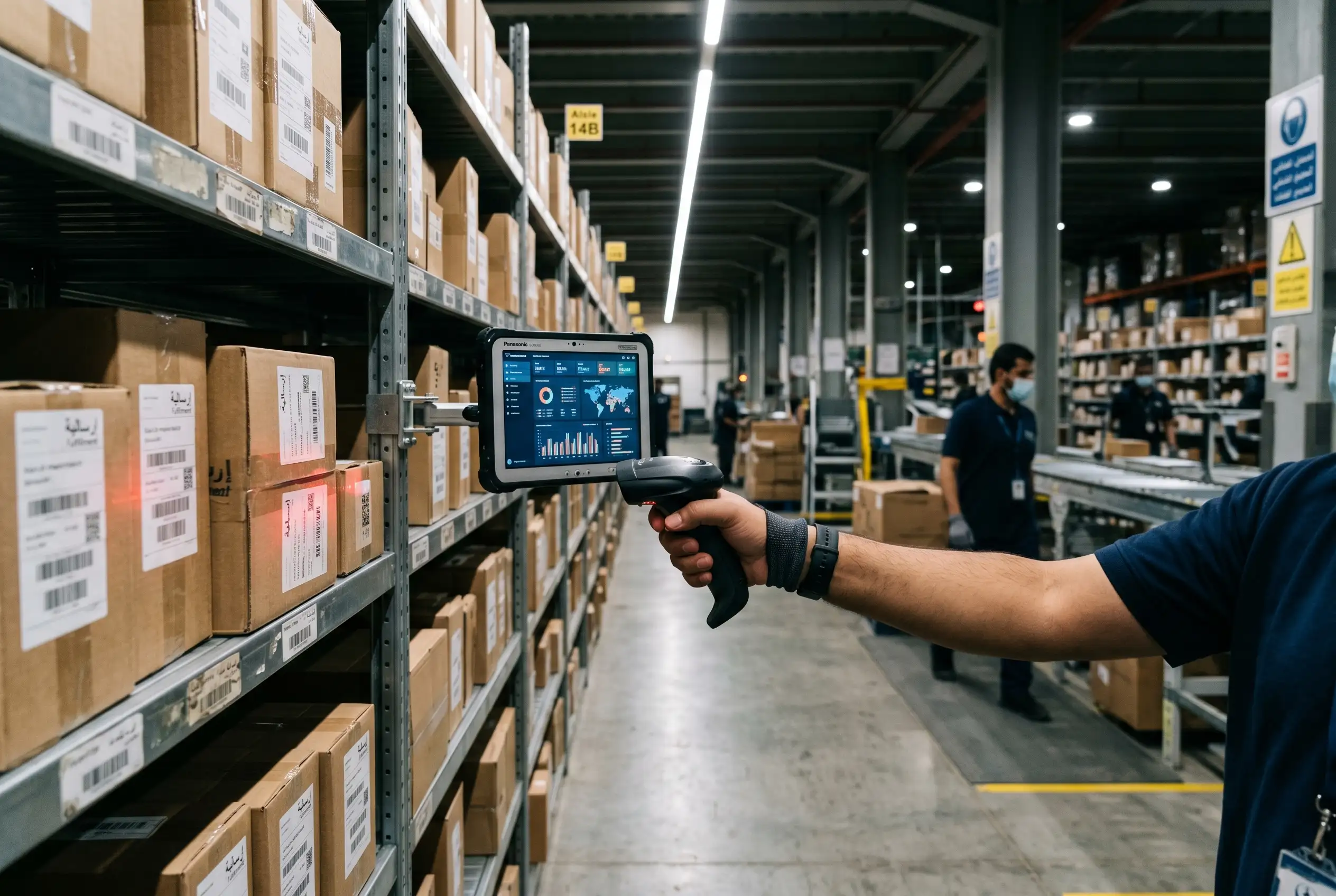
What that looks like in practice is unglamorous. Inventory accuracy has to hold at peak, which means real-time sync between storefront, warehouse, and marketplace listings. Returns handling has to be designed for Saudi consumers, not retrofitted from a US or EU playbook. Last-mile routing has to clear the high-cost rural zones that the underlying market report flags as the single biggest drag on nationwide reach.
The bills for these gaps do not show up in the headline 11.92% CAGR. They show up in fulfillment cost as a percentage of order value, and in the customer-acquisition cost an operator faces to win back a buyer who defected over a fulfillment failure. None of this is a lucky tailwind that lifts every operator equally, the YRC release argues. It is the predictable cost of scaling storefronts, SKUs, and order volume faster than the systems that should support them, and the bill lands on whoever scaled without them.
Vision 2030’s push for new entry, and the regulatory clarity that came with the Personal Data Protection Law, is also a filter, the outlook argues. Higher entry barriers are good for incumbents who can meet them, and punishing for under-resourced competitors who can’t. The advantage goes to whoever is first to be ready, the outlook argues, not whoever is first to launch.
What Operators Can Move On Now
The YRC release is plain about the window: the digital commerce build-out in Saudi Arabia “remains early enough that whole category positions sit unclaimed.” The release puts the non-oil sector at 53% of real GDP, and category share is still cheaper to win than it will be in three years.
Three things sit in the operator’s control. First, design the checkout for the wallet, not the card, because the wallet is where the 14.71% growth is happening. Second, run a readiness audit on inventory accuracy, returns flow, and last-mile routing before peak season exposes the gap. Third, treat Riyadh’s 35.01% concentration as the launch base, and the eastern region’s catch-up as a separate planning lane. The retailers who move on those three now will own the category share while acquisition costs stay low and the field stays thin, the outlook concludes.
Frequently Asked Questions
How large is Saudi Arabia’s e-commerce market expected to get?
YRC’s outlook, drawing on a January 2026 market report, puts the Saudi e-commerce market at USD 31.29 billion in 2026 and USD 54.87 billion by 2031, an 11.92% compound annual growth rate. The market report cites Vision 2030 infrastructure spending, Mada network expansion, and 5G rollout as the main drivers.
What share of Saudi online retail comes from smartphones?
Smartphones drove 77.98% of online retail revenue in Saudi Arabia in 2025, according to the underlying market report. YRC’s outlook treats that share as the baseline for any operator planning a checkout, fulfillment flow, or UX investment in the Kingdom.
What is the readiness gap YRC’s outlook names?
YRC defines the readiness gap as the set of back-end systems, from inventory accuracy to returns handling to last-mile routing, that decide whether an operator can scale cleanly or stall at peak. The CSO frames the gap as the difference between a storefront that can be stood up in days and a back end that takes months to build properly.
Why are mobile wallets the fastest-growing payment rail in Saudi Arabia?
Mobile wallets are expanding at a 14.71% CAGR, the highest of any payment rail in the Kingdom, the YRC release states. STC Pay, Apple Pay, and Google Pay all operate in the market, and Mada’s interoperability with Apple Pay and mada Pay supports PIN-free contactless transactions, which has helped break the cash-on-delivery habit.
What are the biggest non-storefront risks for Saudi e-commerce operators?
The underlying market report flags high rural fulfillment costs as the single biggest drag on nationwide reach, and the Personal Data Protection Law as a higher entry barrier for under-resourced competitors. YRC’s outlook adds inventory accuracy and returns design as the two gaps that most often go unfixed until peak season exposes them.
