
Iraq, a founding member of OPEC, has warned the oil producers’ group it will consider leaving if its output quota is not significantly raised. The warning, delivered on June 25, 2026 by a senior Iraqi oil ministry official to Reuters, lands less than two months after the United Arab Emirates quit the same bloc. Iraq is OPEC’s second-largest producer after Saudi Arabia, and an exit would shrink the bloc’s effective capacity by a further 17%, according to data compiled by Bloomberg.
Baghdad is pressing the case at a moment its own production has collapsed. Iraq pumped 1.48 million bpd in May, against a July allowance of 4.378 million barrels per day and a stated capacity target of seven million. Within hours the oil ministry softened the language, calling a withdrawal premature but leaving the option on the table.
Iraq’s Warning to OPEC, Translated
A senior Iraqi oil ministry official told Reuters on Thursday that Iraq had weighed leaving OPEC but the current plan was to stay and press for a higher quota. The framing was conditional, not final.
Asked whether officials had discussed a withdrawal, the official called it premature. Iraq’s quota, the official said, should be raised in line with its production capacity and population. The same official added that Baghdad’s options were open if Saudi Arabia and the other OPEC allies did not respond, in language first reported by Iraq’s warning to OPEC over its oil quota.
Iraqi Oil Ministry spokesman Salim Al-Rikabi told The National there was “currently no intention” to withdraw, but that a decision would have to be made if the ceiling stayed put. Hours later, a separate ministry statement walked the position back, saying reports suggesting Iraq was ending its OPEC membership “do not reflect the official position of the Iraqi Government.” Neither OPEC nor Saudi authorities responded to requests for comment. A Russian oil source told Reuters the comments did not represent a major challenge for the OPEC+ deal and that a slight quota increase for Iraq might help. Oil prices briefly extended their decline after the Reuters report, trading below $73 a barrel.
Saudi Arabia and other OPEC allies should treat this matter with the utmost seriousness. Failing that, Iraq will be compelled to consider all available options.
The speaker, in the quote above, is the senior Iraqi oil ministry official who spoke to Reuters on June 25, 2026.
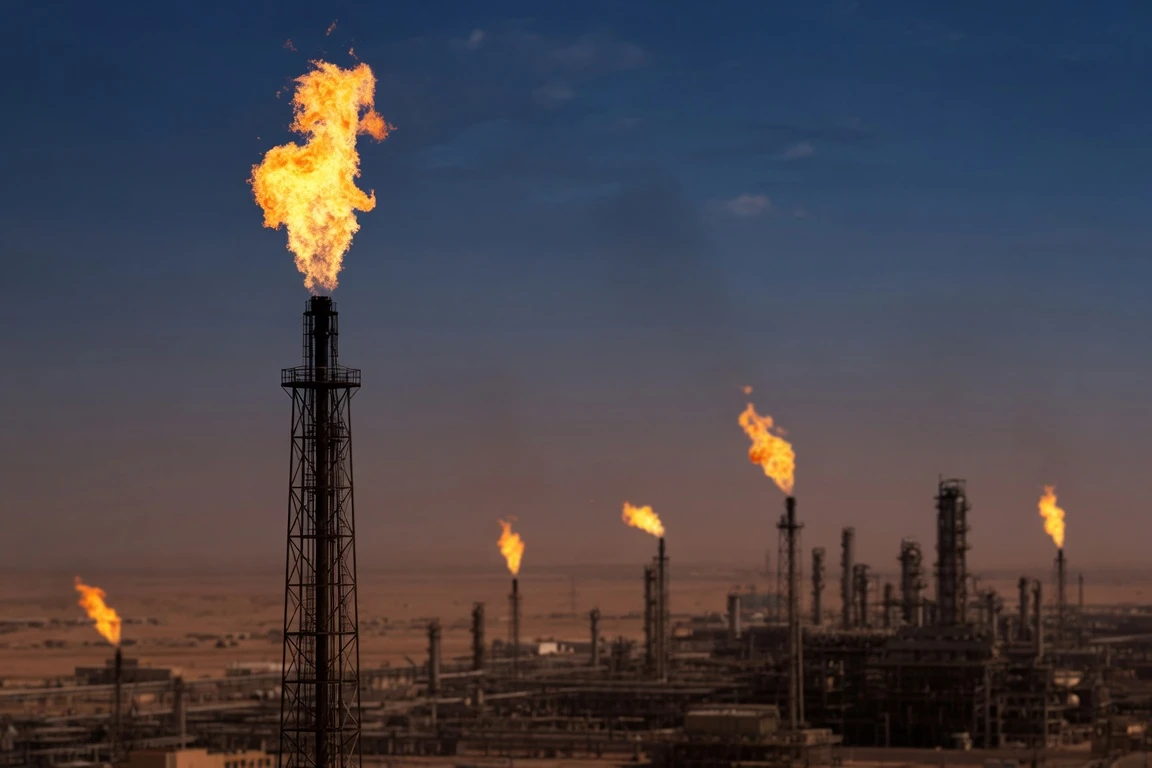
The 4.378 Million Barrel Gap
Iraq’s July OPEC allowance is 4.378 million barrels per day, a number set before the Iran war began and before the Strait of Hormuz effectively cut Iraqi exports. In May, according to OPEC data, Iraq pumped 1.48 million bpd, down from almost 4.2 million in February. The gap between what Iraq is allowed to sell and what it can actually ship is now nearly three million barrels a day. Iraqi officials say that gap is the entire reason for the warning.
Iraqi spokesperson Haider al Aboudi told Reuters the country is working to restore full export capacity and aims to reach seven million barrels per day “over the coming years.” Iraqi Oil Minister Basim Muhammad Khudhair said in May that Iraq had sought a quota of 5 million bpd, a level Bloomberg called “a considerable upgrade” in its report on Iraq’s post-war push for a higher OPEC quota. The ministry statement issued on Thursday acknowledged Iraq’s oil industry had been damaged by “more than four decades of wars, sanctions, and attacks,” language aimed at justifying an above-quota baseline. OPEC+ has begun a technical review of members’ production capacity, with the results feeding 2027 quota baselines. Iraq is pushing to get its baseline moved before that process closes.
- July OPEC quota: 4.378 million barrels per day
- May 2026 output: 1.48 million bpd (OPEC data)
- February 2026 output: nearly 4.2 million bpd, before Hormuz closed
- Iraq’s stated target: seven million barrels per day
Why a Founding Member Would Walk Away
OPEC was formed in Baghdad in 1960, and Iraq is one of its five founding members. A walkout would carry symbolic weight the UAE’s recent exit did not. Iraq also depends on oil for at least 90% of its income, according to The National, leaving it with a narrower fiscal path than the Gulf states that have spent decades diversifying.
Prime Minister Ali al-Zaidi, who took office in May, has made rebuilding Iraq’s economy, attracting foreign investment, and fighting corruption the central agenda of his administration, according to reporting summarized in Iraq’s projected rise as the fourth-largest Arab economy coverage of his government’s priorities. On Wednesday, al-Zaidi said Iraq wanted OPEC to raise the country’s output quota “in line with its production capacity and population,” according to state news agency INA. The Iraqi cabinet approved in June plans to accelerate crude exports through the Kurdistan-to-Turkey pipeline, which would lift existing shipments of 220,000 barrels a day to 770,000 at the Ceyhan terminal. That Mediterranean route bypasses Hormuz entirely.
OPEC+ has begun reviewing members’ oil production capacity to set 2027 baselines, with Iraq participating “actively” in the technical work, according to the ministry statement. Baghdad’s leverage in that process is the threat of leaving it.
| Producer | OPEC tenure | Exit status | Capacity vs quota | Stated reason |
|---|---|---|---|---|
| Iraq | Founding member, 1960 | No exit yet; warning issued June 25, 2026 | July quota 4.378M bpd; aims for 7M bpd capacity | Quota sits below capacity and population; Hormuz disruption to export revenues |
| UAE | Joined 1967 | Withdrew May 1, 2026, after 59 years | Capacity about 5M bpd; was producing about 3.4M bpd | Quota held back a roughly $150bn capacity expansion |
How the Hormuz Closure Set the Stage
The Strait of Hormuz has been effectively closed since March 2026, after Iranian forces declared the waterway shut and attacked ships trying to transit. The closure has cut Iraq off from most of its seaborne export routes, since the bulk of Iraqi crude leaves via Gulf terminals facing Hormuz. A US-Iran deal later reopened the strait to partial traffic, but levels have not returned to pre-war norms. CNBC, citing economic intelligence provider QuantCube Technology, reported Iraqi exports had “virtually dried up” since the war began.
The World Bank called the Hormuz closure “the largest oil market disruption in history” in its April 2026 Commodity Markets Outlook, summarized in its post on the Hormuz disruption’s oil market impact. Global oil supply crashed by 10.1 million barrels per day in March, the bank said, with global output projected to fall 6.9 million barrels per day year-on-year in the second quarter of 2026, the largest quarterly decline since the COVID-19 pandemic. The bank’s baseline forecast has Brent averaging $86 a barrel in 2026, easing to $70 a barrel in 2027 as supply stabilizes, with upside risks pushing Brent into a $95 to $115 range if Middle East flows stay constrained. Iraq sits on the supply side of that shock, with production it cannot move.
The UAE Walked Out Two Months Ago
The UAE announced on April 28, 2026 that it would leave OPEC effective May 1. Abu Dhabi had been producing close to 30% below its 4.85 million bpd capacity under the OPEC+ framework, The National reported.
The UAE had invested about $150 billion to expand its production capacity, according to Enerdata, and had publicly clashed with Saudi Arabia over a quota that held back that expansion. Its departure reduced the total capacity of core OPEC members by about 14%, according to data compiled by Bloomberg. Iraq’s potential departure would diminish that capacity by a further 17%.
The UAE framed the move as a national-interest decision after a “comprehensive review” of production policy. In coverage of UAE’s OPEC exit and its US alignment, Rachel Ziemba, an adjunct senior fellow at the Center for a New American Security, called it one of several ways regional states were “balancing” economic and security relationships. Adnan Mazarei, a nonresident senior fellow at the Peterson Institute for International Economics, told Al Jazeera the US “would welcome a weakening of the OPEC and OPEC+” and that OPEC would likely survive “in a weaker shape and effectiveness.”
Mazarei pointed to the Hormuz disruption as a separate driver: with the strait only partially open and oil prices high, the UAE could supply more barrels outside OPEC discipline than it could inside it. That logic maps directly onto Iraq’s current situation, except that Iraq needs the barrels more than Abu Dhabi does. CNBC called Iraq’s quota push the second pressure campaign on the bloc since the UAE’s April exit.
It prompts the question whether there will be more competition than cooperation in the region and what the governance of the energy markets will look like.
The speaker in the quote above is Rachel Ziemba, adjunct senior fellow at the Center for a New American Security, speaking to Al Jazeera on May 1, 2026.
What an Iraq Exit Would Cost OPEC
If Iraq walked, OPEC’s effective production base would shrink again, on top of the capacity the UAE took with it. Iraq is the bloc’s second-largest producer after Saudi Arabia and a founding member with a 1960 charter. The departure would be both a symbolic and operational blow.
Iraq has alternatives the UAE did not. The Iraqi cabinet approved plans in June to accelerate crude exports through the Kurdistan-to-Turkey pipeline, more than tripling existing flows to 770,000 barrels a day at Ceyhan. The Iraqi spokesperson said the country is also aiming to reach 7 million barrels per day in production capacity over the coming years. Neither path requires an OPEC seat.
The OPEC+ technical review of member capacities is the immediate venue for Iraq’s pressure. The closure of that review, which feeds 2027 baselines, is the deadline for Baghdad’s ask.
Frequently Asked Questions
Why is Iraq threatening to leave OPEC?
Iraq’s oil ministry says its current OPEC quota, 4.378 million barrels per day for July, sits below the country’s production capacity and population needs. A senior ministry official told Reuters on June 25 that Iraq “will be compelled to consider all available options” if OPEC and Saudi Arabia do not raise the quota.
How much oil is Iraq actually producing?
Iraq pumped 1.48 million barrels per day in May, according to OPEC data, down from almost 4.2 million in February before the Strait of Hormuz was effectively closed.
What has the Iran war done to Iraqi exports?
The closure of the Strait of Hormuz, declared by Iranian forces in March 2026, has cut Iraq off from most seaborne export routes. CNBC, citing QuantCube Technology, said Iraqi exports had “virtually dried up” since the war began. Iraq approved plans in June to accelerate crude flows through the Kurdistan-to-Turkey pipeline to Ceyhan as a workaround.
When did the UAE leave OPEC, and what changed?
The UAE announced its departure on April 28, 2026, effective May 1, after 59 years of membership. Abu Dhabi had been producing close to 30% below its 4.85 million bpd capacity under OPEC+ rules and had publicly clashed with Saudi Arabia over quota limits.
What would happen to OPEC if Iraq walked out?
Bloomberg data put the UAE exit at about a 14% reduction in core OPEC capacity. An Iraqi exit would cut that capacity by a further 17%, by the same measure, removing the bloc’s second-largest producer and one of its five founding members.
