
Mike Waltz spent Sunday morning on two networks insisting the Trump administration’s new nuclear deal with Saudi Arabia does not open the door to uranium enrichment. The U.S. ambassador to the United Nations told NBC’s Meet the Press there is “no enrichment envisioned in this plan,” then repeated the point hours later on Fox News Sunday.
The promise is not written into the text in binding form. The new U.S.-Saudi 123 agreement, the legal instrument covering peaceful nuclear cooperation, omits the enrichment and reprocessing ban Washington wrote into its 2009 deal with the United Arab Emirates, according to the lawmakers now reviewing it. The Department of Energy (DOE) has not published the full agreement publicly, leaving Congress and outside analysts to work from summaries, briefings and Waltz’s own talking points.
The Sunday Defense
Waltz made the rounds two days after Capitol Hill’s questions started piling up. On Fox News Sunday he put it plainly: “We are not exporting enrichment capability to the Saudis. These are civilian nuclear power plants, as the Saudis look to diversify. But the difference is, they’ve signed up for full inspections. There is no enrichment.”
He framed the deal as the reopening of a dormant industry rather than a proliferation risk. “We haven’t sold our nuclear technology in terms of small modular reactors, microreactors, large reactors, in many, many decades,” Waltz said, adding that talks over implementation continue even though the core framework is locked in.
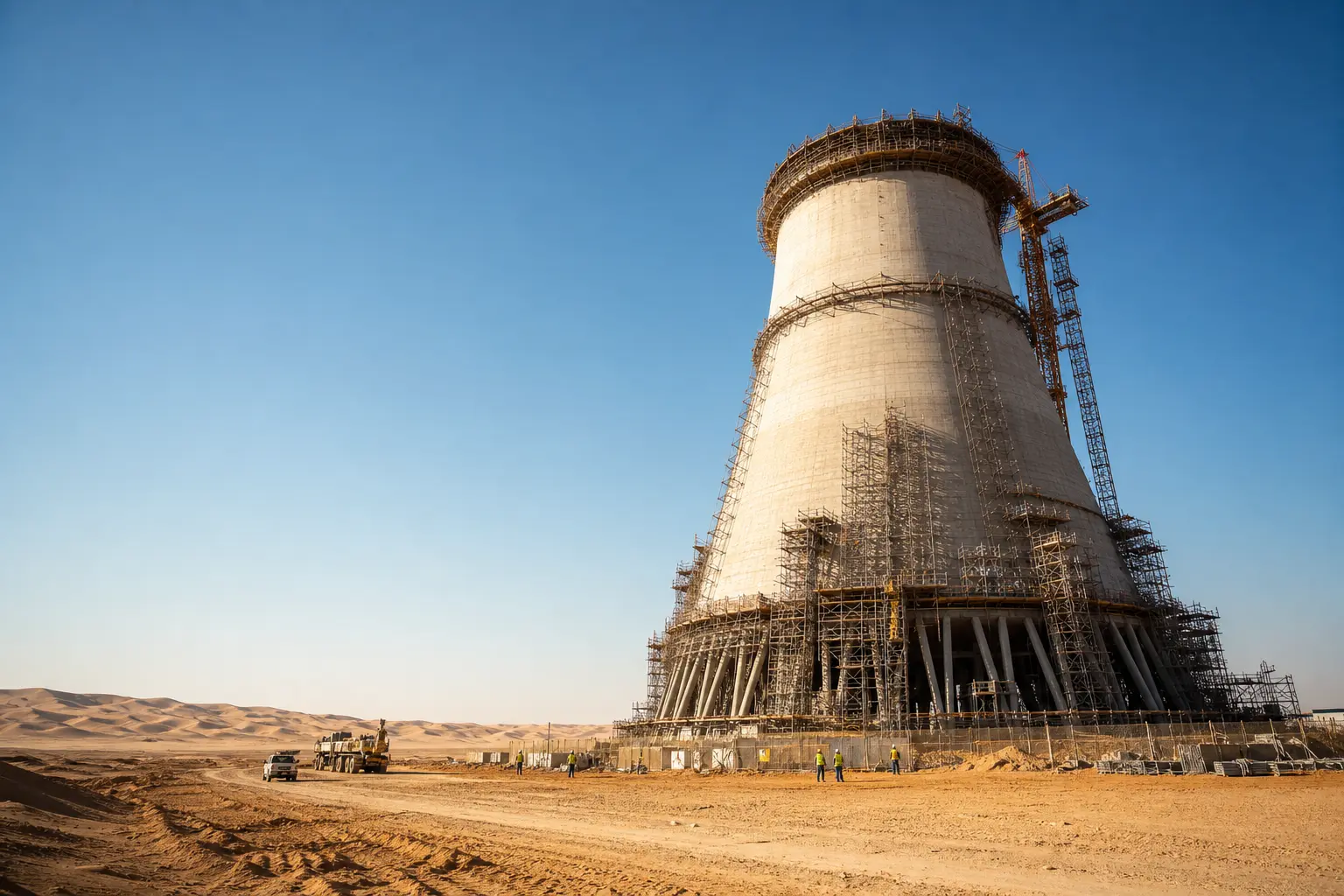
That framework became official on July 23, when Chris Wright, the U.S. energy secretary, and Prince Abdulaziz bin Salman, Saudi Arabia’s energy minister, signed the 123 agreement alongside a companion bilateral safeguards pact. Energy Department officials describe it as a decades-long, multibillion-dollar partnership covering 30 years of reactor sales, inspections and safeguards.
A Late Reversal on Enrichment
Waltz’s certainty is newer than it sounds. As recently as July 18, CNN reported that a draft version of the agreement, one that would have let Saudi Arabia enrich uranium domestically, was stuck awaiting Trump’s personal sign-off. Five days later, the president moved the other way.
“There will be no enrichment of material,” Trump wrote on Truth Social on July 23, the same day the deal was formally signed. The sequence is why Waltz spent Sunday cleaning up the message on national television, three days after the president’s own post.
- July 18, 2026: CNN reports a draft agreement that would permit Saudi uranium enrichment is stuck awaiting Trump’s sign-off.
- July 23, 2026: Wright and Prince Abdulaziz bin Salman sign the 123 agreement and a companion safeguards agreement; Trump posts on Truth Social that enrichment is off the table.
- July 26, 2026: Waltz appears on Meet the Press and Fox News Sunday to reinforce the no-enrichment line and separate the deal from Iran’s program.
Each step moved in the same direction: toward a public promise that arrived after, not before, the underlying paperwork.
What the Signed Text Leaves Out
The gap Waltz glossed over has a name in arms control circles: the “gold standard.” When the United Arab Emirates signed its own 123 agreement in 2009, it accepted a legal ban on enriching uranium or reprocessing spent fuel inside its borders, a standard successive administrations tried to hold new partners to. Section 123 of the Atomic Energy Act requires any country receiving significant American nuclear assistance to sign this kind of agreement before cooperation can begin.
Nonproliferation lawyers reviewing the Saudi text say it does not repeat the UAE’s language. Three protections stand out:
- No enrichment ban, the legal prohibition on enriching uranium domestically that the UAE accepted and Saudi Arabia’s text does not.
- No reprocessing ban, covering the separation of plutonium from spent fuel, the other route to bomb-grade material.
- No Additional Protocol precondition, the requirement that a partner ratify the International Atomic Energy Agency’s (IAEA) expanded inspection regime before receiving U.S. technology.
| Provision | UAE 123 Agreement (2009) | Saudi Arabia 123 Agreement (2026) |
|---|---|---|
| Enrichment on its own soil | Legally barred | No binding prohibition in the signed text |
| Reprocessing spent fuel | Legally barred | No binding prohibition in the signed text |
| IAEA Additional Protocol | Required before U.S. exports begin | Not a precondition under the current text |
| Term and signatories | Signed 2009 | 30 years; Chris Wright and Prince Abdulaziz bin Salman |
Waltz’s “no enrichment envisioned” language describes intent. It does not describe a legal wall.
How Does a 123 Agreement Reach Congress?
Section 123 requires the president to submit any new nuclear cooperation agreement to Congress before it can take effect. Lawmakers get a statutory window to review the text and can try to stop it with a resolution of disapproval passed by both the House and Senate. Congress’s own research service lays out that review timeline for the Saudi case specifically.
The catch is procedural. Because Trump would have to sign his own agreement’s rejection, a disapproval resolution only survives if both chambers clear it by a two-thirds margin big enough to override a veto. That bar is high, which is part of why several Democrats are pushing to amend the text now, while the review window is open, rather than try to kill the deal outright once it closes.
Lawmakers Split Over Missing Safeguards
Rep. Gregory Meeks, the top Democrat on the House Foreign Affairs Committee, said the deal as reported would “significantly erode existing nonproliferation standards” and called for enrichment and reprocessing limits plus the Additional Protocol to be added before he signs off. Sen. Ed Markey of Massachusetts framed the outcome even more bluntly in an official statement.
- Rep. Gregory Meeks (D-NY): wants enrichment and reprocessing limits and the Additional Protocol written into the final text, warning the current version invites a regional arms race.
- Sen. Ed Markey (D-MA): calls the outcome the administration caving to Saudi Arabia on nuclear nonproliferation.
- Waltz and the administration: maintain zero enrichment technology transfers, full inspections, and argue the real proliferation danger is Iran, not Saudi Arabia.
Republican defenders of the deal have framed it differently, casting the agreement as a strategic and commercial win that keeps Saudi Arabia’s civilian buildout anchored to American firms rather than rival suppliers. Meeks’s arms-race warning is not abstract either. A handful of Middle Eastern and North African states already hold nuclear infrastructure, and nonproliferation researchers worry a weaker Saudi precedent invites more of them to ask for the same terms.
Riyadh’s Own Red Line on Iran
Waltz’s sharpest line on Sunday was not about Saudi Arabia. It was about Iran. “The difference is Iran is enriching to weapons’ level that it doesn’t need to do,” he told Meet the Press, describing Tehran’s program as buried “hundreds of feet underground, under hardened military infrastructure” and shielded by “a conventional drone and missile shield.” He argued only an Iranian weapons test, not the Saudi agreement, risks setting off a regional arms race.
Saudi Arabia’s own crown prince has made a competing case for years. Mohammed bin Salman told CBS in 2018 that the kingdom does not want a bomb but, “without a doubt, if Iran developed a nuclear bomb, we will follow suit as soon as possible.” He told Fox News in 2023 that if Tehran built one, “we have to get one” for the sake of regional balance of power, adding, “we don’t want to see that.” Those comments predate this agreement, but they describe the same government Waltz is now vouching for.
Israel has pressed a related point about Iran directly. Prime Minister Benjamin Netanyahu has demanded Iran’s remaining enriched uranium stockpile leave the country entirely, arguing the war with Tehran is not over until it does, a stance that keeps enrichment politics tied to any Saudi deal Israel is watching closely.
Trump has linked this deal’s future to something else again: Saudi Arabia’s relationship with Israel. He has told reporters the nuclear cooperation is contingent on Riyadh moving toward the Abraham Accords, the normalization framework several Arab states have joined since 2020. That is a harder ask than it sounds. Crown Prince Mohammed bin Salman has ruled out joining the accords without a Palestinian state, a condition Israel’s current government has not accepted.
The Review Clock Starts Now
The agreement sits with Congress for its statutory review, the same window Waltz referenced when he said implementation talks continue even though the framework is signed. Meeks and Markey both want enrichment and reprocessing limits added before that window closes. Waltz has signaled the administration considers the current language final.
Whether Saudi Arabia ever enriches a gram of uranium depends on which version of that text survives Congress, not on what gets said on Sunday television.
