
The Turkish Red Crescent has started a three-month financial assistance program worth about 3.2 million Turkish liras ($66,528) for Palestinian patients evacuated from Gaza and treated in Egypt who cannot pay their medical bills.
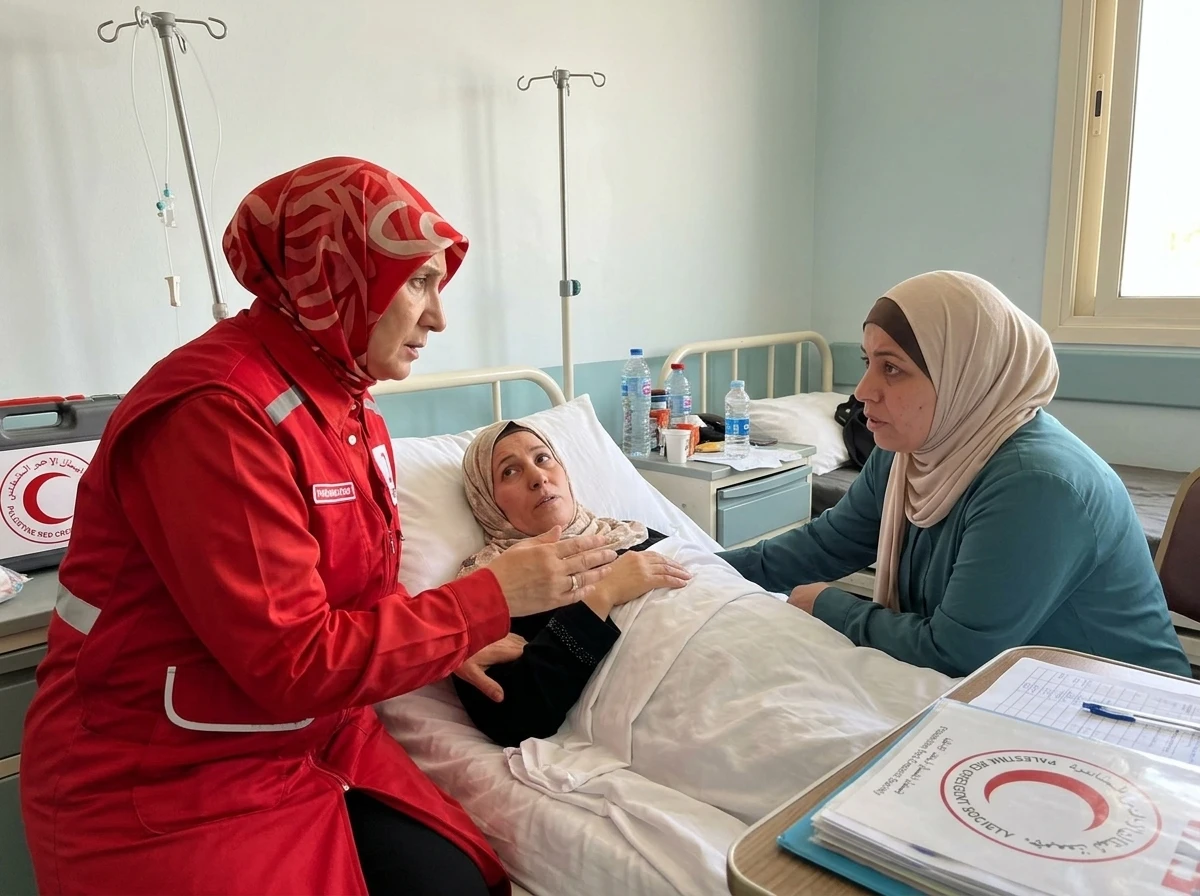
President Fatma Meriç Yılmaz announced the fund on August 23 during a visit to the Palestine Red Crescent Hospital in Cairo, where she met patients, caregivers and staff alongside Türkiye’s ambassador to Egypt, Salih Mutlu Şen.
New Cairo Fund Targets Patients Blocked by Costs
Yılmaz said financial hardship was stopping some patients from getting the care they need. The program runs at the Palestine Red Crescent Hospital in Cairo and covers those unable to meet treatment expenses.
The hospital has treated thousands of Palestinians who reached Egypt from Gaza since October 7, 2023, and handles more than 20,000 Palestinian patients each year, she said.
As a physician and on behalf of the Kızılay family, I would like to express my gratitude to the doctors, nurses and all health care workers who work here with great dedication. They provide services with limited resources but unlimited humanity.
Fatma Meriç Yılmaz, Turkish Red Crescent President, Cairo visit
She added that the goal is for patients to receive treatment, regain health and return to their families. Kızılay will keep working with the Palestine Red Crescent as long as needs continue, she said, so patients are not left alone.
The three-month window concentrates cash on a narrow barrier. Evacuation gets a patient across the border. Payment decides whether treatment follows. By underwriting bills at one facility already receiving high Gaza volume, the fund turns arrival into care rather than a second delay.
Yılmaz also met Egyptian Red Crescent officials to discuss wider Gaza humanitarian cooperation.
Two Gaza Hospitals Kept Running for 150,000 People
In parallel, Kızılay delivered medical supplies worth about 10.5 million Turkish liras to the Al-Amal and Al-Mawasi hospitals in Gaza during August. The shipment covered 34 categories of supplies for Palestine Red Crescent facilities stretched far beyond capacity.
- Ops cover since Oct. 1, 2025: medicines, medical supplies, staff and operating costs at both hospitals
- Reach: healthcare access secured for more than 150,000 people
- August load: 10.5 million liras across 34 supply categories
These hospitals operate under the Palestine Red Crescent and form part of the thin remaining network inside the Strip. The cash and material support prevents total shutdown of services that still function.
Material delivered in August and the longer operating-cost cover work as a single line of defense. Supplies refill shelves. Staff and running costs keep doors open. Together they hold access for the more than 150,000 people those two sites still serve.
Health Aid Since 2023 Tops 85 Million Liras
Total health assistance from the Turkish Red Crescent to Gaza since October 2023 has exceeded 85 million Turkish liras. Separate financial help to the Palestine Red Crescent stands at about 50 million liras to keep hospitals and ambulance services going.
| Item | Quantity or Value |
|---|---|
| Ambulances | 6 |
| Medicines | 68,095 |
| Medical supplies | 118,028 |
| Blood-related supplies and devices | 13,225 |
| Field hospital, OR and ICU units | Fully equipped shipments |
| Cash to Palestine Red Crescent | ~50 million TL |
| Cumulative health aid value | >85 million TL |
Shipments have also included an apheresis device and blood bag systems. The pattern shows steady material and cash flows rather than one-off gestures.
The split between goods and cash matters for daily function. Ambulances, medicines and blood systems move patients and treat them. The roughly 50 million liras in direct finance covers the payroll and fuel that keep those assets in use. Cumulative value above 85 million liras reflects both streams running together since late 2023.
What the Palestine Hospital in Cairo Already Does
The Palestine Red Crescent hospital in Cairo since 1970 has long served Palestinians living in Egypt, families of martyrs and the wounded, and patients referred mainly from Gaza. It offers specialized clinics plus cardiac catheterization, ICU, dialysis, endoscopy, neonatal incubators, geriatrics, physiotherapy, X-ray, pharmacy, lab and 24/7 emergency services.
Yılmaz’s visit and the new fund plug a specific gap: even after successful evacuation, many patients still face bills they cannot pay. The hospital already absorbs high volume; the three-month cash program removes the payment barrier for those who reach it.
That service mix matches the injuries and chronic conditions common among referred Gaza patients. Catheterization, dialysis, ICU beds and neonatal incubators are capital-heavy units. When families cannot pay, those same units become inaccessible even if the bed is free. The new fund bridges that last step.
Similar cross-border medical work appears in other Red Cross and Red Crescent efforts, including the Red Cross field hospital partnership in Rafah that has handled thousands of surgeries and consultations with multiple national societies.
Daily Meals, Water and Border Throughput
Speaking later at Egyptian Red Crescent warehouses in El-Arish, Yılmaz said about 15 trucks carrying aid from Türkiye enter Gaza each day. A recent ship during Ramadan carried material for roughly 400 trucks; some loads were turned back and stored in El-Arish before rerouting.
Kızılay runs three community kitchens inside Gaza and prepares and distributes 30,000 hot meals every day, an operation costing about 100 million liras per month. It also distributes 100 tons of drinking water daily. When border flow slows, teams buy food parcels inside the territory for distribution. Psychosocial programs for children continue, and a new prosthetics project has started for people who lost limbs.
Yılmaz said Türkiye has delivered the most aid among countries and within the Red Cross and Red Crescent Movement via the “Ships of Goodness,” yet the ongoing hardship means the effort brings no comfort while needs remain.
Border rhythm shapes every other line. Fifteen trucks a day set a baseline. A single Ramadan ship scaled for roughly 400 truckloads shows surge capacity when passage opens. Storage in El-Arish and local purchase inside Gaza are the buffers when that rhythm breaks.
- Daily truck entry: about 15 from Türkiye
- Kitchen output: 30,000 hot meals and 100 tons of water
- Monthly kitchen cost: about 100 million liras
- Fallback: food parcels bought inside Gaza when crossings slow
Healthcare System Still Operating at a Fraction
Gaza’s health system faces shortages, damaged facilities and limited capacity. Figures cited with the Kızılay announcement put Israeli attacks on healthcare facilities at least at 445, with 155 facilities damaged and only 47 percent of hospitals partially operational. About 15,600 patients in Gaza still need treatment outside the enclave as of August 2026. Women and children make up 72 percent of those killed.
A broader UNRWA report drawing on WHO data as of June 2026 recorded higher tallies: WHO documented 971 attacks on healthcare affecting at least 804 health facilities and 268 ambulances. Only 19 of Gaza’s hospitals and 73 of 158 health centres were partially operational, leaving roughly 2,200 inpatient beds and 107 ICU beds for more than two million people. More than 18,500 critical patients waited for evacuation.
| Measure | Kızılay-cited figures | WHO figures via UNRWA |
|---|---|---|
| Attacks on healthcare | at least 445 | 971 |
| Facilities affected or damaged | 155 damaged | at least 804 |
| Hospital status | 47% partially operational | 19 hospitals partially operational |
| Patients needing evacuation | about 15,600 (Aug 2026) | more than 18,500 critical |
These numbers explain why patients keep arriving in Cairo and why cash support there and operating costs inside Gaza remain necessary. Evacuation removes people from immediate danger but does not automatically secure treatment once they cross.
Bed and ICU counts make the pressure concrete. Roughly 2,200 inpatient beds and 107 ICU beds for more than two million people leave almost no surge room. When only a fraction of hospitals stay partially open, referral abroad becomes routine rather than exceptional.
On X, Yılmaz posted photos from the Cairo hospital wards and wrote that she met injured and sick children and women, listened to their experiences, longings, fears and prayers, and still saw hope in their eyes. She said Kızılay would keep standing with them so they do not feel alone.
Inside and Outside Care Work as One Pipeline
The Cairo cash program and the Gaza hospital support address successive stages of the same patient path. Inside the Strip, Al-Amal and Al-Mawasi keep limited services running for more than 150,000 people. Outside, the Palestine Red Crescent Hospital in Cairo absorbs those who leave and now has a three-month fund for those who cannot pay.
Neither track replaces the other. Operating-cost cover and 34 categories of August supplies slow collapse on the ground. The 3.2 million lira Egypt fund stops cost from blocking care after a successful crossing. Cumulative health aid above 85 million liras, including about 50 million liras in cash to the Palestine Red Crescent, underwrites both ends.
The same logic appears in food and water. Three kitchens and 30,000 daily meals sustain people who remain. Fifteen trucks a day and El-Arish storage sustain the corridor that moves both goods and patients. When one link weakens, the others face higher load.
What Limited Beds Force Across the Border
Partial hospital function inside Gaza pushes demand onto every external channel that still accepts referrals. With only 47 percent of hospitals partly open in one count, and only 19 hospitals partly open in the WHO-based tally, the Cairo facility’s more than 20,000 Palestinian patients a year is a structural overflow, not a temporary spike.
- Since 1970: Palestine Red Crescent hospital in Cairo serves residents, referred Gaza patients and related families
- October 7, 2023 onward: thousands more arrive from Gaza for treatment
- October 1, 2025: Kızılay ops cover begins for medicines, supplies, staff and costs at Al-Amal and Al-Mawasi
- August 23 announcement: three-month, 3.2 million lira patient payment fund opens in Cairo
- June-August 2026 data: thousands still await evacuation while bed and ICU counts stay severely constrained
Women and children forming 72 percent of those killed frames who fills the wards Yılmaz visited. Prosthetics work for people who lost limbs and psychosocial programs for children extend the same continuum beyond acute surgery. The pipeline runs from damaged wards inside Gaza to specialized clinics in Cairo to longer recovery support.
Movement partners share pieces of that load. The Red Cross field hospital partnership in Rafah has handled thousands of surgeries and consultations with multiple national societies. Kızılay’s ships, trucks, kitchens and now the Cairo fund add parallel capacity rather than a single substitute for a system running at a fraction of need.
Frequently Asked Questions
What is the value and length of the new Turkish Red Crescent patient program in Egypt?
The program is budgeted at approximately 3.2 million Turkish liras, or about $66,528 at then-prevailing rates, and runs for three months. It covers medical treatment costs only for Palestinian patients from Gaza at the Palestine Red Crescent Hospital in Cairo who cannot pay themselves.
How many Palestinian patients does the Cairo hospital handle each year?
According to Turkish Red Crescent President Fatma Meriç Yılmaz, the facility receives more than 20,000 Palestinian patients annually and has treated thousands arriving from Gaza since October 2023.
What cumulative health support has Kızılay provided to Gaza since October 2023?
Health assistance exceeds 85 million Turkish liras and includes six ambulances, 68,095 medicines, 118,028 medical supplies, 13,225 blood-related items, a fully equipped field hospital with operating and intensive care units, plus roughly 50 million liras in direct financial aid to the Palestine Red Crescent.
When did the Palestine Red Crescent begin hospital services in Egypt?
The Egypt branch has provided health services through the Palestine Hospital in Cairo since 1970, serving local Palestinian residents, referred patients from Gaza and other categories including families of the wounded and martyrs.
How many hot meals does the Turkish Red Crescent distribute daily inside Gaza?
Kızılay prepares and distributes 30,000 hot meals every day through its kitchens, an operation valued at about 100 million Turkish liras per month, alongside 100 tons of drinking water daily.
Yılmaz said the organization would continue the work for as long as humanitarian needs persist.
