
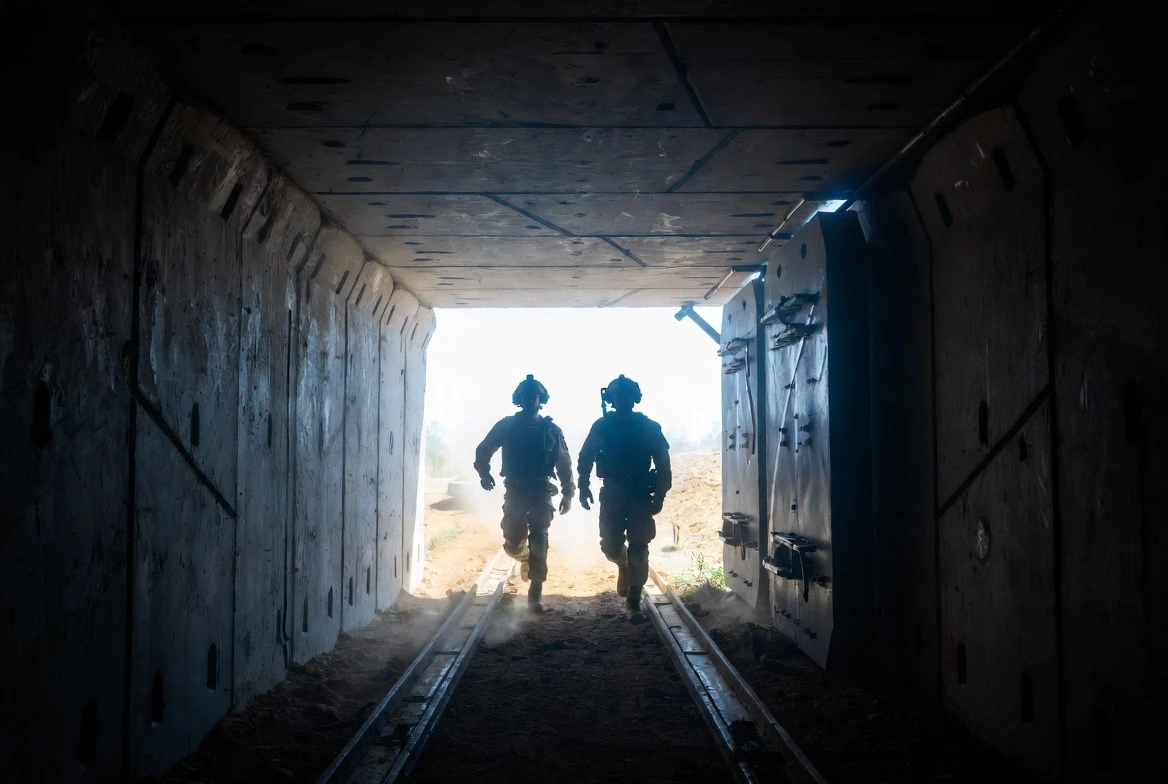
Israel Defense Forces said on Monday it dismantled a 200-meter underground Hezbollah terror complex at Majdal Zoun in southern Lebanon and killed the gunman who killed Captain David Hazutt. Hazutt, an Israeli platoon commander, was the first Israeli soldier to die since Israel, Lebanon and the United States signed a framework agreement on Friday.
Sitting inside the southern Lebanon security zone, the Majdal Zoun complex sat just across from a border Israel has held under military occupation since March. Netanyahu and Defense Minister Israel Katz framed the demolition as part of “Operation Closing Verse” in their own X post, hours after the IDF’s announcement, adding that Israel had updated Washington and the American representative in Lebanon in advance. From there, the diplomatic track kept running alongside the military track. The IDF announcement came after Israeli military officials led journalists through the Majdal Zoun hillside on June 18 to show a Hezbollah drone factory the army now says it has demolished.
The Demolition at Majdal Zoun
Late on Sunday, the IDF posted in two threads, one marked DISMANTLED and the other ELIMINATED. The Majdal Zoun complex, the IDF said, was “constructed using technology and expertise provided by the Iranian terror regime” and sat inside the southern Lebanon security zone. The post listed the headline figures: a tunnel “200+ meters long and 25+ meters deep” with “hundreds of weapons and 4 launch shafts directed toward Israel” recovered from inside.
Hours later, Netanyahu’s office placed the demolition under a name. The label “Operation Closing Verse” appeared in a post by Katz and Netanyahu early on Monday, hours after the IDF’s announcement. Their statement described the IDF as having “just destroyed the underground terrorist infrastructure of the Hezbollah terrorist organization in the area of the village of Majdal Zoun in southern Lebanon.” The tunnel, the statement said, was “over 200 meters long and more than 25 meters deep” and held “hundreds of weapons and several launch silos intended to target the territory of the State of Israel and its citizens.”
Both messages carried a diplomatic signal. The Netanyahu-Katz post said Israel “updated the United States and the American representative in Lebanon in advance regarding the destruction of the infrastructure” and closed with a stay-in-place note: “IDF commanders and fighters will remain in the security zone in southern Lebanon and will continue to destroy terrorist infrastructure, remove threats to northern communities, and safeguard the security of Israel’s citizens.” Israeli political alarms over Hezbollah drone threats have multiplied since March, with former defense minister Avigdor Liberman warning the Knesset that Hezbollah’s explosive UAVs could reach Tel Aviv and Jerusalem.
- Drones: about 50 Iranian-designed UAVs with warheads of around 30 kilograms (66 pounds) each, per Israeli military officials on a media tour of the same Majdal Zoun site on June 18
- Depth: 29 meters (95 feet) under the village, including beneath a mosque, per the same tour
- Launch infrastructure: shafts at the southern end of the tunnel, protected by blast doors on rails, per the same tour
- Explosives: roughly eight tons of explosive material found in the underground site’s rooms, per the same tour
- Iranian backing: “direct Iranian assistance, including planning and funding” for the broader facility, per Israeli military officials on the tour; the IDF post called the construction “technology and expertise provided by the Iranian terror regime”
Captain Hazutt and the Deir Siryan Gunfight
The Deir Siryan operation that yielded the “eliminated” militant ran in parallel with the demolition at Majdal Zoun. Per an IDF probe reported by The Times of Israel, Golani soldiers entered a structure in Deir Siryan around 2 a.m. and encountered a Hezbollah operative who opened fire, killing Captain David Hazutt, 21, a platoon commander in the Golani Brigade’s 12th Battalion from the southern Israeli city of Ashkelon. A second soldier was lightly wounded in the exchange, and the gunman then fled.
He was the first Israeli fatality since Israel, Lebanon and the United States signed a trilateral agreement on Friday aimed at paving the way for a wider peace deal, the IDF said. That agreement includes a pilot phase in which Lebanese soldiers take control of small areas now held by the IDF and a process aimed at disarming Hezbollah, which Hezbollah rejected. Israeli and Lebanese media reported an Israeli airstrike on Sunday near the southern Lebanese towns of Deir Siryan and Taybeh, both inside the security zone, though the IDF did not immediately comment on that strike.
The gunman fled after the exchange and was tracked during extensive searches of the area. By Sunday afternoon, Israeli troops had located him hiding in a nearby building and killed him, the IDF said.
The IDF’s separate Sunday-night post identified the man by his connection to Hazutt, not by name. “ELIMINATED: The terrorist from the encounter in which Captain David Hazutt fell overnight, in a suspicious structure in the area of Deir Siryan in southern Lebanon,” the post read. “Following extensive searches conducted in the area, the terrorist was located in one of the structures near the point of the encounter and was eliminated by IDF troops.”
Within hours, the demolition and the kill were both on the IDF’s Sunday-night feed. The pairing was the operational message: surface fighters and underground infrastructure were being closed out in the same set of posts, and the Israeli prime minister’s office did not address Hazutt’s death in its Operation Closing Verse statement.
Operation Closing Verse and the Security Zone
As part of Operation Closing Verse, the IDF has just destroyed the underground terrorist infrastructure of the Hezbollah terrorist organization in the area of the village of Majdal Zoun in southern Lebanon. The tunnel, which was over 200 meters long and more than 25 meters deep, contained hundreds of weapons and several launch silos intended to target the territory of the State of Israel and its citizens.
Prime Minister Benjamin Netanyahu and Defense Minister Israel Katz wrote the lines in their joint X post on Monday, hours after the IDF’s demolition announcement. Their statement linked the demolition to Israel’s campaign to remove threats to northern Israeli communities, and said the United States and the American representative in Lebanon had been updated in advance. The phrasing turned a tactical demolition into a named operation. The “security zone” the statement referenced is the strip of southern Lebanon Israel has held since a March 2 cross-border flare-up, expanded over the past three months to a buffer officials have tied to ten kilometers from the border in places. Israel has previously shown journalists a Hezbollah tunnel network near Beaufort Castle and tied that complex to Iranian assistance.
The Times of Israel reported Israeli airstrikes and ground operations in the security zone on Saturday, including strikes on Hezbollah operatives armed with RPGs in the Nabatieh area and the destruction of a Hezbollah rocket launcher in a separate incident. In earlier Majdal Zoun reporting, the same outlet described the underground facility as running “several hundred meters” long at 29 meters deep and said launch shafts formed a Hezbollah “airbase.”
Diplomacy in Washington, Demolition in the Zone
The trilateral agreement signed on Friday is what makes Hazutt’s death politically uncomfortable for the diplomatic track. Israeli and Lebanese media reported that Hezbollah rejected the framework, which means the political track is live while the military track stays loud. The deal includes the pilot phase in which Lebanese soldiers take control of small areas currently held by the IDF, plus a process aimed at disarming Hezbollah. Israel and Lebanon remain at odds over the security zone pullback: a US State Department official told Reuters Israel has begun pulling back from its 10-kilometer buffer zone, a claim both Israel and Lebanon deny.
Iran and the United States put a Lebanon ceasefire clause into their memorandum of understanding, signed on June 18, and added a “de-escalation cell” for Lebanon without Israeli participation, per a Meir Amit Intelligence Center weekly summary on Hezbollah and Lebanon. Hezbollah welcomed the Iran-US MOU as an Iranian commitment to defend Lebanon and called direct Israel-Lebanon talks a threat to Lebanese sovereignty. Lebanon’s President Joseph Aoun told US President Donald Trump on Saturday he hopes Washington will help prevent violations of the framework and press Israel to withdraw, the Lebanese presidency said.
Between June 15 and June 22, the IDF reported six soldier deaths inside the security zone, the same Israeli research center says. Hezbollah’s leader, Na’im Qassem, said in a June 21 speech that Hezbollah had “re-examined its military structure and methods of command” since the previous round with Israel, and that “the project to eliminate Hezbollah and the resistance has collapsed.” The Israeli government’s posture, per the Netanyahu-Katz statement, is that demolition of Hezbollah infrastructure in the zone will continue. The Iran-US MOU’s Lebanon clause and the Friday framework point in different directions on the same ground.
Frequently Asked Questions
What did the IDF dismantle at Majdal Zoun?
An underground Hezbollah terror complex more than 200 meters long and at least 25 meters deep, holding hundreds of weapons and four launch shafts aimed at Israel, per the IDF’s Sunday-night post. Netanyahu and Defense Minister Israel Katz called the demolition part of Operation Closing Verse in a separate post on Monday.
Who was Captain David Hazutt?
A 21-year-old platoon commander in the Golani Brigade’s 12th Battalion, from the southern Israeli city of Ashkelon. The IDF said he was the first Israeli soldier to die since Israel, Lebanon and the United States signed a framework agreement the previous Friday.
What is Operation Closing Verse?
The name Netanyahu and Defense Minister Israel Katz gave the IDF’s ongoing campaign to destroy Hezbollah’s underground infrastructure in the southern Lebanon security zone. Their statement said Israeli forces would remain inside the zone and keep destroying terrorist infrastructure “to safeguard the security of Israel’s citizens.”
How does the demolition fit with the Israel-Lebanon ceasefire?
It complicates the picture. The trilateral framework signed on Friday was meant to start a pilot phase in which Lebanese soldiers take over small areas held by the IDF and to begin a process aimed at disarming Hezbollah. Hezbollah has rejected the framework, Israeli and Lebanese media reported. Iran and the United States added a separate Lebanon ceasefire clause to a memorandum of understanding signed on June 18, with a Lebanon de-escalation cell that does not include Israel.
