
Jordanian Prime Minister Jafar Hassan signed four agreements worth $120 million on Aug. 12 to develop land beside the Baptism Site at Bethany Beyond the Jordan, known locally as Al-Maghtas. The packages fund a museum, a pilgrim village, infrastructure and ecological trails timed to the 2,000th anniversary of Christ’s baptism in 2030.
The move puts concrete money and deadlines behind a years-old master plan. Organizers want millions of visitors and a lasting upgrade to Jordan’s claim as the authentic east-bank location of the event that opened Jesus’ public ministry.
Agreements Lock In the Village and Museum
The high-level National Committee, chaired by Hassan, met the same day and sealed the deals under King Abdullah II’s direction. Work covers roughly 1,400 dunums adjacent to the protected core. Preliminary design and site work on the museum and village is slated to start by the end of the first quarter of 2027. Major construction is expected by the end of the second quarter that year, with both main projects targeted for completion in the first quarter of 2029.
| Project | Estimated cost | Key scope |
|---|---|---|
| Baptism Museum | $50 million | 5,500-square-meter facility with exhibitions on the site’s history and the sacrament |
| Pilgrims and visitors’ village | $40 million | Reception areas, visitors’ center, hotel, restaurants, shops and a church |
| Infrastructure | $27 million | Roads, water and desalination systems, electricity, solar networks and lighting |
| Green corridor | $3 million | Biodiversity protection, vegetation expansion and ecological walking trails by the Royal Society for the Conservation of Nature |
Tharwat Al-Masalha, chairman of the board of trustees of the Institution for the Development of Lands Adjacent to the Baptism Site, called the signing an implementation step that keeps the site’s identity intact while improving the visitor experience. Tourism Minister Imad Hijazin framed the package as a national partnership that highlights Jordan’s religious and cultural heritage.
The museum will sit as the anchor of a wider Baptism Development Zone. An international design competition selected a team led by Níall McLaughlin Architects in February 2026. The museum design competition and 2030 opening target expects 400,000 to 450,000 annual visitors once open. Partial funding has come from donors of the Church of Jesus Christ of Latter-day Saints. The winning concept now faces UNESCO impact-assessment review.
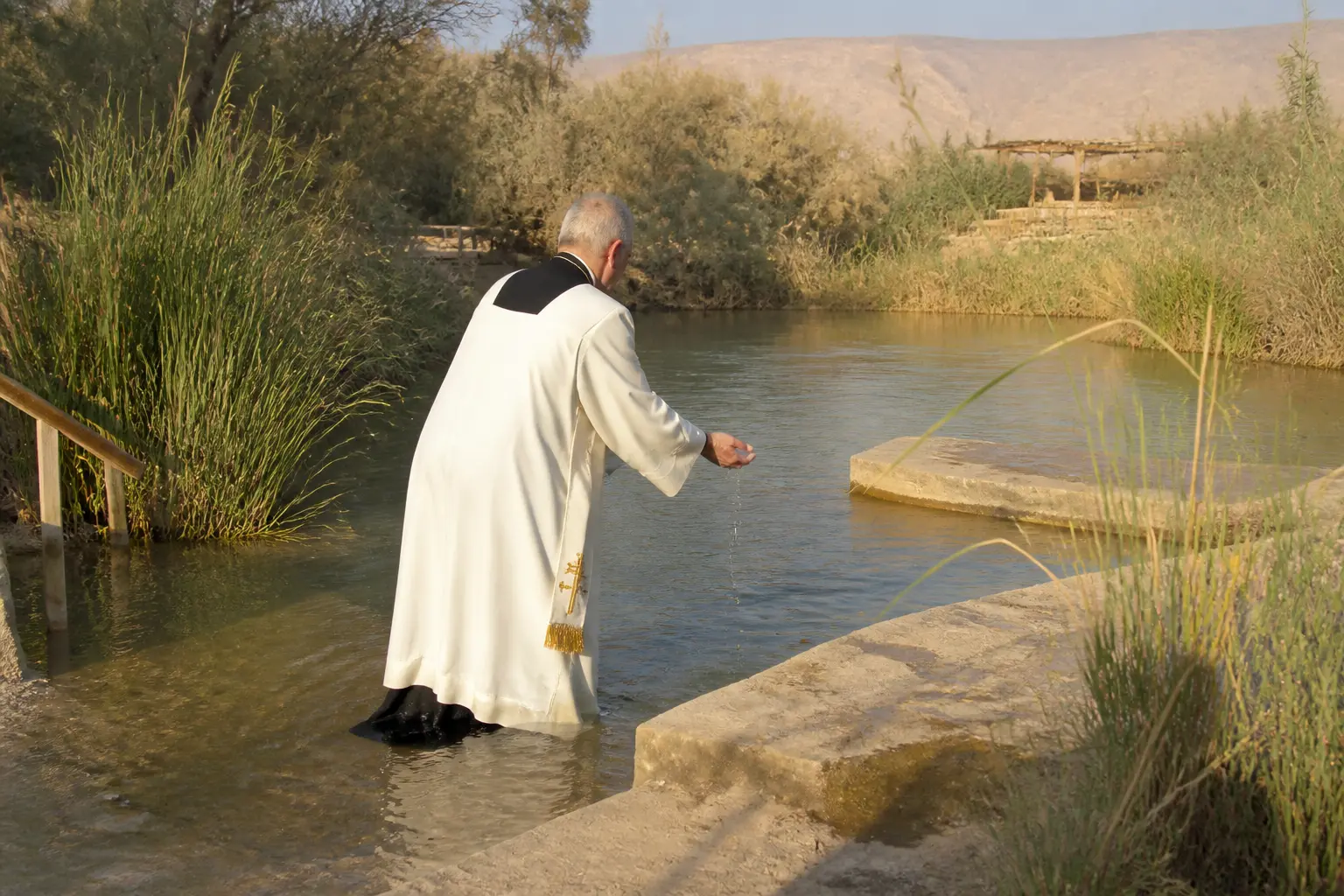
The East Bank the Popes Affirmed
Al-Maghtas lies nine kilometres north of the Dead Sea on the Jordan River’s eastern shore. Archaeological remains include Roman and Byzantine churches, chapels, a monastery, hermit caves and baptismal pools. Tradition holds that John the Baptist baptized Jesus here, the moment the Gospels present as the start of his earthly mission.
The site carries a UNESCO World Heritage listing for Al-Maghtas from 2015 under cultural criteria that recognize both the baptism tradition and continuous pilgrimage. Four popes have visited: St. Paul VI in 1964, St. John Paul II in 2000, Benedict XVI and Francis. Jordan notes it is the only country to have hosted all four at the location.
- Early baseline: roughly 81,000 visitors in 2016, mostly European, American and Arab.
- Post-pandemic climb: estimates approached or passed 200,000 in later recovery years.
- Museum projection: 400,000-450,000 a year after 2030 opening.
- Earlier master-plan ambition: organizers once spoke of scaling the wider zone toward one million annual visitors.
A construction moratorium protects the core property. New work stays in the buffer zone and must clear heritage impact assessments. The Baptism Site Commission, chaired by Prince Ghazi bin Muhammad, manages the place and reinvests revenues on site.
Cardinal Pizzaballa Calls It a Prophetic Sign
King Abdullah and the government are coordinating with Cardinal Pierbattista Pizzaballa, Latin Patriarch of Jerusalem, the Council of Church Leaders in Jordan, and Auxiliary Bishop Iyad Twal, the Latin Patriarchal Vicar in Jordan. Churches and Christian institutions worldwide are being invited into the programming.
Baptism of the Lord is not just an historical event of the past, but an eternal moment that still speaks to each of us. In it we see the humility of the Son of God who entered the waters of Jordan to sanctify creation and open to all of us the way of salvation.
Cardinal Pizzaballa made the remarks at a May 18 meeting with the king and Jordanian clerics. He added that the 2030 observance can become “a prophetic sign of unity, peace and living faith for the whole world.” Hassan has stressed Jordan’s message of coexistence and human fraternity and described the anniversary as reinforcement of the country’s standing as a global Christian pilgrimage destination.
Vatican communication official Andrea Tornielli publicly praised the preparations as a message of peace, hope and mercy from the land of the Baptism. The Jordanian embassy amplified the comments, linking them to the kingdom’s record of Muslim-Christian coexistence. That same theme appeared at Jordan’s recent Nostra Aetate interfaith symposium.
Tourism Numbers the Projects Must Serve
Tourism already contributes roughly 20 percent of Jordan’s GDP. History and culture draw about 85 percent of visitors. Religious sites such as Mount Nebo and the baptism site sit just below Petra, Jerash and Wadi Rum in appeal. Europeans form the largest share at Al-Maghtas, followed by about 24 percent from the United States.
The second-order stakes are jobs and longer stays in a country where youth unemployment has run high and poverty remains a policy pressure. Planners want the village and trails to turn a short river stop into a half-day or overnight experience that spreads spending into lodging, food and local guides. The green corridor and agricultural elements are meant to keep the landscape feeling biblical rather than resort-like.
King Abdullah has repeatedly tied protection of Christian holy places to the survival of living Christian communities. U.S. government estimates put Christians at roughly 2.1 percent of Jordan’s population; church leaders sometimes cite a range of 1.8 to 3 percent. Across the wider Middle East the share has fallen sharply through conflict and emigration. The king has called the disappearance of Christians from the region a disaster for everyone.
Hashemite rulers hold recognized Hashemite custodianship of Christian holy sites in Jerusalem as well. The baptism project extends that guardianship narrative onto Jordanian soil where the kingdom controls both access and development.
Wilderness Rules Still Bind the Build
UNESCO documentation stresses that the site’s authenticity rests partly on its wilderness character along the river’s green zor. Large visitor volumes already exist, yet simple local materials and controlled paths are supposed to preserve a sense of isolation. Churches of various denominations have been allotted plots just outside the core for their own chapels; those structures sit under the same impact-assessment regime.
What we know
- Core property remains under construction moratorium except for archaeological protection.
- Buffer-zone village, museum and trails require heritage impact assessments coordinated with UNESCO.
- Royal Society for the Conservation of Nature leads the green corridor design to expand native cover and walking routes.
What remains open
- Final detailed designs after UNESCO review of the McLaughlin scheme.
- Full private and philanthropic funding mix beyond the initial $120 million agreements.
- Exact programming calendar and projected peak daily numbers for 2030 itself.
Water stress on the Jordan River and the shrinking Dead Sea add environmental risk. Architects involved in earlier master-plan drafts have emphasized earth tones, recycled water and solar power to limit the footprint. Critics of rapid religious tourism elsewhere worry that souvenir strips and hotels can erase the very solitude pilgrims seek. Jordanian officials counter that keeping development outside the archaeological heart and under strict guidelines avoids that outcome.
Israel Runs a Parallel Countdown
Across the river, Israel has also launched preparations for the same 2,000-year mark. Foreign Minister Gideon Sa’ar formed a working group headed by Ambassador George Deek, Israel’s special envoy to the Christian world, to coordinate with churches and ready sites on the western side for large pilgrim numbers. Official Israeli accounts speak of welcoming millions and of the Jordan River as shared Christian heritage.
The two efforts are not formally coordinated. They create a quiet competition for itinerary time, overnight stays and narrative primacy. Jordan holds the UNESCO-listed east-bank complex that successive popes have treated as the principal location. Israel controls popular west-bank access points that many package tours already use. Pilgrims who once crossed for a quick look may soon face fuller east-bank facilities that encourage longer Jordanian stays.
Local tourism voices in Jordan have framed 2030 as an economic journey rather than a single deadline. The $120 million first tranche is meant to make the east bank the obvious base for anniversary-year travel and for the decades that follow.
Delivery Dates Now Sit on the Calendar
If the published schedule holds, the museum and village will be finished more than a year before the anniversary peak. That window gives operators time to train guides, test visitor flows and market multi-day biblical routes that link Al-Maghtas with Madaba’s mosaic map, Mount Nebo and other Jordanian Christian sites. The Council of Church Leaders originated the anniversary proposal; the state has now put money and a prime-ministerial committee behind it.
Success will be measured in more than ribbon-cuttings. It will show in whether pilgrim numbers rise without eroding the wilderness character UNESCO protects, whether local employment sticks, and whether the Christian minority feels reinforced rather than turned into a museum exhibit. The agreements of Aug. 12 turn those questions from aspiration into a construction timetable.
By 2030 the east bank will look different. The river, the memory and the argument over who hosts its living tradition will remain the same.
