
Peggy Flanagan defeated Rep. Angie Craig by roughly 60 percent to 40 percent in Minnesota’s August 11 Democratic Senate primary, locking in an Israel critic who still sits inside her party’s new mainstream on arms sales. The lieutenant governor will face Republican Michele Tafoya in November and is heavily favored in a state that has not sent a Republican to the U.S. Senate since 2002.
Her win carries a quieter consequence. Flanagan already aligns with the 40 Democratic senators who voted in April to block offensive weapons transfers. Stack her with peers such as Abdul El-Sayed and the math for turning symbolic votes into real constraints improves if Democrats reclaim the chamber.
The primary did not invent that consensus. It confirmed that a candidate who mirrors it can beat a better-funded moderate in an open Senate race and still hold the party’s organizational backing for the general election.
Sixty to Forty and the Many Beat the Money
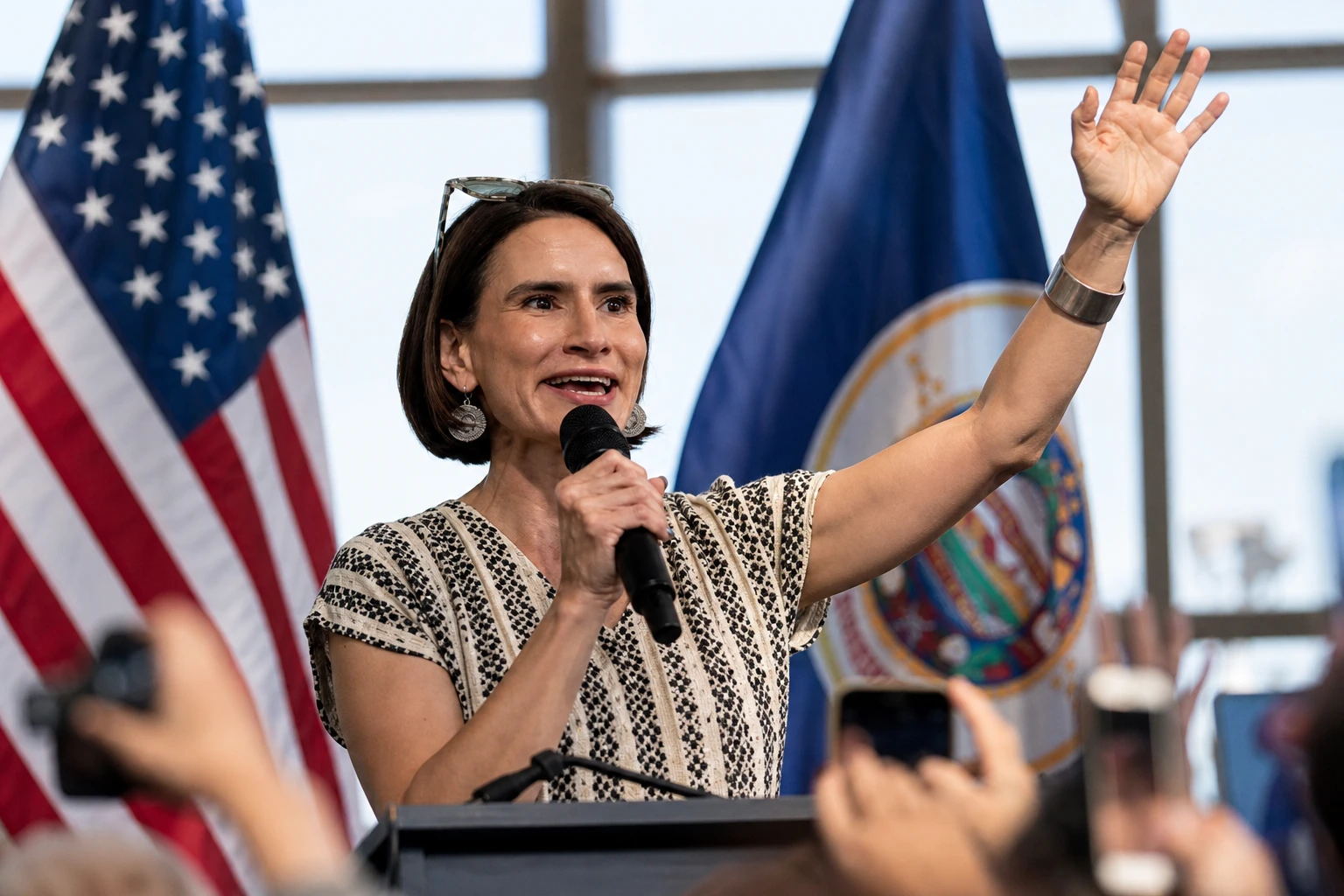
With most ballots counted, Flanagan took about 60 percent to Craig’s 40 percent. She told supporters in Minneapolis: “For months now, I have been telling you that this campaign was about the many versus the money. Well guess what? The many just won.”
Craig outspent her roughly four to one and carried endorsements from House Minority Leader Hakeem Jeffries and other establishment figures. Flanagan had Sen. Bernie Sanders, Sen. Elizabeth Warren, Rep. Ilhan Omar and the state Democratic-Farmer-Labor Party. Outside money poured in on both sides. Progressive super PAC American Priorities spent about $54,000 boosting Flanagan.
- Flanagan: ~60% / ~399,000 votes in early tallies
- Craig: ~40% / ~267,000 votes
- Margin: roughly 20 points once 96% of precincts reported
- Turnout driver: backlash to federal immigration enforcement after deadly Minneapolis shootings
The spending gap made the result sharper, not softer. A four-to-one cash disadvantage usually signals an establishment hold. Here it became the campaign’s proof point that endorsements from Sanders, Warren, Omar and the state party could outrun House leadership support when voters were already angry about Gaza and local enforcement deaths.
Parallel races reinforced the pattern. Progressive Matt Little beat a pro-Israel Democrat for the House seat Craig is vacating. The same night produced two progressive wins in the same state orbit, one for Senate and one for the open House seat, under the same turnout pressure.
Where Flanagan Stands on Israel and Jews
Flanagan has accused Israel of genocide, a charge she shares with Sanders and Omar but not with outgoing Sen. Tina Smith or Sen. Amy Klobuchar. Her platform states she would have joined Minnesota’s two senators “in voting to halt offensive weapons sales to Israel.” That is already majority Democratic opinion: 40 of 47 senators who caucus with Democrats backed the April measure.
She draws a line short of the harder left. She has not joined candidates who oppose U.S. funding for defensive systems such as Iron Dome. Her platform calls for “a two-state solution which allows for a secure Israel and Palestinian self-determination.” El-Sayed has declined to commit to either Israel as a Jewish state or two states.
That package is deliberate. It keeps her inside the April majority on offensive sales, aligned with Smith and Klobuchar on the narrow arms question, and apart from candidates who reject defensive aid or leave the two-state frame unsettled. The genocide language is the sharper edge. The arms and aid positions are the governing ones.
On antisemitism she has been direct. After Temple Israel in Minneapolis was vandalized on the October 7 anniversary with inverted triangles and the phrase “Al-Aqsa Flood,” she wrote: “Last night, Temple Israel in Minneapolis was defaced with anti-Semitic hate. My heart is with the congregants of Temple Israel and our entire Jewish community. Hate has no home in Minnesota, and every house of worship should be a safe place to pray.” She issued a similar statement after a Detroit-area synagogue attack that became a flashpoint for El-Sayed.
She is a close friend of the Twin Cities Jewish community and a trusted ally in the fight against antisemitism. She understands that Jewish safety is bound up with the safety and freedom of all our neighbors.
Bend the Arc CEO Jamie Beran wrote that endorsement. Some Jewish Democrats still worried that Flanagan’s repeated attacks on Craig as “AIPAC’s candidate” played into tropes. A campaign spokesperson replied that she has “consistently condemned antisemitism and will continue standing with Jewish Minnesotans against hate.”
The gap between those condemnations and the AIPAC framing is the live tension. Her statements after Temple Israel and the Detroit-area attack track a clear rejection of hate. The campaign rhetoric that cast Craig as the lobby’s candidate is what left some Jewish Democrats uneasy even as Bend the Arc moved to endorse.
Who Feels the Sting and Who Claims the Win
Pro-Israel Democrats lost another high-profile primary. AIPAC had endorsed Craig in the past and held fundraisers for her House races. Craig herself distanced during a June debate, saying the PAC had given “not one penny” to her Senate bid. Flanagan and progressive voices treated any pro-Israel lobby link as a liability. On X, high-engagement posts framed the night as “Peggy Flanagan has Defeated AIPAC,” language that spread quickly among left accounts.
Jewish communal organizations split. Bend the Arc celebrated. Others noted the tropes risk and watched Jewish communal ties to Israel safety grow more contested inside the party. Progressives claimed vindication that grassroots energy and anger over both Gaza and domestic immigration enforcement could topple better-funded moderates.
Craig conceded and immediately backed Flanagan against Tafoya. Flanagan accepted the olive branch: “Congresswoman Angie Craig assured me she’s in this fight with us. We both love this state. And we both refuse to hand Donald Trump this Senate seat.”
The concession closed the primary fight without a lingering endorsement gap. It did not erase the online frame that treated the night as an AIPAC loss, a frame that traveled faster than Craig’s own distancing line about Senate money.
How the Democratic Center on Arms Moved
April’s Senate votes marked the shift. On a joint resolution to disapprove a foreign military sale to Israel, 40 senators voted yea on the April resolution. Thirteen of them were first-time yes votes on such measures. Seven Democrats joined every Republican in opposition, among them Minority Leader Chuck Schumer, John Fetterman and Jacky Rosen. The resolutions failed, but the Democratic caucus had crossed a new threshold.
Flanagan’s platform simply records that she would have been among the 40. That places her with Smith and Klobuchar on offensive sales while remaining more critical on the broader war. The same dynamic appeared in Michigan a week earlier when El-Sayed beat AIPAC-backed Haley Stevens. Maine’s Troy Jackson is running a parallel race. Each additional Israel-critical Democrat who wins a competitive primary changes the internal count for the next Sanders-style resolution.
- April 15, 2026: 40 Democrats back Sanders joint resolutions blocking bulldozers and 1,000-pound bombs.
- August 4, 2026: El-Sayed wins Michigan Senate primary.
- August 11, 2026: Flanagan wins Minnesota; Little wins Craig’s House seat.
- November 3, 2026: General election tests whether the primary map becomes a Senate majority.
Republicans still control the chamber and have voted unanimously against the resolutions, keeping them symbolic for now. The internal Democratic count is what moved. Thirteen first-time yes votes plus a string of primary wins change who holds the majority inside the caucus even while the floor math stays out of reach.
The Path That Opens If the Chamber Flips
Flanagan has said she will not support Schumer for another term as party leader. Schumer remains a pro-Israel stalwart and one of the seven Democrats who opposed the April measures. If progressives such as Flanagan, El-Sayed and Jackson win in November and Democrats take the majority, leadership questions arrive immediately. A new leader less invested in the traditional alliance would face a caucus already majority-ready to restrict offensive sales.
That is the second-order effect. The primary itself did not change any law. It did add one more reliable vote inside the existing Democratic consensus and removed one more moderate who had voted to continue arms. Online, the same night produced both celebration of an AIPAC defeat and fresh rounds of conspiracy content. Those online waves that fuel antisemitic tropes remain a live risk even when candidates issue clear condemnations.
Minnesota’s Jewish community has already seen the vandalism at Temple Israel. Flanagan’s statements track the safer line progressive candidates can take: criticize Israeli government policy, affirm two states and Jewish safety, reject defensive-aid cuts. Whether that combination holds under general-election pressure is the open test.
Leadership and floor votes are linked. A caucus that already produced 40 yes votes does not need a brand-new ideology to tighten arms policy. It needs a majority, a leader willing to schedule the next resolution, and fewer members in the seven-Democrat opposition bloc. Flanagan’s primary win is one seat in that longer chain.
Tafoya and the Blue-State Reality Check
Michele Tafoya, a former NFL sideline reporter, won the Republican primary and has expressed support for Israel and for U.S. involvement in the Iran conflict. She frames the race as a rejection of “career politicians” and single-party rule under Gov. Tim Walz and Flanagan. Republicans point to a large public-funds fraud scandal and hope it softens Minnesota’s blue lean. Hillary Clinton won the state by only 1.5 points in 2016; Kamala Harris by 4 in 2024.
| Minnesota benchmark | Mark |
|---|---|
| Last Republican U.S. senator | 2002 |
| Last Republican statewide win | 2006 |
| Clinton margin, 2016 | 1.5 points |
| Harris margin, 2024 | 4 points |
Still, no Republican has won a Minnesota statewide race since 2006. Flanagan enters as the favorite. She is a citizen of the White Earth Nation of Ojibwe and currently the country’s highest ranking Native woman in executive office. Her record centers children, housing, Missing and Murdered Indigenous Relatives work and anti-poverty programs. That biography, plus the DFL’s organizational muscle, gives her a structural edge.
Tafoya will try to peel suburban women and independents uneasy with progressive foreign-policy language. Flanagan will paint her as a Trump rubber stamp. Israel will surface, but immigration enforcement deaths and cost-of-living fights are likely to dominate Minnesota airwaves.
The recent presidential margins show a blue state that can tighten without flipping. A fraud scandal and a high-profile Republican nominee test whether that pattern breaks. The longer statewide drought for Republicans is the heavier weight on the scale.
Primary Wins Rewrite the Next Arms Head Count
Flanagan’s platform does not ask Senate Democrats to adopt a new position. It records that she would have stood with the 40 who already voted to block offensive transfers in April. The same is true of the broader primary wave. El-Sayed’s Michigan win and Jackson’s Maine race point in the same direction: candidates who match the existing caucus majority keep replacing moderates who had been more cautious on arms.
Mechanism matters more than rhetoric here. Symbolic resolutions fail while Republicans hold the chamber and vote as a bloc against them. They stop being purely symbolic if Democrats retake the majority and the internal yes count rises. Each primary that swaps a skeptic for a reliable yes changes that future tally before any bill is filed.
The Minnesota result also removed a moderate who had been a past AIPAC endorsee in House races, even after Craig said the PAC gave her Senate bid no money. Progressives read that as proof the lobby label itself is now a primary liability. Moderates read the same night as a warning that establishment spending and leadership endorsements no longer close the gap when turnout runs on Gaza anger and local enforcement backlash.
- Inside the caucus now: 40 yes votes on the April offensive-sales measures, including 13 first-timers
- Still opposed among Democrats: seven, including Schumer, Fetterman and Rosen
- Added by this primary cycle if they win: Flanagan, and potentially El-Sayed and Jackson, as locked-in yes votes
- Floor reality until then: Republican control keeps the resolutions from becoming law
That is the path from August primaries to a different November head count. It is arithmetic built from races already run, not a forecast of new doctrine.
The Fixed Platform Faces Suburban Swing Voters
Flanagan heads into the general with her Israel positions published and stable. Halt offensive sales, keep defensive aid including systems such as Iron Dome, back a two-state outcome with a secure Israel, and condemn antisemitism in plain terms after incidents such as the Temple Israel vandalism. That is the same mix she used against Craig.
Tafoya’s support for Israel and for U.S. involvement in the Iran conflict gives Republicans a clear contrast lane. The question is how much oxygen that lane gets in a state race already loaded with immigration enforcement deaths, cost-of-living pressure, and a public-funds fraud scandal. Flanagan’s team will try to keep the race on domestic ground and on the Trump contrast. Tafoya will try to make progressive foreign-policy language feel risky to suburban women and independents.
Craig’s quick endorsement reduces one Democratic fracture. The DFL’s organizational muscle and Flanagan’s standing as the country’s highest ranking Native woman in executive office supply the ground game. The open test is whether the primary coalition that answered the “many versus the money” call also holds voters who never wanted the party to move left on Israel at all.
What the Primary Changed
Flanagan is now the Democratic nominee. Her Israel platform is public and fixed for the general: halt offensive sales, keep defensive aid, two states with a secure Israel, full-throated antisemitism condemnations. That package already matches where most Senate Democrats voted in April. Adding her to the caucus does not invent a new left flank; it thickens the existing one.
If enough similar candidates win and the majority flips, the next joint resolution on arms sales will face a very different head-count. That is the concrete shift Minnesota’s primary delivered on August 11.
The night also left a dual record: a unified Democratic ticket after Craig’s concession, and an online narrative that cast the result as an AIPAC defeat complete with the conspiracy spillover that followed. Both will travel with Flanagan into November. Only one of them is under her campaign’s control.
