
Egypt’s Haya Karima initiative has finished development works in 620 villages and disbursed EGP 306 billion in its first phase, reaching roughly 18 million people. Sanitation coverage in those villages jumped from 20 percent to 90 percent while the quality-of-life index rose by about 69 percentage points.
The pipes, clinics and fiber lines are the visible layer. The deeper change is that rural households now have stronger reasons to stay put, work locally and raise families without the old pull of overcrowded cities.
The Scale That Covers Half of Egypt
President Abdel Fattah El-Sisi launched the Decent Life program, known as Haya Karima, in 2019. It targets more than 4,500 villages and hamlets that hold nearly 58 million citizens, about half the country’s population, across 20 governorates.
Planned investment exceeds EGP 1 trillion across all phases. Phase One alone carries allocations of EGP 350 billion for roughly 23,000 projects in 1,477 villages. Upper Egypt received 68 percent of those funds and accounts for 61 percent of the beneficiaries.
Selection rested on hard CAPMAS data: high poverty, missing sanitation, crowded classrooms and weak roads. The model rejects single-sector fixes. Every village package mixes infrastructure, health, education, government services and small-business finance at the same time.
- EGP 306 billion already spent in Phase One by mid-2025
- 620 villages fully completed
- 18 million citizens covered in the first wave
- 3.2 million people reached by MSME financing, 55 percent of them women
Phase Two has begun with an initial EGP 25 billion in the 2025/2026 plan. It will touch 1,667 more villages and about 21 million people.
Phase One Hits Nearly Nine in Ten Projects
By the end of June 2025 the overall implementation rate for Phase One reached approximately 89 percent, according to the Ministry of Planning, Economic Development and International Cooperation. Financing secured stood at 93 percent of the EGP 350 billion envelope.
| Indicator | Result |
|---|---|
| Villages completed | 620 |
| Drinking water treatment plants | 349 |
| Household sanitation connections | 1.4 million |
| Health units finished | 796 |
| Classrooms built or upgraded | 15,300 |
| Natural gas villages connected | 637 |
| Fiber-optic villages | 940 |
| Canal lining projects | 947 (3,000 km) |
Sanitation subscribers rose 128 percent. Natural-gas connections climbed 421 percent, cutting LPG subsidy costs by an estimated EGP 1.6 billion a year and saving households another EGP 1.5 billion. Financial inclusion in the targeted villages improved 19.4 percentage points to 75 percent. Female inclusion rose nearly 20 points.
An earlier ministry mid-term snapshot captured on the UN SDG Acceleration Actions platform showed poverty down about 14 points and quality of life up 18 points, with health coverage up 24 points and education services up 12. Different measurement windows produce different point gains, yet the direction stays consistent.
Water, Clinics and Classrooms Arrive Together
The program runs on three interlocking pillars rather than sequential stages.
- Infrastructure and utilities: full drinking-water access via new treatment plants and 6,700 km of networks, sanitation plants and connections that lift coverage toward 90 percent, natural-gas grids, fiber cables, mobile towers, paved roads and lined irrigation canals that raise farm water efficiency.
- Social and human development: primary health units and central hospitals that feed into universal health insurance, thousands of new classrooms that cut density, youth centers, social-solidarity offices and unified government service complexes that house post, civil registry and real-estate desks so villagers no longer travel to district towns for routine papers.
- Economic empowerment: EGP 68.7 billion in micro, small and medium enterprise finance through MSMEDA and partners, agricultural service centers, milk collection points and local industrial complexes that keep value chains inside the village.
Seventy percent of Phase One money went into human-development categories. Four villages already meet world green-building standards, and 15 more are moving through “Tarsheed” environmental certification under a Green Village track.
Villages Keep Their People
For decades Egypt’s countryside exported labor to Cairo, Alexandria and the Gulf. Weak services and thin local markets made migration the rational choice. Haya Karima attacks that calculus directly.
Once clean water, a nearby clinic, a decent school and a micro-loan desk sit inside the village, the cost of leaving rises. The same canal lining that saves irrigation water also raises farm incomes. Gas connections free household budgets. Fiber and ATMs open digital payments and remote work. Local job tallies already show tens of thousands of opportunities created through small projects in the early governorates.
The second-order effect compounds. Lower rural-to-urban pressure eases housing and service strain in the big cities. Remittances that once left the village can recirculate as local spending. Young people who stay become the next cohort of entrepreneurs and volunteers rather than another wave of informal urban workers.
International partners have noticed the platform quality. The World Food Programme is expanding livelihood and food-security work inside Haya Karima villages. EU and ILO projects plug health-protection and social-insurance capacity into the same locations. The program functions less like a closed state project and more like infrastructure other agencies can attach to.
Women and Youth Carry Real Weight
Women received 55 percent of the MSME financing. Female financial inclusion climbed almost 20 points. Youth volunteers, organized through the Haya Karima Foundation volunteer network of more than 50,000 people across 27 governorate headquarters, handle needs assessments, field monitoring and community engagement. That mobilization turns delivery into a civic habit rather than a top-down handout.
Social-solidarity components also mesh with broader social cooperation and family support programs that Egyptian institutions pursue at home and with partners.
How Ministries, NGOs and Volunteers Run It
No single ministry owns Haya Karima. The Ministry of Planning coordinates with Social Solidarity, Local Development, Housing, Health, Education and others. Civil-society organizations and charitable foundations join field assessments and service delivery. Local committees give residents a voice in priority setting.
A high-level committee headed by the Prime Minister oversees progress. The Sharek 2030 mobile app publishes data on roughly 10,000 completed projects so citizens can track work in their own villages and flag problems. An electronic system inside the planning ministry maps needs, designs interventions and measures impact against quality-of-life and SDG indicators.
This multi-stakeholder machine is itself a second-order product. Once built, it can absorb new phases, green standards and partner projects without reinventing the governance wheel each time.
The UN Benchmark and What Phase Two Adds
The United Nations placed Haya Karima on its SDG Acceleration Actions platform and later listed it among international best practices. The recognition rests on the integrated design, the measurable poverty and service gains, and the explicit link to Egypt Vision 2030.
Phase Two expands the same package to another 1,667 villages. Early funding is modest relative to Phase One, yet the targeting criteria remain data-driven and the Upper Egypt focus continues. Green certification, digital monitoring and MSME finance travel forward with the new wave.
Challenges remain real. Full national coverage still requires years and sustained budgets. Maintenance of the new networks will test local capacity. Independent economy-wide studies, including work by IFPRI researchers, continue to model longer-run effects on growth and inequality. Yet the completed villages already show what happens when water, health, school and credit arrive as one package rather than scattered projects.
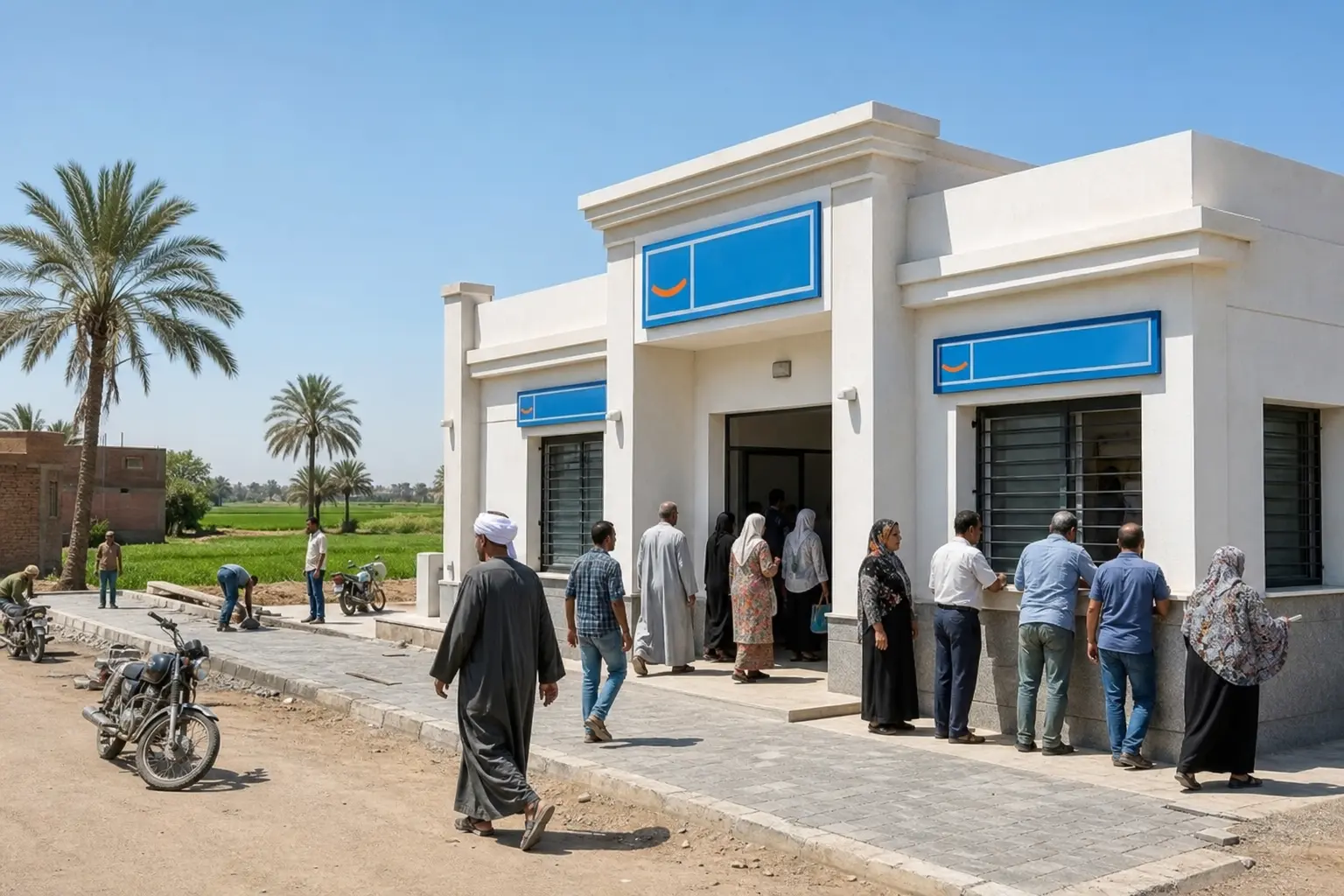
In the finished villages the daily scene has changed. A mother walks to a local health unit instead of a distant hospital. A young graduate opens a shop with a micro-loan. A farmer irrigates from a lined canal and sells milk to a nearby collection center. Those ordinary choices, repeated across hundreds of communities, are the real output of Haya Karima.
