
FIFA closed the books on the 2026 World Cup with about $9 billion in revenue, the richest tournament the sport has ever staged. Spain beat Argentina 1-0 in extra time on July 19 to win the trophy for the second time in its history. Ferran Torres scored the winner after Argentina played the last stretch of the final with ten men, following Enzo Fernández’s second yellow card.
Lionel Messi’s Argentina fell just short again. Gianni Infantino’s gamble on a bigger, 48-team format is what actually drove the record number, and host cities across the United States, Canada and Mexico are still adding up what they spent to make it happen.
How 48 Teams Turned Into $9 Billion
The 2026 tournament expanded from 32 teams to 48, turning 64 matches into 104. Every added match meant another broadcast window, another round of ticket sales, another sponsor placement.
The tournament alone is projected to generate close to $9 billion, including $3.9 billion from broadcasting rights and more than $3 billion from hospitality packages and ticket sales, based on projections in FIFA’s own 2024 annual report. That single-tournament figure nearly matches the $7.6 billion FIFA collected across its entire four-year cycle tied to the 2022 Qatar World Cup.
FIFA signaled the payout scale months in advance. Its council approved the original $655 million prize pool, calling the tournament “groundbreaking in terms of its financial contribution to the global football community,” in Infantino’s words. Facing pressure from European federations months later, FIFA lifted the total pool further, to a final $871 million, nearly double the $440 million Qatar’s teams split in 2022.
Sponsorship money came with its own friction. FIFA had already dropped a beer sponsor’s name from match awards for Muslim players during the tournament, a sign that even deals worth billions needed real-time tweaks once the games kicked off.
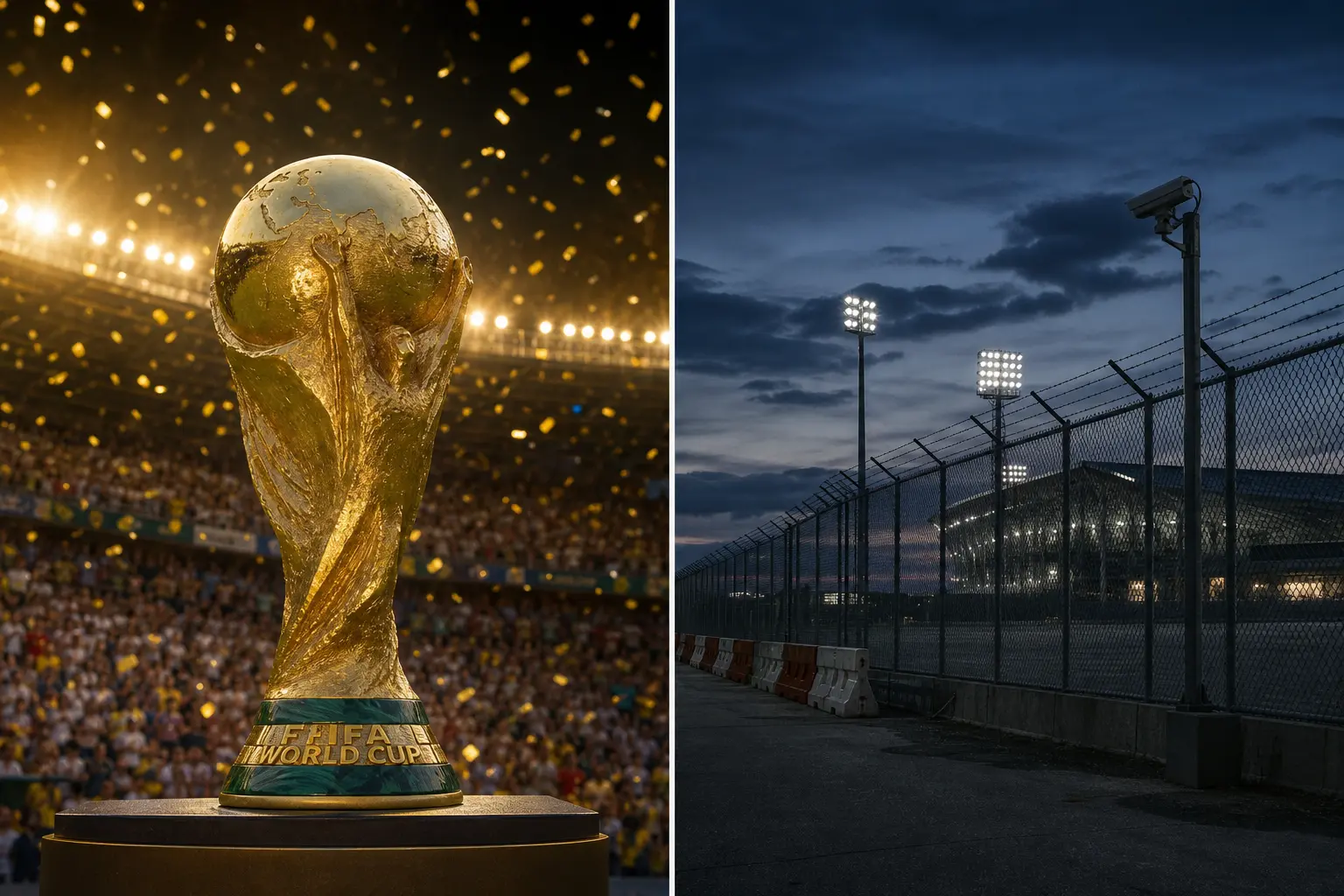
The Priciest Show on Earth
Fans felt the increase first at the ticket window. This was the first World Cup where FIFA used dynamic pricing, letting ticket costs float with demand. FIFA said more than 500 million ticket requests came in during the first sales phase alone.
The scramble produced its own extremes, including a final-match ticket nobody bought at $2.3 million. The attorneys general of New York and New Jersey opened inquiries into the ticketing process over possible consumer protection violations.
Getting to the final in New Jersey cost more than watching it. Round-trip train fares to MetLife Stadium hit $98 on match days, compared with a normal fare of about $13.
The spectacle matched the spending. Madonna, Justin Bieber, BTS and Shakira headlined the tournament’s first-ever halftime show, a break that stretched past 27 minutes and drew criticism from commentators and fans during Sunday’s final. Prediction markets found their own audience too. Crypto exchange Kalshi logged $2.9 billion in trading volume in a single week of the tournament, part of $14.6 billion wagered on the platform across the whole event.
Host Cities Signed Contracts They Could Not Win
Cities in the United States, Canada and Mexico agreed to FIFA’s hosting terms before the three countries even submitted their joint bid in 2017, and many of those contracts remain secret. Chicago withdrew from the bidding process entirely over the terms.
Host committees pay for security, stadium retrofits, transportation and fan festivals. They do not see a share of game-day ticket sales, concessions, merchandise or parking. Alan Rothenberg sits on the Los Angeles host committee. He ran U.S. Soccer the last time the country hosted alone, in 1994, and said the current arrangement was “very, very one-sided.” Back then, some cities kept a slice of game-day food and drink revenue, and U.S. Soccer covered security costs, so hosting actually turned a profit.
Hotel bookings in cities including Los Angeles and Seattle still ran roughly 80 percent below initial forecasts, and some venues showed empty seats despite official sellouts, according to a hotel industry survey reported by Newsweek.
Qatar spent an estimated $220 billion staging the 2022 tournament, the most expensive World Cup ever, largely by building stadiums and infrastructure from scratch. The 2026 hosts avoided much of that bill by reusing NFL and MLS stadiums in cities like Dallas, Los Angeles and New York, but security, transport and renovation costs still ran high across all 16 host cities.
| Host City or Region | Reported Cost | Detail |
|---|---|---|
| Houston, Texas | $65 million | Its share of a $625 million federal security grant split across 11 U.S. host cities |
| Kansas City area | $25.8 million plus $42.5 million | A temporary jail that was not finished in time, plus Arrowhead Stadium renovations the Chiefs plan to leave within five years |
| Toronto | About $380 million | City covering roughly 47 percent, including $123 million in BMO Field upgrades |
| Vancouver | $532 million to $624 million CAD | Up sharply from an initial estimate of about $240 million CAD |
An analysis published by North Carolina State University concluded FIFA captures most financial gains through media rights, sponsorships and ticketing, while host cities absorb major costs with limited direct revenue. One estimate of the total organizing bill, covering security, transport and renovations across all three countries, put the figure above $12 billion.
A Nonprofit With Billions in the Bank
FIFA has operated as an association under Article 60 of the Swiss Civil Code since 1904, a status that shields much of its income from ordinary corporate tax. The designation caps nothing FIFA can earn. It only limits what the money can legally fund.
Zurich’s cantonal government recently rejected a push to force any entity with turnover above 1 billion Swiss francs, roughly $1 billion, to pay standard tax rates. FIFA’s own turnover now runs at close to three times that threshold.
It’s a mystery to me how FIFA can be described as a non-profit association. Nobody on the street understands that. This runs counter to a sense of justice.
Stefan Feldmann represents the Social Democrats on Zurich’s cantonal council and made that argument during the tax debate. Across the Atlantic, FIFA’s American operations file as a tax-exempt group too. IRS filings list the federation as a 501(c)(4) association, according to ProPublica’s Nonprofit Explorer database.
FIFA does reinvest some of that income. Fortune reported the federation has increased what it puts back into football sevenfold since 2016, to about $5 billion, with member associations eligible for up to $8 million each this cycle through FIFA’s development fund. “FIFA is almost too big to fail or too big to pull apart,” Bonita Mersiades, a former Australian soccer executive who helped expose the federation’s corruption scandal in the 2000s, told Fortune.
Did the Teams Get Their Fair Share?
Every one of the 48 teams collected at least $12.5 million just for qualifying, and Spain’s federation banked $51 million for winning. Several European federations still argued the payouts fell short of what a deep World Cup run actually costs a national team to attempt.
- Group stage exit: $9 million
- Round of 32: about $12 million
- Round of 16: about $14 million
- Quarterfinals: $19 million to $20 million
- Fourth place: about $28 million
- Runner-up, Argentina: $34 million
- Champion, Spain: $51 million
That champion’s prize is $9 million more than Argentina earned for winning in Qatar four years ago. Some European federations pushed back anyway. French federation president Philippe Diallo spent months telling Infantino that World Cup teams were not being properly rewarded, he told the sports daily L’Equipe, pointing to the $115 million FIFA paid Club World Cup champion Chelsea for a single tournament just a year earlier.
FIFA’s April increase followed, adding more than $100 million to the pool largely to cover European teams’ travel and lodging costs across three countries. The money still goes to national federations rather than players directly. The U.S. Soccer Federation, for one, keeps 20 percent of its share and splits the rest evenly between its men’s and women’s national teams, under a policy dating to a 2022 agreement.
FIFA Is Already Eyeing 64 Teams for 2030
FIFA has already lined up its next move. Infantino has confirmed that FIFA’s committees will formally examine expanding the 2030 World Cup from 48 to 64 teams once this tournament’s accounts are settled.
The 2030 tournament already carries the sport’s centennial. Spain, Portugal and Morocco will host most matches, while Uruguay, Argentina and Paraguay will each stage one opening game to mark 100 years since the first World Cup. Uruguayan federation president Ignacio Alonso first floated a 64-team field at a FIFA meeting in March 2025, and CONMEBOL president Alejandro Dominguez picked up the idea. “We are convinced that the centennial celebration will be unique because 100 years are celebrated only once,” Dominguez said.
- Gianni Infantino calls the 48-team format a “huge success” and wants FIFA’s committees to formally study a 64-team field for 2030.
- Aleksander Ceferin, UEFA’s president, says the 64-team idea is “not a good idea” and admits the proposal caught him off guard.
- Alejandro Dominguez, CONMEBOL’s president, is pushing for it, arguing the centennial is a once-only chance to include more nations.
- Victor Montagliani, CONCACAF’s president, has voiced doubts about expanding the men’s tournament any further.
A bigger field means more matches and larger broadcast deals. FIFA’s own numbers from this tournament show exactly how that math turns into revenue. FIFA’s relevant committees are expected to take up the question later this year, with the 2030 tournament’s opening matches in Montevideo, Buenos Aires and Asuncion still four years away.
