
Egyptian Minister of Water Resources and Irrigation Hani Sewilam renewed Cairo’s demand on 4 August 2026 for a legally binding agreement on data sharing and operation of the Grand Ethiopian Renaissance Dam. He told a press conference that the lack of regular, reliable operational data remains one of the greatest challenges for water management downstream, with Sudan hit hardest.
The call lands after months of documented flow swings that have already forced Sudanese operators into costly precautions while Egypt leans on the Aswan High Dam’s multi-year storage. Those swings have turned what should be routine seasonal management into a sequence of emergency responses along the middle reach of the basin.
The Black Box at Sudan’s Reservoirs
Sewilam described the situation facing Sudanese dam operators in plain terms drawn from earlier briefings that still shape the current stance. Without advance notice of GERD releases, incoming flows become a black box. Operators cannot know volumes or timing with any certainty.
That uncertainty pushes them to keep reservoir levels lower than design intent as a safety buffer. Lower storage cuts hydropower output and shrinks the water available for irrigation and drinking systems. The buffer is a rational response to missing forecasts, yet it locks in efficiency losses even on days when releases later prove moderate.
- July 2026 inflows: Blue Nile flows into Roseires Reservoir dropped from 207 million cubic metres per day to 129 million between 7 and 9 July after reduced GERD discharges.
- Level drops: Water fell 1.5 metres at Roseires, 1.7 metres at Wad Al-Eis, 1.6 metres at Wad Madani and more than a metre at several Khartoum-area gauges.
- Immediate hits: Intake pumps at Al-Salha drinking water station south of Omdurman were left above the waterline; farmers near Dongola reported the river receding over 2.5 kilometres and vegetable crop damage.
Sudanese authorities opened emergency channels, sent tankers and began drilling wells. Officials still called the overall picture stable thanks to stronger White Nile flows, yet the pattern of sudden swings keeps repeating. Each swing forces the same scramble: lower the gates, protect intakes, and accept reduced generation until the next pulse arrives without warning.
The July sequence illustrates the core problem. A multi-day cut in GERD discharges translated within hours into metre-scale drops at successive Sudanese gauges. Without a shared schedule, operators can only react after the water has already left the upstream reservoir.
What Sewilam Demanded This Week
At the August press conference Sewilam repeated Egypt’s long-standing request for a clear mechanism. Ethiopia would supply advance information on expected water releases and annual operating plans. That data would let Egypt and Sudan plan monthly and seasonal water management, run their own dams safely and prepare for flow changes.
The absence of regular and reliable operational data represented one of the greatest challenges facing water management in the downstream countries, particularly Sudan.
Sewilam said sudden increases or cuts in releases create operational risks for dams and other infrastructure. He stressed that Egypt has raised the point through years of talks and that major dams on a shared river need continuous coordination. He also said Sudan should not be blamed for disruptions caused by missing information; the responsibility sits with Ethiopia’s refusal to lock in a legally binding data-sharing and coordination mechanism.
Cairo still wants an agreement that covers filling and operation while protecting all three countries’ interests. Regular exchange, he argued, would cut risks and improve regional planning. Advance notice of expected releases would allow Sudanese operators to hold higher storage without the same safety penalty, restoring both power output and irrigation reliability that the current black-box pattern erodes.
The demand is procedural as much as political. Egypt is asking for calendars and volumes that can be fed into existing downstream models, not for control of Ethiopian turbines. That distinction has been central to Cairo’s public case for years and remains the core of the August appeal.
Aswan Buys Egypt Time Sudan Does Not Have
Sewilam has repeatedly reassured Egyptians that the Aswan High Dam remains the cornerstone of national water security. Its vast storage and operational flexibility can cover Egypt’s needs for several years even under unilateral GERD moves. He dismissed early-season drought talk as premature, noting mixed rainfall signals across the basin.
| Feature | Aswan High Dam (Egypt) | Sudan Main Reservoirs (e.g. Roseires) |
|---|---|---|
| Role in GERD impact | Multi-year buffer, high flexibility | Direct daily exposure, limited lead time |
| Operator response option | Draw on large storage without emptying | Forced low-level precautions that cut power and irrigation |
| Recent pressure example | Minister says Sudan-style drops will not hit Egypt soon | July 2026 multi-metre level drops and station outages |
The contrast is structural. Egypt sits farther downstream with a massive reservoir built for exactly this kind of multi-year smoothing. Sudan’s dams sit immediately below the GERD and must react in real time without the same cushion. That is why Sewilam keeps highlighting Sudan’s position even while calming Egyptian audiences.
Egypt has also invested in treatment plants, desalination and cuts to water-heavy crops to close a gap between the roughly 55.5 billion cubic metres historic allocation and current needs that run far higher. Those steps help, yet they do not replace predictable upstream releases. Domestic efficiency gains buy political space at home; they cannot restore the lead time that Sudanese operators lose when GERD discharges change without notice.
The same multi-year buffer that protects Egyptian cities also explains Cairo’s diplomatic patience. Sudan cannot wait for the next mediation round when intake pumps are already above the waterline. Egypt can absorb a season of irregular flows and still press for rules that would protect both downstream states over the longer term.
Decades of Talks That Never Locked Rules
The GERD project began in 2011. A Declaration of Principles was signed by Egypt, Sudan and Ethiopia in 2015. Multiple mediation rounds followed under the African Union, the United States and others. None produced a binding operating and data framework.
- March 2015: Leaders sign Declaration of Principles setting cooperation foundations.
- 2019-2020: US- and World Bank-brokered talks propose drought mitigation and minimum releases; Egypt and Sudan endorse a draft; Ethiopia withdraws, citing bias and overly restrictive terms.
- 2020-2023: Further African Union rounds stall; Egypt later calls the track a dead end.
- September 2025: Ethiopia inaugurates the completed dam without a new water-sharing or operations agreement in place.
- 2026: Unilateral operation continues; Egypt renews data and binding-rules demands amid documented Sudan flow swings.
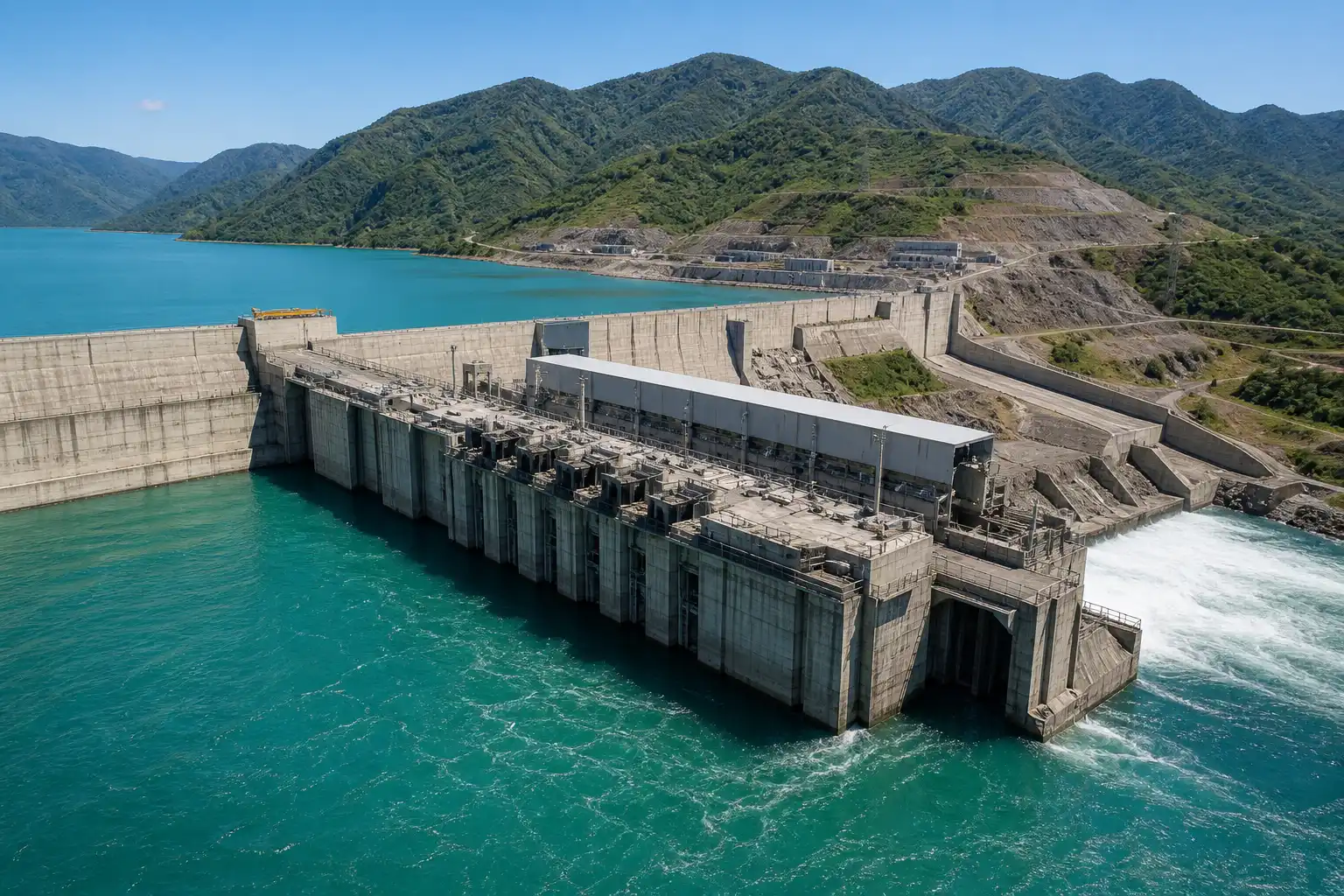
The dam itself now stands as Africa’s largest hydropower plant, with 5,150 MW installed capacity and 74 billion cubic metres of reservoir storage. Average Blue Nile outflow at the site runs near 50 billion cubic metres a year. The project was inaugurated in September 2025 without a new water agreement, shifting the dispute from construction to daily management.
Core remaining gaps include drought-year rules, dispute resolution and the legal form of any deal. Egypt and Sudan want fixed guarantees. Ethiopia prefers flexible, sovereign management. Those gaps have outlasted every mediation format tried since 2015, leaving operators to manage a completed dam with the same incomplete rulebook that governed the construction years.
The September 2025 inauguration marked the practical end of the construction phase and the start of an operations phase still governed by unilateral decisions. Sewilam’s August 2026 remarks return to the same missing pieces that stalled the earlier drafts: advance data, drought protocols and a binding text all three capitals can accept.
Ethiopia’s Counter on Sovereignty and Shares
Addis Ababa has long argued that a permanent binding agreement risks freezing colonial-era water allocations that gave Egypt and Sudan almost the entire flow while leaving Ethiopia with none. The 1959 Nile Waters Agreement allocations to Egypt and Sudan remain the reference point Cairo defends and Ethiopia rejects as outdated and exclusionary.
Ethiopian voices, including technical commentators tracking the dam, accept the value of practical data exchange, dam safety notices and emergency coordination. They reject any deal that would effectively give downstream states a veto or lock Ethiopia into a zero or near-zero consumptive share. GERD is presented as non-consumptive hydropower that ultimately returns water downstream after spinning turbines. Separate irrigation and development plans for Ethiopian Blue Nile lands are treated as sovereign rights under equitable-use principles.
Recent statements from the Ethiopian side reiterate that the dam will not harm Egypt or Sudan and that a legally binding pact of the type Cairo seeks is unnecessary. Cairo’s parallel warning that it will not allow additional Ethiopian dams on the Nile has sharpened the tone without changing the underlying deadlock.
Crowd reaction on X mirrors the split. Some Ethiopian accounts treat any concession on a binding deal as a betrayal that would close future options. Sudanese voices have previously flagged the same operational risks Sewilam now underscores. The practical middle ground of technical data sharing without permanent allocation locks remains elusive.
The sovereignty argument and the data-sharing request therefore talk past each other. One side hears a threat to future development rights; the other hears a refusal to supply the basic release schedules that keep downstream dams and stations running. Until those two frames are reconciled, the July-style swings remain the default operating condition for Sudan.
Unilateral Control Shapes The Entire Basin
A reservoir volume of roughly 74 billion cubic metres gives Ethiopia substantial control over the timing of Blue Nile flows that average near 50 billion cubic metres a year at the dam site. That storage-to-flow ratio means release decisions can reshape the hydrograph for weeks at a stretch. Downstream states experience those decisions as sudden surpluses or deficits rather than as planned seasonal patterns.
The same numbers that make GERD a powerful hydropower asset also make coordination more urgent. When one operator holds multi-month storage on a shared river, the absence of a common calendar converts engineering flexibility into operational risk for everyone below the dam. Egypt’s multi-year buffer at Aswan absorbs part of that risk. Sudan’s reservoirs, sized for shorter cycles, absorb the rest in real time.
- GERD storage: 74 billion cubic metres of controllable volume.
- Average annual Blue Nile outflow at site: near 50 billion cubic metres.
- Egypt historic allocation reference: roughly 55.5 billion cubic metres.
- Sudan exposure: direct daily dependence on releases with limited lead time.
These figures do not themselves dictate a political settlement. They do explain why Sewilam frames data sharing as a safety requirement rather than a diplomatic preference. Without advance schedules, the largest hydropower plant in Africa sets the daily terms for every gauge and intake from Roseires to the Mediterranean.
Three Capitals Still Read The River Differently
Egypt, Sudan and Ethiopia continue to describe the same river through different operational lenses. The differences are visible in the public record of talks and in the practical steps each side has already taken.
| Capital | Primary concern on record | Preferred form of arrangement |
|---|---|---|
| Cairo | Predictable releases and multi-year security via Aswan | Legally binding data and operating rules |
| Khartoum-area operators | Immediate flow swings, power and intake reliability | Advance notice that ends black-box management |
| Addis Ababa | Sovereign management and rejection of 1959 allocations | Flexible coordination without permanent locks |
Those readings produce incompatible timelines. Egypt can afford multi-year diplomacy because Aswan smooths the shocks. Sudanese operators cannot, because metre-scale drops arrive within days of a GERD discharge change. Ethiopia treats the completed dam as proof that sovereign operation already works and that further legal constraint is unnecessary.
The result is a shared river managed on three separate calendars. Sewilam’s August demand tries to force those calendars into a single binding frame. Until that happens, the efficiency losses and emergency workarounds documented in Sudan remain the price of unfinished rules.
Efficiency Costs Already Visible Downstream
The absence of reliable advance data does more than raise abstract security fears. It forces inefficient daily choices.
- Reservoirs run lower than optimal, cutting electricity generation exactly when it is needed.
- Irrigation schedules become reactive rather than planned, raising crop risk.
- Drinking-water stations face sudden intake problems that require emergency workarounds.
- Operators spend time and fuel adjusting gates and pumps instead of following a known annual plan.
A reservoir volume of roughly 74,000 million cubic metres gives Ethiopia substantial control over timing. Without shared operating rules that control is exercised unilaterally. Egypt’s earlier public record includes earlier Egyptian warnings of legal steps over the dam, yet the practical pressure continues to fall first on the Sudanese systems that sit closest to the release gates.
Sewilam closed his latest remarks by reaffirming Egypt’s readiness for an agreement that regulates filling and operation while protecting all three parties. Regular data exchange, he said, would reduce risks and support safe management of the shared Nile. For Sudanese operators already lowering reservoirs and patching water stations, that exchange would move the river from black box to managed flow. Until it arrives, the efficiency and safety costs stay concentrated on the middle reach of the basin.
