
Zamalek has rejected Al Ahly’s attack on Egyptian refereeing and the Football Association, calling early pressure on officials unacceptable and demanding full transparency on player contracts at every club. The exchange landed days before the 2026/27 Egyptian Premier League season opens around 20 August.
The White Castle’s board answered a sharply worded Al Ahly letter that accused the EFA of crisis-making appointments, regulation breaches and “catastrophic” referee comments. Both clubs have returned to a script that has defined Cairo football for years.
Al Ahly’s Letter and Zamalek’s Immediate Reply
On 2 August Al Ahly sent the Egyptian Football Association a letter that opened multiple fronts. The club said it had expected progress after the national team’s World Cup run and a development plan announced by the Minister of Youth and Sports. Instead it saw decisions that “inspire no optimism” and risk fresh crises.
Al Ahly objected to the return of Essam Abdel Fattah as head of the referees’ committee for 2026/27. It said his previous spell delivered no justice for most clubs, especially Al Ahly, and introduced odd language about “containment” and “the spirit of the protocol.” The club recalled that it had finished the last league with young and returning players and skipped the Egypt Cup in protest.
Zamalek’s board replied the next day with open astonishment at what it called an early campaign against local refereeing. The statement, carried by Arab Times and Goal, rejected threats, objections to names and the reopening of last season’s decisions.
Early threats against referees, objections to certain appointments, and revisiting refereeing decisions from last season in an attempt to create doubt and controversy are completely unacceptable. Such actions aim to put pressure on referees before the start of the new season, as has happened in recent years.
Zamalek’s board made that point in its official statement and pledged full support for the integrity of Egyptian referees. Casting doubt on them or on any part of the national system, the club said, should not be tolerated.
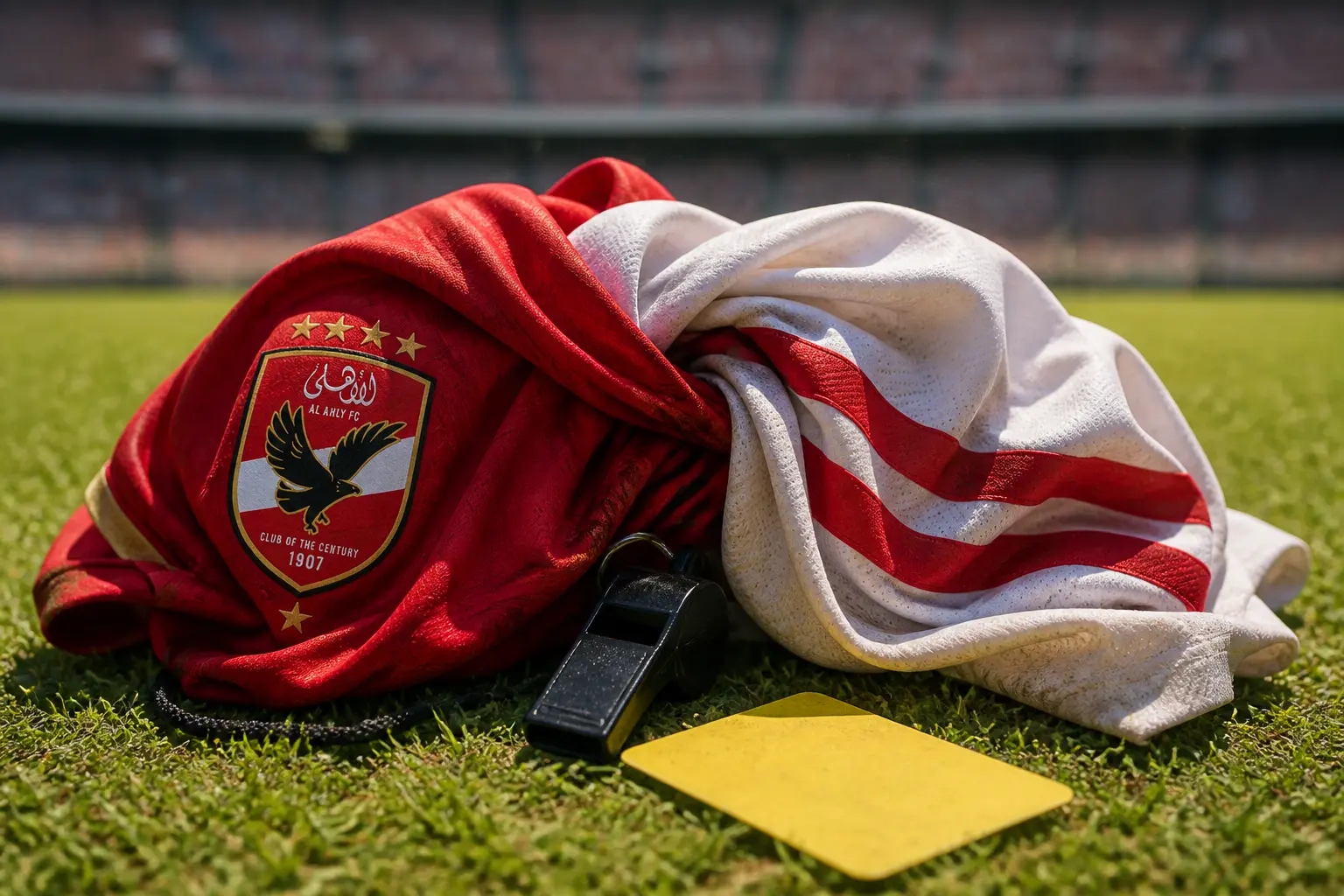
The Flashpoint Over Essam Abdel Fattah
The appointment of Essam Abdel Fattah sits at the centre of Al Ahly’s anger. The EFA named him to lead the referees’ committee again. Al Ahly argued the choice fails to rebuild credibility lost in the eyes of public opinion during his earlier term.
Al Ahly also attacked statements by a VAR official and a referees’ committee member after a Ceramica Cleopatra match late last season. The club branded those comments “catastrophic” and a black mark. According to Al Ahly the VAR official described unjustified obstinacy by the on-field referee in refusing a clear penalty. The committee member pointed to outside interference in the committee’s work, something Al Ahly said it had warned about repeatedly.
| Issue | Al Ahly Claim | Zamalek Position |
|---|---|---|
| Referees committee head | Essam Abdel Fattah return fails justice test | Early objection to formation is pressure tactic |
| Last-season decisions | Catastrophic VAR and committee statements | Revisiting them sows doubt before new season |
| EFA leadership | Decisions and praise of some clubs violate spirit of rules | Praise for Hany Abou Rida board and World Cup work |
| Contracts and licenses | Some clubs get approvals despite unpaid dues | EFA confirmed Zamalek contracts valid; demand review of all |
The comparison shows how quickly a refereeing dispute becomes a wider contest over authority inside Egyptian football.
Contracts Become the Counter-Attack
Zamalek welcomed EFA president Hany Abou Rida’s confirmation that its own player contracts are valid. Then the club turned the same issue outward. It called on the federation and relevant authorities to examine the contracts of players at every other club so the full picture appears without accusation or controversy.
Al Ahly had already raised the contracts and licensing file. It said parties that have not settled dues to state institutions still receive the required approvals. Worse, the association president publicly praised some of those parties as the most committed and insisted their contracts stand, as if others did not. Al Ahly insisted legitimate sporting contracts must stay separate from commercial rights deals.
The club also criticised how the EFA handled a bid to increase Egyptian places in the CAF Champions League. The president submitted a proposal, received a rejection, then kept the decision quiet for a week. Al Ahly said the delay raised questions, especially around the timing of African licence decisions.
Those licences rest on CAF club licensing requirements that cover sporting, infrastructure, personnel, legal and financial criteria. Zamalek settled multiple FIFA cases before the July deadline and secured its papers, according to Abou Rida’s earlier public comments. The transparency demand now puts every club’s paperwork under the same light.
- Al Ahly wants equal application of dues and licence rules without selective praise.
- Zamalek wants every club’s player contracts opened for public clarity.
- Both frame their stance as defence of the wider system rather than self-interest.
- The EFA sits between two giants whose cooperation is essential for a stable season.
The flip from referees to contracts is classic Cairo football politics: one club’s grievance becomes the other’s platform.
A Pattern That Keeps Returning
This is not a new fight. In March 2025 Al Ahly refused to play a Cairo derby against Zamalek after demanding foreign referees. When local officials were appointed instead, Al Ahly stayed away. The match was postponed minutes before kick-off and Zamalek were later awarded the points, a decision Al Ahly vowed to appeal. Foreign referees have long been requested for the derby precisely because neither side trusts the other to accept local calls.
Older chapters look similar. Zamalek has threatened league withdrawals over perceived favouritism. Al Ahly has finished seasons with youth sides or skipped cups. Non-Egyptian officials are routinely flown in for the biggest matches. The 2026 World Cup exit to Argentina produced its own EFA complaint about biased decisions and VAR use, showing the national body itself reaches for the same language when the stakes are high.
- March 2025, Al Ahly boycotts Cairo derby after foreign-referee request is denied; points later awarded to Zamalek.
- Earlier seasons, repeated threats of withdrawal, youth-team protests and public campaigns against named officials.
- July 2026, EFA complains to FIFA over World Cup officiating against Argentina.
- 2 August 2026, Al Ahly letter attacks referees committee appointment and past statements.
- 3-4 August 2026, Zamalek defends referees and demands contract transparency across the board.
Each cycle begins with a claim of injustice, escalates through official letters and media pressure, and ends with the season starting under the same structural distrust. The referee authority under the Laws remains absolute on the pitch, yet off it the big clubs treat every appointment as a political act.
Who Carries the Cost
Smaller Egyptian clubs rarely drive these rows yet feel their effects. Referees work under early-season intimidation that both giants now acknowledge happens regularly. The EFA, led by Hany Abou Rida since his unopposed return, must keep the calendar moving while satisfying two institutions that supply most of the national-team players and generate the loudest media coverage.
Fans on both sides treat every decision as further proof of conspiracy. Recent X posts from Al Ahly accounts framed the letter as necessary fire against an association that grants licences unevenly and tolerates outside interference. Zamalek supporters see their club’s reply as the only defence of national refereeing integrity. The pattern leaves little room for quiet improvement.
Abou Rida has insisted the association stands at equal distance from every club and that overdue dues were rescheduled for several sides, not only Zamalek. He has also noted that Zamalek paid substantial sums to clear FIFA cases. Those statements satisfied one giant and fuelled the other’s grievance.
The Season Starts With the Same Questions
The Egyptian Premier League is due to open in mid-to-late August with a single-league first phase among 20 teams. Al Ahly and Zamalek will again meet as the country’s dominant forces, fresh from Al Ahly’s Super Cup win over Zamalek and ongoing recruitment battles such as Zamalek’s recent player recruitment push.
Nothing in the latest exchange suggests the underlying distrust has eased. Al Ahly closed its letter by saying the association’s recent choices offer no encouragement to cooperate and that the EFA bears full responsibility for running a system that should serve every club. Zamalek closed by praising the same association while insisting transparency must now apply everywhere.
The historical pattern holds: the giants trade public blows, the referees absorb the pressure, and Egyptian football enters another season with the same open questions about fairness and power. The statements are new. The script is not.
