
Egypt’s foreign ministry condemned Yemen’s Houthi movement on Tuesday, calling its threat to blockade Saudi Arabia a blatant violation of international law. The statement followed Monday’s Houthi declaration of a naval embargo against the kingdom, a threat that has already pushed oil tankers to change course in the Red Sea.
Cairo framed its response as solidarity with a Gulf neighbor, and on paper that is exactly what it is. But no government has more riding on what happens next in the Bab El-Mandeb Strait than the one that runs the Suez Canal, a waterway still trying to claw back from a two-year revenue collapse the Houthis caused the first time around.
A Familiar Script From Cairo
Egypt’s Ministry of Foreign Affairs statement described the blockade threat as an irresponsible escalation that undermines regional stability. It warned that the move endangers the safety of maritime navigation, international trade and vital waterways, and said the threat violates international law, the United Nations Convention on the Law of the Sea, and relevant UN Security Council resolutions.
Cairo said it stood in full solidarity with Saudi Arabia and the other members of the Gulf Cooperation Council (GCC, the six-nation bloc grouping Saudi Arabia, the UAE, Kuwait, Qatar, Bahrain and Oman), backing whatever measures the bloc takes to protect its security, sovereignty and territorial integrity. It closed by urging a political and diplomatic track over further escalation.
It was not the first time this month Cairo had said almost exactly this.
- July 14: Egypt condemns Houthi missile and drone strikes on Saudi Arabia’s Abha International Airport, with Foreign Minister Badr Abdelatty phoning Yemeni counterpart Shayea Mohsen Al Zindani to affirm support for Yemen’s internationally recognized government.
- July 19: Abdelatty calls Saudi Foreign Minister Prince Faisal bin Farhan Al Saud, and the two renew condemnation of repeated Iranian attacks on Arab states.
- July 20: Houthi armed forces spokesman Yahya Saree declares a naval blockade against Saudi Arabia, calling it retaliation for what the group describes as a years-long siege of Yemen.
- July 21: Egypt’s Ministry of Foreign Affairs issues its formal condemnation, invoking the Law of the Sea convention and Security Council resolutions.
The July 14 and July 19 statements responded to attacks on Saudi soil. Tuesday’s responded to a threat against a shipping lane that Egypt’s own economy depends on.
Suez Canal’s Recovery Was Never Guaranteed
Egypt’s canal has already lived through one Houthi-driven crisis. Revenue peaked at a record $10.3 billion in 2023, then collapsed as the group’s attacks on Red Sea shipping sent container lines around the Cape of Good Hope instead. By 2024, revenue had fallen to $4 billion and the number of ships making the transit dropped to 13,213, roughly half the year before.
President Abdel Fattah El Sisi put the cost at $800 million a month at one point last year. Other estimates put Egypt’s cumulative losses since late 2023 at $9 billion to $10 billion, wiping out most of the country’s usual foreign currency earner almost overnight.
| Year | Suez Canal Revenue | Vessel Transits |
|---|---|---|
| 2023 | $10.3 billion (record) | Over 26,000 ships |
| 2024 | $4 billion | 13,213 ships |
| 2025 | Expected just above $4 billion | Gradual, partial recovery |
| 2026 (target) | Hoped to approach $10 billion | Contingent on Red Sea security holding |
The Suez Canal Authority’s chairman, Osama Rabie, said in November that he expected 2025 revenue to edge past $4 billion and hoped the canal could approach its old $10 billion ceiling as soon as this year. That projection assumed the Red Sea would stay calmer than it had been. A fresh blockade threat, even one aimed at a neighbor’s ports rather than the canal itself, tests that assumption again.
Why Does a Saudi Blockade Threat Worry Egypt?
Egypt worries because Bab El-Mandeb and the Suez Canal share the same stretch of water. Saudi Arabia has spent months routing oil around a separate closure at the Strait of Hormuz, sending crude instead through the Red Sea corridor Egypt’s canal traffic also depends on for its recovery. A shock to one chokepoint tends to spook shippers away from the whole route, not just the country under direct threat.
Saudi Arabia is not blockaded yet, but it has been leaning on an alternative route for months. The U.S.-Iran war has left the Strait of Hormuz effectively shut since late February, according to Al Jazeera’s reporting on the conflict, forcing the kingdom onto its west coast option instead.
That option is the 1,201-kilometer East-West Pipeline, built in the 1980s to move roughly seven million barrels a day from the Abqaiq oil fields to the Red Sea port of Yanbu. From Yanbu, tankers still have to sail south through Bab El-Mandeb to reach Asia. Around 70 to 75 percent of Saudi crude exports were moving that way by mid-July. That pipeline has become Saudi Arabia’s last route around Hormuz, and it empties into the same Red Sea corridor Egypt needs calm to keep its canal traffic coming back.
Ships that avoid one chokepoint over security fears tend to avoid the whole corridor, including the canal further north. That is what happened after 2023, and it is the risk Egypt is watching now.
Tankers Are Already Turning Back
The market reaction started before Cairo’s statement did. Saudi crude loadings through Bab El-Mandeb fell 36 percent in two weeks, from a peak of 9.5 million barrels a day on June 29 to 6.1 million barrels a day in the week of July 13, according to Kpler data reported by The National.
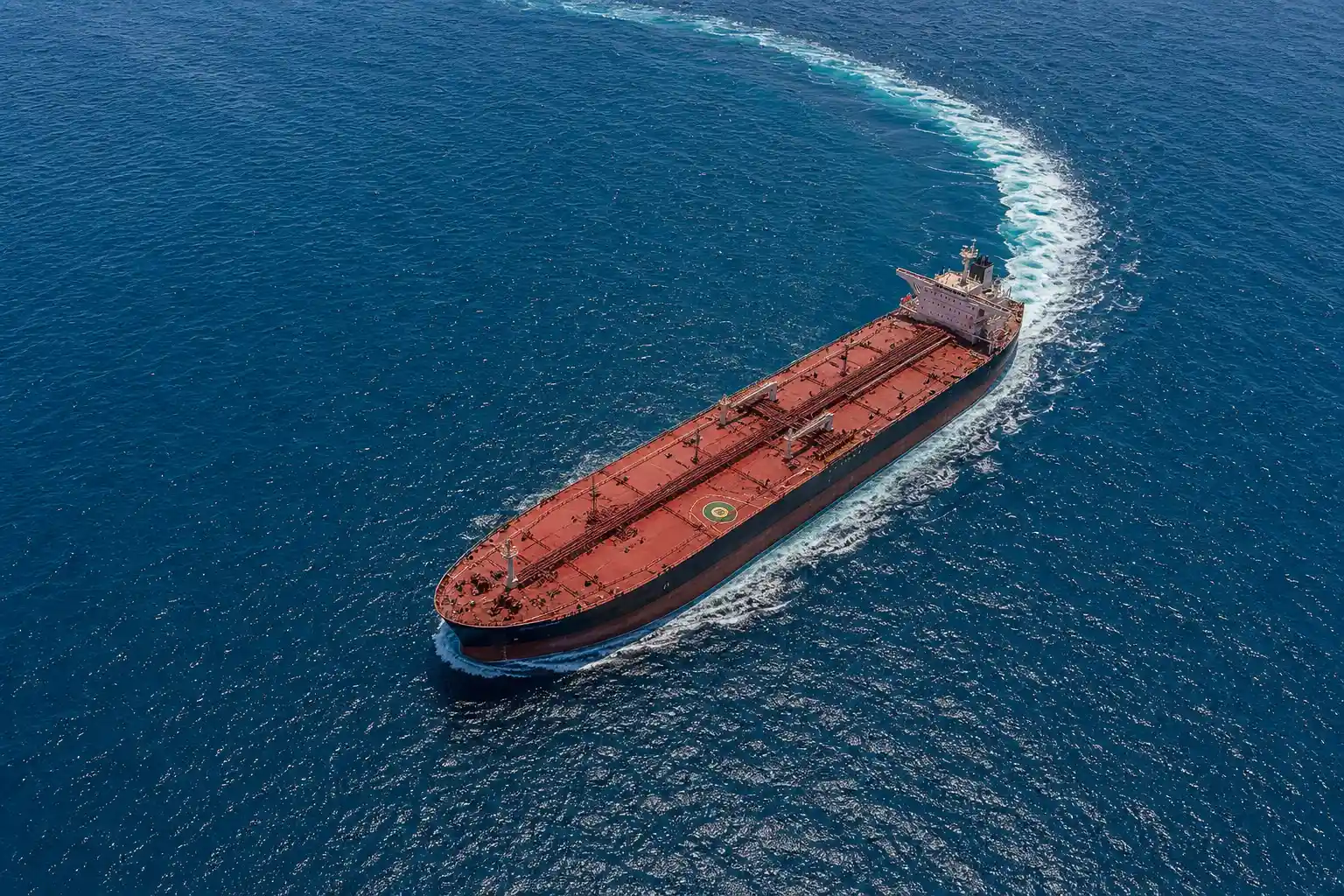
On Monday, the day of the Houthi announcement, two tankers carrying 2.7 million barrels of Saudi oil bound for China and India abandoned their route through Bab El-Mandeb and turned toward the Suez Canal instead, The National reported.
The Houthis are signalling that they are prepared to expand the confrontation from Yemen’s territory into the Red Sea maritime domain.
Neil Quilliam, an associate fellow with Chatham House’s Middle East and North Africa programme, told The National.
Noam Raydan, a senior fellow at the Washington Institute for Near East Policy, put the exposure plainly. “Right now we are facing two pressures on two critical choke points for energy security,” she said. Bab El-Mandeb alone carries about 12 percent of global trade and a quarter of global container traffic, she added.
A War That Already Shut One Strait
This blockade threat lands inside a bigger war. The United States and Iran have been trading strikes since late February, when the conflict shut down normal traffic through the Strait of Hormuz, according to Al Jazeera. By July 20, the two sides had exchanged fire for a tenth consecutive day, according to UPI.
That is what makes this Houthi threat different from earlier ones. Hormuz was already the world’s most important oil chokepoint before this year; Bab El-Mandeb was the backup. If both close at once, the two straits together could put 25 percent of the world’s oil and gas supply at risk, per Al Jazeera’s analysis. Closing Bab El-Mandeb on its own could still cut global oil supply by roughly 7 percent, since it would strand most Saudi exports bound for Asia. Energy analysts have taken to describing the standoff as a second global shipping chokepoint coming under threat, on top of a first one that has not reopened.
Iran had pressed the Houthis to shut Bab El-Mandeb if the United States kept striking Iranian infrastructure, NBC News reported, tying Monday’s embargo directly to the wider war rather than to Yemen’s conflict with Saudi Arabia alone.
A full closure would ripple well beyond oil markets:
- Oil prices: a confirmed, enforced closure would likely add a sustained premium beyond the brief spike already seen this week.
- Insurance costs: war-risk premiums for Red Sea transits would climb further, echoing what happened during the 2023-2024 attacks.
- Rerouting: tankers would likely follow the same playbook from 2023, diverting around the Cape of Good Hope and adding up to three weeks to voyages, as more than 2,000 ships did during that earlier crisis.
- Suez traffic: Egypt’s canal would likely see transit numbers fall again, undercutting the 2026 recovery target Rabie had hoped for.
Each of those outcomes lands hardest on parties that never appear in the Houthi statement at all.
Cairo Wants This Settled at a Table
Egypt’s Tuesday statement closed the way most of its recent statements have, with a call for political and diplomatic solutions over further escalation. Egypt has also been working channels in the wider war. Qatari Prime Minister and Foreign Minister Sheikh Mohammed bin Abdulrahman Al Thani praised Cairo’s mediation efforts to initiate direct dialogue between Washington and Tehran, during a stopover meeting with Abdelatty in Doha.
Qatar and Pakistan have taken on similar mediation roles this month, and their own stakes as mediators have grown alongside the conflict.
Egypt has more to gain from a quick de-escalation than from any diplomatic point-scoring. A calmer Red Sea is the only scenario in which the Suez Canal’s hoped-for $10 billion recovery survives the year.
For now, Egypt’s canal keeps running on schedule. Whether it stays that way depends on a strait Cairo does not control, in a war it did not start.
Frequently Asked Questions
What sparked this specific Houthi threat against Saudi Arabia?
The Houthis said the blockade was retaliation for a Saudi strike on Sanaa International Airport, which the group said happened while an Iranian official was traveling through the airport earlier this month, according to NPR. The Houthis frame the move as part of a broader response to what they call a years-long siege of Yemen by the Saudi-led coalition.
Has Saudi Arabia responded to the blockade threat yet?
There was no immediate Saudi government response when the Houthis first made the announcement Monday, according to NBC News. The Saudi-led coalition followed hours later with a statement vowing to respond firmly, calling the threat an act of maritime piracy, and saying it had begun protective measures for its ships transiting Bab El-Mandeb.
Does the blockade affect the Suez Canal directly?
Not directly. The Houthi embargo targets Saudi-bound and Saudi-flagged vessels transiting Bab El-Mandeb, well south of the Suez Canal’s Mediterranean and Red Sea entrances. But shipping companies and insurers tend to price risk across the whole corridor rather than isolating one country’s ports, which is why Egypt’s canal revenue fell alongside Saudi Arabia’s oil exports during the 2023-2024 attacks even though Egypt was never a declared target.
Is the blockade threat already affecting oil prices?
Oil prices rose briefly after Monday’s announcement before stabilizing, as traders weighed the threat against hopes that US-Iran diplomacy could still prevent a wider war. Prices have not seen the sustained spike that a confirmed, enforced closure of Bab El-Mandeb would likely trigger.
